
Stand-Up India and Credit Guarantee: Strengthening Entrepreneurship and Inclusive Growth in India
SAMATA IAS ACADEMY | CURRENT AFFAIRS ANALYSIS | 12 NOVEMBER 2026
GS Paper II & III
Issues & Analysis
1. Introduction
Entrepreneurship is an important driver of economic growth, employment generation, innovation and social mobility. However, access to entrepreneurship opportunities in India has historically been constrained by unequal access to institutional finance, inadequate collateral, limited business networks and socio-economic disadvantages.
These constraints are particularly significant for women entrepreneurs and individuals belonging to Scheduled Castes (SCs) and Scheduled Tribes (STs), who often face additional barriers in accessing formal credit and establishing sustainable business enterprises.
Recognising the importance of inclusive entrepreneurship, the Government of India introduced the Stand-Up India Scheme in April 2016 to facilitate bank credit for women and SC/ST entrepreneurs establishing new enterprises.
Similarly, the Pradhan Mantri Mudra Yojana (PMMY) was launched in April 2015 to extend institutional credit to micro and small business enterprises that often remain outside the formal banking system.
An important development occurred on 11 November 2026, when the Union Cabinet approved the continuation of both the Stand-Up India Scheme and the Credit Guarantee Fund for Micro Units (CGFMU) for another five years, up to 31 March 2031.
The decisions include:
- An additional target of at least 2.5 lakh beneficiaries under Stand-Up India.
- A ₹4,111 crore credit guarantee corpus for Stand-Up India.
- A ₹5,000 crore corpus for the continuation of CGFMU.
- An anticipated ₹12.6 lakh crore of PMMY loans over the next five years.
- A reduction in the annual guarantee fee under CGFMU for eligible PMMY loans from 1% to 0.75%.
Press Information Bureau+1
These decisions highlight an important dimension of India’s development strategy: moving from merely expanding access to financial services towards promoting productive credit, entrepreneurship and economic empowerment.
The central question is whether access to institutional credit can transform historically underserved sections of society into active participants in India’s entrepreneurial and industrial economy.
2. Why in News?
On 11 November 2026, the Union Cabinet approved the continuation of two important credit-support mechanisms.
A. Continuation of Stand-Up India Scheme
The scheme has been extended for five years, until 31 March 2031.
Its major features include:
| Particular | Details |
|---|---|
| Original launch | 5 April 2016 |
| Nodal ministry | Ministry of Finance |
| Target beneficiaries | Women, SC and ST entrepreneurs |
| Loan amount | Above ₹10 lakh and up to ₹1 crore |
| Nature of enterprise | New or greenfield enterprises |
| Eligible sectors | Manufacturing, services, trading and agriculture-allied activities |
| Credit guarantee coverage | 85% of the loan amount |
| Additional beneficiary target | At least 2.5 lakh |
| Continuation period | Up to 31 March 2031 |
| Credit guarantee corpus | ₹4,111 crore |
Since its launch, the scheme has facilitated loans to more than 2.75 lakh women and SC/ST entrepreneurs. Press Information Bureau+1
B. Continuation of Credit Guarantee Fund for Micro Units
The Cabinet also approved the continuation of CGFMU for another five years, up to 31 March 2031.
| Particular | Details |
|---|---|
| Scheme | Credit Guarantee Fund for Micro Units |
| Original launch | January 2016 |
| Implementing trustee | National Credit Guarantee Trustee Company Limited |
| Corpus | ₹5,000 crore |
| Primary coverage | Eligible PMMY loans up to ₹20 lakh |
| Additional coverage | Specified PMJDY overdrafts and SHG loans |
| Guarantee fee for eligible PMMY loans | Reduced from 1% to 0.75% annually |
| Continuation period | FY 2026–27 to FY 2030–31 |
As of September 2026, more than 60.36 crore loans amounting to approximately ₹43.34 lakh crore had been sanctioned under PMMY since its launch. Press Information Bureau
Important distinction: Stand-Up India and PMMY are not the same scheme. They address different credit requirements and beneficiary groups, although both aim to expand entrepreneurship through institutional finance.
3. Understanding the Problem: Why Is Access to Institutional Credit Important?
3.1 The role of credit in entrepreneurship
Entrepreneurship requires capital at different stages of business development.
A prospective entrepreneur may need finance for:
- Purchasing land or acquiring premises.
- Buying machinery and equipment.
- Procuring raw materials.
- Hiring workers.
- Establishing distribution networks.
- Managing working capital.
- Expanding production capacity.
In a well-developed financial system, entrepreneurs can access loans, equity investments and other financing instruments.
However, a large number of micro and small entrepreneurs face difficulties accessing these sources.
3.2 Why do small entrepreneurs face credit constraints?
A. Lack of collateral
Banks generally assess the borrower’s ability to repay loans and the security available against the loan.
Small entrepreneurs often lack immovable property or other acceptable collateral.
B. Informal nature of businesses
Many micro-enterprises operate without comprehensive financial statements, formal accounting systems or established credit histories.
This makes credit-risk assessment difficult.
C. Information asymmetry
Banks may not possess adequate information about the business model, revenue potential and repayment capacity of small entrepreneurs.
D. High transaction costs
Small loans involve documentation, verification, monitoring and administrative expenses that may be relatively high compared with the loan amount.
E. Social and economic barriers
Women and entrepreneurs from historically disadvantaged communities may face additional constraints, including limited access to property ownership, business networks, professional mentorship and financial information.
3.3 Credit exclusion and economic inequality
Limited access to formal finance can create a self-reinforcing cycle:
Lack of access to institutional credit
Dependence on informal and expensive borrowing
Limited investment and business expansion
Low productivity and income instability
Persistence of economic inequality
Institutional credit programmes attempt to interrupt this cycle by connecting underserved entrepreneurs with formal financial institutions.
However, credit access alone is insufficient. Entrepreneurs also require skills, market opportunities, infrastructure, technology and effective business support.
4. Stand-Up India Scheme: Promoting Entrepreneurship Among Women and SC/ST Communities
4.1 Background and objectives
The Stand-Up India Scheme was launched on 5 April 2016.
Its principal objective is to promote entrepreneurship among women and SC/ST communities by facilitating bank loans for establishing greenfield enterprises.
The scheme seeks to address the historical concentration of entrepreneurial ownership and formal business opportunities among relatively advantaged sections of society.
It is based on the idea that financial inclusion should not be limited to opening bank accounts or providing small consumption loans. It should also enable individuals to establish productive economic enterprises.
4.2 Major objectives
The scheme aims to:
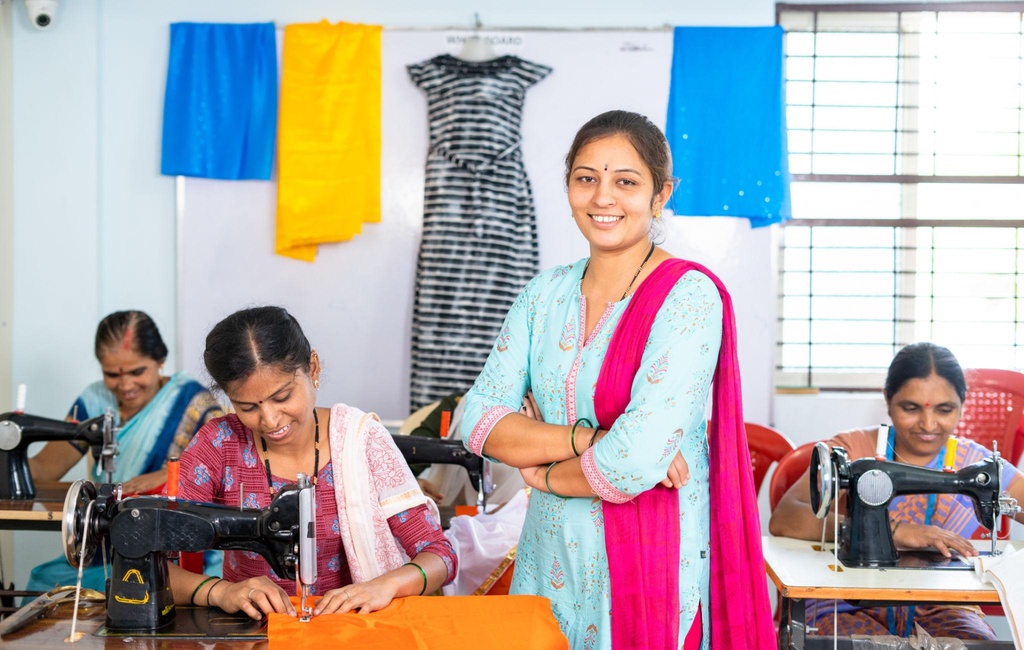
- Promote entrepreneurship among women.
- Encourage enterprise creation among SC and ST communities.
- Facilitate access to institutional finance.
- Support first-generation entrepreneurs.
- Generate employment through new enterprises.
- Promote inclusive and broad-based economic growth.
4.3 Eligibility criteria
The principal eligibility conditions include:
- The borrower must be a woman or belong to an SC/ST community.
- The applicant must be above 18 years of age.
- The enterprise must be a new or greenfield project.
- The borrower should not be in default to any bank or financial institution.
- In the case of a non-individual enterprise, at least 51% of the shareholding and controlling stake should be held by an eligible woman or SC/ST entrepreneur.
4.4 Nature and size of loans
The scheme provides composite loans or term loans for amounts:
₹10 lakh – ₹1 crore
Loan size under Stand-Up India
The loan can cover up to 85% of the project cost, subject to the applicable scheme conditions.
A composite loan combines:
- Term loan: For fixed capital investment, machinery, equipment and other long-term assets.
- Working capital: For day-to-day operational requirements.
The scheme covers the following sectors:
- Manufacturing.
- Services.
- Trading.
- Activities allied to agriculture.
Government of India+2
4.5 Credit guarantee support
One of the important features of the continued scheme is credit guarantee coverage of 85% of the loan amount.
The guarantee mechanism helps reduce the lending institution’s exposure to credit risk, subject to the applicable guarantee conditions.
The standard guarantee fee under the announced scheme is 0.50%. Press Information Bureau
4.6 Greenfield enterprise: Why is this condition important?
A greenfield enterprise refers to a new business venture established from the beginning rather than the expansion of an existing enterprise.
The focus on greenfield enterprises is important because the scheme seeks to promote new entrepreneurial ownership among underserved groups.
For example:
- A woman establishing a new food-processing unit.
- An SC entrepreneur starting a manufacturing enterprise.
- An ST entrepreneur establishing a new services business.
- An eligible entrepreneur establishing an agriculture-allied enterprise.
The objective is to facilitate entry into entrepreneurship rather than merely provide additional finance to businesses that are already established.
5. Credit Guarantee Fund for Micro Units (CGFMU)
5.1 What is CGFMU?
The Credit Guarantee Fund for Micro Units is a credit-risk-sharing mechanism established to facilitate institutional lending to eligible micro-enterprises.
It was launched in January 2016 and is managed by the National Credit Guarantee Trustee Company Limited (NCGTC) as the trustee.
The basic objective is to provide guarantee protection to eligible lending institutions against specified credit defaults.
This reduces the perceived risk associated with lending to micro-enterprises that may not possess adequate collateral.
5.2 How does a credit guarantee mechanism work?
Consider a small entrepreneur seeking a business loan from a bank.
The bank may hesitate to provide the loan because the entrepreneur does not possess sufficient collateral.
A credit guarantee mechanism can provide the bank with partial protection against eligible credit losses.
Working of a credit guarantee mechanism
Entrepreneur
Applies for a business loan
Bank / Lending Institution
Evaluates and sanctions the loan
NCGTC / CGFMU
Provides eligible credit guarantee coverage
Reduced lender risk
Encourages institutional credit to eligible micro-enterprises
Simplified conceptual representation. Actual claims and guarantee payments are governed by scheme conditions.
The guarantee does not mean that the entrepreneur’s loan is waived or that the borrower is exempt from repayment.
The borrower remains legally responsible for repaying the loan.
The guarantee protects the lending institution against a specified portion of eligible losses, subject to the scheme’s terms.
5.3 Credit facilities covered under CGFMU
Under the continuation approved in November 2026, the fund provides guarantee support for:
- Eligible micro-enterprise loans under PMMY up to ₹20 lakh.
- Overdrafts of up to ₹10,000 provided by banks under PMJDY accounts.
- Specified Self-Help Group loan portfolios between ₹10 lakh and ₹20 lakh.
Press Information Bureau+1
5.4 Reduction in guarantee fee
The Cabinet approved a reduction in the annual guarantee fee for eligible PMMY loans from 1% to 0.75%.
For eligible SHG portfolios, the existing fee structure continues:
- 0.25% during the first year.
- 0.50% in subsequent years.
This reduction can lower the cost associated with the guarantee mechanism and support the availability of institutional credit. Press Information Bureau
5.5 Why is CGFMU important?
Micro-enterprises frequently lack the collateral and formal financial records required for conventional bank lending.
By providing credit guarantee support, CGFMU seeks to encourage banks and other lending institutions to extend finance to such enterprises.
It is particularly relevant for:
- Small manufacturers.
- Retail businesses.
- Service providers.
- Micro-enterprises in rural areas.
- Women-led businesses.
- Small entrepreneurs operating in the informal economy.
- Eligible SHGs.
6. Pradhan Mantri Mudra Yojana: The Credit Ecosystem Supported by CGFMU
To understand CGFMU, it is necessary to examine the Pradhan Mantri Mudra Yojana.
6.1 Background
PMMY was launched on 8 April 2015 to provide institutional, collateral-free credit to micro-enterprises.
It is intended to support income-generating business activities in manufacturing, trading and services, including specified activities allied to agriculture.
Both term loans and working capital requirements can be financed.
6.2 Categories of Mudra loans
PMMY loans are classified into four categories.
| Category | Loan amount |
|---|---|
| Shishu | Up to ₹50,000 |
| Kishor | Above ₹50,000 and up to ₹5 lakh |
| Tarun | Above ₹5 lakh and up to ₹10 lakh |
| Tarun Plus | Above ₹10 lakh and up to ₹20 lakh |
Important: Tarun Plus is available to entrepreneurs who have successfully repaid their earlier Tarun-category loans. It became applicable from 24 October 2024. Government of India+1
6.3 Institutions providing Mudra loans
PMMY loans are provided through Member Lending Institutions, including:
- Public Sector Banks.
- Private Sector Banks.
- Regional Rural Banks.
- Small Finance Banks.
- Non-Banking Financial Companies.
- Microfinance Institutions.

6.4 Why was the Mudra loan limit increased?
The maximum loan limit was increased from ₹10 lakh to ₹20 lakh in the Union Budget 2024–25.
The introduction of Tarun Plus was intended to support entrepreneurs who had demonstrated repayment capacity through successful repayment of earlier Tarun loans.
This introduces a progression-based credit approach, under which entrepreneurs can potentially move towards larger borrowing limits as their businesses develop.
6.5 PMMY and CGFMU: The relationship
The two institutions perform complementary functions.
- PMMY provides the framework for extending loans to eligible micro-enterprises.
- CGFMU provides credit guarantee protection to lending institutions against eligible defaults.
The distinction is important because the guarantee fund is not a separate loan-disbursement programme for entrepreneurs.
It is a risk-sharing mechanism that supports the lending ecosystem.
7. Stand-Up India versus Mudra: Understanding the Differences
Both schemes promote entrepreneurship, but they address different segments of the entrepreneurial ecosystem.
| Parameter | Stand-Up India | PMMY |
|---|---|---|
| Launch | April 2016 | April 2015 |
| Primary target | Women and SC/ST entrepreneurs | Micro-enterprises |
| Loan range | Above ₹10 lakh to ₹1 crore | Up to ₹20 lakh |
| Main objective | Promote greenfield enterprises among targeted groups | Expand institutional credit to micro-enterprises |
| Nature | Composite loan or term loan | Term loan and working capital |
| Eligible activities | Manufacturing, services, trading and agriculture-allied activities | Non-agricultural activities, including specified agriculture-allied activities |
| Guarantee mechanism | Stand-Up India credit guarantee arrangements | CGFMU |
| Special feature | Focus on entrepreneurial ownership among women and SC/ST communities | Four loan categories, including Tarun Plus |
Analytical observation: Stand-Up India is primarily an entrepreneurship inclusion programme, whereas PMMY is a broader micro-enterprise credit programme.
The two schemes complement one another in expanding access to formal finance.
8. Significance of the Continuation: Beyond Financial Inclusion
The continuation of these schemes is significant because it connects financial inclusion with productive economic activity.
8.1 Promoting inclusive entrepreneurship
Access to finance can enable individuals from historically disadvantaged communities to establish businesses and participate in formal economic activity.
The Stand-Up India Scheme specifically seeks to address the under-representation of women and SC/ST entrepreneurs in business ownership.
This is important for reducing structural inequalities in the distribution of productive assets and entrepreneurial opportunities.
8.2 Employment generation
Micro and small enterprises are important sources of employment, particularly in labour-intensive sectors.
Access to institutional credit can help businesses:
- Establish new production units.
- Expand existing operations.
- Purchase machinery.
- Increase working capital.
- Recruit additional workers.
- Enter new markets.
Thus, credit availability can contribute to employment generation and local economic development.
8.3 Formalisation of the economy
When micro-enterprises obtain institutional finance, they increasingly interact with the formal financial system.
This can encourage:
- Bank account usage.
- Digital transactions.
- Formal bookkeeping.
- Udyam registration.
- GST registration, where applicable.
- Better financial documentation.
- Improved credit histories.
However, access to a bank loan does not automatically imply complete formalisation. Complementary regulatory and institutional support is necessary.
8.4 Promoting women-led economic development
Women’s participation in entrepreneurship can improve household incomes, financial independence and economic decision-making.
Women-led enterprises can also contribute to:
- Local employment.
- Innovation.
- Better utilisation of human resources.
- Greater participation of women in economic activity.
- Intergenerational improvements in education and living standards.
The policy objective should move beyond merely providing loans to ensuring that women-owned enterprises can survive, expand and become economically sustainable.
8.5 Strengthening rural and semi-urban economies
Micro-enterprises are often closely connected with local economic conditions.
Small manufacturing units, food-processing businesses, retail establishments, repair services and agriculture-allied enterprises generate employment closer to residential communities.
Credit support can therefore contribute to more balanced regional development and reduce excessive dependence on metropolitan employment centres.
8.6 Improving access to formal finance
Credit guarantees can encourage lending institutions to extend credit to borrowers who might otherwise be considered relatively risky.
This is particularly important where the borrower has a viable business proposal but limited collateral.
However, credit guarantees should complement prudent lending practices rather than weaken credit appraisal standards.
9. Credit Guarantee Mechanisms: Their Economic Rationale
Credit guarantee schemes are an important instrument of government intervention in financial markets.
Their significance can be understood through the concept of market failure.
9.1 Information asymmetry
Banks may not possess sufficient information to accurately evaluate the business prospects of small enterprises.
This creates information asymmetry between lenders and borrowers.
As a result, banks may:
- Charge higher interest rates.
- Demand additional collateral.
- Limit credit exposure.
- Reject otherwise viable business proposals.
A credit guarantee can partially address this problem by reducing the potential losses faced by lenders.
9.2 Risk-sharing between the government and financial institutions
Under a credit guarantee mechanism, the government-supported fund assumes a specified portion of eligible credit risk.
This encourages financial institutions to participate in lending to underserved segments.
However, the lender continues to retain part of the risk.
This is important because complete risk transfer can create moral hazard, where lenders have insufficient incentives to assess borrowers carefully.
9.3 Financial inclusion as a public-policy objective
Commercial banks generally evaluate loans based on profitability and risk.
However, governments also consider the broader social and economic benefits of providing credit to underserved populations.
These benefits include:
- Employment generation.
- Poverty reduction.
- Economic empowerment.
- Regional development.
- Entrepreneurial diversification.
Credit guarantee mechanisms help align private lending incentives with these broader public-policy objectives.
10. Challenges in Implementing Credit-Based Entrepreneurship Schemes
Despite their importance, credit guarantee and entrepreneurship schemes face several structural challenges.
10.1 Loan sanction versus actual business success
One of the most important limitations of evaluating government credit schemes is the excessive emphasis on the number and value of loans sanctioned.
A sanctioned loan does not necessarily translate into a successful business.
Entrepreneurs may face difficulties involving:
- Insufficient market demand.
- High operating costs.
- Inadequate managerial skills.
- Competition from established businesses.
- Supply-chain disruptions.
- Working-capital shortages.
Therefore, programme performance should be measured not merely through loan disbursement but also through business survival, employment creation and repayment performance.
10.2 Risk of over-indebtedness
Expanding institutional credit without adequate borrower assessment can increase the risk of over-indebtedness.
This is particularly relevant where entrepreneurs depend on multiple sources of borrowing.
Excessive borrowing can lead to:
- Repayment stress.
- Non-performing assets.
- Financial distress.
- Business closure.
- Dependence on additional borrowing.
Credit expansion must therefore be accompanied by responsible lending practices and borrower education.
10.3 Gender-related barriers
Women entrepreneurs may continue to face constraints even after receiving access to bank finance.
These include:
- Limited ownership of property.
- Unequal access to business networks.
- Restrictions on mobility.
- Household responsibilities.
- Limited access to markets.
- Social and institutional discrimination.
Credit alone cannot eliminate these structural constraints.
10.4 Social and geographical inequalities
Access to formal finance remains uneven across regions.
Entrepreneurs in remote tribal areas, economically backward districts and rural regions may face difficulties in accessing banking institutions and business-support services.
Digital lending can improve accessibility, but it also requires reliable internet connectivity, digital literacy and adequate consumer protection.
10.5 Inadequate entrepreneurial skills
Many first-generation entrepreneurs may possess business ideas but lack experience in:
- Financial management.
- Accounting.
- Marketing.
- Tax compliance.
- Inventory management.
- Business planning.
- Digital commerce.
Without adequate handholding, even financially supported enterprises may struggle to become sustainable.
10.6 Information and awareness gaps
Potential beneficiaries may not be fully aware of the schemes, eligibility requirements and application procedures.
Inadequate awareness can reduce access among the very communities that the schemes are intended to support.
10.7 Guarantee-related moral hazard
Credit guarantees reduce lender risk but do not eliminate it.
If banks become excessively dependent on government-backed guarantees, there may be a tendency to weaken credit appraisal.
Similarly, borrowers may underestimate repayment obligations if they mistakenly believe that government guarantees mean their loans are effectively subsidised or waived.
Both problems require strong institutional oversight.
10.8 Lack of market linkages
Access to credit does not automatically provide access to customers.
Small entrepreneurs often face difficulties in connecting with:
- Large manufacturing companies.
- Government procurement systems.
- E-commerce platforms.
- Export markets.
- Institutional buyers.
Market access is therefore as important as credit access.
11. Evaluating the Impact of India’s Credit-Based Entrepreneurship Ecosystem
The effectiveness of these schemes must be assessed through their contribution to financial inclusion, enterprise development and economic empowerment.
11.1 Achievements
The government’s November 2026 announcement provides important evidence of the scale of formal credit expansion.
| Indicator | Reported achievement |
|---|---|
| PMMY loans sanctioned since launch | More than 60.36 crore |
| PMMY amount sanctioned | Approximately ₹43.34 lakh crore |
| Stand-Up India loans facilitated | More than 2.75 lakh |
| Additional Stand-Up India beneficiaries targeted | At least 2.5 lakh |
| PMMY lending enabled by continued CGFMU | ₹12.6 lakh crore over five years |
Press Information Bureau+1
These figures indicate the expansion of institutional credit access.
However, they should be interpreted carefully.
The cumulative number of loans is not equivalent to the number of unique entrepreneurs, since an individual or enterprise may receive multiple loans over time.
Similarly, loan sanctions do not necessarily represent actual disbursements or successful business outcomes.
11.2 The need for outcome-based evaluation
A more comprehensive assessment should examine:
| Dimension | Indicators |
|---|---|
| Financial inclusion | First-time borrowers and formal credit access |
| Entrepreneurship | New enterprises established |
| Business sustainability | Enterprise survival after 3–5 years |
| Employment | Direct and indirect jobs created |
| Gender inclusion | Women-owned and women-managed enterprises |
| Social inclusion | SC/ST participation and regional distribution |
| Financial performance | Repayment rates and non-performing assets |
| Productivity | Growth in turnover and value addition |
| Formalisation | Udyam registration and formal financial transactions |
The government should progressively move towards such outcome-based monitoring.
12. The Way Forward: From Credit Access to Enterprise Development
India needs to move beyond a loan-distribution approach towards an integrated entrepreneurship-development framework.
12.1 Strengthen entrepreneurial handholding
Beneficiaries should receive support throughout the business lifecycle.
This includes:
- Project preparation.
- Business-plan development.
- Financial literacy.
- Regulatory compliance.
- Accounting and taxation.
- Digital marketing.
- Business management.
12.2 Improve market access
Government procurement, GeM registration, e-commerce platforms and industrial supply chains can create market opportunities for small enterprises.
Special efforts should be made to connect women-led and SC/ST-owned enterprises with larger businesses.
12.3 Promote cluster-based development
Entrepreneurship programmes should be integrated with local industrial clusters.
For example, credit support can be linked with:
- Food-processing clusters.
- Textile and garment clusters.
- Handloom and handicraft clusters.
- Rural manufacturing clusters.
- Local service-sector enterprises.
This can help small businesses access common infrastructure, technical support and established markets.
12.4 Strengthen financial literacy
Entrepreneurs should understand:
- Interest rates.
- Repayment schedules.
- Working-capital management.
- Credit scores.
- Debt obligations.
- Digital financial services.
- Business risk management.
Financial literacy can reduce over-indebtedness and improve repayment discipline.
12.5 Improve last-mile banking access
Banks and financial institutions should strengthen their outreach in rural, tribal and underserved regions.
Digital application systems should be supplemented with local assistance centres and financial counselling.
12.6 Improve credit appraisal mechanisms
Credit appraisal should increasingly incorporate reliable alternative information, including business cash flows and digital transaction records, while protecting borrowers’ privacy.
This can help viable enterprises with limited collateral obtain appropriate finance.
12.7 Promote women-led enterprise ecosystems
Women entrepreneurs need more than credit.
They require access to:
- Business incubation.
- Mentorship.
- Professional networks.
- Technology.
- Market information.
- Childcare and support infrastructure.
- Leadership and management training.
12.8 Strengthen credit guarantee governance
Credit guarantee institutions should maintain transparent procedures for:
- Risk assessment.
- Guarantee claims.
- Recovery mechanisms.
- Fraud prevention.
- Monitoring of lending institutions.
- Periodic impact evaluation.
The government should also ensure that guarantees do not create excessive fiscal liabilities.
12.9 Integrate credit with skill development
Schemes such as PMKVY, Skill India and other entrepreneurship-development programmes can be connected with credit schemes.
This would help ensure that entrepreneurs possess the technical and managerial capabilities required to utilise borrowed funds effectively.
12.10 Encourage technology adoption
Micro-enterprises should be encouraged to adopt digital accounting, e-commerce, automated production systems and modern inventory management.
This can improve productivity and competitiveness.
13. Conclusion
The continuation of Stand-Up India and CGFMU represents an important step in strengthening India’s inclusive entrepreneurship ecosystem.
These initiatives recognise that financial inclusion must extend beyond access to basic banking services towards access to productive capital and entrepreneurial opportunities.
Stand-Up India seeks to expand business ownership among women and SC/ST communities, while PMMY and its supporting credit guarantee mechanism seek to strengthen institutional finance for micro-enterprises.
However, the long-term success of these programmes will depend on their ability to convert financial assistance into sustainable enterprises, productive employment and improved household incomes.
India needs to build an entrepreneurial ecosystem in which access to credit is accompanied by skills, technology, market opportunities, infrastructure and institutional support.
The ultimate measure of inclusive financial policy should not be the amount of credit distributed, but the extent to which that credit creates sustainable enterprises, decent employment and economic independence.
Such an approach can make entrepreneurship a meaningful instrument of inclusive growth and contribute to the broader vision of Viksit Bharat 2047.
14. UPSC Examination Perspective
GS Paper II – Governance and Social Justice
Syllabus linkages:
- Government policies and interventions for development in various sectors.
- Welfare schemes for vulnerable sections.
- Mechanisms, laws, institutions and bodies constituted for the protection and betterment of vulnerable sections.
- Issues relating to poverty and hunger.
- Inclusive governance and social empowerment.
GS Paper III – Indian Economy
Syllabus linkages:
- Indian economy and issues relating to planning, mobilisation of resources and growth.
- Inclusive growth and issues arising from it.
- Investment models.
- Employment generation.
- Financial inclusion and institutional credit.
Important Prelims Facts
| Topic | Important fact |
|---|---|
| Stand-Up India launch | 5 April 2016 |
| PMMY launch | 8 April 2015 |
| Stand-Up India loan range | Above ₹10 lakh to ₹1 crore |
| Stand-Up India target | Women and SC/ST entrepreneurs |
| Stand-Up India guarantee coverage | 85% |
| CGFMU launch | January 2016 |
| CGFMU trustee | NCGTC |
| PMMY maximum loan | ₹20 lakh |
| Tarun Plus | ₹10–20 lakh |
| Tarun Plus eligibility | Successful repayment of earlier Tarun loan |
| CGFMU corpus approved | ₹5,000 crore |
| Stand-Up India guarantee corpus | ₹4,111 crore |
| Stand-Up India extension | Until 31 March 2031 |
| CGFMU extension | Until 31 March 2031 |
Possible UPSC Mains Questions
Question 1 – GS Paper III (15 marks)
“Access to institutional credit is a necessary but insufficient condition for promoting entrepreneurship among economically and socially disadvantaged sections.” Critically examine in the context of Stand-Up India and PMMY.
Question 2 – GS Paper II (15 marks)
Discuss the role of targeted financial inclusion programmes in promoting economic empowerment among women and Scheduled Castes and Scheduled Tribes.
Question 3 – GS Paper III (15 marks)
Credit guarantee mechanisms can address market failures in lending to micro and small enterprises. Explain their economic rationale and examine the challenges associated with their implementation.
Question 4 – GS Paper III (10 marks)
Distinguish between financial inclusion and productive financial inclusion. How can India strengthen the contribution of institutional credit to employment generation?
Prelims Practice Questions
Q1. With reference to Stand-Up India Scheme, consider the following statements:
- It aims to promote entrepreneurship among women and SC/ST communities.
- It supports the establishment of greenfield enterprises.
- It provides loans exclusively to manufacturing enterprises.
- It covers eligible enterprises in manufacturing, services, trading and agriculture-allied activities.
Which of the statements given above are correct?
(a) 1 and 2 only
(b) 1, 2 and 4 only
(c) 2, 3 and 4 only
(d) 1, 2, 3 and 4
Q2. Consider the following statements regarding Pradhan Mantri Mudra Yojana:
- Shishu loans are available up to ₹50,000.
- Kishor loans are above ₹50,000 and up to ₹5 lakh.
- Tarun Plus loans are available to all first-time borrowers without any previous repayment history.
- PMMY covers certain activities allied to agriculture.
Which of the statements given above are correct?
(a) 1 and 2 only
(b) 1, 2 and 4 only
(c) 2, 3 and 4 only
(d) 1, 2, 3 and 4
Q3. With reference to Credit Guarantee Fund for Micro Units, consider the following statements:
- It provides credit guarantee support to eligible lending institutions.
- It is managed by NCGTC as trustee.
- It eliminates the borrower’s obligation to repay the loan.
Which of the statements given above are correct?
(a) 1 only
(b) 1 and 2 only
(c) 2 and 3 only
(d) 1, 2 and 3
Answer key: Q1 – (b); Q2 – (b); Q3 – (b).
External references
- PIB – Continuation of Stand-Up India Scheme.
- PIB – Continuation of Credit Guarantee Fund for Micro Units.
- Department of Financial Services – Pradhan Mantri Mudra Yojana.
- Department of Financial Services – Stand-Up India Scheme.
- NCGTC – CGFMU Frequently Asked Questions.