
UPSC Current Affairs Analysis | GS Paper III – Internal Security, Border Management and Maritime Security | 12 November 2026
1. Introduction
India’s long coastline, extensive maritime zones, strategic island territories and dependence on sea-based trade make coastal security an essential component of national security. The maritime domain is not merely a geographical frontier; it is also a vital economic space through which international trade, energy supplies, fishing activities and communication networks operate.
The 26 November 2008 Mumbai terror attacks exposed serious vulnerabilities in India’s coastal surveillance and inter-agency coordination. Terrorists entered Mumbai through the sea route, demonstrating that maritime approaches could be exploited for attacks on major urban centres.
Since then, India has progressively strengthened its coastal security architecture through institutional reforms, surveillance systems, specialised forces, coastal police infrastructure and intelligence-sharing mechanisms.
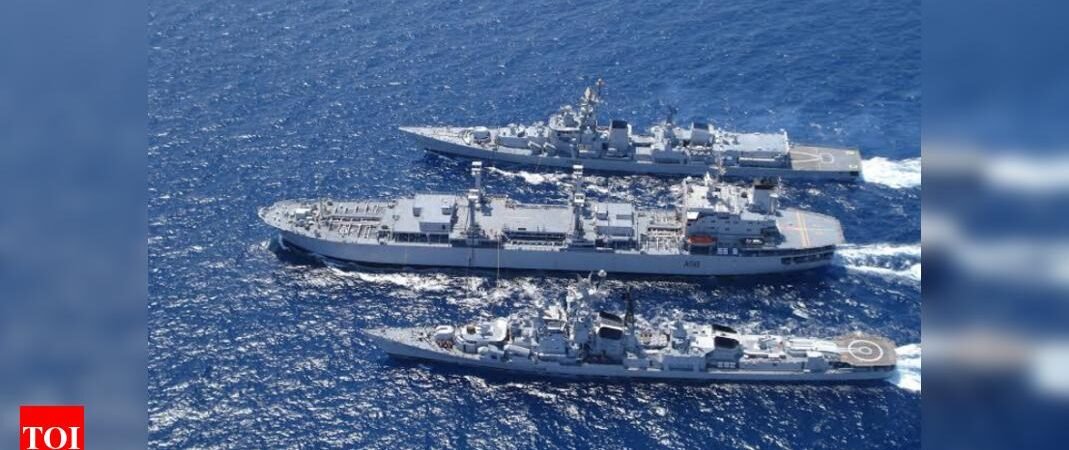
The fifth edition of the pan-India Coastal Defence Exercise Sea Vigil-26, being conducted from 11 to 19 November 2026, provides an opportunity to assess the effectiveness of these arrangements. Coordinated by the Indian Navy, the exercise covers India’s entire coastline and Exclusive Economic Zone (EEZ), involving coastal States and Union Territories, the Indian Coast Guard, Coastal Security Police, Customs and other maritime stakeholders. Press Information Bureau+1
The central question is therefore not simply whether India has established coastal security institutions, but whether these institutions can function as an integrated system capable of detecting, preventing and responding to emerging maritime threats.
2. Why is coastal security important for India?
India’s maritime geography creates both strategic opportunities and security vulnerabilities.
2.1 Geographical and strategic significance
India has:
- A mainland coastline and island territories facing the Arabian Sea, Bay of Bengal and Indian Ocean.
- The Andaman and Nicobar Islands near the strategically important Malacca Strait.
- Lakshadweep Islands in the Arabian Sea.
- Major commercial ports, naval installations, petroleum facilities, offshore platforms and coastal industrial centres.
- Extensive fishing communities and coastal settlements.
India’s maritime interests extend beyond its immediate coastline into the EEZ and wider Indian Ocean Region.
2.2 Economic significance
Coastal and maritime security protects:
- International trade: Disruption of ports and shipping routes can affect imports, exports and supply chains.
- Energy security: Offshore oil and gas installations, petroleum terminals and LNG infrastructure require protection.
- Blue economy: Fisheries, aquaculture, coastal tourism, marine biotechnology and seabed resources depend on a secure maritime environment.
- Critical infrastructure: Ports, shipyards, offshore installations, undersea cables and coastal industrial facilities are potential targets.
- Livelihoods: Coastal communities depend on safe fishing and maritime activities.
2.3 Security significance
The sea can be exploited for:
- Terrorist infiltration and attacks.
- Smuggling of narcotics, arms and explosives.
- Human trafficking and illegal migration.
- Maritime piracy and organised crime.
- Illegal, unreported and unregulated fishing.
- Espionage and hostile surveillance.
- Sabotage of ports, offshore installations and critical infrastructure.
Coastal security is consequently broader than preventing terrorist infiltration. It includes law enforcement, maritime domain awareness, protection of economic assets and safeguarding the rights and livelihoods of coastal communities.
3. The 26/11 Mumbai attacks: A turning point in coastal security
Militants Overcome As Siege Ends In Mumbai
The Mumbai terror attacks of 26 November 2008 exposed major weaknesses in India’s maritime security framework.
The attackers travelled by sea, hijacked an Indian fishing vessel and entered Mumbai through the coastal waters. Their ability to evade detection demonstrated the limitations of surveillance, vessel identification, intelligence coordination and coastal policing.
Major vulnerabilities exposed
| Area | Weakness revealed |
|---|---|
| Maritime surveillance | Inadequate monitoring of suspicious vessel movements |
| Vessel identification | Difficulties in identifying and tracking small fishing vessels |
| Intelligence sharing | Fragmented information among security agencies |
| Coastal policing | Inadequate infrastructure and operational capacity |
| Inter-agency coordination | Lack of seamless coordination between central and state agencies |
| Community participation | Insufficient integration of fishermen into the security framework |
| Response mechanisms | Delays and gaps in operational response |
Institutional response after 26/11
The Government adopted a multi-dimensional approach involving:
- A clearer command and coordination structure for maritime security.
- Strengthening of the Indian Coast Guard and State Marine Police.
- Establishment of Joint Operations Centres.
- Creation of the Sagar Prahari Bal.
- Expansion of coastal radar surveillance.
- Strengthening of vessel registration and identification mechanisms.
- Improved intelligence-sharing arrangements.
- Regular coastal security exercises.
The National Committee for Strengthening Maritime and Coastal Security (NCSMCS) was established as an apex coordination and review mechanism, with representation from concerned ministries and agencies. 26/11+2
The attacks thus marked a transition from a largely fragmented coastal security approach towards a more integrated maritime security framework.
4. India’s coastal security architecture
India follows a multi-layered, multi-agency coastal security framework. It combines operational forces, intelligence institutions, surveillance infrastructure and community participation.
4.1 Three-tier security arrangement
The operational framework involves three principal layers.
| Agency | Principal responsibility |
|---|---|
| Indian Navy | Overall maritime security, particularly offshore and high-seas operations; coordination of maritime surveillance and deployment with the Coast Guard |
| Indian Coast Guard | Coastal security in territorial waters and coordination between central and State agencies |
| State Marine Police | Policing and patrolling of shallow coastal waters and areas close to the shoreline |
The Indian Coast Guard was additionally designated in February 2009 as the authority responsible for coastal security in territorial waters, including areas patrolled by Coastal Police, and for overall coordination between Central and State agencies in coastal security matters. indiancoastguard.gov.in+1
The arrangement is intended to ensure that security responsibilities are distributed but coordinated.
4.2 Institutional coordination
National Committee for Strengthening Maritime and Coastal Security (NCSMCS)
- Functions as the apex-level coordinating and review mechanism.
- Brings together ministries, armed forces, intelligence agencies and other stakeholders.
- Facilitates policy coordination and review of maritime and coastal security arrangements.
Joint Operations Centres (JOCs)
Four Joint Operations Centres have been established at:
- Mumbai
- Visakhapatnam
- Kochi
- Port Blair
These centres serve as important coordination and command-and-control nodes for maritime security operations. Press Information Bureau+1
National Command, Control, Communication and Intelligence (NC3I) Network
The NC3I network connects relevant Navy and Coast Guard nodes to facilitate information sharing and develop a common operational picture of maritime activity.
Its importance lies in reducing information silos and enabling a coordinated response to maritime threats. Digital Sansad+1
4.3 Coastal Security Scheme
The Ministry of Home Affairs implements the Coastal Security Scheme (CSS) to strengthen the infrastructure and capabilities of State and Union Territory Marine Police.
| Phase | Key provisions |
|---|---|
| Phase I (2005–2011) | Coastal Police Stations, check posts, outposts, barracks, interceptor boats and vehicles |
| Phase II (2011–2016; subsequently extended) | Additional coastal police stations, jetties, Marine Police Operation Centres and vehicles |
According to the Ministry of Home Affairs, Phase I provided for 73 Coastal Police Stations, 97 check posts, 58 outposts, 30 barracks and 204 interceptor boats. Under Phase II, 120 Coastal Police Stations had been constructed, along with 37 jetties constructed or upgraded, as per the Ministry’s published scheme information. Ministry of Home Affairs
The scheme is significant because the security of the coastline cannot be ensured exclusively by naval and Coast Guard assets. Local police forces are essential for patrolling beaches, creeks, fishing harbours and coastal settlements.
5. Technology and maritime domain awareness
Modern coastal security depends on the ability to identify, track and assess maritime activity in real time.
The concept of Maritime Domain Awareness (MDA) refers to an effective understanding of activities, events and developments within the maritime environment that may affect security, safety, the economy or the environment.
India has developed several technological systems to strengthen MDA.
5.1 Coastal Surveillance Network (CSN)
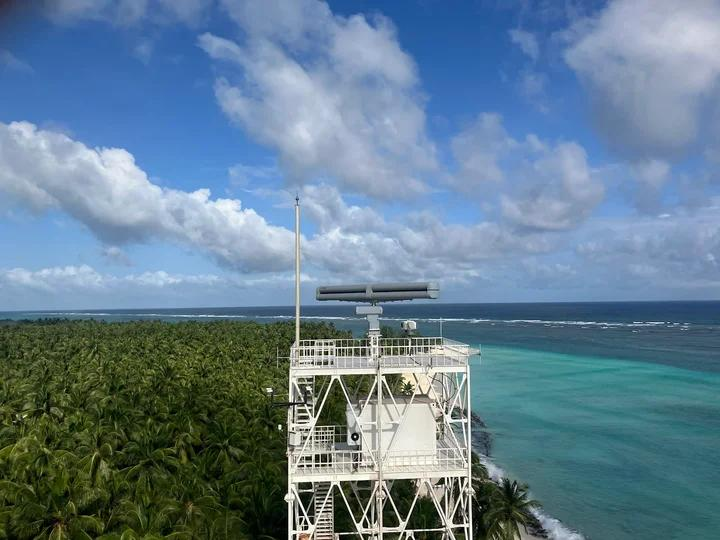
The Coastal Surveillance Network uses a chain of static sensors, including:
- Coastal surveillance radars.
- Automatic Identification System (AIS) receivers.
- Day and night cameras.
- Meteorological sensors.
- Communication systems.
The Indian Coast Guard reports that 46 radar stations have been established under the initial network. An additional 38 radar stations and eight mobile surveillance systems are being installed under Phase II to move towards near gap-free surveillance of the coastline and islands. indiancoastguard.gov.in+1
5.2 Automatic Identification System (AIS)
AIS is a maritime tracking system that enables the exchange of vessel-related information, including identity, position, course and speed.
It helps authorities monitor vessel movements and identify unusual patterns.
However, AIS has limitations:
- Small fishing vessels may not be covered by the same requirements as larger commercial vessels.
- Equipment may be switched off or manipulated.
- AIS signals may be unavailable or unreliable in certain circumstances.
- A vessel’s transmitted identity does not automatically establish the legitimacy of its activity.
Thus, AIS must be supplemented by radar, visual surveillance, intelligence inputs and physical verification.
5.3 Long Range Identification and Tracking (LRIT)
LRIT is a system for identifying and tracking ships over long distances. It supports maritime monitoring beyond the immediate coastal zone and contributes to maritime security and safety.
5.4 Vessel Traffic Management Systems (VTMS)
VTMS helps monitor and regulate ship movements in port approaches and designated maritime areas. It contributes to navigational safety and the security of port infrastructure.
5.5 Fishing vessel identification
Fishing vessels are particularly important in coastal security because they operate close to shore and may move across large stretches of coastline.
Measures such as vessel registration, identity cards for fishermen, monitoring systems and verification of vessel documents seek to distinguish legitimate fishing activity from suspicious movement.
The technological challenge is to develop an integrated maritime picture rather than operate multiple surveillance systems in isolation.
6. The role of fishermen and coastal communities
One of the most important lessons from 26/11 is that coastal security cannot be achieved exclusively through armed forces and technology.
Fishermen and coastal residents possess detailed local knowledge of:
- Normal fishing patterns.
- Unusual vessels and movements.
- Changes in coastal activity.
- Suspicious individuals and unfamiliar landing points.
- Local maritime routes and vulnerable stretches of coast.
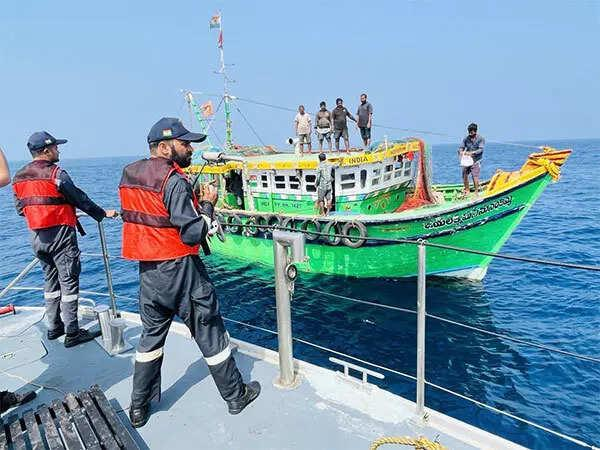
The Indian Coast Guard conducts Community Interaction Programmes (CIPs) to sensitise fishing communities and coastal populations about maritime safety and security. These programmes encourage local residents to function as the eyes and ears of the coastal security system. indiancoastguard.gov.in
Why community participation matters
- Local intelligence: Coastal communities can identify suspicious activity that may not be immediately visible to central surveillance systems.
- Early warning: Reporting unusual movements can help prevent infiltration and smuggling.
- Trust building: Regular interaction improves cooperation between security agencies and local populations.
- Livelihood-sensitive security: Security measures become more effective when they account for the needs of fishing communities.
However, community-based surveillance should not result in indiscriminate suspicion or harassment of legitimate fishermen. Clear reporting mechanisms, identity verification and awareness programmes are necessary.
7. Sea Vigil-26: Assessing India’s coastal defence preparedness
The fifth edition of Sea Vigil-26 is being conducted from 11 to 19 November 2026. The Indian Navy is coordinating the exercise as the lead agency.
7.1 Background
Sea Vigil was conceptualised in 2018 to validate the measures introduced to strengthen India’s maritime security following the 26/11 Mumbai terror attacks.
It is a pan-India exercise covering the entire coastline and the EEZ, involving coastal States and Union Territories, multiple central agencies and coastal communities. Press Information Bureau
7.2 Two phases of Sea Vigil-26
| Phase | Dates | Purpose |
|---|---|---|
| Coastal Defence and Security Readiness Evaluation (CDSRE) | 11–17 November 2026 | Evaluate the preparedness of coastal security institutions and systems |
| Sea Phase | 18–19 November 2026 | Assess operational readiness and maritime response capabilities |
The exercise involves assets of the Indian Navy, Indian Coast Guard, Coastal Security Police, Customs and other maritime agencies. It is facilitated by several ministries, including Defence, Home Affairs, Ports, Shipping and Waterways, Petroleum and Natural Gas, and Fisheries, Animal Husbandry and Dairying. Press Information Bureau
7.3 Significance of Sea Vigil-26
First, it tests institutional coordination. Coastal security involves multiple ministries, State governments, armed forces, law-enforcement bodies and private maritime stakeholders. An exercise of this scale tests whether they can work together.
Second, it evaluates surveillance effectiveness. It provides an opportunity to assess whether radar networks, vessel tracking systems, communication mechanisms and intelligence-sharing arrangements can detect suspicious maritime activity.
Third, it assesses response preparedness. The ability to identify a threat is insufficient unless the concerned agency can respond quickly and effectively.
Fourth, it incorporates coastal communities. The involvement of fishing and coastal communities recognises their importance in local intelligence and early warning.
Fifth, it links coastal defence with broader maritime operations. Sea Vigil serves as a build-up to the Indian Navy’s biennial Theatre Level Readiness Operational Exercise (TROPEX). Together, the two exercises cover the spectrum of maritime security challenges, from coastal defence to operations on the high seas. Press Information Bureau
7.4 Sea Vigil and TROPEX: Difference
| Parameter | Sea Vigil | TROPEX |
|---|---|---|
| Primary focus | Coastal defence and security preparedness | Theatre-level operational readiness |
| Main geographical emphasis | Entire coastline and EEZ | Wider maritime operational environment |
| Core concern | Coastal threats, infiltration and inter-agency coordination | High-end naval operations and maritime warfare preparedness |
| Relationship | Builds up to TROPEX | Tests broader operational readiness |
The two exercises are complementary rather than interchangeable.
8. Emerging threats to India’s coastal security
Despite institutional improvements, India’s coastal security framework faces several evolving challenges.
8.1 Maritime terrorism
Terrorist organisations may exploit small vessels, fishing routes, isolated landing points and gaps in surveillance to infiltrate coastal areas.
The 26/11 attacks remain a reminder that even a limited number of infiltrators can cause severe damage when security arrangements fail.
8.2 Narcotics and arms smuggling
Maritime routes are used for the movement of narcotics, weapons and other contraband. The vastness of the maritime domain and the volume of legitimate commercial and fishing activity make detection difficult.
8.3 Illegal, Unreported and Unregulated (IUU) fishing
IUU fishing threatens marine resources, undermines the livelihoods of legitimate fishing communities and can create enforcement challenges in maritime zones.
It may also involve violations of maritime boundaries and conflicts between fishing vessels.
8.4 Cyber threats to maritime infrastructure
Ports, shipping companies, logistics systems and vessel traffic management infrastructure increasingly depend on digital networks.
Cyberattacks can disrupt port operations, compromise sensitive information and affect supply chains. The digitalisation of maritime infrastructure therefore creates a new dimension of coastal security.
8.5 Protection of critical maritime infrastructure
India must protect:
- Major and minor ports.
- Naval and Coast Guard installations.
- Offshore oil and gas platforms.
- Petroleum terminals and LNG facilities.
- Undersea communication cables.
- Shipyards and coastal industrial clusters.
Disruption of these assets can have consequences extending far beyond the immediate coastal area.
8.6 Climate change and disaster-related vulnerabilities
Coastal erosion, cyclones, storm surges and rising sea levels can affect coastal settlements and infrastructure. They may also disrupt surveillance facilities and maritime operations.
Security agencies must therefore integrate disaster preparedness and climate resilience into coastal security planning.
9. Key challenges in India’s coastal security framework
The existence of institutions and infrastructure does not automatically guarantee effective security.
| Challenge | Implication |
|---|---|
| Fragmented institutional responsibilities | Delays in decision-making and response |
| Inadequate capacity of some Marine Police units | Weak last-mile coastal surveillance |
| Technology gaps | Blind spots in maritime monitoring |
| Difficulties in identifying small vessels | Potential misuse of fishing routes |
| Intelligence-sharing limitations | Incomplete maritime threat assessment |
| Limited community engagement | Loss of valuable local intelligence |
| Cyber vulnerabilities | Risk to ports and digital maritime systems |
| Infrastructure and manpower constraints | Uneven security preparedness across coastal regions |
A particularly important concern is the last-mile implementation gap. Sophisticated national-level surveillance networks cannot substitute for adequately trained and equipped personnel at local coastal police stations.
10. Way forward: Towards an integrated coastal security framework
India needs to move from a system based primarily on surveillance and patrolling towards a comprehensive framework built around prevention, detection, coordination, response and resilience.
10.1 Strengthen coastal police capabilities
- Ensure adequate boats, communication equipment and maintenance facilities.
- Provide specialised maritime training to coastal police personnel.
- Improve coordination between Marine Police and the Coast Guard.
- Strengthen coastal police stations and operational centres.
- Conduct regular audits of local security infrastructure.
10.2 Build an integrated maritime information system
India should further integrate radar, AIS, LRIT, satellite-based surveillance, port monitoring and intelligence inputs.
A common operational picture can improve threat assessment and reduce duplication of effort.
10.3 Improve intelligence coordination
- Strengthen coordination among intelligence agencies, Navy, Coast Guard and State Police.
- Improve information exchange through established maritime coordination mechanisms.
- Establish clear protocols for reporting and responding to suspicious activity.
- Conduct regular joint exercises to test these protocols.
10.4 Expand community-based security
- Strengthen Community Interaction Programmes.
- Improve awareness among fishermen regarding vessel registration and reporting procedures.
- Provide accessible communication channels for reporting suspicious activity.
- Ensure that legitimate fishing activity is not unnecessarily disrupted.
10.5 Protect critical maritime infrastructure
Ports, offshore installations, energy terminals and undersea communication infrastructure require risk-based security assessments.
Cybersecurity audits, physical protection, emergency response plans and regular exercises should form part of an integrated framework.
10.6 Strengthen regional maritime cooperation
Maritime threats often cross national boundaries. India should deepen cooperation with neighbouring countries through:
- Information-sharing arrangements.
- Joint maritime patrols and exercises.
- Search and rescue cooperation.
- Anti-smuggling operations.
- Maritime domain awareness initiatives.
- Cooperation through regional platforms such as the Indian Ocean Rim Association (IORA) and BIMSTEC.
10.7 Integrate coastal security with disaster management
Coastal security agencies should work closely with disaster management authorities to ensure continuity of surveillance and response during cyclones, floods and other emergencies.
11. Conclusion
India’s coastal security framework has undergone significant transformation since the 26/11 Mumbai attacks. The establishment of a multi-tiered security arrangement, strengthening of the Coast Guard and Marine Police, expansion of surveillance infrastructure and development of inter-agency coordination mechanisms represent important institutional advances.
However, the maritime domain is dynamic. New threats involving cyberattacks, organised crime, maritime terrorism and attacks on critical infrastructure require continuous adaptation.
Sea Vigil-26 should therefore be viewed not merely as a national-level exercise, but as an opportunity to evaluate the effectiveness of India’s entire coastal security architecture.
Ultimately, a secure coastline requires more than naval strength. It requires capable local institutions, reliable technology, effective intelligence coordination, regional cooperation and the active participation of coastal communities.
India must seek to build a coastal security system that is integrated, technology-enabled, intelligence-driven and community-oriented.
12. UPSC examination perspective
GS Paper III – Internal Security
- Role of external state and non-state actors in creating challenges to internal security.
- Linkages between organised crime and terrorism.
- Security challenges and their management in border areas.
- Coastal security challenges and their management.
- Role of communication networks in internal security.
Important prelims facts
| Term | Significance |
|---|---|
| Sea Vigil | Pan-India coastal defence exercise |
| Sea Vigil-26 | Fifth edition, 11–19 November 2026 |
| Indian Navy | Lead agency coordinating Sea Vigil-26 |
| TROPEX | Theatre Level Readiness Operational Exercise |
| NCSMCS | Apex coordination and review mechanism for maritime and coastal security |
| CSN | Coastal Surveillance Network |
| AIS | Automatic Identification System |
| LRIT | Long Range Identification and Tracking |
| NC3I | National Command, Control, Communication and Intelligence Network |
| JOCs | Joint Operations Centres at Mumbai, Visakhapatnam, Kochi and Port Blair |
| Coastal Security Scheme | Ministry of Home Affairs scheme to strengthen State and UT Marine Police infrastructure |
Mains practice questions
Question 1. The 26/11 Mumbai terror attacks exposed critical weaknesses in India’s coastal security architecture. Examine the institutional and technological reforms undertaken since then. What further measures are necessary?
Question 2. Maritime security is no longer confined to naval preparedness. Discuss the role of inter-agency coordination, technological surveillance and coastal communities in strengthening India’s coastal security.
Question 3. Examine the significance of Exercise Sea Vigil-26 in evaluating India’s preparedness against emerging maritime security threats.
Suggested answer-writing structure
For a 250-word answer on coastal security:
- Introduce India’s maritime geography and strategic importance.
- Explain the vulnerabilities exposed by 26/11.
- Discuss the three-tier coastal security architecture.
- Analyse institutional and technological measures.
- Identify implementation gaps and emerging threats.
- Conclude with an integrated, community-oriented approach.
External references
- PIB – Sea Vigil-26: Fifth Edition of Pan-India Coastal Defence Exercise.
- Indian Coast Guard – Coastal Security.
- Ministry of Home Affairs – Coastal Security Scheme.
- PIB – Measures to Enhance Coastal Security.