

Comprehensive UPSC Prelims and Mains Analysis
1. Terrorist Attack in Kulgam: Challenges to Internal Security in Jammu and Kashmir
GS Paper III – Internal Security | Terrorism | Border Management
The development
Three personnel of the Central Reserve Police Force (CRPF) were injured in a terrorist attack at a checkpoint in Kulgam district of south Kashmir on November 11.
The attack occurred around 2:15 p.m., when terrorists opened fire at close range on CRPF personnel belonging to the 46th Battalion.
One of the injured personnel was reported to be in critical condition and was airlifted to Srinagar for specialised treatment.
Security forces intensified search operations in the area to identify and apprehend the attackers.
Strategic significance
The incident highlights the continuing security challenges in Jammu and Kashmir despite sustained counterterrorism operations.
Important dimensions include:
1. Targeting of security installations: Checkpoints and security personnel remain vulnerable to sudden attacks, particularly in areas where terrorists can exploit local terrain and mobility.
2. Tactical changes: The possibility of attackers using motorcycles or other vehicles highlights the need for effective surveillance, intelligence gathering and rapid-response mechanisms.
3. Security of public events: The attack occurred on a day when the Lieutenant-Governor was scheduled to attend an event in the district, highlighting the importance of layered security arrangements.
4. Local intelligence: Effective counterterrorism requires cooperation between intelligence agencies, local police and central armed police forces.
Measures required
- Strengthen human intelligence networks.
- Improve technological surveillance in vulnerable areas.
- Enhance coordination between the J&K Police, CRPF and other security agencies.
- Improve protection of checkpoints and vulnerable installations.
- Strengthen community participation in counterterrorism.
- Combine security operations with development and political engagement.
Conclusion: Counterterrorism in Jammu and Kashmir requires a comprehensive strategy combining intelligence-led operations, technological capabilities, community confidence and effective governance.
Mains question: Despite improvements in the security situation, Jammu and Kashmir continues to face sporadic terrorist attacks. Examine the challenges and suggest measures to strengthen the counterterrorism framework.
2. Ladakh: Restrictions on Protests Ahead of Local Body Elections
GS Paper II – Federalism | Local Governance | Democratic Rights
The development
The Chief Electoral Officer of Ladakh prohibited protests within the municipal limits of Leh and Kargil ahead of local body elections scheduled between November 21 and December 4.
The order cited the Model Code of Conduct and the need to maintain an atmosphere conducive to free and fair elections.
The decision came amid demands by civil society groups for the resumption of dialogue with the Union government and postponement of hill council elections.
The Leh Apex Body (LAB) called for peaceful agitation beginning November 12.
Its demands include:
- Resumption of talks with the Union government.
- Disclosure of the status of the judicial inquiry into the September 2025 violence in Leh, which resulted in four deaths.
- Postponement of hill council elections.
- Greater democratic safeguards for Ladakh.
Ladakh was constituted as a Union Territory in 2019 following the reorganisation of the erstwhile State of Jammu and Kashmir.
Why is Ladakh demanding greater safeguards?
The concerns involve political representation, institutional autonomy, protection of land and employment interests, and preservation of the region’s distinctive cultural and ecological character.
The demand for constitutional safeguards has been an important dimension of political mobilisation in Ladakh.
Constitutional and governance dimensions
The issue raises questions concerning:
- The relationship between the Union government and Union Territories.
- Democratic representation in regions without a State legislature.
- The role of autonomous hill councils.
- The relationship between public order and freedom of peaceful assembly.
- The need for institutional consultation in geographically and culturally distinct regions.
Articles 19(1)(a) and 19(1)(b) guarantee freedom of speech and expression and the right to assemble peacefully and without arms, subject to reasonable restrictions under the Constitution.
The Model Code of Conduct seeks to ensure that electoral processes remain free from intimidation and undue influence. However, restrictions on public activity must also satisfy applicable legal and constitutional requirements.
Way forward
- Resume structured dialogue between the Union government and Ladakh’s representative organisations.
- Strengthen local democratic institutions.
- Ensure transparent investigation into past incidents.
- Address legitimate concerns regarding land, employment and cultural protection.
- Ensure that restrictions during elections remain proportionate and legally justified.
Mains question: Discuss the governance challenges associated with the administration of Union Territories without legislatures, with particular reference to Ladakh.
3. Karnataka’s SC/ST Reservation Enhancement: Constitutional Limits on Reservation
GS Paper II – Constitution | Social Justice | Reservation Policy
The development
The Karnataka government has filed a Special Leave Petition (SLP) before the Supreme Court challenging the Karnataka High Court’s decision to quash the enhancement of reservation for Scheduled Castes and Scheduled Tribes.
The State had increased:
- Scheduled Caste reservation from 15% to 17%.
- Scheduled Tribe reservation from 3% to 7%.
The High Court struck down the relevant provisions of the Karnataka legislation on October 12, 2026.
Its reasoning was that the enhancement took total reservation to 56%, exceeding the 50% ceiling laid down in the Supreme Court’s 1992 judgment in Indra Sawhney v. Union of India.
The existing reservation distribution in Karnataka was:
| Category | Reservation |
|---|---|
| Scheduled Castes | 15% |
| Scheduled Tribes | 3% |
| Other Backward Classes | 32% |
| Total | 50% |
The State government intends to continue pursuing the matter, including its demand for placing the legislation in the Ninth Schedule.
Constitutional background
Article 15(4): Enables special provisions for the advancement of socially and educationally backward classes and SCs and STs.
Article 15(5): Enables special provisions relating to admission to educational institutions, subject to constitutional exceptions.
Article 16(4): Permits reservation in public employment for backward classes inadequately represented in State services.
Article 16(4A): Enables reservation in promotion for SCs and STs under specified conditions.
The 50% ceiling
In Indra Sawhney (1992), the Supreme Court upheld 27% reservation for OBCs in central government employment and established the general principle that reservations should ordinarily not exceed 50%, subject to exceptional circumstances.
The issue demonstrates the constitutional tension between:
- Ensuring adequate representation of historically disadvantaged communities.
- Maintaining equality of opportunity.
- Respecting constitutional limitations.
- Providing a sound empirical basis for reservation policies.
The Ninth Schedule question
Article 31B protects laws placed in the Ninth Schedule from certain constitutional challenges.
However, the Supreme Court’s decision in I.R. Coelho v. State of Tamil Nadu (2007) established that laws inserted into the Ninth Schedule after April 24, 1973, can be reviewed if they violate the basic structure of the Constitution.
Therefore, inclusion in the Ninth Schedule does not automatically provide absolute immunity from judicial review.
Way forward
Reservation policy should be based on reliable data concerning social backwardness, representation and historical disadvantage.
States must ensure that affirmative-action measures satisfy constitutional requirements and are supported by appropriate legislative and empirical justification.
Mains question: Examine the constitutional and judicial framework governing reservation in India. Discuss the challenges involved in balancing adequate representation with the principle of equality.
4. Artificial Intelligence and the Crisis of Reliable Knowledge
GS Paper III – Science and Technology | AI Governance | GS IV – Ethics
The editorial: Visions of the Future
The editorial discusses the growing difficulty of distinguishing reliable information from misleading content in an environment increasingly influenced by artificial intelligence.
AI systems have accelerated the production and dissemination of information, but they have also enabled malicious actors to circulate questionable claims across research platforms and public communication channels.
The editorial uses the 2026 Booker Prize awarded to M. John Harrison for The End of Everything as an entry point to discuss society’s anxiety over AI and the future of human understanding.
Major concerns
1. Information disorder
Generative AI can produce large quantities of convincing but inaccurate content.
This can undermine the credibility of research, journalism and public communication.
2. Declining attention and critical thinking
The continuous circulation of information can make it difficult for individuals to distinguish important facts from irrelevant or misleading claims.
3. Concentration of technological power
A small number of companies increasingly influence the development and deployment of advanced AI systems.
This raises questions about public accountability and the distribution of technological benefits.
4. Economic speculation
The editorial refers to the proposed valuation of Anthropic at $1.4 trillion, highlighting the speculative expectations surrounding future AI demand.
5. Human intellectual contribution
The use of AI to solve complex mathematical problems raises a larger question: should technological progress be evaluated only by computational achievement, or also by its contribution to human education, research and collective knowledge?
Implications for democracy
The quality of democratic decision-making depends on citizens having access to reliable information.
AI-generated misinformation can influence:
- Electoral behaviour.
- Public opinion.
- Social relations.
- Scientific understanding.
- Institutional credibility.
- Public policy debates.
Way forward
- Develop robust AI accountability frameworks.
- Strengthen independent fact-checking.
- Promote digital and media literacy.
- Improve transparency in AI-generated content.
- Encourage responsible AI research.
- Preserve human oversight in high-impact decisions.
- Strengthen public-interest research and education.
Conclusion: The central challenge of AI governance is not merely controlling technology but ensuring that technological progress strengthens human understanding, democratic deliberation and public accountability.
Mains question: Artificial intelligence has increased the availability of information while simultaneously creating challenges to the credibility of knowledge. Critically examine.
5. Maharashtra’s Gokul Dairy Controversy: Executive Power and Cooperative Democracy
GS Paper II – Governance | Cooperative Federalism | Democratic Institutions
The development
An editorial titled Milking Power examines the controversy surrounding the takeover of the Kolhapur District Cooperative Milk Producers’ Union, popularly known as Gokul Dairy.
The controversy followed an amendment to the Maharashtra Cooperative Societies Act through an ordinance promulgated on November 6.
The Congress-led panel had won 13 of the 25 elected seats on the cooperative’s board on October 19.
Subsequently, the State government nominated directors to the board under the amended law.
Four of the nominated directors had voting rights. Their participation changed the effective balance of power, enabling the BJP and its allies to secure the chairmanship.
The cooperative has an annual turnover of approximately ₹4,000 crore and is connected with several lakh milk producers in western Maharashtra.
Why are cooperatives important?
Cooperatives are member-owned institutions based on collective economic participation.
They are particularly important in:
- Dairy production.
- Agricultural marketing.
- Rural credit.
- Sugar production.
- Consumer services.
- Rural employment generation.
Constitutional framework
The 97th Constitutional Amendment introduced important provisions concerning cooperative societies.
Article 19(1)(c): Includes the right to form cooperative societies.
Article 43B: Directs the State to promote voluntary formation, autonomous functioning, democratic control and professional management of cooperative societies.
Part IXB: Contains provisions concerning cooperative societies, subject to the constitutional position clarified by the Supreme Court.
In Union of India v. Rajendra N. Shah (2021), the Supreme Court held that Part IXB, insofar as it governed cooperative societies operating within individual States, required ratification by at least half the State legislatures. It retained its applicability to multi-State cooperative societies and Union Territories.
Issues highlighted by the editorial
- Whether executive intervention can alter the outcome of a democratically conducted cooperative election.
- The relationship between government oversight and cooperative autonomy.
- The implications of political control over economically significant cooperative institutions.
- The role of courts in protecting democratic principles.
Way forward
Cooperatives must retain democratic control by their members.
Government intervention should be limited to legitimate regulatory objectives, financial accountability and institutional integrity.
Mains question: Examine the role of cooperatives in India’s rural economy. Discuss the importance of preserving democratic autonomy in cooperative institutions.
6. Tamil Nadu’s Industrial Growth and the Challenge of Water Security
GS Paper III – Indian Economy | Infrastructure | Environment
The editorial analysis
Tamil Nadu is among India’s leading industrial investment destinations. However, the State faces a growing conflict between industrial expansion and the availability of water resources.
According to NITI Aayog’s Investment Friendliness Index released in July 2026, Tamil Nadu ranked third, behind Gujarat and Maharashtra.
The State has a diversified industrial base, skilled workforce and a substantial manufacturing ecosystem.
However, the editorial identifies industrial water availability as a major constraint.
Important data
| Indicator | Reported figure |
|---|---|
| Tamil Nadu’s share of India’s water resources | 3% |
| Average annual rainfall | 960 mm |
| Surface water potential | 853 TMC |
| Annual groundwater recharge, 2025 | 22.61 BCM |
| Annual extractable groundwater resource | 20.46 BCM |
| Groundwater extraction | 15.04 BCM |
| Groundwater extraction as a share of extractable resource | 73.5% |
| Industrial water demand in 2001 | 1,555 MCM |
| Projected industrial water demand in 2050 | 1,985 MCM |
The article notes that the State-wide average conceals considerable regional differences.
Industrial districts such as Salem, Vellore and Chennai are classified as over-exploited, while Krishnagiri and Coimbatore fall in the critical category.
Why is this significant?
Water is an essential production input for several industries:
- Textiles.
- Automobile manufacturing.
- Power generation.
- Food processing.
- Chemicals.
- Electronics.
Water scarcity can increase operating costs, disrupt production and discourage new investments.
It also creates competition between industrial, agricultural and domestic water requirements.
Zero Liquid Discharge
The editorial discusses Zero Liquid Discharge (ZLD) systems as an important industrial water-management strategy.
ZLD systems aim to recover and reuse wastewater, minimising the discharge of liquid waste into the environment.
The article cites the Tiruppur textile cluster as an example of the use of such systems.
However, high installation and operational costs can create difficulties for smaller industrial units.
Policy recommendations
- Introduce water pricing that reflects local availability and scarcity.
- Expand wastewater recycling and treatment.
- Promote ZLD systems.
- Strengthen groundwater regulation.
- Improve industrial water infrastructure.
- Integrate renewable energy with desalination and wastewater treatment.
- Ensure adequate budgetary allocation for water management.
- Incorporate water availability into industrial investment planning.
Constitutional relevance
Water is primarily a State subject under Entry 17 of the State List, subject to the Union’s powers under Entry 56 of the Union List concerning inter-State rivers and river valleys.
Article 21 has also been interpreted to encompass the right to access clean water as part of the right to life.
Conclusion: Water security must be treated as essential economic infrastructure. Industrial competitiveness and sustainable water management must be planned together.
Mains question: Industrial development in water-stressed regions requires a shift from resource-intensive growth to resource-efficient growth. Discuss with reference to Tamil Nadu.
7. Turning Battery Waste into Strategic Mineral Wealth
GS Paper III – Science and Technology | Environment | Critical Minerals
The development
An important opinion article examines India’s opportunity to recover critical minerals from discarded lithium-ion batteries.
The article argues that recycling can become an important source of strategic minerals and reduce India’s dependence on imports.
This issue assumes additional significance in the context of the Directorate General of Foreign Trade’s decision to prohibit exports of specified lithium-ion battery waste and black mass.
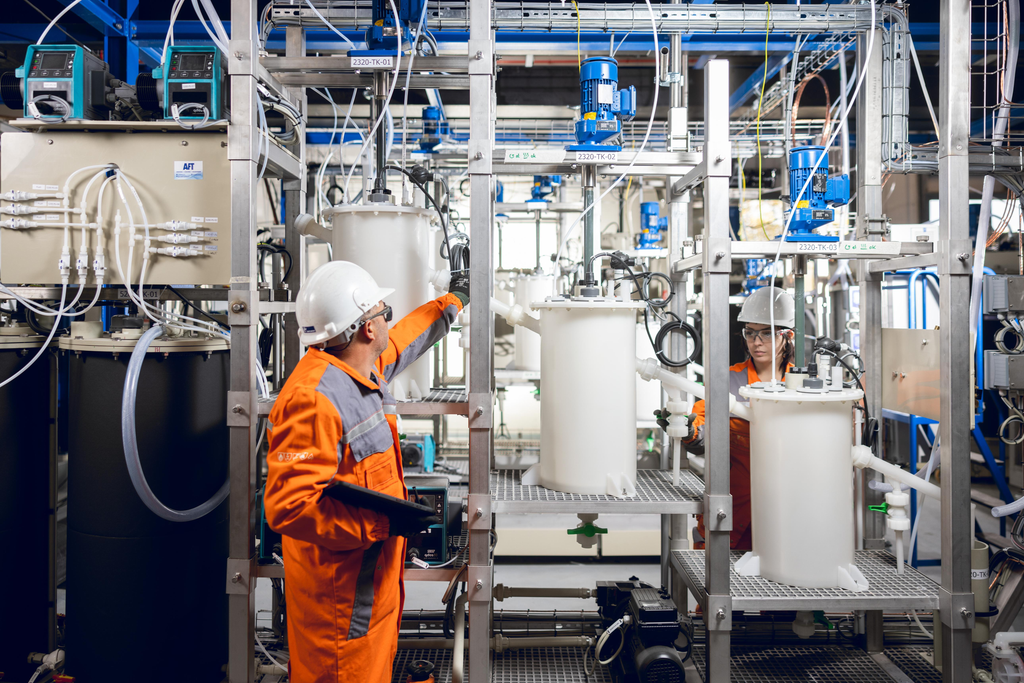
What is black mass?
Black mass is a powdered mixture obtained during the recycling of lithium-ion batteries.
It contains economically valuable materials, including:
- Lithium.
- Nickel.
- Cobalt.
- Manganese.
- Graphite.
These materials are essential for battery manufacturing, electric vehicles, electronics and renewable energy storage.
Why is battery recycling important?
1. Reducing import dependence
China dominates several stages of critical mineral processing. India remains dependent on imports for important battery materials.
Domestic recycling can provide an additional source of supply.
2. Circular economy
Instead of treating discarded batteries as waste, recycling converts them into valuable industrial inputs.
3. Environmental protection
Improper disposal of batteries can create environmental and public-health risks.
4. Industrial development
A domestic battery-recycling industry can create employment, attract investment and develop advanced material-processing capabilities.
Important figures reported
- More than 8.7 million electric vehicles were operating on Indian roads by FY 2025–26, according to the article.
- Recycling could potentially meet around 10–12% of India’s lithium demand for EV battery manufacturing.
- Formal recycling facilities reportedly achieve material recovery rates exceeding 90%, compared with approximately 10–20% through informal methods.
Battery Waste Management Rules, 2022
The rules provide a regulatory framework based on Extended Producer Responsibility (EPR).
Under EPR, producers are assigned responsibility for ensuring the environmentally sound management of products after their useful life.
The framework encourages collection, recycling and recovery of battery materials.
Challenges
- Inadequate battery collection networks.
- Dominance of informal recycling.
- High investment costs.
- Diverse battery chemistries.
- Technological limitations in mineral recovery.
- Lack of standardisation.
- Uncertain availability of end-of-life batteries.
Recommended strategy
The article proposes a holistic approach:
- Include recycled minerals in strategic critical-mineral planning.
- Strengthen research and development in recycling technologies.
- Establish standards for recycled mineral quality.
- Improve battery collection and take-back mechanisms.
- Encourage EV manufacturers to establish buy-back arrangements.
- Provide patient capital to recycling enterprises.
- Promote design for recycling and second-life battery applications.
Conclusion: India’s energy transition should incorporate circularity from the beginning. Battery recycling can provide a supplementary source of critical minerals while strengthening domestic industrial capabilities.
Mains question: Discuss the significance of battery recycling in India’s quest for critical mineral security and a circular economy.
8. Air Pollution in India: Beyond the Stubble-Burning Narrative
GS Paper III – Environment | Pollution Control | Public Health
The development
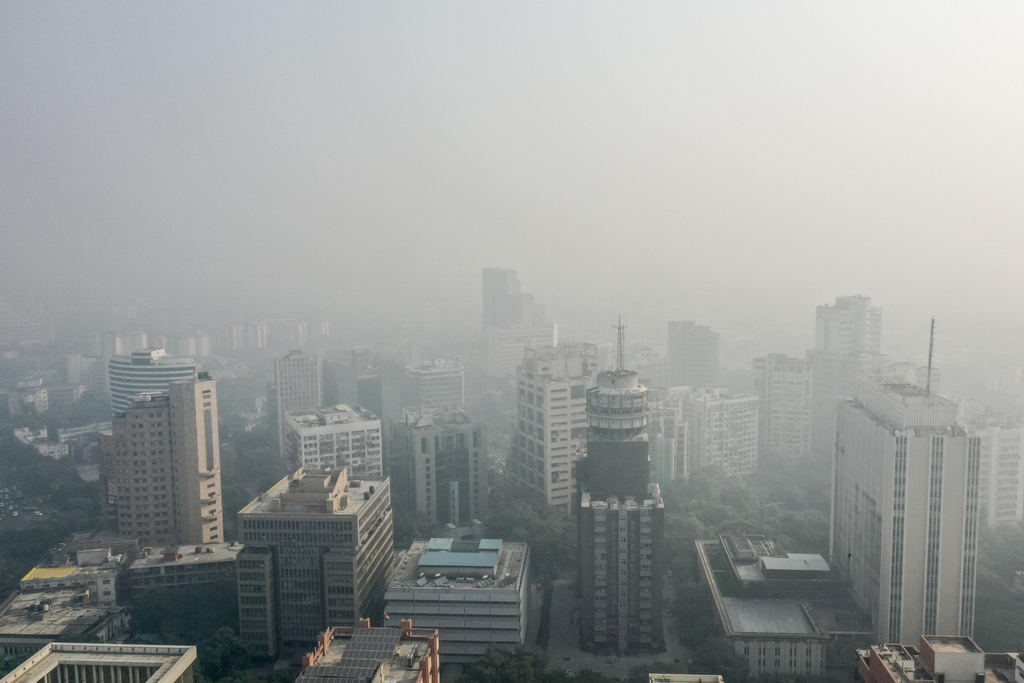
Delhi’s air pollution continues to be a major public-health concern.
According to the newspaper, the city’s 24-hour average Air Quality Index stood at 313 on November 11, placing it in the very poor category.
The Centre for Science and Environment (CSE) released an analysis showing that air pollution levels during the early winter of 2026 were higher than in recent years.
Important findings
The analysis found:
- Average PM2.5 concentration in the week preceding Deepavali reached 236 micrograms per cubic metre.
- This was 97% higher than the 120 micrograms recorded in 2025.
- It was 32% higher than the 179 micrograms recorded in 2024.
- The study highlighted the contribution of transport emissions, construction dust and other urban sources.
Another important finding concerns pollution-monitoring data.
Nearly 70% of the 634 continuous ambient air-quality monitoring stations in the CPCB network recorded peak PM2.5 readings in the severe category of 250 micrograms per cubic metre or above during Deepavali.
The article also reports that several monitoring stations stopped reporting PM2.5 values during the period.
Why should India move beyond the stubble-burning narrative?
Crop-residue burning is an important seasonal contributor to air pollution in northern India.
However, it is not the only source.
Other major contributors include:
| Source | Major pollutants |
|---|---|
| Road transport | PM2.5, nitrogen oxides |
| Thermal power plants | SO2, NOx and particulate matter |
| Industries | Particulate matter and gaseous pollutants |
| Construction | Dust and particulate matter |
| Waste burning | Fine particles and toxic gases |
| Agricultural activities | Ammonia and seasonal emissions |
The Supreme Court has also observed that vehicular emissions and industrial pollution need to be examined alongside stubble burning.
Data transparency
A particularly important issue is the reported capping of particulate matter readings at 1,000 micrograms per cubic metre.
Experts have argued that actual peak values should be made publicly available rather than creating gaps in the monitoring data.
Reliable monitoring is essential for effective environmental governance.
GRAP
The Graded Response Action Plan is an emergency framework for controlling air pollution in Delhi-NCR.
It provides progressively stricter measures depending on the severity of air pollution.
The newspaper also reports that schools up to Grade 5 in Noida and Ghaziabad were directed to conduct classes in hybrid mode following the implementation of Stage III of GRAP.
Way forward
- Adopt airshed-based pollution management.
- Strengthen public transport.
- Reduce vehicular emissions.
- Enforce industrial emission standards.
- Improve construction-dust management.
- Develop scientific crop-residue utilisation mechanisms.
- Improve transparency in pollution monitoring.
- Strengthen coordination among NCR governments.
Conclusion: Air pollution must be addressed as a year-round structural problem rather than a seasonal crisis. Scientific measurement, transparent data and coordinated action are essential.
Mains question: Air pollution in northern India is a multi-source environmental crisis requiring an integrated regional approach. Discuss.
9. India Simplifies Its Visa Regime
GS Paper II – Governance | GS III – Economy | Ease of Doing Business
The development
The Ministry of Home Affairs has simplified India’s visa framework by reducing the number of major visa categories from 13 to nine.
The application forms have also been made shorter, with the number of required fields reduced by approximately 65–70%.
The Tourist Visa has been renamed the Visitor Visa to accommodate a wider range of permitted travel purposes.
A specific Production Investment Business Visa provision has also been created for foreign technical specialists and personnel involved in production-related activities.
These activities include:
- Installation and commissioning.
- Quality checks.
- Essential maintenance.
- Production and IT support.
- Training.
- Supply-chain development.
- Plant design.
- Transfer of technical knowledge.
Background
The reform follows an earlier rationalisation in October 2025, when the number of major visa categories was reduced from 22 to 13.
The August 2026 reform further reduced the number from 13 to nine.
The e-visa facility is available to nationals of 172 countries through electronic travel authorisation.
Economic significance
Visa simplification can improve India’s attractiveness as an investment destination.
Foreign investors frequently require access to specialised engineers, consultants and technical personnel.
A simpler visa framework can:
- Reduce administrative delays.
- Facilitate foreign investment.
- Improve international business mobility.
- Support technology transfer.
- Facilitate industrial installation and commissioning.
- Improve India’s integration into global production networks.
Balancing facilitation and security
Simplifying visa procedures should not weaken immigration security.
The government must continue to ensure:
- Identity verification.
- Appropriate background checks.
- Monitoring of visa compliance.
- Effective coordination among immigration and security agencies.
Mains question: Examine the role of immigration and visa reforms in improving India’s investment climate and integration into global value chains.
10. Fertiliser Subsidy: Rising Fiscal Burden and Agricultural Sustainability
GS Paper III – Indian Economy | Agriculture | Public Finance
The development
The Union Cabinet approved a fertiliser subsidy of ₹62,370.02 crore for the Rabi season of 2026–27.
This represents an increase of ₹24,417.73 crore over the ₹37,952 crore budgeted for the Rabi season of 2025–26.
The newspaper reports that the fertiliser subsidy requirement has increased substantially because of higher international prices of fertilisers and liquefied natural gas (LNG).
Important figures
| Indicator | Amount |
|---|---|
| Rabi 2026–27 subsidy approved | ₹62,370.02 crore |
| Rabi 2025–26 budget allocation | ₹37,952 crore |
| Kharif 2026 subsidy allocation | ₹41,533.81 crore |
| Total fertiliser subsidy budgeted for FY27 | ₹1.71 lakh crore |
| Total fertiliser subsidy in FY26 | ₹1.86 lakh crore |
The newspaper notes that the overall subsidy expenditure could significantly exceed the budgetary estimate if international prices remain elevated.
Why does India subsidise fertilisers?
Fertilisers are essential agricultural inputs.
Subsidies seek to:
- Make fertilisers affordable.
- Protect farmers from international price volatility.
- Maintain agricultural productivity.
- Support food security.
- Stabilise agricultural input costs.
The fiscal challenge
An increase in international fertiliser prices can raise the subsidy burden even without a corresponding increase in physical consumption.
This creates pressure on government expenditure and fiscal management.
The subsidy bill also becomes vulnerable to geopolitical disruptions affecting energy and fertiliser supply chains.
Nutrient imbalance
India’s fertiliser subsidy system has historically contributed to concerns regarding excessive use of certain nutrients, particularly urea.
An imbalanced application of nitrogen, phosphorus and potassium can affect:
- Soil health.
- Agricultural productivity.
- Groundwater quality.
- Long-term sustainability.
Way forward
- Promote balanced fertiliser application.
- Expand soil testing and soil-health advisory services.
- Improve fertiliser supply-chain efficiency.
- Encourage organic and biofertilisers where appropriate.
- Reduce excessive dependence on imported inputs.
- Strengthen domestic fertiliser production.
- Improve targeting and monitoring of subsidies.
Mains question: Fertiliser subsidies are important for agricultural security but create significant fiscal and environmental challenges. Critically examine.
11. Credit Guarantee Fund for Micro Units Extended Until 2031
GS Paper III – Indian Economy | Financial Inclusion | MSMEs
The development
The Union Cabinet approved the continuation of the Credit Guarantee Fund for Micro Units (CGFMU) for five years, up to March 2031.
The scheme is intended to facilitate loans of ₹12.6 lakh crore under the Pradhan Mantri Mudra Yojana.
The approved corpus is ₹5,000 crore.
What is a credit guarantee?
A credit guarantee is a mechanism through which a designated institution provides assurance to lenders against a specified portion of potential loan defaults.
It reduces the lending risk faced by financial institutions and encourages them to extend credit to borrowers who may lack conventional collateral.
Pradhan Mantri Mudra Yojana
PMMY was launched in 2015 to improve access to institutional finance for non-corporate, non-farm micro and small enterprises.
It seeks to encourage entrepreneurship and financial inclusion.
The CGFMU was launched in January 2016 and provides guarantee coverage to lending institutions through the National Credit Guarantee Trustee Company Limited.
Reported performance
As of September 2026:
- More than 60.36 crore loans had been sanctioned under PMMY.
- The total amount sanctioned was ₹43.34 lakh crore.
Significance
- Encourages collateral-free lending.
- Supports micro-enterprises.
- Promotes entrepreneurship.
- Expands formal credit access.
- Supports self-employment.
- Strengthens financial inclusion.
Challenges
Credit expansion must be accompanied by productive investment and adequate repayment capacity.
Other challenges include:
- Loan misuse.
- Multiple borrowing.
- Indebtedness.
- Inadequate business skills.
- Weak market access.
- Credit risk for lenders.
Conclusion: Credit guarantees can address the problem of information asymmetry and collateral constraints, but sustainable enterprise development requires market access, financial literacy and business support.
Mains question: Examine the role of credit guarantee mechanisms in promoting financial inclusion and entrepreneurship among India’s micro-enterprises.
12. India-France Dialogue on Economic Security and Critical Technologies
GS Paper II – International Relations | Strategic Partnerships
The development
India and France held discussions on space, critical technologies and economic security in Paris between November 9 and 10.
The talks included the inaugural India-France Economic Security and Critical Technologies Dialogue and the third Space Dialogue.
The two sides discussed:
- Supply-chain vulnerabilities.
- Critical technologies.
- Cybersecurity.
- Protection of strategic supplies.
- India-EU relations.
- Cooperation in the space sector.
The economic security dialogue was established in June 2026 during Prime Minister Narendra Modi’s visit to France.
Strategic significance
Economic security has become an important component of international relations.
Countries increasingly recognise that excessive dependence on concentrated supply chains can create strategic vulnerabilities.
India and France have complementary interests in:
- Aerospace.
- Defence.
- Nuclear energy.
- Space exploration.
- Digital technology.
- Critical minerals.
- Industrial research.
Importance for India
The partnership can help India:
- Diversify strategic technology partnerships.
- Reduce supply-chain vulnerabilities.
- Improve access to advanced technologies.
- Strengthen cybersecurity cooperation.
- Expand space-sector collaboration.
- Strengthen India’s strategic autonomy.
Mains question: Examine the emerging importance of economic security in India’s strategic partnerships, with particular reference to India-France relations.
13. Russia-Ukraine Conflict: Prisoner Exchange and Continuing Peace Negotiations
GS Paper II – International Relations | International Organisations | Humanitarian Issues
The development
Russia and Ukraine agreed in principle to a large exchange of prisoners of war following two days of U.S.-mediated talks in Abu Dhabi.
The negotiations concluded without a major breakthrough on ending the conflict.
Important unresolved issues include:
- Post-war security guarantees.
- The future of Russian-occupied Ukrainian territories.
- The role of European countries in a peace settlement.
- Long-term security arrangements.
Significance of prisoner exchanges
Prisoner exchanges are an important humanitarian confidence-building measure.
They can:
- Reduce the suffering of captured combatants.
- Build limited trust between opposing parties.
- Create opportunities for further negotiations.
- Maintain diplomatic communication during conflict.
However, humanitarian agreements do not automatically resolve the political and territorial disputes underlying a war.
Implications for India
The conflict affects India through several channels:
- Energy prices.
- Food and fertiliser supply chains.
- Defence procurement.
- International trade.
- Global geopolitical alignments.
- Relations with Russia, the United States and Europe.
India’s diplomatic position must continue to emphasise dialogue, diplomacy and respect for sovereignty and territorial integrity.
Mains question: Discuss the humanitarian and geopolitical dimensions of prisoner exchanges in contemporary armed conflicts. How can India contribute to international peace efforts?
14. COP31: UN Secretary-General Warns of Accelerating Climate Crisis
GS Paper III – Environment | Climate Change | International Conventions
The development
UN Secretary-General António Guterres warned world leaders at COP31 in Türkiye that the global response to climate change was insufficient.
He highlighted the rapid rise in emissions, global temperatures and climate-related disasters.
The summit is an important platform for negotiations on the implementation of international climate commitments.
Major challenges
- Continued dependence on fossil fuels.
- Slow implementation of emission-reduction commitments.
- Inadequate climate finance.
- Unequal vulnerability between developed and developing countries.
- Increasing frequency and intensity of climate-related disasters.
India’s position
India’s climate policy must balance three objectives:
Developmental justice: Ensuring that economic development and poverty reduction are not compromised.
Energy transition: Expanding renewable energy and improving energy efficiency.
Climate equity: Ensuring that developed countries fulfil their commitments concerning finance, technology transfer and capacity building.
Important concepts
- Mitigation: Reducing greenhouse-gas emissions or enhancing carbon sinks.
- Adaptation: Adjusting human and natural systems to actual or expected climate impacts.
- Climate finance: Financial support for mitigation and adaptation.
- Loss and damage: Addressing climate-related impacts that cannot be avoided through mitigation or adaptation alone.
Mains question: Examine the challenges facing international climate negotiations. Discuss India’s approach to balancing developmental priorities with climate commitments.
15. India Bans Export of Lithium-Ion Battery Waste and Black Mass
GS Paper III – Economy | Environment | Critical Minerals
The development
The Directorate General of Foreign Trade (DGFT) prohibited the export of specified waste and scrap of primary cells and batteries, electric accumulators and lithium-ion battery black mass.
The decision seeks to ensure that valuable mineral-bearing waste generated within India is processed domestically.
Why is this important?
Black mass contains valuable minerals such as lithium, nickel, manganese, cobalt and graphite.
These are essential for:
- Electric vehicle batteries.
- Electronics manufacturing.
- Renewable energy storage.
- Industrial battery systems.
Expected benefits
- Availability of domestic recycling feedstock.
- Better capacity utilisation of Indian recycling plants.
- Increased domestic mineral recovery.
- Reduced dependence on imported processed minerals.
- Employment generation.
- Development of the circular economy.
Important policy connection
The move should be studied alongside:
- National Critical Mineral Mission.
- Battery Waste Management Rules, 2022.
- Extended Producer Responsibility.
- Production-linked incentives.
- India’s electric mobility transition.
Mains question: Explain how recycling and domestic processing of critical minerals can strengthen India’s resource security and industrial competitiveness.
16. Proposed Regulation of Allied and Healthcare Professionals
GS Paper II – Health | Governance | Human Resource Development
The National Commission for Allied and Healthcare Professions (NCAHP) has proposed a regulatory framework for registration of allied and healthcare professionals.
The proposal provides for:
- Provisional registration.
- Competency assessment.
- Skill-upgradation opportunities.
- Supervised clinical training.
- Bridge courses.
- Minimum qualifying examinations.
- An integrated online registration system.
The NCAHP operates under the National Commission for Allied and Healthcare Professions Act, 2021.
Why is this important?
Healthcare delivery depends not only on doctors and nurses but also on a large range of allied professionals.
These include:
- Medical laboratory professionals.
- Physiotherapists.
- Medical imaging professionals.
- Occupational therapists.
- Nutrition professionals.
- Emergency and surgical technology professionals.
- Health informatics professionals.
Significance
A uniform registration system can improve:
- Professional standards.
- Patient safety.
- Accountability.
- Skill development.
- Transparency in recruitment.
- Recognition of professional qualifications.
The Commission invited stakeholder comments on the proposed regulations by December 4.
Mains question: Examine the importance of regulating allied healthcare professionals in strengthening India’s healthcare delivery system.
17. Yuge Yugeen Bharat Museum: Heritage Conservation Through Adaptive Reuse
GS Paper I – Art and Culture | GS II – Governance
The development
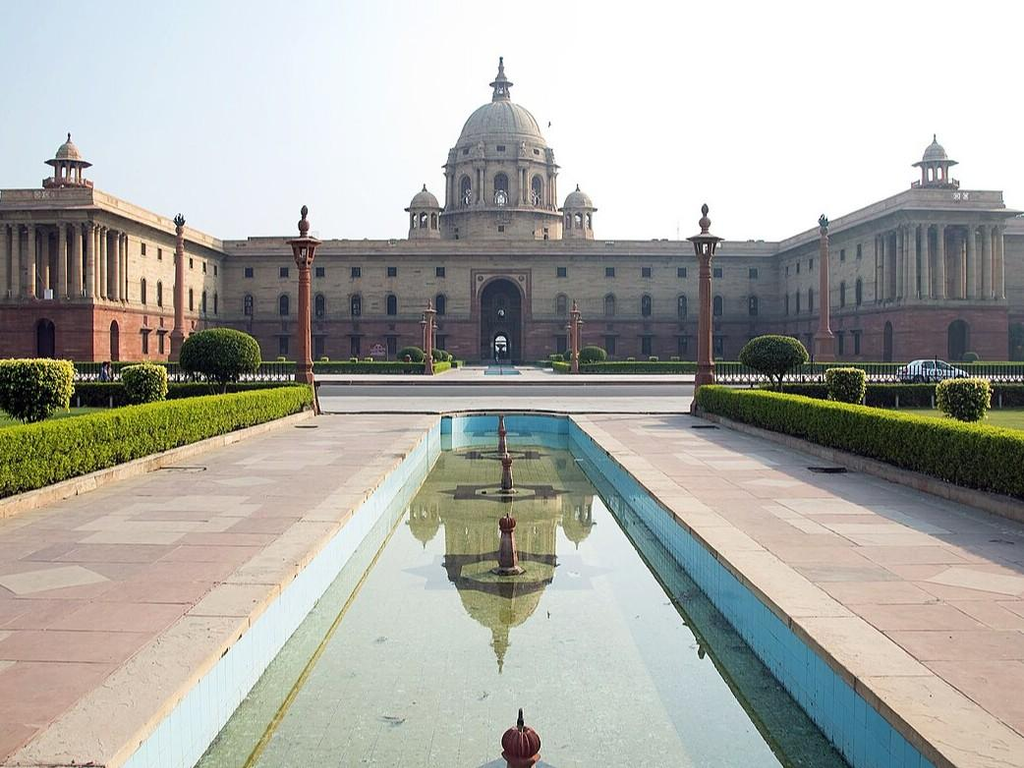
The Cabinet Committee on Economic Affairs approved a ₹3,230-crore project for developing the Yuge Yugeen Bharat Museum in the historic North and South Block buildings in New Delhi.
The project aims to transform the historic buildings into a major public cultural institution.
The proposed museum will cover approximately 1,78,509 square metres.
Around 1.8 million objects have been identified for possible display from the National Museum, ASI site museums, State museums and private collections.
The project will be implemented between FY 2026–27 and FY 2030–31.
The first gallery, focusing on the theme of adornment, is expected to open in the latter half of 2027.
Important themes
The museum is expected to showcase:
- Architecture and cityscapes.
- Mathematics and astronomy.
- Languages and scripts.
- Faith and spirituality.
- Trade and ideas.
- Cultural traditions.
- Knowledge systems.
Adaptive reuse
Adaptive reuse refers to the process of giving an existing building a new functional purpose while retaining its architectural and heritage significance.
It can help conserve historic structures while making them useful for contemporary public purposes.
Significance
- Heritage preservation.
- Cultural education.
- Tourism development.
- Public access to museum collections.
- Promotion of India’s civilisational heritage.
- Integration of digital and immersive technologies.
Mains question: Discuss the role of museums and heritage institutions in preserving India’s tangible and intangible cultural heritage.
18. INS Betwa to Undergo Refit and Repowering
GS Paper III – Defence Technology | Indigenisation | Maritime Security
The Ministry of Defence signed a contract worth ₹498.58 crore with Cochin Shipyard Limited for the refit and repowering of INS Betwa.
INS Betwa is a Brahmaputra-class guided-missile frigate.
The project includes replacing its existing steam-based propulsion system with diesel-engine-based propulsion and upgrading its combat capabilities.
The project is expected to involve more than 50 MSMEs.
Significance
- Modernisation of naval platforms.
- Strengthening domestic ship-repair capabilities.
- Development of indigenous engineering capacity.
- Participation of MSMEs in defence manufacturing.
- Employment generation.
- Support for Aatmanirbhar Bharat.
Mains question: Examine the importance of indigenous defence manufacturing and maintenance capabilities in strengthening India’s maritime security.
19. Swachh Survekshan 2025–26: Navi Mumbai Tops the Cleanliness Rankings
GS Paper II – Urban Governance | GS III – Environment
The results of Swachh Survekshan 2025–26 were announced by the Union government.
Important rankings reported in the newspaper:
| Category | City |
|---|---|
| Overall cleanest city | Navi Mumbai |
| Second | Surat |
| Third | Vijayawada |
| Cleanest riverfront town | Rewa |
| Second riverfront town | Bilaspur |
| Third riverfront town | Varanasi |
| Cleanest coastal town | Puri |
| Cleanest Himalayan city | Rudrapur |
| Cleanest city in the 3–10 lakh population category | Ujjain |
The survey covered more than 4,751 cities.
It is the flagship cleanliness assessment under the Swachh Bharat Mission–Urban.
Significance
Swachh Survekshan promotes competitive urban governance by encouraging cities to improve sanitation, solid-waste management and citizen participation.
However, sustainable cleanliness requires more than rankings. It requires reliable waste collection, segregation, scientific processing, wastewater management and long-term behavioural change.
Mains question: Examine the role of competitive assessment and citizen participation in improving urban sanitation and solid-waste management.
20. Other Important Developments
A. UPI and Merchant Discount Rate
NPCI has not announced a new date for implementing the proposed Merchant Discount Rate on selected Person-to-Merchant UPI transactions.
The proposed levy had faced opposition from merchants and petrol pump dealers.
UPSC relevance: Digital payments, financial inclusion, payment infrastructure and the cost of digital transactions.
B. Noida Metro Expansion
The Union Cabinet approved an 8.45-km extension of the Aqua Line from Noida Sector 51 to Greater Noida Sector 4, with five elevated stations.
The project is expected to improve urban mobility and connectivity with the existing Blue Line.
UPSC relevance: Urban transport, metropolitan governance and sustainable cities.
C. India’s EV Procurement Policy
The Finance Ministry has asked Ministries and departments to make electric vehicles their default and preferred choice for staff cars, with a procurement price cap of ₹20 lakh.
UPSC relevance: Government procurement as an instrument of green industrial policy.
D. Mutual Fund Flows
AMFI recorded net mutual fund inflows of ₹1.73 lakh crore in October 2026, compared with an outflow of ₹1.33 lakh crore in September.
However, equity mutual fund inflows declined by nearly 14% month-on-month to ₹32,993 crore.
UPSC relevance: Capital markets, household savings and financial intermediation.
E. Qualcomm Workforce Reduction
More than 1,000 jobs in India could be affected by Qualcomm’s global workforce-reduction exercise. The company had not confirmed the number of Indian positions involved.
UPSC relevance: Semiconductor industry, IT employment, technological restructuring and labour-market adjustment.
F. Air India Financial Performance
Singapore Airlines’ share of losses from Air India declined during the first half of FY 2026–27.
However, Air India and Air India Express together reported a consolidated net loss of ₹22,238 crore in FY 2025–26.
UPSC relevance: Airline privatisation, public-private partnerships, corporate restructuring and infrastructure economics.
G. Oil Tanker Incident in the Strait of Hormuz
A Saudi Arabia-flagged oil tanker carrying three Indian seafarers was involved in a possible attack while transiting the Strait of Hormuz. All three Indian nationals and the crew were reported safe.
UPSC relevance: Maritime security, energy chokepoints and protection of Indian nationals abroad.
H. Ebola Outbreak in the Democratic Republic of Congo
The newspaper reports 11,042 confirmed cases and 5,387 deaths in the latest outbreak, associated with the Bundibugyo species of Ebola virus.
UPSC relevance: Emerging infectious diseases, global health security and international disease surveillance.
Part II – Important Prelims Revision
21. Prelims Facts and Concepts
| Topic | Fact to remember |
|---|---|
| Article 19(1)(b) | Right to assemble peacefully and without arms |
| Article 31B | Protection of laws placed in the Ninth Schedule |
| Article 43B | Promotion of cooperative societies |
| 97th Constitutional Amendment | Constitutional framework for cooperative societies |
| Indra Sawhney judgment | 1992; general 50% reservation ceiling |
| NCAHP Act | 2021 |
| Battery Waste Management Rules | 2022 |
| EPR | Extended Producer Responsibility |
| Black mass | Recovered mixture of valuable battery minerals |
| CGFMU | Credit Guarantee Fund for Micro Units |
| PMMY | Pradhan Mantri Mudra Yojana |
| DGFT | Directorate General of Foreign Trade |
| ZLD | Zero Liquid Discharge |
| GRAP | Graded Response Action Plan |
| CAAQMS | Continuous Ambient Air Quality Monitoring Stations |
| COP31 | UN climate conference in Türkiye |
| INS Betwa | Brahmaputra-class guided-missile frigate |
| NCAHP | National Commission for Allied and Healthcare Professions |
| Swachh Survekshan | Urban cleanliness assessment |
| Visitor Visa | Renamed category replacing Tourist Visa |
Part III – Mains Answer Writing Practice
22. Questions for UPSC CSE
GS Paper II – Polity and Governance
- Examine the constitutional limitations governing reservation policies in India. Discuss the implications of the 50% reservation ceiling.
- Democratic autonomy of cooperative institutions is essential for their credibility and effectiveness. Discuss in the context of recent developments in Maharashtra.
- Discuss the governance challenges in Union Territories without legislatures, with particular reference to Ladakh.
- Examine the role of regulatory reforms in improving India’s ease of doing business, with reference to the simplification of visa procedures.
GS Paper III – Economy and Environment
- Industrial growth in water-stressed regions requires a transition towards resource-efficient production. Discuss.
- Examine the role of battery recycling in reducing India’s dependence on imported critical minerals.
- Air pollution in India is a multi-source environmental crisis. Explain why an integrated airshed-based approach is necessary.
- Fertiliser subsidies are essential for agricultural security but create fiscal and environmental challenges. Critically analyse.
- Discuss the importance of credit guarantee mechanisms in promoting entrepreneurship and financial inclusion.
- Examine the contribution of indigenous ship repair and modernisation capabilities to India’s maritime security.
GS Paper IV – Ethics
- Artificial intelligence has created new ethical challenges concerning truth, accountability and human intellectual autonomy. Discuss.
Conclusion
The developments reported on November 12, 2026 demonstrate the growing interdependence between governance, economic development, technological innovation and environmental sustainability.
Three broad themes emerge.
First, institutional accountability and democratic autonomy remain central to constitutional governance, as demonstrated by developments relating to Ladakh, reservation policy and cooperative institutions.
Second, resource security is becoming an important dimension of economic sovereignty. Water security, critical minerals, battery recycling and fertiliser supply chains illustrate the need to integrate economic growth with resource management.
Third, technological advancement must be accompanied by responsible governance. Artificial intelligence, healthcare regulation, digital payments and defence modernisation require appropriate institutional safeguards.
For UPSC aspirants, the essential task is to connect these developments with constitutional provisions, government policies, economic principles and scientific concepts rather than memorising isolated news events.