
UPSC Prelims and Mains Current Affairs Analysis
Today’s developments highlight several important dimensions of India’s governance, economic transformation, environmental sustainability and foreign policy. The major issues include the implementation of OBC reservation, Centre-State relations, regulation of foreign-funded organisations, India’s dependence on critical minerals, air pollution and the strategic implications of satellite internet. Developments in Bangladesh, West Asia and the Russia-Ukraine conflict also have implications for India’s diplomatic and economic interests.
1. OBC Reservation and the Creamy Layer Principle: Balancing Caste and Economic Inequality
GS Paper II – Social Justice | Issues relating to weaker sections | Reservation policy
1.1. The issue
An important editorial in The Hindu examines the implementation of the creamy layer principle in OBC reservation, particularly following judicial intervention concerning the use of parental salary as a criterion for determining social advancement.
The debate centres on the need to ensure that reservation benefits reach genuinely disadvantaged sections while preventing arbitrary exclusion of eligible candidates.
The Supreme Court’s decision in the Rohith Nathan (2026) matter, as discussed in the editorial, rejected the government’s use of the 2004 clarification to exclude OBC candidates solely on the basis of their parents’ salaries.
The issue has particular relevance to Civil Services Examination candidates whose service allocations were affected by the interpretation of creamy layer rules.
1.2. Understanding the creamy layer principle
The creamy layer principle seeks to exclude relatively advanced sections within the Other Backward Classes from reservation benefits.
The underlying rationale is that affirmative action should benefit those who continue to experience social and educational disadvantage.
In Indra Sawhney v. Union of India (1992), the Supreme Court upheld 27% reservation for OBCs in central government services, subject to the exclusion of the creamy layer.
The principle recognises that economic and social advancement within a caste category is not uniform.
1.3. The problem of inconsistent implementation
The editorial identifies several concerns:
- The government used a 2004 clarification to treat parental salary as an indicator of social advancement.
- Salary increases resulting from pay revisions do not necessarily indicate a corresponding change in occupational or social status.
- Eligible OBC candidates who cleared the Civil Services Examination faced difficulties in securing reservation-related benefits.
- The implementation of judicial decisions has created administrative complications in service allocation.
According to the editorial, OBC representation in central government employment stood at 26.3% in the 2024–25 DoPT Annual Report, with representation declining towards higher positions.
1.4. The issue of sub-categorisation
The Justice G. Rohini Commission examined the distribution of reservation benefits among different OBC communities.
Its report, submitted in 2023, remains unpublished, according to the editorial.
The issue highlights the need to understand inequalities within the OBC category rather than treating it as a homogeneous social group.
1.5. Way forward
- Implement creamy layer criteria consistently and in accordance with judicial interpretation.
- Avoid treating salary alone as an adequate measure of social advancement.
- Publish relevant findings on the distribution of reservation benefits.
- Strengthen caste-wise socioeconomic data collection.
- Examine inequalities in education, occupation, land ownership and assets.
- Ensure that administrative errors do not deprive eligible candidates of legitimate benefits.
Conclusion: Reservation policy must address both caste-based exclusion and inequalities within disadvantaged communities. An evidence-based approach is essential to ensure equitable distribution of affirmative-action benefits.
Mains question: Examine the need to balance social disadvantage and economic advancement in the implementation of the creamy layer principle in OBC reservation.
2. Centre-State Relations: The Disbanding of the Kurian Joseph Committee
GS Paper II – Federalism | Centre-State relations | Constitutional governance
2.1. The issue
The Tamil Nadu government has decided to disband the Justice Kurian Joseph Committee on Union-State Relations and transfer its responsibilities to the Tamil Nadu State Law Commission.
The editorial questions the rationale behind this decision, arguing that the committee had already undertaken substantial work on Centre-State relations and submitted Part I of its report to the previous State government in February 2026.
2.2. Why was the committee important?
The committee examined important issues relating to:
- State autonomy.
- Delimitation.
- The office of the Governor.
- Conflicts involving subjects in the Concurrent List.
- The distribution of powers between the Union and States.
- Institutional mechanisms for cooperative federalism.
Its work was intended to contribute to a more balanced federal governance structure.
2.3. Constitutional significance
India follows a federal system with a strong Centre.
The Constitution distributes legislative powers through:
| List | Legislative jurisdiction |
|---|---|
| Union List | Parliament |
| State List | State Legislatures |
| Concurrent List | Both Parliament and State Legislatures |
However, the Constitution also provides the Union with certain overriding powers, including under Article 249, Article 250 and Article 254 in specified circumstances.
The central challenge is to maintain national unity without undermining the constitutional autonomy of States.
2.4. Major issues in Centre-State relations
- Increasing centralisation of administrative and financial powers.
- Disputes relating to the role of Governors.
- Differences over the implementation of centrally sponsored schemes.
- Delays in the release of funds.
- Disagreements over the use of central investigative agencies.
- Delimitation and representation of States.
- Conflicts involving Concurrent List subjects.
2.5. Way forward
India requires institutional mechanisms that promote regular consultation, predictable fiscal arrangements and cooperative decision-making.
Independent expert committees can contribute to this process by providing recommendations based on constitutional principles rather than immediate political considerations.
Mains question: Examine the major areas of tension in Centre-State relations in India. Suggest institutional reforms to strengthen cooperative federalism.
3. FCRA Amendments: Foreign Funding, Minority Rights and Institutional Accountability
GS Paper II – Governance | Civil society | Fundamental Rights
3.1. The issue
The proposed amendments to the Foreign Contribution (Regulation) Act, 2010 have generated debate among civil society organisations, Opposition parties and Christian institutions.
The proposed changes seek tighter regulation of organisations receiving foreign contributions, including provisions relating to assets created or acquired through foreign funds.
The government argues that the amendments are intended to improve transparency, accountability and prevent the misuse of foreign contributions.
Critics fear that the provisions could restrict legitimate charitable, educational, healthcare and social-service activities.
The Bill has been referred to a Joint Parliamentary Committee for further examination.
3.2. Understanding the FCRA
The Foreign Contribution (Regulation) Act, 2010 regulates the acceptance and utilisation of foreign contributions by individuals, associations and organisations in India.
Its broad objectives include:
- Preventing foreign contributions from being used for activities detrimental to national interest.
- Regulating the receipt and utilisation of foreign funds.
- Improving financial accountability.
- Ensuring transparency in the operations of recipient organisations.
3.3. The central dilemma
The issue involves balancing two legitimate objectives:
National regulatory interest
The State has a legitimate responsibility to regulate foreign funding and prevent illegal diversion of funds.
Institutional freedom
Civil society organisations and minority institutions must retain the freedom to undertake legitimate educational, charitable, healthcare and social-development activities.
3.4. Accountability of recipient institutions
The editorial also raises the question of whether institutions receiving public donations and foreign contributions should voluntarily disclose their financial information.
Important accountability mechanisms include:
- Publication of audited annual accounts.
- Disclosure of major sources of funding.
- Transparent income and expenditure statements.
- Independent audits.
- Disclosure of the broad utilisation of donations and grants.
3.5. Constitutional dimensions
- Article 19(1)(c): Freedom to form associations or unions.
- Article 25: Freedom of conscience and free profession, practice and propagation of religion.
- Article 26: Freedom to manage religious affairs, subject to constitutional limitations.
- Article 30: Rights of minorities to establish and administer educational institutions.
These rights operate within the constitutional framework and are subject to applicable restrictions.
Conclusion: The objective should be accountable institutional autonomy. Regulation must prevent misuse without unnecessarily restricting legitimate civil society activities.
Mains question: How can India balance national security concerns, regulatory accountability and the constitutional autonomy of civil society and minority institutions in regulating foreign contributions?
4. Starlink and India’s Strategic Autonomy in Satellite Internet
GS Paper III – Science and Technology | Internal Security | Cybersecurity
4.1. The issue
An important analysis examines the strategic implications of Starlink’s proposed operations in India and the extent of control that the Indian government can exercise over a satellite-based internet network operated by a foreign private company.
The debate emerged following Elon Musk’s criticism of alleged restrictions on Starlink’s entry into India.
The government has maintained that satellite operators must comply with the same regulatory framework.

4.2. How does Starlink work?
Starlink is a satellite-based broadband internet service operated by SpaceX.
Unlike conventional internet infrastructure, which depends heavily on terrestrial fibre-optic cables and mobile towers, Starlink uses a constellation of satellites in Low Earth Orbit (LEO).
Its architecture broadly involves:
- Satellites in Low Earth Orbit.
- User terminals installed at the consumer end.
- Ground gateways connecting satellite networks to terrestrial infrastructure.
- Network-management systems operated by the service provider.
4.3. Why is satellite internet strategically important?
Satellite internet can provide connectivity to:
- Remote and mountainous settlements.
- Border regions.
- Ships and maritime platforms.
- Disaster-affected areas.
- Military installations.
- Regions lacking terrestrial infrastructure.
Its applications extend beyond commercial internet services to national security and emergency communications.
4.4. India’s concerns
A. Data sovereignty
Indian authorities must ensure that domestic internet traffic remains subject to Indian laws and regulatory oversight.
B. National security
Military and security agencies may depend on satellite communication for operations in remote areas.
C. Foreign control over infrastructure
The satellite constellation, software and terminal-access systems remain under the control of the foreign operator.
D. Connectivity disruptions
The operator may have the technical capacity to disable services in a particular region, potentially affecting essential services.
E. Regulatory enforcement
It is difficult to independently verify all aspects of satellite traffic routing and data handling.
4.5. Regulatory requirements discussed in the article
The analysis refers to India’s requirements for satellite internet operators, including:
- Routing Indian user traffic through gateways located in India.
- Providing monitoring facilities to Indian security agencies.
- Complying with security-related connectivity restrictions.
- Preventing unauthorised routing of Indian traffic through foreign gateways.
4.6. International experiences
The article discusses contrasting experiences in Iran and Ukraine.
Iran has complained about unauthorised Starlink operations, while Ukraine has worked with SpaceX to identify and restrict certain unauthorised terminals.
These examples illustrate the extent to which private satellite operators can influence connectivity during conflicts.
4.7. Way forward for India
- Strengthen regulatory monitoring of satellite communication.
- Develop indigenous satellite communication capabilities.
- Encourage multiple service providers to reduce dependence on a single operator.
- Maintain alternative communication systems for the armed forces.
- Expand BharatNet and terrestrial connectivity.
- Establish clear cybersecurity and data-protection standards.
Conclusion: Satellite internet can strengthen digital inclusion, but strategic dependence on foreign-controlled communication infrastructure must be carefully managed.
Mains question: Satellite communication networks are increasingly becoming strategic infrastructure. Examine the opportunities and national security challenges associated with foreign satellite internet providers in India.
5. India Ranked 176th in the 2026 Environmental Performance Index
GS Paper III – Environment and Ecology | Sustainable Development
5.1. The issue
India ranked 176th among 177 countries in the 2026 Environmental Performance Index (EPI), published by Yale and Columbia Universities.
The index assesses environmental performance using 47 indicators across 12 categories.
The newspaper highlights an important distinction between India’s rankings in air quality and air pollution:
- Air quality: 175th.
- Air pollution: 88th.
The distinction illustrates the complexity of environmental measurement and the need to examine individual indicators rather than relying exclusively on an aggregate ranking.
5.2. Why is air pollution difficult to address?
Several activities responsible for economic development also generate pollution.
| Economic activity | Environmental concern |
|---|---|
| Industrial production | Particulate matter and gaseous emissions |
| Thermal power generation | Sulphur dioxide, nitrogen oxides and particulate emissions |
| Transportation | Vehicular emissions |
| Agriculture | Crop-residue burning and other emissions |
| Construction | Dust pollution |
5.3. Lessons from China
The article discusses China’s experience in reducing pollution while maintaining economic growth.
Between 2005 and 2010, China’s sulphur dioxide emissions declined by 14% following stronger industrial emission controls.
Its subsequent clean-air campaign also contributed to reductions in fine particulate pollution.
The lesson is that environmental improvement need not wait until economic growth is complete.
5.4. India’s energy transition challenge
The International Energy Agency expects India’s electricity demand to grow by an average of 6.4% annually through 2030.
The article notes that solar energy is expected to meet around half of the additional demand, while coal will supply approximately one-quarter.
This creates a challenge of balancing energy security, affordability and environmental sustainability.
5.5. Way forward
- Strengthen industrial emission standards.
- Improve implementation of pollution-control norms in thermal power plants.
- Accelerate renewable energy adoption.
- Promote electric mobility.
- Improve urban public transport.
- Strengthen air-quality monitoring.
- Adopt airshed-based pollution management.
- Improve coordination between economic and environmental policy.
Conclusion: India’s environmental transition must focus not merely on introducing cleaner technologies but on ensuring that their combined impact is sufficient to offset the growth in pollution-generating activities.
Mains question: India’s challenge is to reduce environmental pollution without compromising the requirements of economic growth and energy security. Discuss.
6. NMDC Explores Lithium Investment Opportunities in Russia
GS Paper III – Mineral Resources | Energy Security | Industrial Development
6.1. The issue
India’s state-owned mining company, NMDC Ltd., is reportedly exploring investment opportunities in Russian lithium projects through discussions with Rosatom.
The discussions are preliminary, and the newspaper reports that Rosatom did not confirm active negotiations with NMDC.
The development is part of India’s broader strategy to secure critical mineral supplies for battery manufacturing and electric vehicles.
6.2. Why is lithium important?
Lithium is a critical mineral with applications in:
- Lithium-ion batteries.
- Electric vehicles.
- Energy storage systems.
- Consumer electronics.
- Renewable energy integration.
Lithium-ion batteries are important for storing electricity generated through intermittent renewable sources such as solar and wind power.
6.3. India’s dependence
India’s domestic processing capacity for lithium remains at a nascent stage.
The country continues to depend heavily on imports, particularly from China, Vietnam and Ecuador, as reported in the newspaper.
The Union Cabinet has also approved an incentive policy worth ₹28.14 billion to encourage domestic processing of lithium and nickel.
6.4. Strategic implications
Economic security: Reliable access to lithium is essential for India’s electric mobility and battery manufacturing ambitions.
Geopolitical diversification: Investments in different geographical regions can reduce excessive dependence on a limited number of suppliers.
Industrial development: Domestic mineral processing can support the development of a complete battery manufacturing ecosystem.
Energy transition: Critical minerals are essential to India’s renewable energy and decarbonisation objectives.
6.5. Way forward
- Diversify international mineral partnerships.
- Accelerate domestic exploration.
- Develop mineral-processing technologies.
- Strengthen battery recycling.
- Promote research into alternative battery chemistries.
- Develop strategic mineral reserves.
Mains question: Critical minerals are emerging as an important dimension of economic and geopolitical security. Examine India’s vulnerabilities and suggest measures to strengthen its mineral security.
7. Dibang Multipurpose Project: Concerns of Downstream Communities
GS Paper III – Infrastructure | Environment | Disaster Management
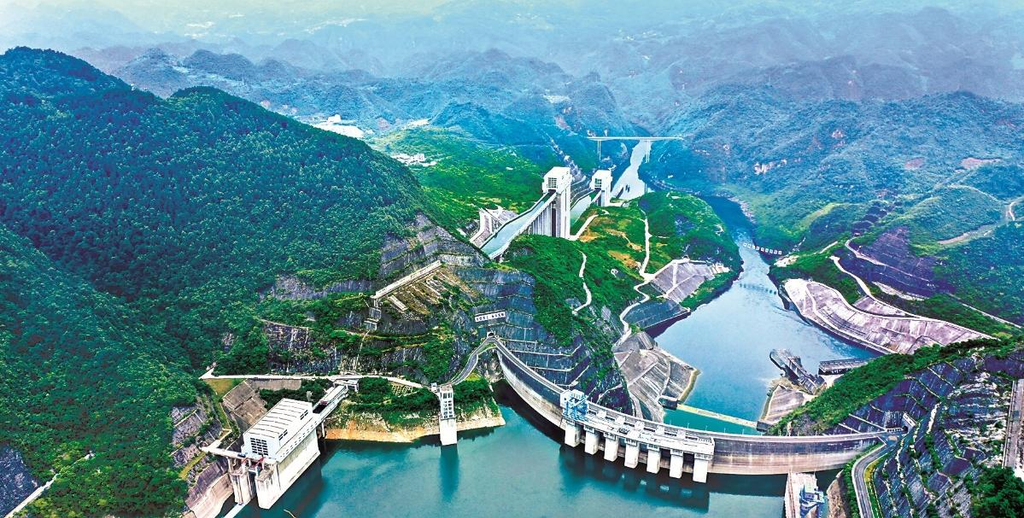
7.1. The issue
Communities living downstream of the proposed Dibang Multipurpose Project in Arunachal Pradesh have raised concerns regarding flood protection, rehabilitation and potential dam-break risks.
The 2,880 MW project is being developed by NHPC Limited in the Lower Dibang Valley district.
Its estimated cost is ₹31,875 crore, and it is scheduled for commissioning by February 2032.
An alliance representing downstream communities in Arunachal Pradesh and Assam has given the two State governments a 10-day deadline to address its demands.
7.2. Why are downstream communities concerned?
Large hydropower projects can have implications extending beyond the immediate reservoir and dam site.
Important concerns include:
- Changes in river-flow patterns.
- Downstream flood risks.
- Dam-break risks.
- Impact on agricultural land and settlements.
- Displacement and rehabilitation.
- Changes in riverine ecosystems.
- Impact on livelihoods dependent on river systems.
7.3. Demands raised by the communities
The alliance has sought:
- Project Affected Family status for downstream households.
- Public hearings in Dibrugarh and Tinsukia.
- Flood-protection measures.
- Guide walls and embankments.
- Protection against potential dam-break impacts.
7.4. Environmental and governance dimensions
The issue demonstrates that environmental impact assessment must consider the entire river basin rather than only the immediate project area.
It also highlights the importance of public participation in decisions concerning large infrastructure projects.
7.5. Way forward
- Comprehensive downstream impact assessment.
- Effective environmental impact assessment and public hearings.
- Transparent disaster-management plans.
- Advance warning systems.
- Adequate rehabilitation and compensation.
- Continuous consultation with local communities.
Mains question: Large hydropower projects in the Himalayan region require a balance between energy security, ecological sustainability and the rights of downstream communities. Discuss.
8. U.S. Court Permits Service of Civil Summons on India’s NSA and Former RAW Chief
GS Paper II – International Relations | Internal Security | International Law
8.1. The issue
A U.S. District Court has permitted Khalistani separatist Gurpatwant Singh Pannun to serve a civil lawsuit on India’s National Security Adviser Ajit Doval and former Research and Analysis Wing chief Samant Goel through Indian judicial channels.
The lawsuit is linked to allegations concerning an assassination plot against Pannun in 2023.
India’s Ministry of External Affairs rejected the move and described the lawsuit as frivolous.
India maintained that judicial documents intended for service in India must be routed through its designated central authority, the Ministry of Law and Justice.
8.2. The Hague Convention dimension
The Hague Convention on the Service Abroad of Judicial and Extrajudicial Documents in Civil or Commercial Matters, 1965, establishes mechanisms for transmitting judicial documents across national boundaries.
Its purpose is to facilitate international service of documents while respecting the legal procedures of the receiving country.
8.3. Diplomatic implications
The issue has implications for:
- India-U.S. diplomatic relations.
- Sovereign immunity and the legal status of government officials.
- Cross-border judicial cooperation.
- Counterterrorism cooperation.
- The relationship between domestic jurisdiction and international legal procedures.
8.4. India’s approach
India must protect its national interests while responding through established diplomatic and judicial mechanisms.
It is important to distinguish the procedural permission granted by a U.S. court from a final determination of the allegations.
Mains question: Examine the challenges involved in reconciling domestic sovereignty with cross-border judicial cooperation in an increasingly interconnected world.
9. West Asia: U.S. Signals Restraint on Further Strikes Against Iran
GS Paper II – International Relations | GS III – Energy Security
9.1. The issue
U.S. President Donald Trump indicated that the United States would hold off on additional military strikes against Iran for the time being following appeals from regional countries, including Qatar.
However, the U.S. intends to maintain its naval blockade in the Strait of Hormuz.
The developments have reduced immediate concerns about a sustained disruption in global oil supplies.
The newspaper reports that Brent crude prices declined to just above $91 per barrel after touching approximately $118 on October 30.
9.2. Why is the Strait of Hormuz important?
The Strait of Hormuz connects the Persian Gulf with the Gulf of Oman and is one of the world’s most important maritime energy chokepoints.
A disruption in this passage can affect global petroleum transportation and international energy markets.
9.3. Implications for India
India is heavily dependent on imported crude oil.
A prolonged conflict in the region can lead to:
- Higher crude oil prices.
- Increased import expenditure.
- Pressure on the current account deficit.
- Imported inflation.
- Higher transportation and production costs.
- Risks to Indian nationals and commercial interests in the region.
9.4. India’s strategic response
India needs to pursue a balanced West Asia policy through:
- Diversification of energy suppliers.
- Maintenance of strategic petroleum reserves.
- Strengthening maritime security.
- Maintaining diplomatic relations with regional stakeholders.
- Protecting Indian nationals abroad.
- Promoting regional stability through dialogue.
Mains question: Explain the strategic importance of the Strait of Hormuz for India’s energy security. What measures can India adopt to reduce its vulnerability to geopolitical disruptions?
10. India-Bangladesh Relations: Sheikh Hasina’s Extradition Issue
GS Paper II – International Relations | Neighbourhood First Policy
10.1. The issue
Bangladesh has reiterated its demand for the return of former Prime Minister Sheikh Hasina, who has been residing in India since leaving Bangladesh in August 2024.
The Bangladeshi authorities have referred to the 2013 extradition treaty between India and Bangladesh.
India’s Ministry of External Affairs stated that the matter is a legal issue and would be dealt with accordingly.
The newspaper also reports that the requirement of a travel document is an important procedural aspect of any possible return.
10.2. Why is the issue important?
Bangladesh is a major neighbour of India and occupies a strategically important position in India’s eastern neighbourhood.
Bilateral cooperation covers:
- Border management.
- Connectivity.
- Trade and investment.
- Water-sharing.
- Energy cooperation.
- Security cooperation.
- Regional connectivity through BIMSTEC and BBIN initiatives.
10.3. Challenges for India
- Balancing diplomatic relations with Bangladesh’s present government.
- Respecting the legal framework governing extradition.
- Ensuring due process.
- Preventing bilateral political tensions from affecting broader cooperation.
- Protecting India’s security and economic interests.
10.4. Way forward
India should address the matter through established legal and diplomatic channels while maintaining constructive engagement with Bangladesh.
Mains question: Discuss the significance of Bangladesh in India’s neighbourhood policy. Examine the challenges that political instability in Bangladesh poses for bilateral relations.
11. India-UAE-Russia-Ukraine: Renewed Trilateral Peace Talks
GS Paper II – International Relations
The United States has mediated renewed talks involving Russia and Ukraine in Abu Dhabi.
The discussions are focused on security guarantees, humanitarian issues, prisoner exchanges and the return of Ukrainian civilians and children.
The meeting represents another diplomatic attempt to end the Russia-Ukraine conflict.
Implications for India
The conflict has affected global energy markets, food supply chains, defence procurement and international alignments.
India must continue to balance its strategic relationships with Russia, the United States and European countries.
Its approach should emphasise:
- Strategic autonomy.
- Dialogue and diplomacy.
- Respect for sovereignty and territorial integrity.
- Energy security.
- Protection of global supply chains.
Mains question: Examine the challenges before India in maintaining strategic autonomy amid geopolitical polarisation arising from the Russia-Ukraine conflict.
12. India’s Women Workforce: Rising Participation and Structural Inequality
GS Paper III – Indian Economy | Inclusive Growth | Women Empowerment
An important analysis in the opinion section examines the changing nature of women’s participation in India’s workforce.
Between 2017–18 and 2025:
- The number of working women increased from 104 million to 201 million.
- The female Worker Population Ratio increased from 22% to 38%.
However, the article cautions that the increase has been concentrated largely in rural areas, particularly in agriculture, own-account work and unpaid family work.
Major concerns
A. Quality of employment
An increase in workforce participation does not automatically indicate access to secure and adequately remunerated employment.
B. Unpaid family work
Women may contribute substantially to household enterprises and agricultural activities without receiving independent wages.
C. Sectoral concentration
A large proportion of additional female employment is concentrated in agriculture.
D. Structural transformation
Economic growth must generate productive employment opportunities for women beyond traditional and informal occupations.
Way forward
- Expand women’s access to formal employment.
- Improve skill development.
- Strengthen childcare infrastructure.
- Improve access to credit and productive assets.
- Promote women’s participation in manufacturing and services.
- Recognise and reduce unpaid care work.
Mains question: The increase in women’s workforce participation in India must be evaluated in terms of the quality and nature of employment rather than merely the number of women employed. Discuss.
13. Dibang, Starlink and AI: Emerging Issues in Technology and Governance
13.1. Temple wearable and brain-health claims
An article examines Temple, a wearable device marketed as a tool for monitoring brain health and ageing through measurements related to cerebral blood flow.
The device’s central metric, the Brain Flow index, is still under scientific evaluation.
Small studies have compared its readings with established techniques such as near-infrared spectroscopy and transcranial Doppler ultrasound.
However, medical experts have cautioned that the available evidence is insufficient to establish its ability to predict longevity, general well-being or specific diseases.
UPSC relevance:
- Medical technology.
- Wearable health devices.
- Evidence-based medicine.
- Regulation of health-related technological claims.
- Data reliability and consumer protection.
Key takeaway: Technological innovation must be accompanied by rigorous clinical validation before devices are used to make significant health claims.
13.2. Artificial intelligence and public procurement
The newspaper also reports allegations concerning the procurement of AI-generated books for public libraries in Tamil Nadu.
The Madras High Court directed the Directorate of Vigilance and Anti-Corruption to register an FIR and take steps concerning the suspected irregularities.
The issue highlights the risks associated with procuring AI-generated content without adequate verification.
UPSC relevance:
- AI governance.
- Public procurement.
- Accountability in public institutions.
- Digital literacy.
- Quality assurance in education.
14. Repatriation of 39 Naga Ancestral Remains from Oxford
GS Paper I – Indian Heritage and Culture | GS II – International Relations
The University of Oxford has transferred the custodianship of 39 Naga artefacts, including ancestral human remains, to representatives of the Forum for Naga Reconciliation and the Naga Tribe Hoho.
The artefacts were held at the Pitt Rivers Museum, established in 1884.
The development represents an important step in the efforts of indigenous communities to reclaim ancestral remains and cultural objects held in foreign museums.
Significance
- Recognition of indigenous cultural rights.
- Ethical museum practices.
- Decolonisation of museum collections.
- Repatriation of cultural property.
- Preservation of indigenous heritage and identity.
Mains question: Discuss the ethical and cultural significance of repatriating indigenous artefacts and ancestral remains held in foreign museums.
15. Important Other Developments
- Telangana Bharat Summit 2026: Hyderabad will host the summit on November 13 and 14, bringing together participants from around 70 countries to discuss democracy, social justice, climate change and international cooperation.
- Andhra Pradesh investment proposals: The State Cabinet approved proposals covering AI data centres, advanced materials, electronics, renewable energy and industrial development.
- Bihar public grievance redressal: Fifteen government officers were suspended over delays in resolving applications under the Sahyog Programme, highlighting accountability in citizen-service delivery.
- Supreme Court on undertrial prisoners: The Court emphasised that the Uttar Pradesh government must ensure that prisoners granted bail are not kept in jail merely because they cannot satisfy financial conditions or arrange local sureties.
- Cyber impersonation of Delhi Police: An FIR was registered over fraudulent notices seeking removal of social media posts and blocking of digital-rights organisations’ accounts. The case highlights cybercrime and the importance of authenticating official communications.
- CISCE examination timetable: The ICSE 2027 examinations are scheduled from February 15 to March 31, while ISC examinations will take place from February 9 to April 8.
16. Prelims Facts to Remember
| Topic | Important fact |
|---|---|
| Indra Sawhney judgment | 1992; OBC reservation and creamy layer principle |
| FCRA | Foreign Contribution (Regulation) Act, 2010 |
| Starlink | Satellite internet network operated by SpaceX |
| LEO | Low Earth Orbit |
| EPI | Environmental Performance Index |
| EPI 2026 | India ranked 176 out of 177 |
| NMDC | National Mineral Development Corporation |
| Lithium | Important mineral for rechargeable batteries |
| Dibang Project | 2,880 MW hydropower project in Arunachal Pradesh |
| Article 254 | Inconsistency between Union and State laws on Concurrent List subjects |
| Article 19(1)(c) | Right to form associations or unions |
| Hague Convention, 1965 | Service of judicial and extrajudicial documents abroad |
| Pitt Rivers Museum | University of Oxford |
| Muthuswami Dikshitar | One of the Carnatic Music Trinity |
17. Mains Answer Writing Practice
Question 1 – GS II
The implementation of reservation policy requires a balance between social disadvantage and economic advancement. Discuss with reference to the creamy layer principle.
Question 2 – GS II
Examine the major challenges facing Indian federalism. What role can institutional committees play in strengthening Centre-State relations?
Question 3 – GS II
Foreign funding regulation must balance national security, transparency and the autonomy of civil society institutions. Critically examine.
Question 4 – GS III
Discuss the opportunities and strategic vulnerabilities associated with the increasing dependence on foreign satellite communication networks.
Question 5 – GS III
India’s environmental challenge is not merely the adoption of clean technologies but ensuring that their combined impact offsets rising pollution. Analyse.
Question 6 – GS III
Explain the importance of critical minerals in India’s energy transition. Examine the challenges in securing reliable lithium supplies.
Question 7 – GS III
Large hydropower projects in the Himalayan region raise questions concerning environmental sustainability, disaster risks and community rights. Discuss.
Question 8 – GS III
Examine the structural barriers affecting women’s participation in India’s formal workforce.
Conclusion
The developments reported on November 11, 2026 highlight a common theme: institutional accountability must accompany economic growth, technological advancement and the exercise of state power.
Whether it is reservation policy, foreign funding regulation, satellite communication, environmental protection or infrastructure development, India’s governance framework must balance competing objectives through transparency, constitutional safeguards and evidence-based policymaking.
For UPSC aspirants, the most important preparation strategy is to connect these current developments with foundational concepts in the Constitution, economy, environment, international relations and science and technology.