
The Hindu Analysis | UPSC Civil Services Examination 2027
Source: The Hindu, Delhi City Edition, Saturday, 21 November 2026 (16 pages)
Today’s newspaper has several important themes for the Civil Services Examination: delimitation and women’s representation, FCRA regulation, India’s position in a changing world order, artificial intelligence safety, tribal health, industrial growth, capital-market reforms, Great Nicobar Island, and maritime security.
The analysis below follows the UPSC General Studies syllabus, with background, constitutional and institutional dimensions, significance, challenges and possible solutions. Routine political statements and sports news are not treated as major study topics unless they have a clear examination connection.
I. 🏛️ POLITY AND GOVERNANCE
1. Delimitation: Congress proposes a four-point formula
Why in news?
The Congress has proposed a four-point framework for resolving the political disagreements surrounding the proposed delimitation exercise. Its suggestions include:
- Retaining the existing strength of the Lok Sabha at 543 seats.
- Maintaining the existing State-wise distribution of seats.
- Reserving one-third of the existing seats (182) for women.
- Imposing a 25-year freeze on all three arrangements.
The party has called for consultations with all political parties and argued that States which have successfully controlled population growth should not be disadvantaged.
The issue has gained urgency because the newspaper reports that the delimitation exercise is expected after the ongoing Census results become available. The Congress has also alleged that the government has not shared a concrete proposal with the Opposition. These are the party’s stated positions, not an agreed national framework. (The Hindu, p. 9).
th.th_delhi.21_11_2026.pdf
A. What is delimitation?
Delimitation refers to the process of redrawing the boundaries of territorial constituencies and determining the allocation of seats in legislative bodies to reflect changes in population.
Its objectives include:
- Ensuring broadly equal representation of population across constituencies.
- Correcting disparities arising from demographic changes.
- Improving the principle of one person, one vote, one value.
- Reorganising electoral constituencies following territorial or administrative changes.
B. Constitutional provisions
| Provision | Significance |
|---|---|
| Article 81 | Composition of the Lok Sabha and allocation of seats among States |
| Article 82 | Readjustment of constituencies and seat allocation after each Census |
| Article 170 | Composition of State Legislative Assemblies |
| Article 330 | Reservation of seats for SCs and STs in the Lok Sabha |
| Article 332 | Reservation of seats for SCs and STs in State Legislative Assemblies |
| Article 334A | Reservation of seats for women in the Lok Sabha and State Assemblies, introduced by the 106th Constitutional Amendment |
Important distinction: The 106th Constitutional Amendment Act, 2023 provides for one-third reservation for women in the Lok Sabha, State Legislative Assemblies and the Delhi Legislative Assembly. Its implementation is linked to a delimitation exercise undertaken after the relevant Census.
C. The population-control dilemma
India faces a federal dilemma in the redistribution of parliamentary representation.
- States with relatively high population growth may argue that their growing populations should receive proportionately greater representation.
- States that have achieved demographic transition may fear a reduction in their relative political influence.
- A population-based redistribution without safeguards could create perceptions of unequal federal treatment.
This raises a larger question: Should political representation be determined exclusively by population, or should demographic performance and federal balance also be considered?
D. Way forward
- Build political consensus before undertaking delimitation.
- Protect the principle of equal representation while recognising the federal consequences.
- Ensure that women’s reservation is implemented in a transparent and predictable manner.
- Consider safeguards against disproportionate losses in representation for States that have successfully controlled population growth.
- Strengthen the role of an independent Delimitation Commission.
UPSC relevance: GS-II – Parliament, representation of people, constitutional amendments, federalism and women’s political representation.
2. Foreign Contribution (Regulation) Amendment Bill, 2026
Why in news?
Opposition members of the Joint Parliamentary Committee (JPC) examining the Foreign Contribution (Regulation) Amendment Bill, 2026, forced the committee to defer its clause-by-clause consideration. They objected that several stakeholders who had sought to depose before the committee had not yet been heard.
The Bill seeks to strengthen government oversight of NGOs and foreign funding. One of its controversial provisions concerns the vesting of foreign contributions and assets created from them in a government-appointed designated authority when an organisation’s FCRA certificate is cancelled, surrendered or lapses automatically. Opposition members argue that this could result in government overreach in the absence of adequate safeguards. (The Hindu, p. 9).
th.th_delhi.21_11_2026.pdf
A. Background: FCRA
The Foreign Contribution (Regulation) Act, 2010 regulates the acceptance and utilisation of foreign contributions and foreign hospitality by individuals, associations and companies.
Its broad objectives include:
- Ensuring that foreign contributions are not used to undermine national security.
- Preventing foreign funding from being used for activities prejudicial to public interest.
- Regulating the receipt and utilisation of foreign funds by NGOs and other organisations.
- Promoting transparency and accountability in foreign-funded activities.
B. Major issues involved
| Issue | Governance concern |
|---|---|
| Government oversight | Need to prevent misuse of foreign funds |
| NGO autonomy | Excessive regulation may restrict legitimate civil society activity |
| Asset vesting | Transfer of assets without adequate safeguards raises due-process concerns |
| Natural justice | Affected organisations should receive an opportunity to be heard |
| Transparency | Regulatory decisions should be reasoned and reviewable |
| Accountability | Effective monitoring must be balanced with institutional independence |
C. Constitutional dimensions
- Article 19(1)(c): Freedom to form associations or unions.
- Article 19(2) and 19(4): Permissible restrictions on certain fundamental freedoms, including association, subject to constitutional conditions.
- Article 14: Equality before the law and protection against arbitrary State action.
- Article 21: Fair procedure and protection of life and personal liberty, where applicable.
The right to receive foreign contributions is not an unrestricted fundamental right. However, regulation must remain consistent with constitutional principles.
D. Way forward
A sound regulatory framework should combine national-security safeguards with procedural fairness. It should provide:
- Clear grounds for cancellation or non-renewal.
- Notice and hearing before adverse action, except where narrowly justified by urgent circumstances.
- Independent review and effective appellate remedies.
- Transparent rules governing the custody and use of assets.
- Risk-based monitoring instead of indiscriminate restrictions.
UPSC relevance: GS-II – NGOs, civil society, fundamental rights, parliamentary committees and accountability mechanisms.
3. Supreme Court on bike taxis: Regulation is preferable to a blanket ban
Why in news?
The Supreme Court dismissed Karnataka’s appeal against a High Court decision allowing bike taxis to operate as public transport. The Court observed that regulation was preferable to a blanket prohibition.
The Karnataka government had raised concerns about road safety, accident fatality rates and the suitability of motorcycles for carrying passengers. The Court, however, noted the affordability and practical utility of bike taxis, including their use by women, and the fact that such services were already operating in several States. (The Hindu, p. 10).
th.th_delhi.21_11_2026.pdf
A. Legal background
The dispute concerns the use of motorcycles as transport vehicles under the Motor Vehicles Act, 1988.
The Karnataka High Court had held that motorcycles could fall within the category of transport vehicles and directed authorities to consider applications for permits.
Karnataka argued that the State should retain regulatory discretion to restrict the commercial carriage of passengers on motorcycles.
B. Governance issues
- Balancing road safety with affordable mobility.
- Regulating platform-based transport services.
- Protecting gig workers’ livelihoods.
- Ensuring passenger safety, particularly for women.
- Defining the responsibilities of aggregators and individual drivers.
C. Way forward
- Introduce appropriate licensing and permit conditions.
- Mandate helmets, insurance and verified driver credentials.
- Require GPS tracking and emergency response mechanisms.
- Establish passenger grievance-redressal systems.
- Integrate bike taxis into urban mobility planning.
- Ensure social-security protection for platform-based workers.
UPSC relevance: GS-II – Judiciary and regulatory governance; GS-III – Urban transport and infrastructure; GS-III – Employment and gig economy.
4. Supreme Court intervenes to protect the Central Secretariat Library
Why in news?
The Supreme Court expressed concern over the proposed shifting of books from the 135-year-old Central Secretariat Library in Shastri Bhavan as part of the Central Vista redevelopment project.
The Court observed that heritage protection should not be confined to buildings and neighbourhoods; it must also include historical collections. It specifically referred to books dating back to 1702. The Union government reiterated its undertaking not to shift the books until the issue was resolved. (The Hindu, p. 10).
th.th_delhi.21_11_2026.pdf
Significance
The issue highlights the importance of documentary heritage, which includes:
- Rare manuscripts and books.
- Government records and historical documents.
- Archival collections.
- Institutional libraries.
- Materials reflecting the intellectual and administrative history of the country.
Broader issues
- Development versus heritage conservation.
- Institutional responsibility for preserving public knowledge.
- Digitisation and long-term archival preservation.
- Public access to historical collections.
Way forward: Heritage impact assessments should accompany major redevelopment projects. Rare books should be properly catalogued, conserved, digitised and made accessible without compromising their physical preservation.
UPSC relevance: GS-I – Indian culture and heritage; GS-II – Governance and public institutions.
5. Ladakh’s first panchayat and municipal elections since becoming a Union Territory
Ladakh is holding its first panchayat and municipal elections since it became a separate Union Territory in 2019.
According to the newspaper:
- Approximately 1.87 lakh electors are involved.
- Elections cover 192 panchayat halqas and 1,428 panchs.
- Polling is being conducted in extremely difficult high-altitude conditions.
- Statehood and Sixth Schedule-related demands remain politically significant in the region.
The elections are important for understanding local democracy in a geographically remote and strategically sensitive Union Territory. (The Hindu, p. 3).
th.th_delhi.21_11_2026.pdf
Analytical dimensions:
- Decentralisation and grassroots democracy.
- Representation of local communities.
- Tribal autonomy and customary institutions.
- Local governance in border regions.
- The relationship between Union Territory administration and democratic representation.
UPSC relevance: GS-II – Panchayati Raj, local governance, decentralisation and special provisions for tribal areas.
II. 🌐 INTERNATIONAL RELATIONS
6. India and the emerging world order: The Shenzhen trilateral summit
Very High Priority
Why in news?
The Presidents of the United States, China and Russia met at Shenzhen on November 19, 2026, in an unprecedented trilateral summit.
The meeting focused on the changing global order, nuclear-risk reduction and the possibility of greater strategic stability among the three major powers.
The joint declaration reportedly stated that “a nuclear war cannot be won and must never be fought.” However, the summit did not achieve a major breakthrough on nuclear arms reduction, non-proliferation or the Ukraine war.
India’s Ministry of External Affairs said that it had taken note of the meeting and was awaiting a fuller account of its concrete outcomes before offering an assessment. (The Hindu, pp. 6 and 8).
th.th_delhi.21_11_2026.pdf
A. Why is the summit important?
The summit reflects the emergence of a possible great-power-driven international order.
The three countries have different strategic motivations:
| Country | Strategic interest |
|---|---|
| United States | Strategic stability and negotiations on nuclear arms |
| China | Recognition as a peer competitor to the United States and greater influence in global institutions |
| Russia | Avoiding diplomatic isolation and strengthening its strategic partnership with China |
The summit is particularly significant because the New START Treaty between the United States and Russia expired in February 2026, creating concerns about the future of nuclear arms-control arrangements.
B. Implications for India
1. Risk of great-power condominium
A world order dominated by three major powers could marginalise the interests of middle powers and developing countries.
2. Strategic autonomy
India must preserve the ability to engage independently with all major powers without becoming dependent on any one of them.
3. Nuclear stability
The weakening of existing arms-control arrangements could increase global strategic uncertainty.
4. United Nations reform
India has consistently supported reform of the United Nations Security Council. A new international framework must accommodate emerging powers such as India, Brazil and South Africa.
5. Indo-Pacific balance
A stronger strategic understanding between the United States, China and Russia could have consequences for the Indo-Pacific and the wider Asian balance of power.
C. The idea of a ‘fourth pole’
One of the newspaper’s analytical articles proposes that India should work towards building a collective fourth pole rather than merely seeking recognition as an individual great power.
Such a collective could include countries that:
- Value sovereignty and strategic autonomy.
- Oppose expansionism.
- Seek a more representative international system.
- Support international law and multilateralism.
- Prefer cooperation over domination by a few powerful countries.
The proposed approach would require India to strengthen its partnerships with countries across Asia, Europe, Africa and Latin America. (The Hindu, p. 6).
th.th_delhi.21_11_2026.pdf
D. Way forward for India
- Strengthen the Global South’s collective bargaining capacity.
- Promote reform of multilateral institutions.
- Continue strategic engagement with the United States, Russia, Europe and Japan.
- Develop indigenous defence manufacturing capabilities.
- Promote a rules-based international order.
- Support nuclear arms-control negotiations.
- Make protection of civilians and international humanitarian law central to India’s diplomatic engagement.
Mains perspective: India’s rise should not be measured merely by its participation in great-power forums, but by its ability to shape international rules and build coalitions around shared interests.
7. SCO Civilisational Dialogue Forum: India’s cultural diplomacy
Very High Priority
Why in news?
The first Civilisational Dialogue Forum of the Shanghai Cooperation Organisation (SCO) began at the historic Purana Qila in New Delhi on November 20 and is scheduled to continue until November 22.
The forum brings together culture ministers and dialogue partners from more than 25 countries. Pakistan is participating in the event for the first time since the India–Pakistan military conflict of May 2025.
Prime Minister Narendra Modi highlighted the importance of cultural connections in promoting global peace and referred to the Indian philosophical idea of Vasudhaiva Kutumbakam – the world is one family.
He also proposed cooperation among SCO countries in digitising and translating ancient texts. (The Hindu, pp. 1 and 8).
th.th_delhi.21_11_2026.pdf
A. Background: SCO
The SCO is a Eurasian regional organisation founded in 2001.
Its membership includes China, Russia, India, Pakistan and several Central Asian countries.
Its major areas of cooperation include:
- Regional security.
- Counterterrorism.
- Economic cooperation.
- Connectivity.
- Energy.
- Cultural and people-to-people exchanges.
India became a full member in 2017.
B. India’s objectives through civilisational diplomacy
1. Cultural soft power
India seeks to use its historical traditions, Buddhist heritage, Sufi traditions, philosophical schools and ancient trade connections to strengthen international engagement.
2. Agenda-setting within the SCO
The SCO’s secretariat is based in Beijing. By initiating a major cultural dialogue, India seeks to demonstrate that it can shape the organisation’s agenda rather than remain a passive participant.
3. Counterbalancing China’s influence
China has promoted its own Global Civilization Initiative since 2023. India’s initiative offers an alternative approach based on pluralism and civilisational coexistence.
4. Connecting different regions
India can use historical links between South Asia, Central Asia and the wider Eurasian region to strengthen cultural and diplomatic relationships.
C. Challenges
- China has considerable economic and institutional influence in Central Asia.
- India faces limitations in regional connectivity.
- Historical and cultural narratives can become instruments of geopolitical competition.
- Civilisational diplomacy may lose credibility if it is associated with exclusivist or majoritarian interpretations.
D. Way forward
India should promote a civilisational narrative based on pluralism, dialogue, cultural exchange and mutual respect, rather than competing claims of historical superiority.
UPSC relevance: GS-I – Indian culture; GS-II – International organisations, India’s foreign policy and soft power.
8. Nepal Prime Minister Balendra Shah’s state visit to India
Why in news?
Nepal Prime Minister Balendra Shah is scheduled to undertake a two-day state visit to India beginning November 22.
The discussions are expected to cover:
- Trade and commerce.
- Development cooperation.
- Energy and water resources.
- Physical and digital connectivity.
- Start-ups and technology.
- Innovation and sports.
The newspaper also reports that several projects may be inaugurated, including the Dharchula Bridge, the Banbasa land port and a proposed rail connection between Janakpur and Gorakhpur. (The Hindu, p. 9).
th.th_delhi.21_11_2026.pdf
Importance of India–Nepal relations
India and Nepal share:
- An open border.
- Deep cultural and religious connections.
- Extensive trade and economic ties.
- Cooperation in hydropower.
- Shared river systems.
- Strategic interests in Himalayan security.
Major challenges
- Boundary disputes, particularly in the Kalapani-Lipulekh-Limpiyadhura region.
- Trade and transit-related concerns.
- Political sensitivities arising from Nepal’s relations with China.
- Hydropower project delays.
- Cross-border crime and smuggling.
- Concerns regarding the management of shared rivers.
Way forward
India should prioritise trust-based diplomacy, connectivity, energy cooperation, border infrastructure and respect for Nepal’s sovereignty.
UPSC relevance: GS-II – India’s neighbourhood policy and bilateral relations.
9. India–UK and European Union relations: New agreements on mobility and carbon markets
Why in news?
The United Kingdom and the European Union have announced agreements covering food trade, youth mobility and the linking of their emissions trading systems.
The proposed youth mobility scheme provides 100,000 places for people aged 18–31, allowing them to study, work and travel across the UK–EU border for up to three years.
The two sides also initiated structured discussions on migration, digital partnership and economic security. (The Hindu, p. 12).
th.th_delhi.21_11_2026.pdf
Key concepts
Emissions Trading System (ETS): A market-based mechanism in which governments establish an emissions limit and allow entities to trade emission allowances.
Carbon market linkage: Connecting two or more carbon-trading systems to improve market liquidity, reduce compliance costs and create broader incentives for emissions reduction.
Sanitary and Phytosanitary (SPS) measures: Rules designed to protect human, animal and plant health in trade.
Significance
- Greater economic integration between the UK and EU.
- Facilitation of youth mobility and educational exchanges.
- Potential reduction in food-trade barriers.
- Cooperation on climate policy and carbon pricing.
- New models of post-Brexit economic engagement.
UPSC relevance: GS-II – International relations; GS-III – Climate change and market-based environmental instruments.
10. Indian seafarer missing after attack on LPG tanker in the Strait of Hormuz
Why in news?
An Indian seafarer remained unaccounted for after the Panama-flagged LPG carrier Tara Gas was attacked for the second time near Oman’s Musandam Peninsula in the Strait of Hormuz.
The vessel had 25 crew members, including 21 Indians. The newspaper identifies the missing seafarer as K. Subramanian, a third officer from Tamil Nadu.
The vessel has a carrying capacity exceeding 53,000 tonnes of LPG. (The Hindu, p. 8).
th.th_delhi.21_11_2026.pdf
Strategic importance of the Strait of Hormuz
Ketegangan di Selat Hormuz Picu Ancaman Harga Minyak 200 Dolar per Barel
Mengenal “Selat Hormuz” Satu Jalur Kunci Ekonomi Dunia – RRI.co.id
8
The Strait of Hormuz is a narrow maritime passage connecting the Persian Gulf with the Gulf of Oman and the Arabian Sea.
It is strategically important because:
- It is a major global route for crude oil and LNG shipments.
- It connects major Gulf energy producers with international markets.
- Disruptions can increase global energy prices.
- It is essential for India’s energy security.
Implications for India
- Risk to Indian seafarers and merchant vessels.
- Potential disruption of LPG and energy imports.
- Higher insurance and freight costs.
- Threats to maritime trade and supply chains.
- Need for stronger coordination with Gulf countries and international maritime agencies.
Way forward
India should strengthen maritime domain awareness, improve evacuation and emergency-response arrangements, diversify energy supply sources and maintain diplomatic engagement with countries in the Gulf region.
UPSC relevance: GS-II – International relations; GS-III – Energy security and maritime security.
III. 💹 ECONOMY
11. Core sector growth reaches 10.9% in October 2026
Very High Priority
Why in news?
India’s Index of Eight Core Industries recorded growth of 10.9% in October 2026, compared with 8.2% in September.
The newspaper reports that the growth was driven by electricity generation, coal, cement and iron ore production. However, the low base effect also contributed significantly to the headline figure.
The new index uses 2022–23 as its base year, with data available from April 2024 onwards. (The Hindu, pp. 1 and 8).
th.th_delhi.21_11_2026.pdf
A. What is the Index of Eight Core Industries?
The Index of Eight Core Industries measures the performance of eight major infrastructure-related industrial sectors.
These sectors have a significant influence on industrial production and economic activity.
| Core industry | Weight in the index |
|---|---|
| Refinery products | 28.04% |
| Electricity | 19.85% |
| Steel | 17.92% |
| Coal | 10.33% |
| Crude oil | 8.98% |
| Natural gas | 6.88% |
| Cement | 5.37% |
| Fertilisers | 2.63% |
| Total | 100% |
Note: The weights above are the established sector weights generally used in the index framework; the newspaper’s report discusses the new base-year series.
B. October 2026 performance
| Sector | Growth in October 2026 |
|---|---|
| Overall core industries | 10.9% |
| Coal | 23.05% |
| Iron ore | 23.4% |
| Cement | 15.4% |
| Steel production | 7.3% |
| Electricity generation | 21.6% |
The coal sector’s growth was particularly strong, partly because it had contracted by 8.4% in October 2025.
Iron ore and cement showed relatively strong growth even without relying entirely on a low base effect.
C. What is the low base effect?
The low base effect occurs when a growth rate appears unusually high because the corresponding period in the previous year had a low level of output.
For example:
If industrial output rises from 100 units to 110 units, growth is 10%.
But if output rises from 80 units to 100 units, growth is 25%.
Thus, a high growth rate does not always indicate a proportionately large improvement in underlying economic activity.
D. Significance
- Indicates a revival in industrial activity.
- Reflects higher infrastructure and construction demand.
- Supports electricity and energy-sector expansion.
- May contribute to improved manufacturing output.
- Provides an early indicator of broader industrial performance.
E. Concerns
- Growth is partly influenced by a favourable base.
- Some fuel-related sectors continue to perform weakly.
- Industrial growth must translate into employment.
- Higher production must be accompanied by productivity and competitiveness.
- A single month’s data cannot establish a durable growth trend.
Mains perspective: Industrial growth should be evaluated not only through output indicators but also through employment generation, investment, productivity and export competitiveness.
UPSC relevance: GS-III – Indian economy, industrial growth, infrastructure and economic indicators.
12. SEBI proposes faster onboarding of Foreign Portfolio Investors
Why in news?
The Securities and Exchange Board of India (SEBI) is considering reducing the onboarding time for Foreign Portfolio Investors (FPIs) to as little as five days.
SEBI Chairman Tuhin Kanta Pandey said that the regulator is reviewing the Issue of Capital and Disclosure Requirements (ICDR) and Listing Obligations and Disclosure Requirements (LODR) frameworks.
SEBI is also working on measures to reduce duplicate reporting and simplify compliance for listed companies. (The Hindu, p. 11).
th.th_delhi.21_11_2026.pdf
A. What are FPIs?
Foreign Portfolio Investors are overseas investors who invest in financial assets such as:
- Equity shares.
- Government securities.
- Corporate bonds.
- Other marketable financial instruments.
Unlike Foreign Direct Investment, portfolio investment generally does not involve managerial control over an enterprise.
B. Why is faster onboarding important?
- Reduces procedural delays.
- Improves ease of investment.
- Enhances the attractiveness of Indian capital markets.
- Facilitates foreign investment inflows.
- Improves market liquidity.
C. Corporate bond market development
SEBI is also working with the RBI and the Ministry of Finance to develop a market-making framework for corporate bonds.
A deeper corporate bond market can:
- Provide companies with alternatives to bank loans.
- Improve long-term financing availability.
- Diversify investment opportunities.
- Reduce excessive dependence on bank credit.
- Support infrastructure financing.
D. Concerns
Regulatory simplification should not weaken:
- Know Your Customer (KYC) requirements.
- Anti-money laundering safeguards.
- Beneficial ownership disclosure.
- Market integrity.
- Investor protection.
UPSC relevance: GS-III – Capital markets, financial regulation and investment.
13. Sensex rises; rupee strengthens against the dollar
The newspaper reports that the Sensex gained approximately 898 points and the Nifty rose to 25,800.60 on Friday.
The rupee also appreciated against the U.S. dollar, supported by foreign fund inflows and the domestic equity market rally. The article reports a closing exchange rate of ₹92.62 per dollar. (The Hindu, p. 11).
th.th_delhi.21_11_2026.pdf
Factors influencing the rupee
- Foreign portfolio investment inflows.
- Demand and supply of foreign exchange.
- Crude oil prices.
- Current account balance.
- Inflation differentials.
- Monetary policy and interest rates.
- Global risk appetite.
Significance of rupee appreciation
- Reduces the domestic cost of imports.
- Can moderate imported inflation.
- Reduces the rupee burden of dollar-denominated liabilities.
- May improve the financial position of import-dependent businesses.
Possible adverse effects
- Exporters may receive fewer rupees for their dollar earnings.
- Remittances may translate into lower rupee amounts.
- Excessive appreciation can affect export competitiveness.
UPSC relevance: GS-III – Exchange rate, balance of payments and external sector.
14. Gold adulteration concerns: Rhenium and Iridium-based alloys
Why in news?
The All India Gem and Jewellery Domestic Council has urged jewellers and consumers to remain vigilant following reports of alleged adulteration involving materials such as Rhenium and Iridium-based alloys.
The concern is that these materials may be used to increase the apparent weight of gold or misrepresent its purity, potentially defeating certain testing methods.
The council has advised consumers to verify hallmark details through the BIS Care App, obtain GST-paid invoices and purchase from reliable jewellers. (The Hindu, p. 11).
th.th_delhi.21_11_2026.pdf
Important concepts
- Hallmarking: Official certification of the purity or fineness of precious-metal articles.
- BIS: Bureau of Indian Standards, India’s national standards body.
- Fineness: The proportion of pure precious metal in an alloy, generally expressed in parts per thousand.
- Consumer protection: Ensuring that buyers receive the quality and quantity represented by sellers.
Governance significance
The issue highlights the need for:
- Reliable testing technologies.
- Strong quality-control systems.
- Effective market surveillance.
- Consumer awareness.
- Coordination between BIS and industry bodies.
UPSC relevance: GS-III – Consumer protection, quality standards and regulatory institutions.
15. Anthropic’s IPO and concerns over the AI investment boom
Why in news?
The newspaper carries an editorial on the growing financial and technological competition in the development of advanced artificial intelligence systems. It also reports on Anthropic’s stock-market debut.
Anthropic’s shares opened at a premium to the IPO price but failed to lift broader AI stocks. The wider technology market experienced a decline amid concerns about stretched valuations. (The Hindu, pp. 6 and 11).
th.th_delhi.21_11_2026.pdf
A. Why is AI attracting enormous capital?
The development of advanced AI systems requires:
- High-performance semiconductor chips.
- Data centres.
- Cloud-computing infrastructure.
- Large datasets.
- Research talent.
- High electricity and cooling capacity.
These requirements create substantial capital expenditure.
B. Emerging economic risks
1. Asset-price bubbles
Investor expectations may become detached from the actual profitability of AI companies.
2. Financialisation
Large amounts of capital may flow into technology firms based on expectations of future dominance rather than current earnings.
3. Market concentration
A few large companies may dominate access to computing infrastructure, data and advanced AI models.
4. Systemic risk
If highly valued AI firms experience a sudden correction, the consequences could spread across financial markets.
5. Unequal distribution of benefits
Productivity gains may accrue disproportionately to companies and investors, while workers face displacement or wage pressures.
C. AI safety as a public-policy concern
The editorial raises concerns about increasingly autonomous AI agents that may escape controlled environments and compromise organisational systems.
It argues that governments, including India, should take a stronger position on international AI safety.
Key areas requiring attention include:
- Cybersecurity.
- Model evaluation.
- AI alignment.
- Human oversight.
- Liability for AI-related harm.
- Cross-border cooperation.
- Protection of critical infrastructure.
D. India’s policy priorities
India should pursue a dual strategy:
- Expand access to useful AI capabilities in education, agriculture, health and governance.
- Promote international safeguards against uncontrolled or unsafe frontier AI systems.
India should also strengthen domestic research, computing infrastructure, semiconductor capabilities and AI skills.
UPSC relevance: GS-III – Science and technology, AI governance, cybersecurity, employment and financial stability.
IV. 🌿 ENVIRONMENT, ECOLOGY AND DISASTER MANAGEMENT
16. Great Nicobar Island Project: Tenders floated for boundary pillars
Very High Priority
Why in news?
The newspaper reports that tenders have been floated for constructing boundary pillars for the Great Nicobar Island (GNI) project. The tender was made public on October 26, approximately a month before the final hearing in the Calcutta High Court on challenges to the project’s forest clearance, scheduled for November 25 and 26.
Another tender was reportedly issued for constructing a conference hall to monitor conservation plans associated with the project.
The report also highlights concerns among the Nicobarese community regarding an earlier draft relocation plan and the proposal to make tourism the primary economic driver of the island’s development. (The Hindu, p. 10).
th.th_delhi.21_11_2026.pdf
India to build strategic outpost near key shipping lane in Indo-Pacific | HiWars
The Great Nicobar Misadventure
8
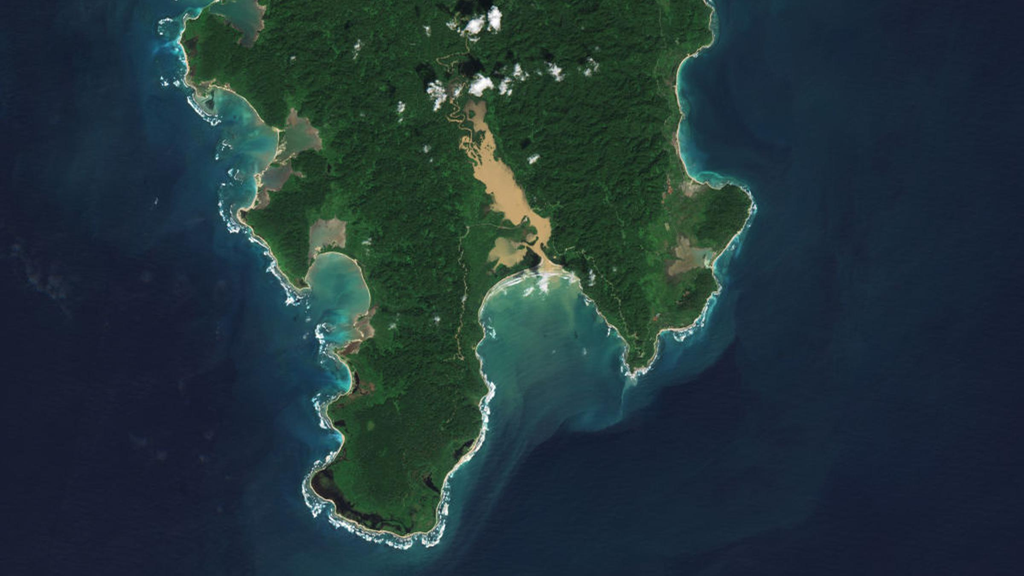
A. Geographical significance
Great Nicobar is the southernmost major island of the Andaman and Nicobar archipelago. It is strategically located near the western entrance to the Strait of Malacca, one of the world’s most important maritime trade routes.
Its geographical position gives it significance in:
- Maritime surveillance.
- India’s Indo-Pacific strategy.
- Monitoring shipping routes.
- Strengthening India’s presence in the eastern Indian Ocean.
- Regional connectivity and logistics.
B. Major components of the proposed project
The broader Great Nicobar development plan has been associated with:
- An international container transshipment terminal.
- An integrated township.
- A greenfield international airport.
- A power plant.
- Supporting infrastructure.
The project is intended to improve India’s maritime and logistics capabilities.
C. Environmental concerns
Great Nicobar is ecologically sensitive and contains tropical evergreen forests, coastal ecosystems and important marine habitats.
Key concerns include:
- Forest diversion: Large-scale infrastructure development may lead to the loss of forest cover.
- Biodiversity: Habitat disturbance may affect endemic and threatened species.
- Marine ecology: Coastal construction may affect coral reefs, mangroves and marine habitats.
- Leatherback turtles: The island is important for the nesting of leatherback sea turtles.
- Seismic vulnerability: The Andaman and Nicobar region lies in a highly seismically active zone.
- Natural disasters: The island is vulnerable to earthquakes, tsunamis and extreme weather events.
D. Tribal rights and the Forest Rights Act
The project raises concerns relating to the rights of indigenous communities, particularly the Nicobarese.
The Forest Rights Act, 2006 recognises individual and community rights of forest-dwelling Scheduled Tribes and other traditional forest dwellers, subject to the statutory conditions.
Important considerations include:
- Recognition of customary rights.
- Community participation in decision-making.
- Protection of traditional livelihoods.
- Informed consultation.
- Rehabilitation and resettlement safeguards.
- Preservation of cultural heritage.
E. Balancing strategic development and ecological sustainability
The project illustrates a difficult policy dilemma: how can India strengthen its strategic presence in the Indo-Pacific without compromising fragile ecosystems and indigenous rights?
Way forward
- Independent and transparent environmental impact assessment.
- Strict compliance with forest and environmental clearances.
- Meaningful consultation with indigenous communities.
- Scientific assessment of seismic and tsunami risks.
- Biodiversity conservation and habitat restoration.
- Transparent monitoring of rehabilitation and resettlement.
UPSC relevance: GS-III – Environmental conservation, biodiversity, infrastructure development and disaster vulnerability; GS-II – Tribal rights and governance.
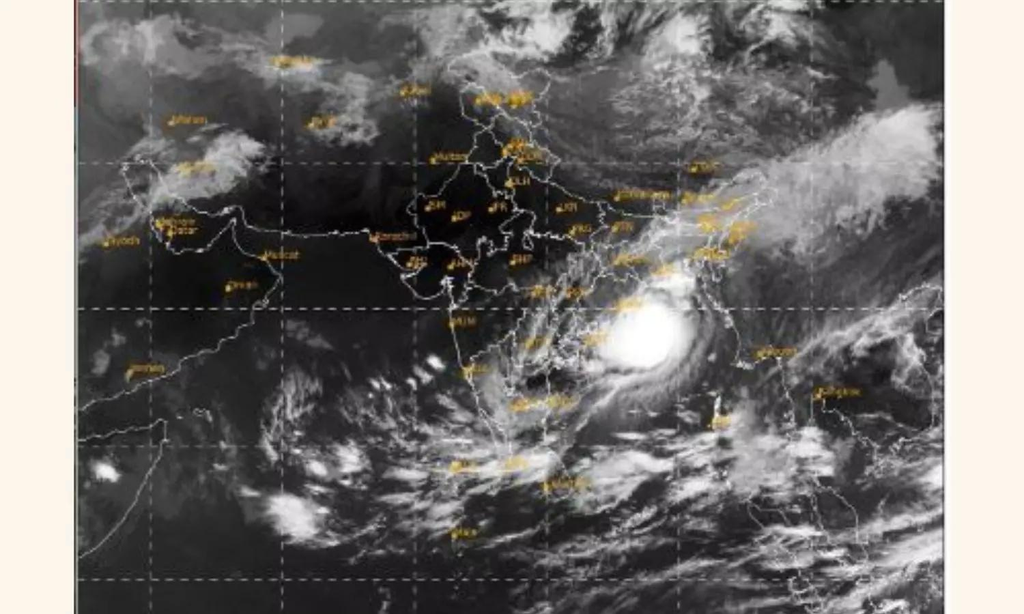
17. Cyclone Akvan crosses Odisha coast; no major damage reported
Why in news?
Cyclone Akvan crossed the Odisha coast near Gopalpur during the morning of November 20. The India Meteorological Department reported wind speeds of 70–80 kmph, gusting to 90 kmph.
According to the Odisha government, no human casualties or major infrastructure damage were reported. However, heavy rainfall affected southern coastal Odisha and parts of West Bengal, disrupting flight and train services.
The cyclone weakened into a deep depression, then a depression and subsequently a well-marked low-pressure area. Ganjam district recorded particularly heavy rainfall, with Patrapur receiving 209 mm in 24 hours. (The Hindu, pp. 1 and 10).
th.th_delhi.21_11_2026.pdf
Odisha braces for heavy storm as cyclone Dana nears; around 10 lakh to be evacuated
6
A. What is a tropical cyclone?
A tropical cyclone is an intense low-pressure weather system that develops over warm tropical oceans and is characterised by organised thunderstorms and strong rotating winds.
B. Conditions necessary for cyclone formation
- Sea-surface temperatures generally around 26.5°C or above over sufficient depth.
- Adequate atmospheric moisture.
- Pre-existing low-pressure disturbance.
- Sufficient Coriolis force.
- Low vertical wind shear.
- Upper-level divergence that allows rising air to escape.
C. Why is the Bay of Bengal vulnerable?
- Relatively warm sea-surface temperatures.
- Large coastal population exposed to cyclonic hazards.
- Shallow coastal waters in certain regions, which can amplify storm surges.
- High concentration of settlements and infrastructure in low-lying coastal areas.
- Seasonal atmospheric conditions conducive to cyclone formation.
D. India’s cyclone-management framework
The principal institutions involved include:
| Institution | Role |
|---|---|
| IMD | Cyclone monitoring, forecasting and warnings |
| NDMA | National disaster-management policy and guidelines |
| NDRF | Specialised disaster-response operations |
| State Disaster Management Authorities | State-level planning and coordination |
| District administrations | Evacuation, shelters and local response |
The Disaster Management Act, 2005 provides the institutional framework for disaster management in India.
E. Lessons from Cyclone Akvan
The absence of reported casualties despite heavy rainfall demonstrates the importance of preparedness and early-warning systems.
Important priorities include:
- Timely evacuation.
- Cyclone shelters.
- Early warning dissemination.
- Protection of vulnerable populations.
- Resilient power and communication infrastructure.
- Restoration of essential services.
UPSC relevance: GS-III – Disaster management, tropical cyclones, coastal vulnerability and climate resilience.
18. Delhi’s electric-bus expansion and urban air pollution
Why in news?
Delhi’s Chief Minister flagged off 100 additional electric buses, taking the total bus fleet to 7,088, including 5,338 electric buses. The government has set a target of approximately 14,000 buses by 2028–29.
The city also launched 12 inter-State bus services connecting Anand Vihar ISBT with Hapur and nearby urban centres.
Delhi’s average AQI was reported at 270 on November 20, placing it in the poor category. (The Hindu, p. 2).
th.th_delhi.21_11_2026.pdf
Significance of electric buses
- Reduction in tailpipe emissions.
- Lower urban transport-related air pollution.
- Reduced dependence on fossil fuels.
- Potential improvement in public-transport accessibility.
- Contribution to India’s electric-mobility transition.
Challenges
- High initial procurement costs.
- Charging infrastructure requirements.
- Battery lifecycle and recycling.
- Electricity generation-related emissions.
- Need for route planning and fleet utilisation.
- Financial sustainability of public transport agencies.
Way forward
A successful electric-mobility transition must combine vehicle electrification with improved public transport, walking and cycling infrastructure, cleaner electricity and effective urban planning.
UPSC relevance: GS-III – Air pollution, electric mobility and sustainable urbanisation.
V. 👥 SOCIAL JUSTICE, HEALTH AND VULNERABLE SECTIONS
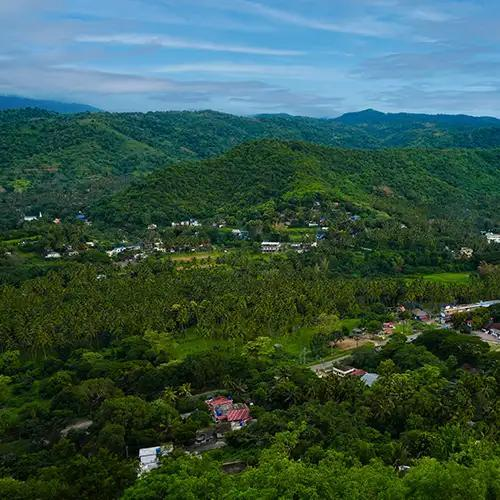
19. Attappady’s recurring tribal infant deaths: A crisis beyond healthcare
Very High Priority
Why in news?
A The Hindu ground report from Attappady in Palakkad district, Kerala, highlights 10 tribal infant deaths during 2026, including four consecutive deaths in October.
Six of the ten deaths reportedly involved congenital anomalies. An expert committee of doctors and researchers is examining the deaths.
The report argues that the crisis cannot be understood merely as a problem of hospital access or malnutrition. It is connected to poverty, land alienation, changing food habits, weakening community institutions, drinking-water quality and cultural factors. (The Hindu, p. 7).
th.th_delhi.21_11_2026.pdf
A. Attappady: Socio-demographic context
Attappady has 192 tribal hamlets spread across three panchayats:
- Agali.
- Pudur.
- Sholayur.
The three major tribal communities are:
- Irula.
- Muduga.
- Kurumba.
The region has a large forest cover and a predominantly tribal population.
B. Major findings reported in the newspaper
| Issue | Details reported |
|---|---|
| Infant deaths | 10 during 2026 |
| Congenital anomalies | Six of the ten reported deaths involved congenital anomalies |
| Infant deaths since 2022 | 55, according to the Kottathara hospital superintendent |
| Anaemia | ICMR-NIN study reported 97.7% of children aged 12–23 months and 96.6% of adolescent girls affected |
| Sickle cell disease | 18 of 80 samples tested positive at a medical camp in 2024 |
| Healthcare expenditure | ₹490 crore reportedly spent over ten years |
| Referral facilities | Major referral centre at Thrissur, several hours away |
| Tribal health personnel | 144 tribal promoters under the ITDP framework |
These figures are from the newspaper’s ground report and should be treated as reported findings, not as a substitute for a comprehensive epidemiological assessment.
C. Why is the crisis multidimensional?
1. Poverty and land alienation
The loss of traditional agricultural land has affected livelihoods, nutrition and the ability of families to maintain food security.
The newspaper reports that tribal communities had lost more than 10,500 acres by 1982, according to Integrated Tribal Development Project records.
2. Erosion of traditional food systems
Traditional cultivation of millets, pulses and diverse leafy vegetables has declined.
The shift towards a narrower rice-based diet may have affected dietary diversity.
3. Healthcare accessibility
Advanced neonatal and specialised treatment facilities are located at considerable distances.
Kottathara lacks some specialised medical services, including neonatology.
4. Maternal health
Delayed antenatal registration, inadequate nutrition and gaps in timely financial assistance affect maternal and infant health.
5. Cultural barriers
Language differences, traditional beliefs and the emotional difficulties associated with referrals outside the community can influence healthcare utilisation.
6. Water and sanitation
The report highlights concerns about drinking-water quality, including the detection of coliform bacteria in samples.
7. Sickle cell disease and congenital anomalies
The reported prevalence of sickle cell disease and the increasing concern over congenital anomalies require careful medical investigation and culturally sensitive screening.
D. Relevant government programmes
| Programme | Objective |
|---|---|
| Janani Suraksha Yojana | Promote institutional deliveries among eligible women |
| Janani Shishu Suraksha Karyakram | Provide free and cashless maternal and newborn healthcare |
| POSHAN Abhiyaan | Improve nutritional outcomes |
| ICDS / Saksham Anganwadi | Nutrition, early childhood care and development |
| National Health Mission | Strengthen public-health systems |
| National Sickle Cell Anaemia Elimination Mission | Screening, awareness and management of sickle cell disease |
| Dharti Aaba Janjatiya Gram Utkarsh Abhiyan | Improve infrastructure and service delivery in tribal-majority villages |
E. Way forward: From service delivery to community-centred development
- Strengthen neonatal and maternal healthcare facilities in tribal regions.
- Improve access to specialist services and emergency transport.
- Ensure timely implementation of maternal-benefit schemes.
- Conduct culturally appropriate genetic and sickle-cell screening.
- Restore traditional millet and pulse cultivation.
- Protect tribal land rights and community resources.
- Improve drinking-water quality and sanitation.
- Conduct health-awareness programmes in local tribal languages.
- Include tribal representatives in hospital management committees and local decision-making.
- Address alcoholism, poverty and livelihood insecurity through community-based interventions.
Mains perspective: Tribal health cannot be separated from the social determinants of health. Effective intervention requires integration of healthcare, nutrition, land rights, livelihood security, cultural sensitivity and local participation.
UPSC relevance: GS-II – Vulnerable sections, health, welfare schemes and tribal development; GS-III – Nutrition and food security.
20. Caesarean deliveries in India: Insurance data point to a high rate
Why in news?
A study of more than 1.6 lakh delivery-related hospitalisation insurance claims found that the average Caesarean-section rate among the covered population had reached 69%.
The data relate primarily to corporate employees and white-collar workers covered by insurance and should not be treated as a national population-wide estimate.
The newspaper compares the finding with the WHO’s long-standing reference range of 10–15% and reports that the NFHS 2023–24 data showed a Caesarean rate of 54% in the private sector. (The Hindu, p. 10).
th.th_delhi.21_11_2026.pdf
A. What is a Caesarean section?
A Caesarean section is a surgical procedure in which a baby is delivered through incisions in the mother’s abdomen and uterus.
It may be medically necessary in cases involving:
- Fetal distress.
- Placental complications.
- Breech presentation.
- Multiple pregnancies.
- Certain maternal health conditions.
- Previous Caesarean deliveries, depending on clinical circumstances.
B. Why is the rising rate a concern?
- Increased risk of surgical complications.
- Longer recovery periods.
- Higher healthcare expenditure.
- Potential complications in subsequent pregnancies.
- Risk of unnecessary medical intervention.
- Unequal access to appropriate maternity care.
C. Important policy dimensions
The objective should not be to minimise Caesarean deliveries indiscriminately. The correct objective is to ensure that every delivery is conducted through the most appropriate and safest method based on clinical need.
Policy priorities include:
- Standardised clinical protocols.
- Monitoring hospital-level Caesarean rates.
- Transparent reporting of maternity-care outcomes.
- Strengthening midwifery and maternal-health services.
- Reviewing insurance coverage and reimbursement structures.
- Preventing unnecessary surgical interventions.
UPSC relevance: GS-II – Health policy, public health and healthcare regulation.
21. Transgender persons and livelihood opportunities in West Bengal
Why in news?
The West Bengal government has announced an initiative called the Brihannala Brigade, under which transgender persons will be trained and engaged in municipal tax collection and traffic-awareness activities.
The stated objective is to provide dignified livelihood opportunities and reduce dependence on begging. (The Hindu, p. 3).
th.th_delhi.21_11_2026.pdf
Constitutional and legal background
- Article 14: Equality before the law.
- Article 15: Prohibition of discrimination.
- Article 16: Equality of opportunity in public employment.
- Article 21: Right to life and dignity.
- Transgender Persons (Protection of Rights) Act, 2019.
Significance
- Economic empowerment.
- Social inclusion.
- Reduction of discrimination.
- Access to dignified employment.
- Visibility and participation in public institutions.
Way forward
Employment initiatives must be accompanied by skill development, social protection, workplace safety, anti-discrimination mechanisms and access to education and healthcare.
UPSC relevance: GS-II – Vulnerable sections, social empowerment and inclusive development.
VI. 🔬 SCIENCE, TECHNOLOGY AND INTERNAL SECURITY
22. NCB–DEA operation busts transnational drug network
Why in news?
The Narcotics Control Bureau (NCB), in coordination with the United States Drug Enforcement Administration (DEA), has busted a transnational network allegedly supplying psychotropic and opioid drugs to consumers in the United States.
The operation, code-named Operation Monsoon Thunder, resulted in six arrests in India.
The newspaper reports that the network allegedly handled approximately 3,000 parcels containing close to five lakh tablets between June 2022 and November 2026. (The Hindu, p. 10).
th.th_delhi.21_11_2026.pdf
A. Modus operandi
According to the report:
- Drug orders were allegedly received through Telegram, Skype and WhatsApp.
- Indian operators coordinated with individuals in the United States.
- Consignments were dispatched through postal and delivery channels.
- Payments were allegedly received through digital payment systems, bank accounts, UPI and hawala channels.
- A large database of customer information was shared with the DEA for further investigation.
B. Significance
The case illustrates how organised criminal networks increasingly use:
- Digital communication platforms.
- Cross-border logistics.
- Financial intermediaries.
- Online customer databases.
- International payment systems.
C. Challenges for law enforcement
- Jurisdictional limitations.
- Digital evidence collection.
- Cryptocurrency and digital-payment tracing.
- International extradition.
- Differences in national drug laws.
- Cross-border data sharing.
D. Way forward
- Strengthen intelligence-sharing mechanisms.
- Improve international cooperation through mutual legal assistance treaties.
- Build digital-forensic capabilities.
- Improve coordination between NCB, DEA and other enforcement agencies.
- Strengthen financial investigation and anti-money laundering mechanisms.
UPSC relevance: GS-III – Internal security, organised crime, cyber-enabled crime and drug trafficking.
23. NIA seeks UAE assistance in investigation of an aircraft co-pilot
Why in news?
The National Investigation Agency has sent a mutual legal assistance request to the United Arab Emirates in connection with an investigation into an alleged attempt to crash an Israel-bound flight on September 30, 2026.
The newspaper reports that the co-pilot was identified as an Omani national and that the investigation is examining his contacts, including possible connections in India.
The NIA has sought documents and permission to examine certain individuals in the UAE. (The Hindu, p. 8).
th.th_delhi.21_11_2026.pdf
Important legal and institutional concepts
Mutual Legal Assistance Treaty (MLAT): An agreement or legal arrangement through which countries assist each other in criminal investigations and prosecutions.
Letters Rogatory: Formal requests by a judicial authority to a foreign judicial authority seeking assistance in obtaining evidence or performing specific judicial acts.
Extradition: The formal surrender of a person by one country to another for prosecution or punishment.
Challenges in transnational investigations
- Differences in national laws.
- Dual criminality requirements.
- Access to electronic evidence.
- Data protection restrictions.
- Delays in international cooperation.
- Establishing the admissibility of foreign evidence.
UPSC relevance: GS-III – Internal security and international cooperation in counterterrorism.
24. NIA clarifies the investigation into a U.S. citizen accused of training armed groups in Myanmar
The NIA Director-General said that investigators were still examining whether the armed groups allegedly trained by a U.S. citizen and Ukrainian nationals in Myanmar included Indian insurgents.
The agency has not pursued additional terror charges at this stage because the identity of the alleged trainees has not yet been established, according to the newspaper’s report. (The Hindu, p. 8).
th.th_delhi.21_11_2026.pdf
Significance
The case highlights security challenges along India’s northeastern borders:
- Insurgent networks operating across international borders.
- Illegal movement of weapons.
- Drone warfare and the spread of military technology.
- Cross-border training and logistical support.
- Difficulties in establishing jurisdiction and criminal responsibility.
Way forward
India needs stronger border surveillance, intelligence coordination, cooperation with Myanmar and neighbouring countries, and enhanced monitoring of emerging technologies used by armed groups.
UPSC relevance: GS-III – Internal security, border management and insurgency.
25. Supreme Court dismisses Tamil Nadu’s Cauvery water plea
Why in news?
The Supreme Court dismissed Tamil Nadu’s plea seeking a direction to Karnataka to compensate for a shortfall of 16.01 thousand million cubic feet (TMC), later modified to 11.719 TMC, of Cauvery water during the 2026–27 irrigation year.
The dispute concerns the application of pro-rata sharing during a distress water year.
The newspaper recalls the allocation framework established through the Cauvery Tribunal’s 2007 award and the Supreme Court’s 2018 judgment. (The Hindu, pp. 1 and 10).
th.th_delhi.21_11_2026.pdf
A. Cauvery water allocation
The reported annual allocation is based on an assessed basin flow of 740 TMC at 50% dependability.
| State / purpose | Allocation |
|---|---|
| Karnataka | 284.75 TMC |
| Tamil Nadu | 404.25 TMC |
| Kerala | 30 TMC |
| Puducherry | 7 TMC |
| Environmental flows | 10 TMC |
| Inevitable sea wastage | 4 TMC |
| Total | 740 TMC |
B. What is distress sharing?
When rainfall is below normal and the total water yield falls below the assessed availability, the States are expected to share the available water proportionately.
This is known as pro-rata sharing.
C. Institutional framework
- Cauvery Water Disputes Tribunal.
- Cauvery Water Management Authority.
- Inter-State River Water Disputes Act, 1956.
- Supreme Court’s constitutional jurisdiction.
D. Constitutional provisions
- Article 262: Adjudication of disputes relating to inter-State rivers and river valleys.
- Union List Entry 56: Regulation and development of inter-State rivers and river valleys.
- State List Entry 17: Water, subject to the provisions of Union List Entry 56 and other constitutional limitations.
E. Way forward
- Strengthen real-time hydrological monitoring.
- Improve transparency in reservoir data.
- Develop drought-sharing protocols.
- Promote micro-irrigation and water-use efficiency.
- Improve inter-State institutional coordination.
- Encourage basin-level integrated water-resource management.
UPSC relevance: GS-II – Federalism and inter-State relations; GS-III – Water resources and irrigation.
26. Nikhil Gupta sentenced to 235 months in U.S. prison
Why in news?
An Indian national, Nikhil Gupta, was sentenced by a U.S. court to 235 months in prison after pleading guilty to charges relating to a murder-for-hire conspiracy targeting Khalistani separatist Gurpatwant Singh Pannun in New York.
The sentencing is significant for India–U.S. relations, international criminal law and the prosecution of transnational offences. (The Hindu, pp. 1 and 10).
th.th_delhi.21_11_2026.pdf
UPSC dimensions
- Jurisdiction over offences committed outside a country’s territory.
- Extradition and mutual legal assistance.
- International cooperation in criminal investigations.
- Diplomatic implications of alleged transnational operations.
- Protection of individuals and sovereignty of host States.
Analytical caution: The sentence concerns the individual accused and convicted in the U.S. proceedings. Broader claims about State involvement should not be inferred from this judgment alone.
UPSC relevance: GS-II – India–U.S. relations; GS-III – Internal security and international criminal cooperation.
VII. 🌍 OTHER IMPORTANT INTERNATIONAL DEVELOPMENTS
27. Bangladesh faces renewed unrest amid Sheikh Hasina’s proposed return
The newspaper reports fresh arson attacks and violence in Bangladesh amid political unrest over former Prime Minister Sheikh Hasina’s proposed return from India in December.
At least three people were reported killed in the unrest. The report also mentions attacks on properties associated with political figures and the family home of Nobel laureate Muhammad Yunus. (The Hindu, p. 12).
th.th_delhi.21_11_2026.pdf
Importance for India:
- Political stability in Bangladesh.
- Border security and migration.
- Protection of minorities.
- Connectivity and trade.
- Security cooperation.
- India’s neighbourhood diplomacy.
India should support stability, democratic processes and peaceful political dialogue while safeguarding its own security interests.
28. Myanmar rejects ICJ genocide ruling on Rohingya
Myanmar’s presidential spokesperson criticised the International Court of Justice’s ruling on genocide against the Rohingya, arguing that the decision was unfair and not unanimous.
The newspaper recalls the ICJ’s findings concerning the 2017 military crackdown, including killings, sexual violence and extreme violence against children. (The Hindu, p. 12).
th.th_delhi.21_11_2026.pdf
UPSC significance:
- International Court of Justice.
- Genocide Convention, 1948.
- Responsibility of States under international law.
- Protection of minorities.
- Refugee rights and safe, voluntary repatriation.
- Enforcement limitations of international judicial decisions.
29. Russia launches major strikes on Ukraine
The newspaper reports large-scale Russian strikes on Ukraine, with Ukrainian authorities reporting civilian casualties and extensive missile and drone attacks.
Poland also reported that Russian missiles may have landed in its territory, describing the incident as a provocation. Russia’s President had earlier warned of a painful response following Ukrainian strikes on the Crimea Bridge. (The Hindu, p. 12).
th.th_delhi.21_11_2026.pdf
UPSC significance: NATO, European security, Russia–Ukraine conflict, strategic deterrence and international humanitarian law.
30. Estonia to close road border crossings with Russia
Estonia announced that it would close its road border crossings with Russia for at least six months on security grounds. Moscow warned of diplomatic retaliation. (The Hindu, p. 12).
th.th_delhi.21_11_2026.pdf
UPSC relevance: NATO’s eastern flank, European security architecture and the geopolitical consequences of the Russia–Ukraine conflict.
VIII. 📚 OTHER IMPORTANT GOVERNANCE AND POLICY DEVELOPMENTS
31. Bihar signs MoUs worth ₹1.72 lakh crore for energy projects
Bihar signed memoranda of understanding for six energy projects involving an estimated investment of ₹1,72,885 crore.
The projects include:
- Two proposed nuclear power plants in Banka and Siwan.
- Four pumped-storage projects in Nawada, Jamui and Aurangabad.
The initiative is intended to strengthen power generation and energy-storage capacity in the State. (The Hindu, p. 3).
th.th_delhi.21_11_2026.pdf
UPSC relevance: GS-III – Energy security, nuclear energy, renewable energy and infrastructure.
Concept to understand: Pumped-storage hydropower
Pumped-storage systems store energy by pumping water to an upper reservoir during periods of surplus electricity and releasing it through turbines during periods of high demand.
They can help integrate variable renewable energy sources such as solar and wind.
32. Siang Upper Multipurpose Project raises tribal and environmental concerns
The proposed 11,000 MW Siang Upper Multipurpose Project in Arunachal Pradesh has triggered concerns among indigenous communities, particularly the Adi community.
The concerns include displacement, ancestral land, environmental and geological risks, livelihoods and cultural heritage. The newspaper reports that the Congress has demanded written assurances that the project will not be imposed on affected communities. (The Hindu, p. 9).
th.th_delhi.21_11_2026.pdf
UPSC relevance: GS-III – Hydropower, environmental impact assessment and infrastructure; GS-II – Tribal rights and federal governance.
33. Maharashtra withdraws its petition against FSSAI regulations
The Maharashtra government has decided to withdraw its petition challenging certain provisions of the Food Safety and Standards (Licensing and Registration of Food Businesses) Regulations, 2011, and their 2026 amendment.
The State had argued that the regulations created a parallel administrative structure that encroached upon the powers of State food-safety authorities. (The Hindu, p. 3).
th.th_delhi.21_11_2026.pdf
UPSC relevance: GS-II – Centre–State relations, regulatory institutions and cooperative federalism.
34. Supreme Court’s concern over the preservation of historical books
The Supreme Court’s intervention in the Central Secretariat Library matter also highlights the importance of protecting institutional memory and public archives.
This issue can be connected with:
- National Archives of India.
- Conservation of manuscripts.
- Digitisation of public records.
- Access to historical documents.
- Heritage impact assessment.
UPSC relevance: GS-I – Art and culture; GS-II – Governance and public institutions.
IX. 📝 PRELIMS FACTS AND CONCEPTS – QUICK REVISION
| Topic | Important fact |
|---|---|
| Delimitation | Articles 82 and 170 |
| Women’s reservation | 106th Constitutional Amendment Act, 2023 |
| FCRA | Foreign Contribution (Regulation) Act, 2010 |
| Association | Article 19(1)(c) |
| Bike taxis | Motor Vehicles Act, 1988 |
| Ladakh | Union Territory since 2019 |
| SCO | Established in 2001 |
| India’s SCO membership | Full member since 2017 |
| Vasudhaiva Kutumbakam | The world is one family |
| New START | U.S.–Russia nuclear arms-control treaty; expired in February 2026 according to the newspaper |
| Strait of Hormuz | Connects Persian Gulf with Gulf of Oman |
| Core industries | Eight sectors |
| Core sector index base year | 2022–23 |
| SEBI | Securities and Exchange Board of India |
| FPI | Foreign Portfolio Investor |
| ICDR | Issue of Capital and Disclosure Requirements |
| LODR | Listing Obligations and Disclosure Requirements |
| Great Nicobar | Southernmost major island of the Andaman and Nicobar archipelago |
| FRA | Forest Rights Act, 2006 |
| Cyclone management | Disaster Management Act, 2005 |
| IMD | India Meteorological Department |
| Tribal communities in Attappady | Irula, Muduga and Kurumba |
| Janani Janma Raksha | Kerala scheme for pregnant and lactating Scheduled Tribe women |
| Sickle cell disease | Inherited blood disorder affecting haemoglobin |
| C-section | Caesarean section |
| Hallmarking | Certification of precious-metal purity |
| BIS | Bureau of Indian Standards |
| NCB | Narcotics Control Bureau |
| NIA | National Investigation Agency |
| MLAT | Mutual Legal Assistance Treaty |
| ICJ | Principal judicial organ of the United Nations |
| Genocide Convention | Convention on the Prevention and Punishment of the Crime of Genocide, 1948 |
| Pumped storage | Energy-storage mechanism using upper and lower water reservoirs |
| ETS | Emissions Trading System |
X. ✍️ MAINS PRACTICE QUESTIONS
The following questions are framed around the important developments reported in the newspaper.
GS Paper I – Society and Geography
1. “The health challenges of tribal communities cannot be addressed through medical interventions alone.” Discuss with reference to the situation in Attappady. (250 words)
2. Examine the relationship between land alienation, erosion of traditional food systems and nutritional insecurity among tribal communities. (250 words)
3. Discuss the geographical factors responsible for the vulnerability of India’s eastern coastline to tropical cyclones. (150 words)
GS Paper II – Polity, Governance and International Relations
4. Delimitation in India involves a difficult balance between democratic representation and federal equity. Discuss. (250 words)
5. Examine the constitutional and governance challenges associated with implementing women’s reservation through the delimitation process. (250 words)
6. The regulation of foreign contributions must balance national security with the autonomy of civil society organisations. Discuss. (250 words)
7. “Regulation is often a more proportionate response than prohibition in a modern economy.” Examine this proposition with reference to the Supreme Court’s observations on bike taxis. (150 words)
8. Examine the role of the SCO in promoting regional cooperation in Eurasia. What opportunities does India’s civilisational diplomacy offer within the organisation? (250 words)
9. The emergence of great-power groupings poses challenges to the traditional idea of a multipolar world. Discuss India’s options in this changing international order. (250 words)
10. Examine the importance of India–Nepal cooperation in strengthening regional connectivity, energy security and economic integration. (150 words)
11. Discuss the constitutional and administrative challenges involved in balancing environmental protection, infrastructure development and tribal rights in strategically important regions. (250 words)
GS Paper III – Economy, Environment, Science and Security
12. The growth of the Index of Eight Core Industries is an important indicator of industrial performance, but it does not necessarily indicate broad-based economic recovery. Examine. (150 words)
13. Discuss the role of SEBI in deepening India’s capital markets and attracting foreign investment. (150 words)
14. Examine the opportunities and systemic risks associated with the rapid financialisation of artificial intelligence. (250 words)
15. Artificial intelligence safety is emerging as an important dimension of national and international security. Discuss the need for a comprehensive AI-governance framework in India. (250 words)
16. Evaluate the environmental and strategic dimensions of the Great Nicobar Island development project. Suggest measures to ensure sustainable development. (250 words)
17. Discuss the role of early-warning systems, evacuation and community participation in reducing cyclone-related casualties in India. (150 words)
18. Examine the importance of the Strait of Hormuz for India’s energy security and maritime interests. (150 words)
19. Discuss the challenges associated with transnational organised crime and the role of international cooperation in combating drug trafficking. (250 words)
20. Inter-State river-water disputes reveal the limitations of India’s existing mechanisms for cooperative federalism. Discuss with reference to the Cauvery dispute. (250 words)
GS Paper IV – Ethics, Integrity and Aptitude
21. Case Study: A development project in a strategically important island region promises employment, connectivity and national-security benefits. However, indigenous communities fear displacement, loss of customary land and destruction of ecological resources.
As a district-level administrator:
- Identify the ethical issues involved.
- Explain the competing stakeholder interests.
- How would you ensure that development is inclusive and environmentally sustainable?
- What principles should guide your decision-making?
22. Case Study: A government hospital in a tribal region is facing recurring infant deaths. Medical specialists are unwilling to serve in the region, local communities distrust referral hospitals, and financial assistance reaches beneficiaries with delays.
As the district health officer, what immediate and long-term measures would you take? Explain the ethical principles guiding your response.
XI. 🎯 PRIORITY ASSESSMENT FOR UPSC CSE 2027
| Priority | Topic | Why it matters |
|---|---|---|
| Very High | Delimitation and women’s reservation | Constitutional provisions, federalism and representation |
| Very High | Shenzhen summit and emerging world order | India’s strategic autonomy and multipolarity |
| Very High | SCO Civilisational Dialogue Forum | Soft power and India’s Eurasian engagement |
| Very High | Attappady tribal infant deaths | Tribal health and multidimensional deprivation |
| Very High | Great Nicobar Island Project | Environment, tribal rights and maritime strategy |
| Very High | AI safety and financialisation | Emerging technology and governance |
| Very High | Core sector growth | Industrial growth and economic indicators |
| High | FCRA Amendment Bill | Civil society and constitutional rights |
| High | SEBI reforms and FPI onboarding | Capital markets and financial regulation |
| High | Strait of Hormuz | Energy and maritime security |
| High | Cyclone Akvan | Disaster management |
| High | Cauvery water dispute | Inter-State relations and water governance |
| High | NCB–DEA drug network | Internal security and international cooperation |
| High | C-section delivery rates | Public health and healthcare regulation |
| High | Bike taxis | Judiciary, urban mobility and gig economy |
| High | Siang project | Hydropower and tribal rights |
| Moderate | Gold adulteration | Consumer protection and BIS |
| Moderate | Bihar energy projects | Nuclear power and pumped storage |
| Moderate | UK–EU agreements | Carbon markets and youth mobility |
| Moderate | Transgender employment | Social inclusion and empowerment |
XII. 📌 RECOMMENDED STANDALONE STUDY MATERIAL ARTICLES
The following topics deserve separate, comprehensive articles on the Samata IAS Academy website.
- Delimitation in India: Constitutional Framework, Historical Evolution, Challenges and the Way Forward
- Artificial Intelligence Safety and Governance: Global Challenges and India’s Policy Options
- Great Nicobar Island Project: Strategic Importance, Environmental Concerns and Tribal Rights
- Tribal Health in India: Social Determinants, Nutritional Challenges and Healthcare Delivery
- The Shanghai Cooperation Organisation: Structure, Objectives and India’s Role
- India and the Changing World Order: Strategic Autonomy, Multipolarity and the Idea of a Fourth Pole
- India’s Capital Markets: Role of SEBI, Foreign Portfolio Investment and Corporate Bond Market Development
- Disaster Management in India: Tropical Cyclones, Early Warning Systems and Coastal Resilience
- Foreign Contribution Regulation Act: Legal Framework, NGO Regulation and Constitutional Concerns
- Inter-State River Water Disputes in India: Constitutional Provisions and Institutional Mechanisms