
Introduction
Museums are important institutions for preserving a society’s collective memory. They do not merely store historical objects; they collect, conserve, research, interpret and communicate the cultural experiences of different generations. They also help societies understand their historical evolution, artistic traditions, technological achievements, belief systems and social transformations.
India possesses one of the world’s richest and most diverse cultural heritages, extending from prehistoric archaeological remains and the Indus Valley Civilisation to classical art, medieval architecture, regional traditions and contemporary cultural expressions. However, the challenge is not simply the richness of this heritage, but its systematic documentation, conservation, interpretation and accessibility to the public.
Against this background, the Union Cabinet’s approval of the Yuge Yugeen Bharat Museum (YYBM) on 11 November 2026 represents a significant development in India’s cultural infrastructure.
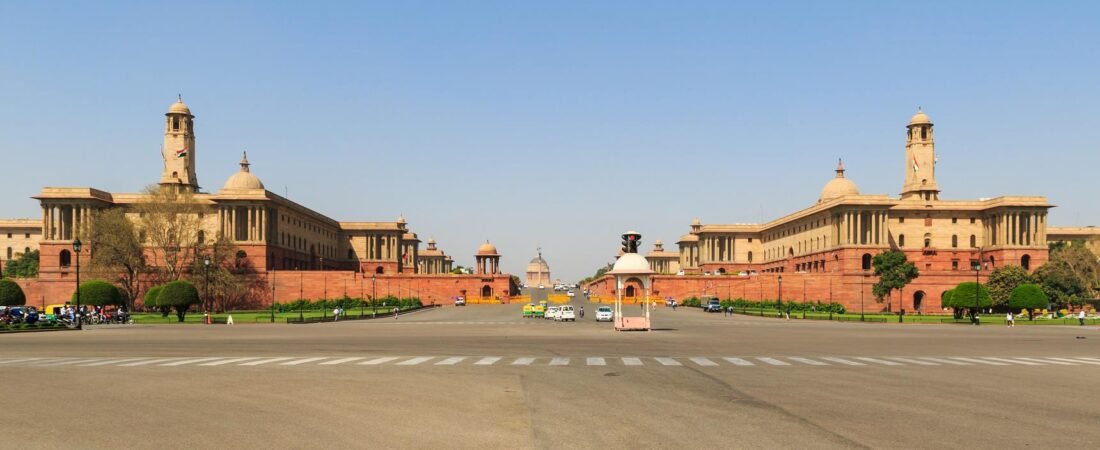
The project, estimated to cost ₹3,230 crore, will transform the historic North and South Block buildings in New Delhi into a major national museum through adaptive reuse. It aims to present India’s civilisational journey through an integrated interpretation of its tangible and intangible heritage. Press Information Bureau+1
The project raises important questions concerning heritage conservation, museum governance, historical interpretation, cultural diplomacy and the democratisation of knowledge.
1. Yuge Yugeen Bharat Museum: Key Features
The Yuge Yugeen Bharat Museum was first announced on 18 May 2023, during the International Museum Expo. The project is being developed by the Ministry of Culture.
The Cabinet Committee on Economic Affairs approved the project on 11 November 2026.
Major features
| Particulars | Details |
|---|---|
| Name | Yuge Yugeen Bharat Museum |
| Location | North and South Block Complex, New Delhi |
| Nodal ministry | Ministry of Culture |
| Approved project cost | ₹3,230 crore |
| Proposed built-up area | Approximately 1,78,509 sq. metres |
| Planned display area | More than 1 lakh sq. metres |
| Implementation period | FY 2026–27 to FY 2030–31 |
| Objects identified for potential display | Approximately 18 lakh |
| Expected annual visitor capacity | 1 crore |
| First gallery | Adornment, expected to open in the latter part of 2027 |
The museum is expected to have the world’s largest museum display area, according to the Government of India. Its collections will draw upon the National Museum, other museums under the Ministry of Culture, 52 Archaeological Survey of India (ASI) site museums, state museums and private collections. Press Information Bureau+2
Proposed thematic galleries
The museum will present India’s civilisational journey through thematic galleries, including:
- Adornment: Jewellery, personal ornaments, textiles and traditions of bodily decoration.
- Architecture and Cityscapes: Evolution of settlements, urban planning, monuments and architectural styles.
- Mathematics and Astronomy: India’s contributions to mathematical thought, astronomical observations and scientific knowledge.
- Languages and Scripts: Development of India’s linguistic diversity, writing systems and literary traditions.
- Faith and Spirituality: Religious traditions, philosophical schools, spiritual practices and their historical interactions.
- Bharat Connects – Trade and Ideas: India’s historical connections with other regions through trade, migration, cultural exchange and intellectual interaction.
The first gallery, on Adornment, is expected to open in the North Block in the latter part of 2027. The museum is being developed through a phased and modular approach. Press Information Bureau+1
2. Historical Significance of North and South Blocks
The museum project is significant not only because of its proposed collections but also because of the historical importance of the buildings in which it will be housed.
North Block of the Secretariat Building in New Delhi, India
North, South Blocks to be restored in phased manner
Architectural background
North Block and South Block form an important part of the Central Secretariat complex in New Delhi. They were designed by British architect Herbert Baker as part of the construction of New Delhi as the capital of British India.
The buildings were completed around the inauguration of New Delhi in 1931.
Their architecture combines elements of European classical design with features associated with Indian architectural traditions. Their imposing façades, colonnades, courtyards and sandstone construction form an important part of the architectural character of Lutyens’ Delhi.
Political and administrative significance
These buildings served as important centres of India’s administrative and political institutions.
- South Block housed the Prime Minister’s Office after Independence.
- Important Cabinet-level deliberations and national policy decisions took place in these buildings.
- They symbolised the continuity of the central administrative structure through the colonial and post-Independence periods.
Government offices were relocated from the historic buildings in February 2026, creating an opportunity to repurpose them as public cultural spaces. Press Information Bureau+1
Why is their transformation significant?
The conversion of North and South Blocks into a museum represents a change in the public function of these buildings.
They are moving from being primarily administrative spaces to institutions intended for public learning, cultural engagement and historical interpretation.
This transformation also raises a broader question: How can India conserve the physical legacy of its past while democratising access to the historical knowledge associated with it?
3. Understanding Adaptive Reuse in Heritage Conservation
One of the most important concepts associated with the museum project is adaptive reuse.
Adaptive reuse refers to the process of giving an existing building a new functional purpose while retaining its significant architectural, historical and cultural characteristics.
Instead of demolishing an old structure and constructing an entirely new building, adaptive reuse attempts to integrate the building’s heritage value with contemporary requirements.
Difference between restoration, conservation and adaptive reuse
| Concept | Meaning | Primary objective |
|---|---|---|
| Restoration | Returning a structure to a known earlier state | Recover historical appearance |
| Conservation | Protecting the structure from deterioration and loss | Preserve heritage value |
| Adaptive reuse | Giving an existing building a new functional purpose | Combine preservation with contemporary use |
| Reconstruction | Rebuilding a structure or part of it | Recreate lost or damaged elements |
Advantages of adaptive reuse
1. Preservation of architectural heritage
It helps retain historically significant buildings, architectural features and urban landscapes.
2. Sustainable utilisation of resources
Reusing existing structures can reduce the need for demolition and new construction, thereby limiting material consumption and construction waste.
3. Economic efficiency
Depending on structural conditions and conservation requirements, adaptive reuse may make better use of existing infrastructure.
4. Cultural continuity
Buildings acquire new public functions without losing their connection with the past.
5. Urban regeneration
Historic buildings can become cultural destinations, educational centres and public spaces, contributing to the regeneration of surrounding urban areas.
Challenges
Adaptive reuse is not always straightforward. Historic buildings may require:
- Structural strengthening and restoration.
- Fire safety and emergency evacuation systems.
- Climate control and humidity management.
- Accessibility infrastructure.
- Protection of original architectural features.
- Modern electrical, lighting and security systems.
The challenge is to introduce modern facilities without compromising the historic integrity of the structure.
In the case of Yuge Yugeen Bharat Museum, the Government has stated that the architectural character and heritage significance of North and South Blocks will be preserved while adapting their internal spaces for museum functions. Press Information Bureau+1
4. Understanding India’s Tangible and Intangible Cultural Heritage
A major objective of the Yuge Yugeen Bharat Museum is to present India’s tangible and intangible heritage through an integrated narrative.
This distinction is important for understanding the broader scope of cultural heritage conservation.
A. Tangible cultural heritage
Tangible heritage refers to physical objects, monuments, buildings and material remains that possess historical, artistic, archaeological or cultural significance.
It includes:
- Archaeological sites and monuments.
- Sculptures and paintings.
- Coins and inscriptions.
- Manuscripts and historical documents.
- Textiles, jewellery and handicrafts.
- Traditional tools and technological artefacts.
- Historic buildings and urban settlements.
Examples include the sculptures of the Gupta period, Chola bronzes, Mughal miniature paintings, ancient coins and archaeological remains of the Indus Valley Civilisation.
B. Intangible cultural heritage
Intangible heritage refers to living cultural practices, expressions, knowledge systems and skills transmitted across generations.
It includes:
- Oral traditions and expressions.
- Performing arts.
- Traditional music and dance.
- Rituals and festivals.
- Traditional craftsmanship.
- Knowledge concerning nature and the universe.
- Traditional medicine and healing practices.
- Community-based cultural expressions.
Examples include India’s classical dance traditions, oral epics, traditional weaving practices, folk music and indigenous ecological knowledge.
Difference between tangible and intangible heritage
| Tangible heritage | Intangible heritage |
|---|---|
| Physical and material in nature | Living practices and cultural expressions |
| Can often be preserved through physical conservation | Requires transmission through communities and practitioners |
| Includes monuments, sculptures and manuscripts | Includes music, dance, rituals and traditional knowledge |
| Conservation focuses on material integrity | Conservation focuses on continuity, practice and transmission |
Important: Intangible heritage cannot be adequately protected by merely displaying photographs, recordings or objects. Its preservation requires the participation of the communities that practise and transmit it.
This is particularly relevant to India’s traditional artisans, tribal communities, folk performers and indigenous knowledge holders.
5. Museums as Institutions of Historical Interpretation
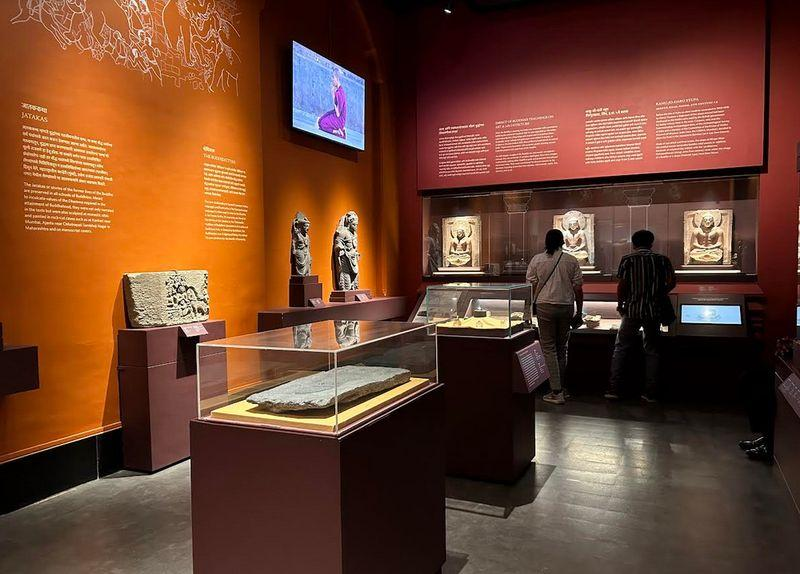
Museums are not neutral warehouses of historical objects. They select, classify, preserve and interpret material evidence to communicate particular aspects of the past.
This makes museum governance and historical interpretation extremely important.
How do museums construct historical understanding?
A museum influences public understanding of history through several interconnected processes:
- Collection: Selection and acquisition of objects.
- Classification: Categorisation according to period, region, material or cultural context.
- Conservation: Protection and maintenance of collections.
- Interpretation: Explanation of the historical and cultural significance of objects.
- Presentation: Arrangement of objects in galleries and exhibitions.
- Public engagement: Educational programmes, guided tours, publications and digital platforms.
For instance, a sculpture displayed in isolation may communicate its artistic qualities. However, when displayed with information about its historical period, religious context, patronage, artistic technique and regional influences, it can provide a much deeper understanding of the society that produced it.
The importance of a balanced historical narrative
India’s civilisational history is characterised by regional diversity, cultural exchanges, migrations, intellectual interactions and social transformations.
A comprehensive national museum should therefore avoid presenting history as a linear account of isolated dynasties or political events.
It should explain:
- Continuity as well as change.
- Regional diversity alongside wider civilisational connections.
- Indigenous developments and external influences.
- Religious traditions and philosophical debates.
- Artistic achievements and technological innovations.
- Social hierarchies, inequalities and historical transformations.
- Contributions of women, tribal communities, artisans and marginalised groups.
A balanced historical narrative must be supported by archaeological evidence, inscriptions, manuscripts, historical scholarship, scientific dating and interdisciplinary research.
The museum’s credibility will depend substantially on the quality of its research, documentation and interpretative methods.
6. Museums and India’s Civilisational Connections with the World
India’s historical development cannot be understood in isolation from the wider world.
Trade, migration, religious movements, maritime networks and intellectual exchanges connected the Indian subcontinent with Central Asia, West Asia, Southeast Asia, East Asia, Africa and Europe.
A museum presenting India’s civilisational history should explain these connections.
Major historical connections
| Region | Historical connections with India |
|---|---|
| Central Asia | Trade routes, migration, political interactions and cultural exchanges |
| West Asia | Maritime trade, commercial networks, religious and intellectual interactions |
| Southeast Asia | Spread and adaptation of Indian religious, artistic and architectural traditions |
| East Asia | Buddhist networks, pilgrimage and transmission of knowledge |
| Africa | Indian Ocean trade, migration and commercial connections |
| Europe | Ancient trade, colonial interactions and modern intellectual exchanges |
India’s cultural influence in Southeast Asia
Indian religious, artistic and literary traditions influenced several Southeast Asian societies.
Examples include:
- Hindu and Buddhist architectural traditions in Cambodia.
- Ramayana traditions in Thailand and Indonesia.
- Sanskrit inscriptions in parts of Southeast Asia.
- Buddhist networks connecting India with Sri Lanka, Myanmar, Thailand, China and other regions.
However, these developments should not be understood as simple one-way cultural transmission. Local societies adapted, transformed and integrated these traditions into their own cultural frameworks.
UPSC perspective: India’s cultural influence abroad is best understood through the concepts of cultural diffusion, localisation, syncretism and civilisational interaction.
7. Museums, Cultural Diplomacy and India’s Soft Power
Cultural institutions can contribute significantly to a country’s international influence.
Soft power refers to the ability of a country to influence others through attraction, values, culture and ideas rather than through coercion or financial incentives.
India’s civilisational heritage provides an important foundation for its soft power.
How museums contribute to cultural diplomacy
1. International visibility
Museums provide opportunities to showcase India’s artistic, archaeological and intellectual heritage to international visitors.
2. Academic cooperation
International exhibitions, joint research projects and exchanges of museum professionals can strengthen cultural relations.
3. Promotion of tourism
Major museums can become important destinations for international cultural tourism.
4. International understanding
Museums can communicate India’s historical contributions to science, mathematics, philosophy, art, architecture and literature.
5. Cultural partnerships
Collaborations with international institutions can facilitate conservation training, exhibition design, research and exchange of collections.
The Yuge Yugeen Bharat Museum is expected to strengthen India’s cultural tourism and international cultural engagement. Press Information Bureau+1
However, cultural diplomacy should be based on credible historical research and openness to scholarly dialogue. Its purpose should be to deepen international understanding rather than merely promote a simplified national image.
8. India’s Museum and Heritage Conservation Framework
India has several institutions and initiatives responsible for the protection, documentation and promotion of cultural heritage.
A. Archaeological Survey of India (ASI)
The Archaeological Survey of India, established in 1861, is the principal organisation responsible for archaeological research and the protection of centrally protected monuments and archaeological sites.
Its major functions include:
- Conservation and preservation of centrally protected monuments.
- Archaeological excavations and explorations.
- Scientific study of archaeological remains.
- Maintenance of protected sites and monuments.
- Documentation of India’s archaeological heritage.
B. National Museum
The National Museum in New Delhi was established in 1949 and formally inaugurated at its present Janpath premises in 1960.
It houses collections relating to different periods and cultural traditions of Indian history.
The National Museum is an important institution for the conservation, research and public presentation of archaeological and artistic collections.
The National Museum at Janpath is expected to continue functioning alongside the Yuge Yugeen Bharat Museum. The two institutions are envisaged as having different but complementary approaches to presenting India’s past. ThePrint+1
C. National Mission on Monuments and Antiquities (NMMA)
The National Mission on Monuments and Antiquities was established in 2007 to document and digitise unprotected monuments and antiquities across India.
According to information provided by the Ministry of Culture in March 2026:
- Approximately 1.84 lakh monuments and built heritage sites had been documented.
- Approximately 17.20 lakh antiquities had been documented.
The mission seeks to create comprehensive national registers of monuments and antiquities and strengthen their documentation. Press Information Bureau
D. National Mission for Manuscripts
The National Mission for Manuscripts was established in 2003 to document, conserve and promote India’s manuscript heritage.
Its activities include:
- Documentation and cataloguing of manuscripts.
- Conservation and preservation.
- Capacity building and training.
- Digitisation and knowledge dissemination.
- Promotion of manuscript studies.
E. Ministry of Culture
The Ministry of Culture is responsible for formulating and implementing policies concerning the preservation, promotion and dissemination of India’s cultural heritage.
It works through several autonomous organisations, institutions and specialised bodies involved in museums, archives, performing arts, literature and cultural research.
9. International Frameworks for Museum Governance and Heritage Protection
Museum development is guided not only by national policies but also by international standards and conventions.
A. International Council of Museums (ICOM)
The International Council of Museums (ICOM) is a global organisation representing museum professionals and institutions.
In 2022, ICOM adopted a revised definition of a museum.
According to this definition, a museum is a permanent institution serving society that researches, collects, conserves, interprets and exhibits tangible and intangible heritage. It should be accessible, inclusive, ethical and professionally managed, while promoting diversity and sustainability. International Council of Museums+1
This definition highlights that a modern museum must perform functions beyond the display of historical objects.
B. UNESCO Recommendation concerning Museums and Collections, 2015
UNESCO adopted the Recommendation concerning the Protection and Promotion of Museums and Collections, their Diversity and their Role in Society on 17 November 2015.
It emphasises:
- Preservation of tangible and intangible heritage.
- Research and documentation.
- Education and lifelong learning.
- Accessibility and social inclusion.
- Cultural diversity and intercultural dialogue.
- Community participation.
- Sustainable development.
- Ethical management of collections.
The recommendation also highlights the importance of maintaining professional inventories and preventing illicit trafficking of cultural objects. Legal Affairs+1
C. UNESCO Convention for the Safeguarding of the Intangible Cultural Heritage, 2003
The Convention seeks to safeguard living cultural traditions and practices.
It recognises the importance of:
- Oral traditions and expressions.
- Performing arts.
- Social practices, rituals and festive events.
- Knowledge and practices concerning nature and the universe.
- Traditional craftsmanship.
The convention places considerable importance on the participation of communities in safeguarding their own heritage.
D. UNESCO World Heritage Convention, 1972
The World Heritage Convention provides an international framework for identifying, protecting and preserving cultural and natural heritage of outstanding universal value.
It is particularly relevant to the conservation of monuments, archaeological sites, historic cities and cultural landscapes.
10. Major Challenges in India’s Museum Sector
Despite India’s enormous cultural wealth, museum development faces several institutional and structural challenges.
1. Inadequate documentation
Many historical objects, manuscripts, private collections and regional antiquities remain inadequately documented.
The absence of standardised inventories creates difficulties in identifying, tracing and protecting cultural objects.
2. Shortage of trained professionals
Modern museums require specialised professionals in:
- Conservation science.
- Archaeology and art history.
- Museum education.
- Collection management.
- Exhibition design.
- Digital archiving.
- Restoration and preventive conservation.
A shortage of trained personnel can undermine the quality of museum management.
3. Conservation infrastructure
Historical objects require specialised storage conditions.
Temperature, humidity, light exposure, pollution, pests and improper handling can cause irreversible damage.
Museums must invest in climate-controlled storage, conservation laboratories and preventive maintenance.
4. Unequal geographical distribution
Major national museums are concentrated in a limited number of cities.
Many smaller towns, rural regions and tribal areas lack adequate museums and cultural interpretation centres.
This limits public access to cultural resources.
5. Limited public engagement
Museums are often perceived as formal institutions meant primarily for researchers, historians and tourists.
There is a need to make museums more accessible to school students, local communities, persons with disabilities and first-time visitors.
6. Risk of historical oversimplification
A national museum must present a complex and diverse civilisation without reducing it to a narrow political or cultural narrative.
Historical interpretation should be evidence-based, inclusive and open to academic scrutiny.
7. Illicit trafficking of antiquities
Illegal excavation, theft, smuggling and unauthorised international trade threaten India’s archaeological and artistic heritage.
Strengthening inventories, provenance research, border enforcement and international cooperation is essential.
8. Digital divide
Digital technologies can improve access to museum collections, but inadequate infrastructure, technical expertise and digital literacy can prevent smaller institutions from benefiting from these opportunities.
11. Way Forward: Building a Modern and Inclusive Museum Ecosystem
The Yuge Yugeen Bharat Museum should be viewed as an opportunity to strengthen India’s wider museum ecosystem rather than as an isolated infrastructure project.
A. Strengthen professional museum governance
Museums should have clearly defined institutional responsibilities, professional leadership, transparent collection-management systems and adequate financial support.
B. Improve conservation infrastructure
Investment is required in conservation laboratories, scientific testing, climate-controlled storage and disaster-preparedness systems.
C. Accelerate digitisation
A comprehensive digital inventory of museum collections can improve documentation, research, transparency and public accessibility.
Digital records should include:
- Photographs and descriptions.
- Historical and archaeological context.
- Provenance and ownership records.
- Conservation history.
- Scientific analysis, wherever available.
D. Encourage community participation
Local communities, traditional artisans, tribal groups and cultural practitioners should participate in documenting and presenting their heritage.
This will help museums represent living cultural traditions rather than treating communities merely as subjects of historical display.
E. Improve accessibility
Museums should develop multilingual interpretation, audio guides, accessible infrastructure, educational programmes and digital exhibitions.
F. Strengthen educational partnerships
Schools, universities, research institutions and museums should collaborate through:
- Museum-based learning programmes.
- Archaeological and historical workshops.
- Student research projects.
- Curatorial training.
- Public lectures and exhibitions.
G. Promote regional museums
India needs a stronger network of regional and local museums that document the cultural histories of different states, linguistic communities and geographical regions.
H. Ensure evidence-based historical interpretation
Museum narratives should be supported by archaeological, historical, scientific and interdisciplinary research.
Different perspectives should be represented responsibly, with clear distinctions between established evidence, scholarly interpretation and unresolved historical debates.
I. Strengthen international cooperation
India should expand cooperation with international museums, universities, conservation laboratories and cultural organisations for research, professional training, exhibitions and the recovery of illicitly trafficked antiquities.
12. Significance of the Yuge Yugeen Bharat Museum for UPSC
The project has relevance across several areas of the Civil Services Examination syllabus.
| UPSC component | Relevant themes |
|---|---|
| GS Paper I | Indian culture, art forms, architecture, literature and cultural heritage |
| GS Paper I | Modern Indian history and colonial architecture |
| GS Paper II | Government policies and institutional mechanisms |
| GS Paper III | Science and technology in heritage conservation, digitisation and cultural resource management |
| GS Paper IV | Public service values, preservation of collective heritage and responsibility towards future generations |
| Essay | Culture, civilisation, identity, heritage and nation-building |
| Prelims | ASI, National Museum, ICOM, UNESCO conventions and cultural heritage terminology |
Important Prelims facts
- The Yuge Yugeen Bharat Museum is being developed at the North and South Block Complex in New Delhi.
- The project was approved by the Cabinet Committee on Economic Affairs on 11 November 2026.
- Its estimated project cost is ₹3,230 crore.
- The project is being implemented by the Ministry of Culture.
- The first gallery is expected to be based on the theme of Adornment.
- The Archaeological Survey of India was established in 1861.
- The National Museum was established in 1949 and inaugurated at its present premises in 1960.
- The National Mission on Monuments and Antiquities was established in 2007.
- ICOM adopted its revised museum definition in 2022.
- UNESCO adopted its Recommendation concerning Museums and Collections in 2015.
Conclusion
The Yuge Yugeen Bharat Museum represents an important opportunity to rethink the manner in which India preserves, interprets and communicates its civilisational heritage.
Its significance lies not merely in the scale of the proposed infrastructure or the number of objects it may display, but in its potential to connect historical evidence with public education, academic research and cultural understanding.
However, the success of the project will depend on the quality of conservation, professional museum governance, historical research, accessibility and community participation.
A museum should not be reduced to a collection of impressive galleries or a tourist attraction. It must function as a living institution of learning, reflection and cultural dialogue.
India’s cultural heritage can become a meaningful national asset only when it is preserved scientifically, interpreted responsibly and made accessible to all sections of society.
UPSC Mains Practice Questions
1. GS Paper I – 10 Marks
Discuss the role of museums in preserving and promoting India’s tangible and intangible cultural heritage.
2. GS Paper I – 15 Marks
The Yuge Yugeen Bharat Museum represents an attempt to integrate heritage conservation with contemporary public cultural infrastructure. Examine its significance and the challenges associated with the project.
3. GS Paper II – 15 Marks
Museums are increasingly recognised as institutions of education, social inclusion and cultural diplomacy rather than merely repositories of historical objects. Discuss.
4. Essay
“Preserving the past is essential for shaping the future.”
Official references and further reading
Use these sources for verification and further study:
- PIB – Cabinet approval for Yuge Yugeen Bharat Museum, 11 November 2026.
- PIB – Yuge Yugeen Bharat Museum: Preserving India’s Civilisational Heritage.
- PIB – National Mission on Monuments and Antiquities.
- ICOM – Official Museum Definition.
- UNESCO – Recommendation on the Protection and Promotion of Museums and Collections.
- PIB – Yuge Yugeen Bharat National Museum, March 2025.