

Introduction
The Governor occupies a distinctive position in India’s federal system. As the constitutional head of a state, the Governor performs executive, legislative and certain discretionary functions. The office is intended to ensure that state government operates within the Constitution while preserving the principles of parliamentary democracy and responsible government.
However, the Governor’s role has frequently become controversial, particularly when the ruling party at the state level differs from the party governing at the Union level. Questions surrounding assent to Bills, the summoning of legislative assemblies, the appointment of Chief Ministers and the use of discretionary powers have generated debates about constitutional conventions, federalism and democratic accountability.
The central issue is not whether the Governor possesses constitutional powers, but how those powers should be exercised within a system in which the elected Council of Ministers is ordinarily responsible for governing the state.
Recent Supreme Court decisions have made this debate especially important. In November 2025, the Supreme Court’s advisory opinion on the Presidential Reference concerning Articles 200 and 201 clarified important aspects of the Governor’s and President’s roles in dealing with state Bills, including the rejection of judicially imposed fixed timelines and the concept of deemed assent. These developments must be read alongside earlier judgments on gubernatorial discretion and constitutional conventions.
1. Constitutional Position of the Governor
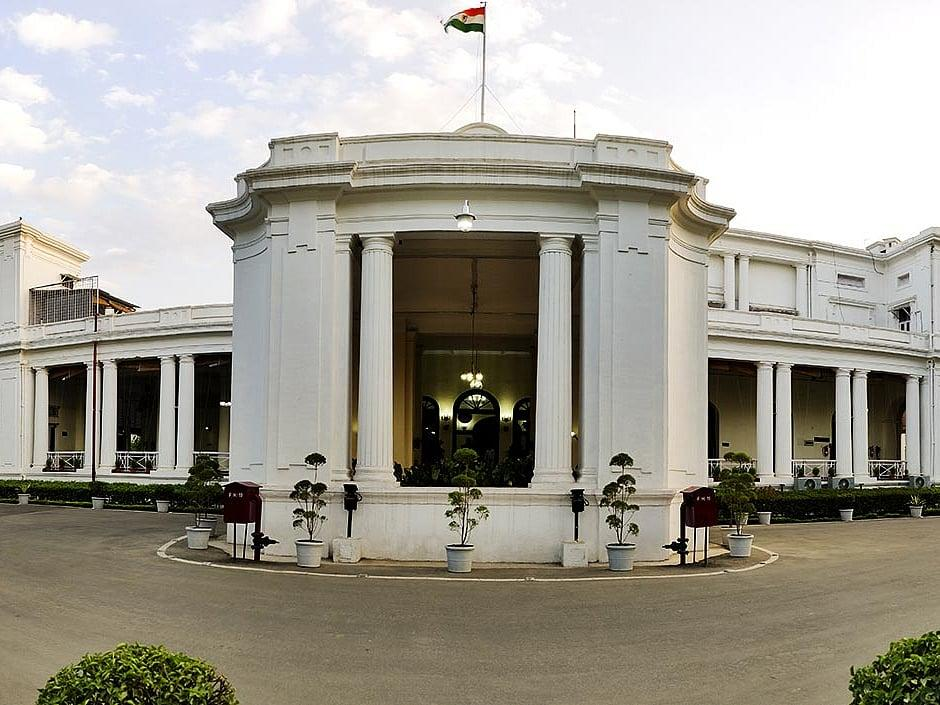
The constitutional framework governing the Governor is primarily contained in Part VI of the Constitution, particularly Articles 153 to 162, along with provisions relating to the state legislature and the constitutional relationship between the Union and states.
Article 153: Governors of states
Article 153 provides for a Governor for each state. The same person may be appointed Governor of two or more states.
Article 154: Executive power of the state
Article 154 vests the executive power of the state in the Governor. This power is exercised directly or through officers subordinate to the Governor in accordance with the Constitution.
In India’s parliamentary system, however, the Governor ordinarily acts on the aid and advice of the Council of Ministers headed by the Chief Minister, subject to constitutionally recognised exceptions.
Article 155: Appointment
The Governor is appointed by the President of India by warrant under his or her hand and seal.
The Governor is therefore appointed rather than directly elected by the people of the state.
Article 156: Term of office
The Governor holds office during the pleasure of the President and ordinarily remains in office for five years from the date of entering office. The Governor may resign by writing to the President.
The five-year term does not operate as an absolute guarantee of tenure because the Constitution provides for the pleasure principle. Nevertheless, constitutional governance requires that the appointment and removal of Governors be exercised consistently with constitutional principles.
Article 157: Qualifications
A person must be a citizen of India and have completed 35 years of age to be eligible for appointment as Governor.
Article 158: Conditions of office
Article 158 prescribes conditions relating to the office, including restrictions on membership of Parliament or a state legislature and the holding of other offices of profit.
Article 159: Oath
Before entering office, the Governor takes an oath to preserve, protect and defend the Constitution and the law, and to devote himself or herself to the service and well-being of the people.
Article 161: Pardoning power
The Governor can grant pardons, reprieves, respites or remissions of punishment, and suspend, remit or commute sentences in cases falling within the executive power of the state, subject to constitutional limitations and applicable law.
Article 163: Aid and advice
Article 163 provides for a Council of Ministers headed by the Chief Minister to aid and advise the Governor, except where the Constitution requires the Governor to exercise functions in discretion.
This provision is central to understanding the Governor’s position. The Governor is not a parallel elected executive. The office must operate within the constitutional framework of responsible government.
For the authoritative constitutional text, consult the Legislative Department’s Constitution of India resource.
2. Executive Powers of the Governor
The Governor performs several executive functions within the constitutional framework.
Appointment of the Chief Minister
Under Article 164, the Governor appoints the Chief Minister and, on the Chief Minister’s advice, appoints other ministers.
In ordinary circumstances, the leader who commands the confidence of the elected Legislative Assembly is appointed Chief Minister. When no party or coalition has a clear majority, the Governor may have to assess which leader is most likely to secure the confidence of the House.
Such situations demand impartiality, transparency and respect for legislative procedures.
Appointment of other officials
The Governor performs specified appointment functions under the Constitution and applicable laws. These include the appointment of the Advocate General under Article 165 and participation in certain state-level constitutional processes.
The Governor also appoints the chairperson and members of the State Public Service Commission under Article 316, subject to the constitutional framework governing those commissions.
Administration and ministerial advice
Although executive power is vested in the Governor, the elected Council of Ministers ordinarily determines government policy and administration.
The Governor may seek information from the Chief Minister regarding the administration of state affairs and legislative proposals, including under Article 167. This power facilitates constitutional communication; it does not convert the Governor into an alternative policymaking authority.
3. Legislative Powers of the Governor
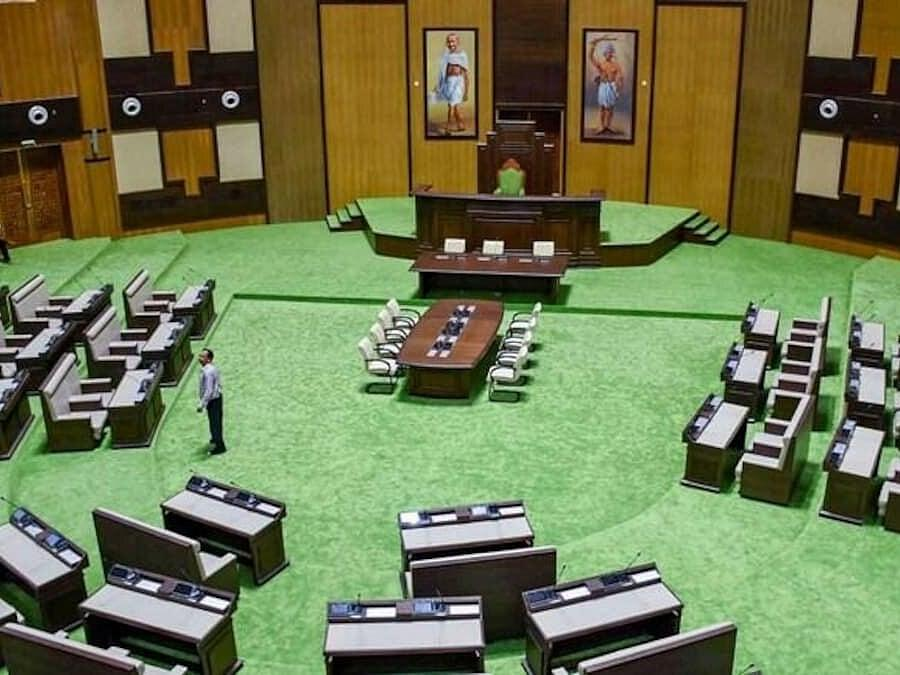
The Governor forms part of the state legislature under Article 168, alongside the Legislative Assembly and, where one exists, the Legislative Council.
The Governor’s legislative functions include summoning and proroguing the legislature, addressing it, dealing with Bills and promulgating Ordinances in accordance with the Constitution.
Summoning and proroguing the legislature
Article 174 empowers the Governor to summon the House or Houses of the state legislature, prorogue them and dissolve the Legislative Assembly.
The provision must be understood in the context of parliamentary government and constitutional conventions. The Governor is not ordinarily free to use these powers to frustrate the elected government’s functioning.
Addressing the legislature
Under Article 176, the Governor delivers a special address at the commencement of the first session after each general election to the Legislative Assembly and at the first session of each year.
The address communicates the government’s broad policy priorities. In a parliamentary system, the address is generally prepared in accordance with the elected government’s programme.
Assent to Bills: Articles 200 and 201
One of the most debated aspects of the Governor’s role concerns the treatment of Bills passed by the state legislature.
Under Article 200, when a Bill is presented to the Governor, the Governor has constitutionally prescribed options: grant assent, withhold assent in accordance with the Article’s scheme, or reserve the Bill for the consideration of the President. A Bill other than a Money Bill may also be returned to the legislature with a message requesting reconsideration.
If the legislature passes a returned Bill again, with or without amendments, and presents it to the Governor, the first proviso to Article 200 provides that the Governor shall not withhold assent therefrom. The Article also requires reservation for the President where the specified condition concerning the powers of the High Court is met.
Article 201 governs the President’s consideration of a Bill reserved by the Governor.
The constitutional difficulty arises when a Bill remains pending for a prolonged period or when the Governor’s action appears to conflict with the policy of an elected government.
The Supreme Court’s 2025 developments
In State of Tamil Nadu v. Governor of Tamil Nadu (2025), the Supreme Court examined the Governor’s handling of Bills passed by the Tamil Nadu legislature. The judgment delivered on 8 April 2025 set aside the Governor’s reservation of ten Bills after their reconsideration by the legislature and prescribed timelines in the particular dispute.
Subsequently, the President referred questions concerning Articles 200 and 201 to the Supreme Court under Article 143. On 20 November 2025, a five-judge Constitution Bench delivered its advisory opinion.
The opinion clarified that:
- Courts cannot prescribe fixed timelines for the Governor or President to decide on assent under Articles 200 and 201.
- The Constitution does not recognise the concept of deemed assent, under which a Bill would automatically be treated as approved merely because a specified period had elapsed.
- Courts cannot substitute their own decision for the constitutionally assigned role of the Governor or President.
- The decision on the merits of a Bill before it becomes law is not open to judicial adjudication in the manner of a challenge to enacted legislation.
- The constitutional framework does not authorise a Governor to exercise an unlimited power to obstruct the legislative process indefinitely; the legal treatment of delay must be understood in light of the Court’s opinion and the applicable constitutional principles.
These developments mean that the law should not be summarised simply as either “the Governor must always follow ministerial advice” or “the Governor has unrestricted discretion over Bills.” Article 200 has to be read in its constitutional context, alongside the 2025 judgments and the relevant provisions governing different categories of Bills.
The primary source is the Supreme Court’s advisory opinion of 20 November 2025.
Ordinance-making power: Article 213
When the state legislature is not in session and circumstances require immediate action, Article 213 empowers the Governor to promulgate Ordinances, subject to constitutional conditions.
An Ordinance has the force of law but is temporary and must be placed before the legislature when it reassembles. It ordinarily ceases to operate six weeks after reassembly unless it is replaced or otherwise dealt with according to the Constitution.
The Ordinance-making power is not intended to become a routine substitute for legislative debate. It must be exercised within the constitutional framework and is subject to judicial review on applicable grounds.
4. Discretionary Powers: Scope and Limitations
The Governor’s discretionary authority is among the most contested aspects of the office.
Article 163 recognises that there are circumstances in which the Constitution requires the Governor to act in discretion. However, the existence of the office does not imply that all gubernatorial functions are discretionary.
The distinction between constitutional power and the manner in which that power may be exercised is essential.
Situations involving discretion
The Governor may need to exercise judgment in situations such as:
- Appointing a Chief Minister when no party or coalition has an obvious majority.
- Determining whether a government continues to enjoy the confidence of the Legislative Assembly, where the question arises under constitutionally appropriate circumstances.
- Certain functions under Article 200, in light of the constitutional text and the Supreme Court’s interpretation.
- Sending a report under Article 356 where the Governor believes that the constitutional machinery of the state has broken down, subject to constitutional limitations and judicial scrutiny of the relevant issues.
The precise scope of discretion varies with the constitutional provision and the circumstances. It should not be treated as a general licence to act independently of the elected government.
Floor test and legislative majority
The Legislative Assembly is the primary forum for establishing whether a government commands majority support.
In S.R. Bommai v. Union of India (1994), the Supreme Court emphasised the importance of floor tests in determining legislative majority and placed significant limits on arbitrary use of Article 356.
A Governor’s assessment of political developments should therefore be guided by constitutional norms and legislative procedures rather than personal or partisan preference.
5. The Governor and President’s Rule
Article 356 empowers the President to issue a proclamation when satisfied, on receipt of a Governor’s report or otherwise, that the government of a state cannot be carried on in accordance with the Constitution.
A Governor’s report can be relevant to this process, but it does not automatically establish that President’s Rule is justified.
In S.R. Bommai v. Union of India, the Supreme Court strengthened constitutional safeguards against arbitrary dismissal of state governments. The judgment established that the exercise of power under Article 356 is subject to judicial review and that a legislative majority should ordinarily be tested on the floor of the House.
The Governor’s office must therefore be used to protect constitutional government, not to destabilise elected administrations for political reasons.
6. The Governor and Centre–State Relations
The Governor occupies an institutional position connecting the Union and the state. This position can support constitutional coordination, but it can also generate conflict when the Governor’s actions are perceived as favouring the Union government.
Federalism and elected state governments
India’s Constitution combines a strong Union with constitutionally protected state institutions. Governors are appointed by the President, while state governments derive their democratic mandate from elected legislatures.
The challenge is to reconcile the Governor’s constitutional responsibilities with the autonomy and democratic legitimacy of state governments.
Disputes over Bills
Delays in assent, reservations of Bills and disagreements over constitutional interpretation can affect a state’s legislative agenda. Such disputes are particularly consequential when legislation concerns education, public administration, state finances or other politically sensitive areas.
The Supreme Court’s 2025 decisions underline the need to distinguish between the constitutional options available to the Governor, the procedure for exercising them and the limits of judicial intervention.
Political neutrality
The Governor is expected to discharge constitutional duties impartially. Perceptions that Governors are acting as political representatives of the Union government can weaken trust in the office and intensify federal disputes.
Constitutional conventions, transparent procedures and reasoned institutional conduct are therefore important even where the constitutional text does not provide a detailed procedure for every situation.
7. Important Supreme Court Judgments
Shamsher Singh v. State of Punjab (1974)
The Supreme Court reaffirmed the parliamentary principle that the President and Governor ordinarily act on the aid and advice of their respective Councils of Ministers, except where the Constitution provides otherwise.
Significance: It is a foundational judgment for understanding the Governor as a constitutional head rather than an independent executive authority.
S.R. Bommai v. Union of India (1994)
The Supreme Court placed constitutional limits on the use of Article 356 and strengthened judicial scrutiny of proclamations imposing President’s Rule.
Significance: It reinforces federalism, legislative majority tests and safeguards against arbitrary dismissal of elected state governments.
Nabam Rebia v. Deputy Speaker (2016)
The Supreme Court examined the Governor’s powers concerning legislative proceedings in Arunachal Pradesh and rejected the idea that the Governor could freely interfere with the functioning of the elected legislature.
Significance: It illustrates the limits of gubernatorial discretion and the importance of legislative autonomy.
State of Punjab v. Principal Secretary to the Governor of Punjab (2023)
The Supreme Court considered issues arising from the Governor’s handling of legislative sessions and Bills in Punjab.
Significance: The judgment emphasised constitutional responsibilities and the need for the Governor to act consistently with the parliamentary system.
State of Tamil Nadu v. Governor of Tamil Nadu (2025), and the Presidential Reference (2025)
The April 2025 judgment addressed the Governor’s handling of Bills passed by the Tamil Nadu legislature. The subsequent advisory opinion of 20 November 2025 addressed questions about Articles 200 and 201, including timelines, deemed assent and judicial intervention.
Significance: These developments are essential for understanding the current constitutional debate. Students should distinguish the original judgment in the Tamil Nadu dispute from the later advisory opinion on the Presidential Reference.
8. Major Challenges in the Office of Governor
1. Politicisation of appointments
The appointment of former politicians or individuals closely associated with political parties can create doubts about impartiality, even where the appointment is constitutionally valid.
2. Uncertainty surrounding discretionary authority
The Constitution does not provide an exhaustive list of every circumstance in which the Governor may exercise discretion. This creates room for disputes over conventions, political circumstances and constitutional interpretation.
3. Delays in legislative processes
Prolonged disputes over assent to Bills can affect the functioning of state legislatures and create uncertainty for administration and public policy.
The Supreme Court’s 2025 advisory opinion rejects judicially imposed fixed timelines and deemed assent, making institutional conventions and constitutionally appropriate remedies particularly important.
4. Tensions between constitutional morality and political competition
Constitutional offices must function according to the spirit of parliamentary democracy. When political competition influences the interpretation or exercise of constitutional powers, public confidence can suffer.
5. Weakness of conventions
Some aspects of gubernatorial conduct depend significantly on conventions and established parliamentary practices. Where conventions are ignored or contested, legal and political disputes become more likely.
9. Reforms: Strengthening the Office of Governor
Transparent appointment process
A more consultative appointment process could strengthen public confidence in the impartiality of the office. Any reform should preserve the constitutional appointment framework while encouraging wider consultation with relevant stakeholders.
Clearer conventions for hung assemblies
Conventions governing the invitation to form a government, the order of preference among claimants to a majority and the timing of floor tests should be clear, transparent and consistently followed.
Reasoned and constitutionally grounded decisions
Where the constitutional framework calls for a decision, the Governor should act in accordance with the relevant provision and established legal principles. Clear communication can reduce avoidable conflict, while respecting constitutional confidentiality and legal requirements.
Improve Union–state consultation
Regular institutional dialogue between the Union and state governments can help prevent disagreements from escalating into constitutional confrontations.
Strengthen legislative accountability
The elected legislature should remain central to questions of government majority and lawmaking. Floor tests, legislative debate and judicial review where legally available provide checks against arbitrary action.
Implement relevant commission recommendations
The Sarkaria Commission and Punchhi Commission examined Centre–state relations and the role of Governors. Their recommendations remain valuable for assessing appointment practices, constitutional conventions and the balance between Union and state institutions.
Reform should focus on making the Governor an impartial constitutional authority rather than a competing political centre.
Conclusion
The Governor’s office is an important part of India’s constitutional architecture. It is designed to uphold constitutional government, facilitate the functioning of the state legislature and discharge specific responsibilities under the Constitution.
The office’s legitimacy depends on the manner in which its powers are exercised. A Governor who respects parliamentary conventions, recognises the democratic mandate of the elected government and acts within constitutional limits can contribute to stable federal relations. Conversely, partisan conduct or prolonged institutional conflict can undermine public confidence.
Recent Supreme Court decisions concerning Articles 200 and 201 demonstrate that disputes over the Governor’s role require careful reading of the constitutional text and judicial interpretation. Effective reform must combine constitutional fidelity, political neutrality, transparent conventions and respect for the autonomy of elected state institutions.
Ultimately, the Governor should serve as a constitutional safeguard, not as a parallel political executive. This distinction is essential to India’s parliamentary democracy and cooperative federalism.
UPSC Prelims: Quick Revision
- Article 153: Governors of states.
- Article 154: Executive power of the state.
- Article 155: Appointment of the Governor.
- Article 156: Term of office.
- Article 161: Pardoning power in matters within the state’s executive power, subject to constitutional limits.
- Article 163: Council of Ministers to aid and advise the Governor, subject to constitutional exceptions.
- Article 164: Appointment of the Chief Minister and other ministers.
- Article 174: Summoning, proroguing and dissolution-related powers.
- Article 200: Governor’s options regarding state Bills.
- Article 201: Bills reserved for the President.
- Article 213: Ordinance-making power.
- Article 356: President’s Rule.
- Article 361: Personal immunity of the President and Governors, subject to the constitutional framework.
- S.R. Bommai (1994): Judicial review of Article 356 and importance of legislative majority tests.
- Presidential Reference (2025): Rejected judicially imposed fixed timelines and deemed assent under Articles 200 and 201.
UPSC Mains Practice Questions
GS Paper II
- “The Governor is a constitutional head, not a parallel political executive.” Discuss in the context of India’s parliamentary system.
- Examine the constitutional and federal implications of disputes over the Governor’s assent to state Bills.
- Discuss the significance of S.R. Bommai v. Union of India in limiting the arbitrary use of Article 356.
- What reforms are needed to strengthen the impartiality of the Governor’s office and improve Centre–state relations?
Authoritative References
- Constitution of India — Part VI and relevant provisions concerning state executive and legislative powers.
- Supreme Court of India, State of Tamil Nadu v. Governor of Tamil Nadu (2025).
- Supreme Court of India, Presidential Reference on assent to Bills under Articles 200 and 201, advisory opinion dated 20 November 2025.
- Sarkaria Commission Report on Centre–State Relations.
- Punchhi Commission Report on Centre–State Relations.
- Legislative Department, Government of India — Constitution of India.
- Supreme Court of India — Official judgment PDF on the Presidential Reference.
Related reading on Samata IAS Academy: Indian Polity and Constitution | Fiscal Federalism in India | Parliamentary Committees in India | Money Bills in India