
Introduction
Parliamentary privileges are special rights, immunities and powers enjoyed by Parliament, state legislatures, their members and committees to enable them to discharge their constitutional responsibilities effectively. They protect legislative debate, facilitate scrutiny of the executive and preserve the institutional autonomy of representative bodies.
However, parliamentary privileges also raise an important constitutional question: how can the independence and dignity of legislatures be protected without creating spaces in which elected representatives become unaccountable to ordinary law?
This question is particularly relevant in India, where the Constitution guarantees freedom of speech within legislatures while also establishing judicial review, equality before law and the rule of law. The Supreme Court’s judgment in Sita Soren v. Union of India (2024) reinforced this balance by holding that legislative privilege does not provide immunity from prosecution for bribery connected with a legislator’s speech or vote.
Understanding parliamentary privileges therefore requires an examination of their constitutional basis, scope, limitations and relationship with democratic accountability.
1. Constitutional Framework of Parliamentary Privileges
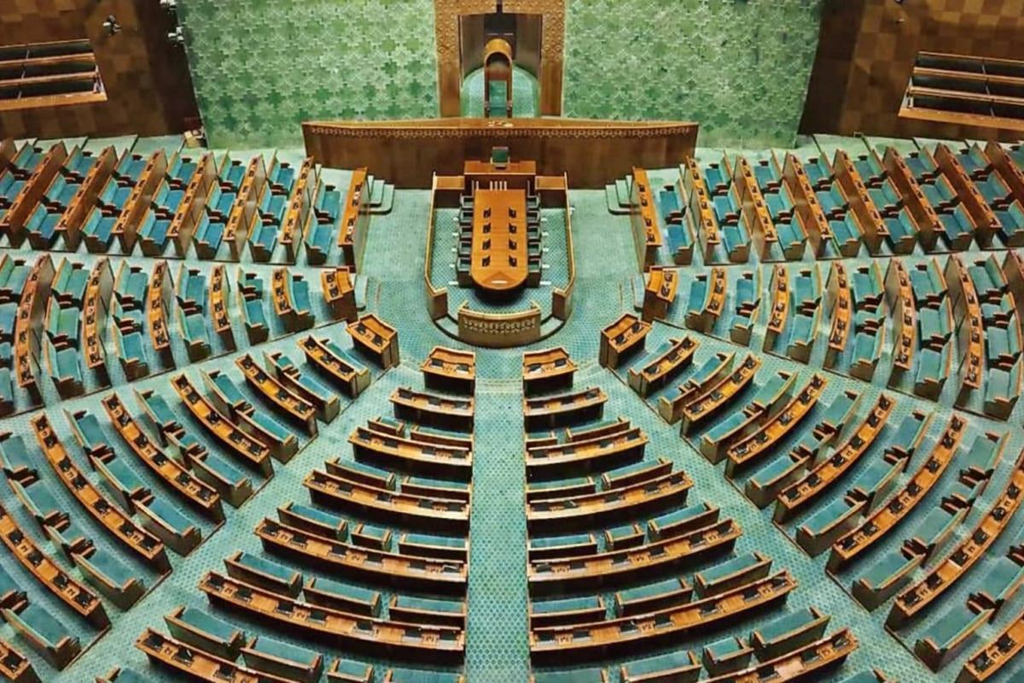
The principal constitutional provisions governing legislative privileges are Articles 105 and 194.
Article 105: Powers and privileges of Parliament
Article 105 deals with the powers, privileges and immunities of Parliament, its members and committees.
Its principal provisions are:
- Article 105(1): Guarantees freedom of speech in Parliament, subject to the Constitution and the rules and standing orders regulating parliamentary procedure.
- Article 105(2): Protects members from court proceedings in respect of anything said or any vote given in Parliament or a parliamentary committee. It also protects authorised publication of parliamentary reports, papers, votes and proceedings.
- Article 105(3): Provides for the privileges of the Houses, members and committees to be defined by Parliament by law. Until then, the constitutional provision preserves the relevant privileges as specified in the Article.
- Article 105(4): Extends the relevant protections to persons who have a constitutional right to speak in, or otherwise participate in, parliamentary proceedings.
Article 194: Privileges of state legislatures
Article 194 provides a corresponding framework for state legislatures.
It protects freedom of speech within state legislatures, establishes immunity relating to legislative speech and votes, and deals with the privileges of state legislative Houses, members and committees.
The distinction is straightforward:
| Provision | Institution covered |
|---|---|
| Article 105 | Parliament, MPs and parliamentary committees |
| Article 194 | State legislatures, MLAs/MLCs and legislative committees |
These provisions support legislative independence while making clear that freedom of speech within a House is subject to constitutional provisions and procedural rules.
For the official constitutional explanation, consult the Lok Sabha’s parliamentary privileges FAQ.
2. Why Are Parliamentary Privileges Necessary?
Parliamentary privileges are not personal rewards granted to legislators. Their constitutional purpose is to ensure that representative institutions can function without improper interference.
Freedom of legislative debate
Legislators must be able to question government policy, expose administrative failures and raise public concerns without the constant threat of legal proceedings over statements made in the House.
This protection supports effective opposition, legislative scrutiny and public accountability.
Independence of the legislature
Parliament and state legislatures must be able to regulate their internal proceedings and conduct their constitutional business without arbitrary interference from other authorities.
Privileges protect the legislature’s capacity to deliberate, investigate matters within its remit and maintain orderly proceedings.
Protection against obstruction
The legislature may need to address conduct that obstructs members, committees or the institution itself from performing their duties. Privileges provide mechanisms for responding to such obstruction, subject to constitutional limitations.
Executive accountability
Legislators use questions, debates, motions and committee proceedings to scrutinise government action. Privileges help ensure that this scrutiny can take place effectively.
Their ultimate purpose is institutional: to protect the functioning of representative democracy, not to place legislators above the law.
3. Types of Parliamentary Privileges
Parliamentary privileges can broadly be divided into collective privileges of the House and individual privileges of members.
A. Collective privileges
Collective privileges belong to the House as an institution.
1. Right to regulate internal proceedings
Each House conducts its business according to the Constitution, applicable laws and its rules of procedure. The presiding officer plays a central role in maintaining order and applying these rules.
2. Power to punish for contempt or breach of privilege
A House may take action against conduct that obstructs its functioning or violates its recognised privileges. The scope and exercise of this authority must remain consistent with constitutional principles.
3. Control over publication of proceedings
The Constitution protects authorised publication of parliamentary reports, papers, votes and proceedings under Article 105(2), with corresponding protection under Article 194(2).
Other constitutional provisions, including Article 361A, also address the publication of legislative proceedings.
4. Protection of institutional authority
The House can take measures necessary to preserve its ability to perform legislative functions. Such authority does not imply that every criticism of a legislator or institution automatically constitutes contempt.
B. Individual privileges
Individual privileges are attached to members in their capacity as legislators.
1. Freedom of speech in the House
Members can express views and participate in legislative debate subject to constitutional limitations, rules of procedure and directions of the presiding officer.
2. Immunity concerning legislative speech and votes
Article 105(2) and Article 194(2) protect legislators from court proceedings in respect of anything said or any vote given in the relevant legislative setting.
This is a functional protection intended to preserve fearless legislative participation.
3. Certain protections relating to attendance and proceedings
Legislative rules and recognised privileges have historically included protections connected with members’ attendance and the functioning of the House. Their precise scope must be assessed under the applicable constitutional provisions, laws, rules and judicial decisions.
These protections should not be confused with a blanket exemption from criminal law.
4. Freedom of Speech in Parliament: Is It Absolute?
Article 105(1) guarantees freedom of speech in Parliament, but expressly makes it subject to the Constitution and the rules and standing orders regulating parliamentary procedure.
This is distinct from Article 19(1)(a), which guarantees freedom of speech and expression as a fundamental right.
Legislative freedom of speech serves a specific constitutional function: enabling representatives to debate, question and deliberate on public affairs within the legislature.
It does not mean that members may disregard the rules of the House. The presiding officer can enforce procedural requirements, maintain order and apply the rules governing debate.
In March 2026, the Lok Sabha Speaker publicly reiterated that parliamentary freedom of speech operates within the framework of constitutional and procedural rules. The statement underlined that no member has an unrestricted privilege to speak outside the established rules of the House. <Cite refs={[“turn329926search7″,”turn329926search1”]}/>
Freedom of speech and statements outside the House
A key distinction must be made between statements made as part of legislative proceedings and statements made outside the House.
The special immunity in Article 105(2) is linked to legislative speech and votes, and to authorised publication as specified in the Article. A statement made at a press conference, in a public meeting or on social media does not automatically receive the same protection merely because the speaker is a Member of Parliament.
The legal position depends on the nature and context of the statement and the relevant law.
5. Parliamentary Privileges and the Rule of Law
The Constitution establishes both legislative autonomy and the principle that public officials remain accountable under law.
Privileges must therefore be interpreted in a way that protects the legislature’s essential functions without extending immunity to conduct unrelated to those functions.
The central distinction is between:
- Protection of legislative functions: Safeguarding speech, voting, deliberation and the orderly functioning of the House.
- Personal immunity from ordinary law: A much broader proposition that would exempt legislators from legal responsibility simply because of their public office.
The Constitution supports the former, not an unlimited version of the latter.
A legislator does not acquire a general licence to commit criminal offences. Nor does the House’s authority to regulate its proceedings automatically displace the jurisdiction of ordinary courts in matters governed by criminal law.
This distinction was central to the Supreme Court’s decision in Sita Soren v. Union of India.
6. Landmark Judgment: Sita Soren v. Union of India (2024)
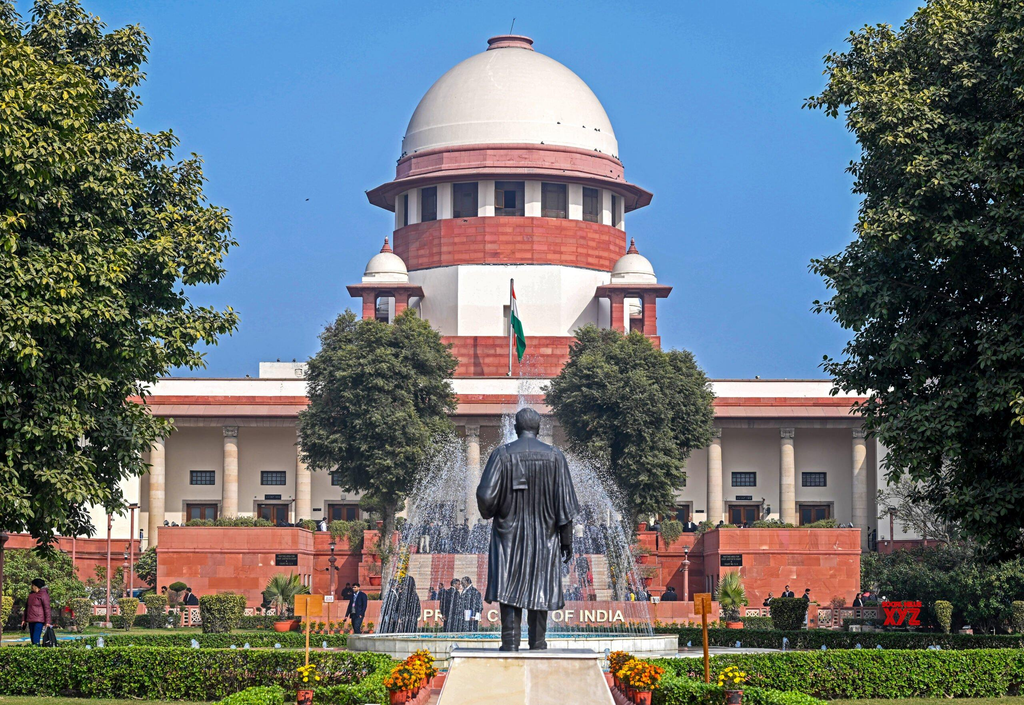
The Supreme Court’s seven-judge Constitution Bench delivered its judgment in Sita Soren v. Union of India on 4 March 2024.
The case concerned the relationship between legislative immunity and allegations of bribery connected with a legislator’s vote.
Background
The dispute raised a fundamental question: could a legislator claim immunity from criminal prosecution for accepting a bribe in connection with a vote in the legislature?
An earlier Supreme Court judgment, P.V. Narasimha Rao v. State (CBI/SPE) (1998), had interpreted legislative immunity in a way that protected certain legislators from prosecution for bribery connected with parliamentary speech or votes, subject to the circumstances considered by the Court.
The issue was reconsidered by a seven-judge Bench in Sita Soren.
What did the Supreme Court decide?
The Court unanimously held that legislators do not enjoy immunity under Articles 105(2) or 194(2) against prosecution for bribery connected with their speech or vote.
The Court overruled the relevant interpretation in P.V. Narasimha Rao (1998).
Its reasoning emphasised that bribery is not an essential part of legislative functioning. Accepting illegal gratification is not transformed into a protected legislative act merely because the payment is connected with a vote or speech.
Constitutional significance
The judgment established several important principles:
- Legislative privileges exist to support the effective functioning of legislatures.
- Privileges are not unlimited personal immunities.
- Bribery is not protected by constitutional immunity relating to legislative speech or votes.
- The House and its members are not insulated from the ordinary operation of criminal law.
- Constitutional interpretation must preserve both legislative independence and public accountability.
The judgment is particularly significant because it clarifies that the purpose of privilege is to protect representative democracy, not to shield corruption.
Read the judgment through the Supreme Court of India’s landmark judgment summaries.
7. Breach of Privilege and Contempt of the House
The terms “breach of privilege” and “contempt of the House” are related but not identical.
Breach of privilege
A breach of privilege occurs when a recognised privilege of a House, member or committee is violated or disregarded.
Examples may include conduct that improperly obstructs a member from performing legislative duties or violates a specific recognised privilege.
Contempt of the House
Contempt of the House is a broader concept. Conduct may amount to contempt where it obstructs or impedes the House, a member or an officer in the discharge of legislative functions, even where the conduct does not fall neatly within a specifically recognised privilege.
The two concepts overlap, and the precise assessment depends on the facts, the relevant privilege and applicable parliamentary rules.
Who decides a question of privilege?
The House may consider and decide questions of privilege, or the matter may be referred to the relevant Committee of Privileges according to the applicable rules.
The committee examines the issue and reports its findings. The House then considers the matter under its procedure.
The existence of this internal process does not mean that every claim made by a House is beyond constitutional scrutiny. Questions involving fundamental constitutional limitations, jurisdiction and legal rights must be understood in light of the applicable constitutional framework and judicial precedents.
8. Are Parliamentary Privileges Codified in India?
A major continuing issue is the absence of a comprehensive law defining all parliamentary privileges.
Article 105(3) authorises Parliament to define privileges by law. Until such legislation is enacted, the provision preserves the privileges specified by the constitutional text.
The Lok Sabha and Rajya Sabha’s official FAQs state that Parliament has not enacted a comprehensive law under Article 105(3) defining the full scope of privileges. Article 194(3) provides the corresponding framework for state legislatures. <Cite refs={[“turn329926search1″,”turn329926search0”]}/>
Why does codification matter?
First, legal certainty: A clearer statutory framework could help members, citizens, journalists and public authorities understand the scope of privileges.
Second, consistency: Codification could reduce differences in interpretation and make procedures more predictable.
Third, safeguards against misuse: Clear definitions and procedures could help distinguish genuine interference with legislative functioning from criticism or conduct that does not justify privilege proceedings.
Fourth, institutional legitimacy: Transparent rules can strengthen public confidence in legislative institutions.
However, codification would require careful drafting. An excessively narrow definition could weaken the legislature’s ability to respond to genuine obstruction, while an overly broad definition could undermine freedom of expression and accountability.
9. Parliamentary Privileges and Judicial Review
The relationship between legislative privilege and judicial review is complex.
Legislatures require autonomy over their internal proceedings. At the same time, the Constitution is supreme, and the existence of legislative privilege does not automatically remove every related matter from judicial scrutiny.
The Supreme Court has recognised the importance of legislative privileges while also establishing that constitutional limitations remain relevant.
The principle of functional necessity
The reasoning in Sita Soren reinforces the idea that privileges must bear a functional relationship to the essential duties of the legislature.
A claim of privilege should not be treated as automatically valid simply because it is made by a member or institution of the legislature.
Institutional autonomy and constitutional limits
Judicial review should not become routine supervision of every internal legislative decision. Equally, legislative privilege should not be interpreted as a blanket bar against examining questions that fall within judicial jurisdiction.
The challenge is to preserve the constitutional balance: legislative independence within the Constitution, rather than institutional independence from the Constitution.
10. Major Challenges and the Way Forward
Challenge 1: Unclear scope of privileges
The absence of comprehensive codification creates uncertainty about the boundaries of certain privileges.
Way forward: Parliament and state legislatures should consider clear, carefully drafted laws defining privileges, procedures and safeguards, while preserving the constitutional freedom necessary for legislative work.
Challenge 2: Potential use against legitimate criticism
Privilege proceedings can create concerns when used in response to criticism of legislators or legislative institutions.
Way forward: The distinction between legitimate criticism and genuine obstruction should be clearly articulated. Any action should be proportionate to the conduct and grounded in recognised privilege principles.
Challenge 3: Confusion between institutional and personal immunity
Privileges designed to protect the House may be incorrectly presented as personal exemptions from legal accountability.
Way forward: Legislative rules, training and public explanations should reinforce the functional purpose of privileges. The Sita Soren judgment provides an important constitutional guide.
Challenge 4: Limited public understanding
The technical language of privileges, contempt and legislative immunity can make it difficult for citizens to understand when a privilege is justified.
Way forward: Legislatures should publish accessible explanations of privilege procedures, committee reports where appropriate, and reasoned accounts of decisions consistent with applicable rules.
Challenge 5: Balancing autonomy with accountability
The legislature must be able to regulate its proceedings without obstruction, but its authority must remain compatible with constitutional governance.
Way forward: Clear procedures, reasoned decisions, judicial precedents and a culture of constitutional restraint should guide the exercise of privilege powers.
Conclusion
Parliamentary privileges are essential to the functioning of representative democracy. They protect legislative speech, facilitate scrutiny of the executive and preserve the autonomy of Parliament and state legislatures.
However, their legitimacy depends on their purpose and limits. Privileges are designed to enable legislators to perform constitutional duties, not to create a class of individuals exempt from ordinary law.
The Supreme Court’s decision in Sita Soren v. Union of India (2024) clarified this principle by holding that bribery connected with a legislator’s speech or vote is not protected by legislative immunity. The judgment reinforces the idea that institutional independence and public accountability are complementary, not opposing, constitutional values.
India should continue to strengthen parliamentary privileges through clearer rules, carefully considered codification and consistent adherence to constitutional principles. The objective must be a legislature that is free to deliberate, capable of holding the executive accountable and itself accountable to the Constitution and the people.
UPSC Prelims: Quick Revision
- Article 105: Powers, privileges and immunities of Parliament, its members and committees.
- Article 194: Powers, privileges and immunities of state legislatures, their members and committees.
- Article 105(1): Freedom of speech in Parliament, subject to constitutional and procedural rules.
- Article 105(2): Immunity relating to legislative speech and votes, and protection for authorised publication as specified in the Article.
- Article 105(3): Legislative power to define privileges by law.
- Article 194: Corresponding framework for state legislatures.
- Article 361A: Protection relating to publication of legislative proceedings, subject to constitutional conditions.
- Breach of privilege: Violation of a recognised privilege.
- Contempt of the House: Conduct that obstructs or impedes legislative functioning; it may extend beyond a specific breach of privilege.
- Sita Soren v. Union of India (2024): Bribery connected with legislative speech or voting is not protected by Articles 105(2) or 194(2).
- P.V. Narasimha Rao v. State (CBI/SPE) (1998): The relevant interpretation of legislative immunity was overruled by the seven-judge Bench in Sita Soren.
UPSC Mains Practice Questions
GS Paper II
- “Parliamentary privileges are intended to protect legislative functioning, not to confer personal immunity from the law.” Discuss with reference to Sita Soren v. Union of India (2024).
- Examine the constitutional basis of parliamentary privileges in India. Should they be codified by law?
- Distinguish between breach of privilege and contempt of the House. Discuss the need to balance legislative autonomy with constitutional accountability.
- Explain the relationship between parliamentary privileges, freedom of speech and judicial review in India.
Authoritative References
- Constitution of India — Articles 105, 194 and 361A.
- Supreme Court of India, Sita Soren v. Union of India, 2024 INSC 161, decided 4 March 2024.
- Supreme Court of India — Landmark Judgment Summaries, 2024.
- Lok Sabha Secretariat — Parliamentary Privileges FAQ.
- Rajya Sabha Secretariat — Rajya Sabha FAQ.
Related reading on Samata IAS Academy: Indian Polity and Constitution | Parliamentary Committees in India | Money Bills in India | The Governor in India