

Introduction
The Constitution of India establishes a parliamentary system of government in which law-making authority primarily rests with the elected legislature. At the Union level, Parliament exercises legislative powers, while State Legislatures perform this function within their respective constitutional domains. However, the Constitution also recognises situations in which immediate legislative action may become necessary when the legislature is not in session.
To address such exceptional circumstances, the Constitution provides for the ordinance-making powers of the President and the Governor under Articles 123 and 213, respectively.
An ordinance is a temporary legislative instrument promulgated by the executive when the relevant legislature is not in session and circumstances require immediate action. Once promulgated, it has the same force and effect as an Act of the legislature, subject to constitutional limitations and the requirement of subsequent legislative scrutiny.
Although the ordinance-making power is necessary to address urgent situations, its exercise raises important constitutional questions concerning separation of powers, parliamentary supremacy, executive accountability, federalism and judicial review.
The Supreme Court has repeatedly emphasised that ordinance-making is an extraordinary legislative mechanism and cannot become a substitute for the normal legislative process.
1. Constitutional Basis of Ordinance-Making Power
The Constitution provides two principal provisions governing ordinance-making:
- Article 123: Power of the President to promulgate ordinances when Parliament is not in session.
- Article 213: Power of the Governor to promulgate ordinances when the State Legislature is not in session.
These provisions form part of the legislative powers of the executive under the Constitution.
Article 123: Ordinance-making power of the President
Article 123 empowers the President to promulgate an ordinance when both Houses of Parliament are not in session and circumstances exist that require immediate legislative action.
The constitutional conditions are:
- Parliamentary recess: The President can promulgate an ordinance only when both Houses of Parliament are not in session. If either House is in session, this constitutional condition is not satisfied.
- Immediate necessity: Circumstances must exist that make immediate action necessary.
- Constitutional competence: The ordinance must deal with matters on which Parliament has the competence to legislate.
- Legislative scrutiny: The ordinance must subsequently be placed before both Houses of Parliament.
An ordinance promulgated under Article 123 has the same force and effect as an Act of Parliament. However, it is temporary and remains subject to the constitutional procedure governing its continuation.
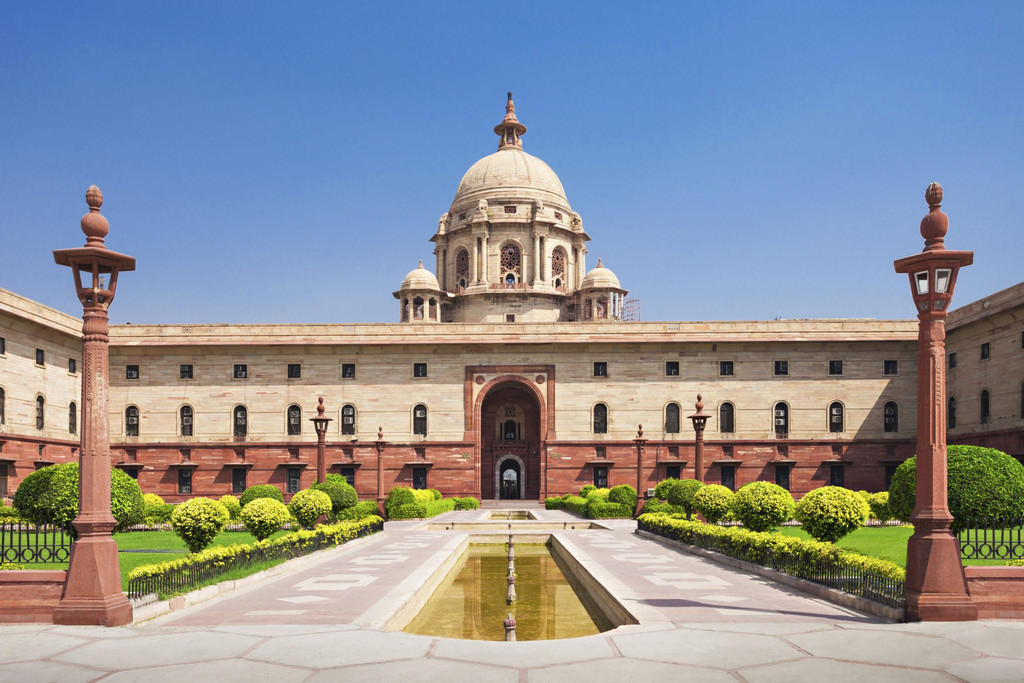
Article 213: Ordinance-making power of the Governor
Article 213 confers a corresponding power on the Governor of a State.
A Governor may promulgate an ordinance when the Legislative Assembly is not in session. In a State having a Legislative Council, the ordinance-making power can be exercised when both Houses are not in session.
The provision also incorporates additional safeguards relating to the distribution of legislative powers between the Union and the States.
The Governor cannot promulgate an ordinance without instructions from the President in certain circumstances, including where:
- A Bill containing the same provisions would have required the President’s previous sanction for introduction in the State Legislature.
- The Governor would have considered it necessary to reserve such a Bill for the consideration of the President.
- A State law containing the same provisions would have been invalid unless reserved for the President’s consideration and assented to by the President.
These restrictions preserve the constitutional relationship between the Union and the States, particularly in matters involving the Concurrent List and other constitutionally specified requirements.
2. Conditions for Promulgation of an Ordinance
The ordinance-making power is not an unrestricted executive authority. Its exercise is governed by constitutional conditions.
A. Legislature must not be in session
An ordinance can be promulgated only when the relevant legislature is not in session.
At the Union level, both Houses of Parliament must be out of session. At the State level, the Legislative Assembly must not be in session; where a Legislative Council exists, both Houses must be out of session.
The distinction is important because the Constitution does not permit the executive to bypass an available legislature merely for administrative convenience.
B. Immediate action must be necessary
The Constitution requires circumstances that make immediate legislative action necessary.
The power is intended to address situations in which waiting for the legislature to reassemble may cause serious administrative, economic, social or public-interest difficulties.
The existence of an urgent situation is therefore central to the constitutional justification for promulgating an ordinance.
C. Legislative competence must exist
An ordinance cannot exceed the legislative competence of the legislature concerned.
For example, the President cannot use Article 123 to promulgate an ordinance on a subject that Parliament is constitutionally prohibited from legislating upon.
Similarly, a Governor cannot promulgate an ordinance on a matter beyond the legislative competence of the State Legislature.
An ordinance is subject to the same constitutional limitations as an ordinary statute, including Fundamental Rights and the federal distribution of legislative powers.
D. Ordinances are subject to constitutional limitations
The ordinance-making power cannot be used to circumvent constitutional restrictions.
An ordinance may be challenged if it violates Fundamental Rights, exceeds legislative competence, or is promulgated in circumstances that violate constitutional requirements.
3. Ordinance-Making Power and the Parliamentary System
Although Article 123 refers to the satisfaction of the President, the President ordinarily exercises this power on the aid and advice of the Council of Ministers under Article 74.
Similarly, the Governor exercises the ordinance-making power within the framework of the parliamentary system of government at the State level.
The ordinance-making power is therefore an executive legislative power, not a personal discretionary power of the President or Governor.
This distinction is essential to understanding the constitutional position of the President and Governor.
The executive is politically accountable to the legislature. Consequently, an ordinance must ultimately be placed before the elected representatives for consideration.
The ordinance-making power should therefore be understood as an exceptional mechanism operating within parliamentary democracy, rather than an independent source of permanent executive law-making authority.
4. Duration and Legislative Approval of Ordinances
One of the most important constitutional safeguards is the temporary nature of ordinances.
Six-week rule
Under Articles 123 and 213, an ordinance must be laid before the relevant legislature when it reassembles.
It ceases to operate at the expiration of six weeks from the reassembly of the legislature, unless it is approved through the legislative process.
The six-week period is calculated from the date on which the legislature reassembles. Where the two Houses are summoned to reassemble on different dates, the later date is relevant for calculating the period.
An ordinance may also cease to operate earlier if the relevant legislative disapproval procedure is completed.
What happens if Parliament or the State Legislature approves the ordinance?
If the legislature wishes to continue the legal provisions contained in an ordinance, it must enact the necessary legislation through the ordinary legislative process.
The executive cannot simply treat an ordinance as a permanent law.
Can an ordinance be withdrawn?
Yes. Article 123 permits the President to withdraw an ordinance at any time. Article 213 provides a corresponding power to the Governor.
Constitutional comparison
| Feature | Article 123 | Article 213 |
|---|---|---|
| Authority | President | Governor |
| Legislature | Parliament | State Legislature |
| Legislative recess | Both Houses not in session | Assembly not in session; both Houses if bicameral |
| Legal effect | Same force as an Act of Parliament | Same force as an Act of the State Legislature |
| Legislative scrutiny | Both Houses | Legislative Assembly or both Houses |
| Duration | Six weeks after reassembly, subject to earlier disapproval | Six weeks after reassembly, subject to earlier disapproval |
| Withdrawal | By President | By Governor |
5. Ordinance-Making Power and Judicial Review
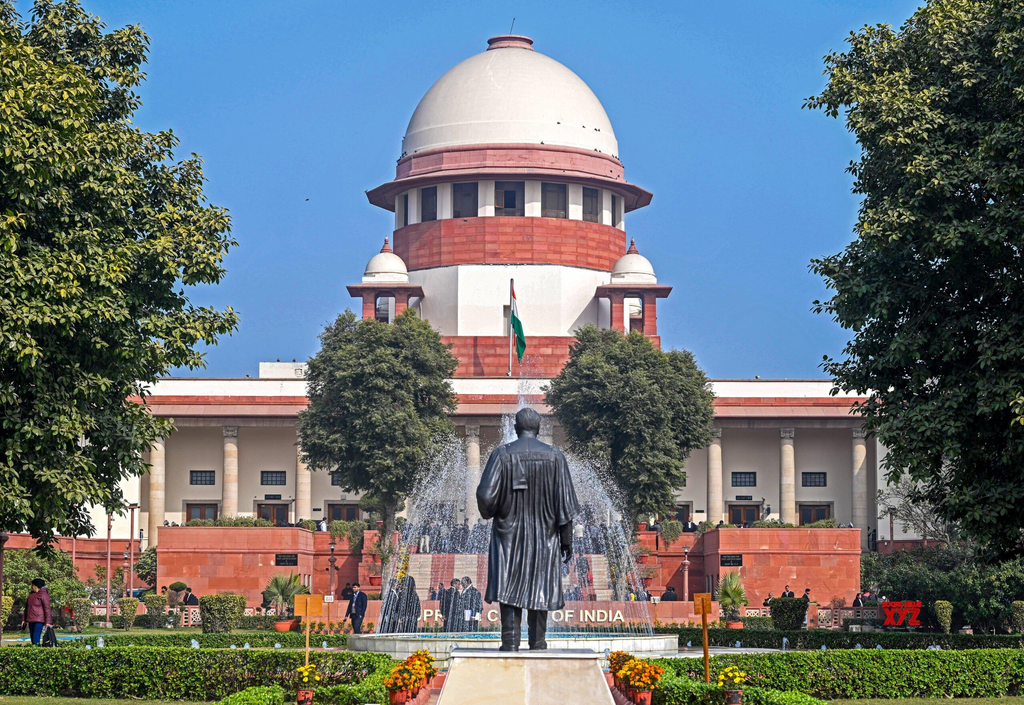
A significant constitutional question is whether the satisfaction of the President or Governor in promulgating an ordinance is beyond judicial scrutiny.
The Supreme Court has clarified that ordinance-making power is not immune from judicial review.
A. R.C. Cooper v. Union of India (1970)
The case, popularly known as the Bank Nationalisation case, examined the constitutional validity of the Bank Nationalisation Ordinance and the subsequent legislation.
The Supreme Court recognised that the President’s satisfaction under Article 123 is not entirely beyond judicial scrutiny.
The decision contributed to the development of the principle that the exercise of ordinance-making power must remain within constitutional boundaries.
Significance: Executive satisfaction cannot be treated as an unrestricted or unreviewable constitutional authority.
B. A.K. Roy v. Union of India (1982)
The Supreme Court examined the constitutional validity of the National Security Ordinance and the legislation that followed it.
The judgment considered the nature of the ordinance-making power and its relationship with the legislative process.
The Court recognised that ordinances have the same force and effect as Acts of the legislature while remaining subject to constitutional limitations.
Significance: Ordinances are legislative instruments with temporary operation, but their constitutional validity remains open to judicial examination.
C. D.C. Wadhwa v. State of Bihar (1987)
This is one of the most important judgments concerning the misuse of ordinance-making power.
The Bihar Government had repeatedly re-promulgated ordinances without placing them before the State Legislature for proper legislative consideration.
The Supreme Court strongly criticised this practice.
The Court held that the power to promulgate ordinances is an emergency power and cannot be used as a substitute for the normal legislative process.
Repeated re-promulgation undermines the authority of the legislature and represents a fraud on the Constitution.
Significance: The executive cannot keep an ordinance alive indefinitely by repeatedly re-promulgating it.
D. Krishna Kumar Singh v. State of Bihar (2017)
In this landmark judgment, a seven-judge Constitution Bench of the Supreme Court examined the constitutional consequences of ordinances, particularly their re-promulgation and the effects of their expiry.
The judgment established several important principles:
- Ordinance-making is an exceptional power: It cannot become a parallel legislative process.
- Mandatory laying before the legislature: The requirement to place an ordinance before the legislature is mandatory.
- Re-promulgation is constitutionally impermissible as a routine practice: Repeated re-promulgation without legislative consideration is a fraud on the Constitution.
- Judicial review is available: The exercise of ordinance-making power is subject to judicial scrutiny.
- No automatic permanence: An ordinance does not acquire permanent legal status merely because it has operated for a period.
The Court also examined the consequences of the expiry of an ordinance. As a general principle, the rights, liabilities and legal consequences created by an ordinance do not automatically continue after it ceases to operate. The Court recognised that the consequences of particular actions may require examination, including considerations of public interest and the nature of the rights involved.
Significance: The judgment strengthened legislative supremacy and established important safeguards against executive misuse of ordinance-making power.
6. Re-Promulgation of Ordinances: A Threat to Legislative Supremacy
Re-promulgation refers to the repeated issuance of an ordinance containing substantially the same provisions after the earlier ordinance has ceased to operate or is approaching expiry.
The Constitution allows ordinances only as a temporary response to urgent circumstances. Re-promulgation can defeat the requirement of legislative scrutiny.
Why is re-promulgation problematic?
- It allows the executive to continue exercising legislative power without obtaining legislative approval.
- It weakens the role of Parliament and State Legislatures.
- It undermines democratic accountability.
- It bypasses legislative debate, committee scrutiny and public deliberation.
- It creates uncertainty about the temporary nature of ordinances.
The Supreme Court’s decisions in D.C. Wadhwa and Krishna Kumar Singh make it clear that repeated re-promulgation cannot be treated as a legitimate substitute for legislation.
The underlying constitutional principle is that the power to make laws primarily belongs to the legislature, while ordinance-making is an exceptional executive power.
7. Ordinance-Making Power and Separation of Powers
The Indian Constitution does not follow a rigid separation of powers. Instead, it establishes a system of functional distribution, checks and balances and institutional accountability.
The ordinance-making power represents a limited overlap between executive and legislative functions.
However, this overlap is justified only because the Constitution recognises the need for immediate action in exceptional circumstances.
The constitutional balance
| Institution | Constitutional role |
|---|---|
| Executive | Promulgates ordinances when constitutional conditions are satisfied |
| Legislature | Examines, approves, modifies or rejects the ordinance through legislation and disapproval procedures |
| Judiciary | Reviews constitutional validity and prevents abuse of power |
The ordinance-making mechanism must operate within this balance.
If the executive routinely uses ordinances to avoid legislative debate, the constitutional balance is disturbed.
Therefore, ordinance-making should be guided by the principles of necessity, temporariness, transparency and legislative accountability.
8. Ordinance-Making Power and Federalism
Article 213 is particularly significant in the context of Indian federalism.
The Governor’s ordinance-making power operates within the constitutional distribution of legislative powers between Parliament and State Legislatures.
The requirement of Presidential instructions in specified situations under Article 213 reflects the constitutional need to coordinate State legislative action with the broader federal framework.
However, the Governor is not an independent legislative authority. The ordinance-making power must be exercised within the constitutional framework governing the Governor’s relationship with the State Council of Ministers.
The provision also raises important questions about the autonomy of State Governments and the constitutional relationship between the Governor and the elected State executive.
For a broader understanding of this relationship, readers may refer to our article on The Governor in India: Constitutional Powers, Discretionary Authority and Centre–State Relations.
9. Arguments in Favour of Ordinance-Making Power
Despite concerns about misuse, ordinance-making remains an important constitutional instrument.
A. Addressing urgent situations
An ordinance enables the government to respond quickly when immediate legislative action is necessary and the legislature is not in session.
B. Administrative continuity
It helps prevent legal and administrative uncertainty in situations requiring urgent statutory intervention.
C. Economic and financial urgency
Certain situations involving economic stability, financial administration or regulatory intervention may require immediate legal measures.
D. Public interest
An ordinance may be necessary to address urgent public-interest concerns where waiting for the next legislative session could result in serious consequences.
E. Constitutional flexibility
The provision provides flexibility within the parliamentary system without requiring the Constitution to prescribe a rigid legislative calendar for every emergency situation.
10. Concerns and Criticism
The ordinance-making power has also attracted criticism because of its potential misuse.
A. Executive overreach
Frequent reliance on ordinances can shift legislative authority towards the executive.
B. Weakening of parliamentary democracy
The ordinance route can bypass discussion, debate and scrutiny by elected representatives.
C. Reduced transparency
Unlike ordinary legislation, ordinances may be promulgated without the same level of prior public and parliamentary examination.
D. Re-promulgation
Repeated re-promulgation undermines the temporary character of ordinances and weakens legislative control.
E. Federal tensions
The Governor’s ordinance-making power may generate tensions between the State Government and the Governor, particularly where constitutional conventions and the role of the elected Council of Ministers are disputed.
F. Limited public consultation
Urgent executive law-making may reduce opportunities for stakeholder consultation and examination of the likely consequences of a proposed law.
11. Reforms Required
The ordinance-making power should neither be abolished nor converted into a routine legislative mechanism. Instead, it requires safeguards that strengthen constitutional accountability.
1. Clear justification for urgency
Every ordinance should be accompanied by a clear statement explaining the circumstances that necessitated immediate legislative action.
2. Stronger legislative scrutiny
Ordinances should be placed before the legislature at the earliest opportunity. Relevant legislative committees may examine their implications where appropriate.
3. Avoiding repeated re-promulgation
The principles laid down in D.C. Wadhwa and Krishna Kumar Singh must be followed strictly. Re-promulgation should not become a substitute for legislative approval.
4. Greater transparency
Governments should disclose the reasons for promulgating ordinances and provide supporting information wherever practicable.
5. Respect for federal principles
The Governor’s ordinance-making power should be exercised in accordance with constitutional conventions, the parliamentary system and the distribution of legislative powers.
6. Strengthening legislative functioning
Regular legislative sessions, adequate sitting days and effective legislative scrutiny can reduce the perceived need for frequent ordinances.
7. Judicial vigilance
Courts should continue to examine constitutional challenges involving legislative competence, mala fide exercise of power and violations of constitutional requirements.
12. Ordinance-Making Power: Important Prelims Facts
| Constitutional provision | Subject |
|---|---|
| Article 74 | Council of Ministers to aid and advise the President |
| Article 123 | Ordinance-making power of the President |
| Article 213 | Ordinance-making power of the Governor |
| Article 245 | Extent of laws made by Parliament and State Legislatures |
| Article 246 | Distribution of legislative powers |
| Seventh Schedule | Union, State and Concurrent Lists |
| Article 200 | Governor’s assent to Bills passed by State Legislature |
Important points for Prelims
- An ordinance has the same force and effect as an Act of the legislature, subject to constitutional limitations.
- An ordinance is not a permanent law merely because it has been promulgated.
- Under Article 123, both Houses of Parliament must not be in session.
- Under Article 213, the Legislative Assembly must not be in session; in a bicameral State, both Houses must be out of session.
- An ordinance must be laid before the relevant legislature.
- It normally ceases to operate six weeks after the legislature reassembles, unless it is earlier disapproved or otherwise ceases to operate.
- The President and Governor may withdraw ordinances.
- Re-promulgation cannot be used as a routine substitute for legislation.
- The ordinance-making power is subject to judicial review.
13. Previous Year and Practice-Oriented Questions
Prelims practice question
With reference to the ordinance-making power in India, consider the following statements:
- The President can promulgate an ordinance when either House of Parliament is not in session.
- An ordinance has the same force and effect as an Act of Parliament.
- An ordinance must be laid before both Houses of Parliament.
- The ordinance-making power of the President is completely immune from judicial review.
Which of the statements given above are correct?
(a) 1 and 2 only
(b) 2 and 3 only
(c) 1, 2 and 3 only
(d) 2, 3 and 4 only
Answer: (b) 2 and 3 only
Explanation:
- Statement 1 is incorrect. Both Houses of Parliament must not be in session for an ordinance to be promulgated under Article 123.
- Statement 2 is correct. An ordinance has the same force and effect as an Act of Parliament.
- Statement 3 is correct. It must be laid before both Houses.
- Statement 4 is incorrect. The Supreme Court has recognised that ordinance-making power is subject to judicial review.
Mains practice question
“The ordinance-making power is an exceptional legislative instrument and should not become an alternative to parliamentary law-making.” Discuss in the context of Articles 123 and 213 of the Indian Constitution. (15 marks)
Approach: Begin with the constitutional basis of ordinance-making. Explain the need for the power, examine the concerns associated with executive overreach and repeated re-promulgation, discuss the judgments in D.C. Wadhwa and Krishna Kumar Singh, and conclude with reforms to strengthen legislative accountability.
Conclusion
The ordinance-making power under Articles 123 and 213 represents a constitutional compromise between the need for immediate executive action and the principle of legislative supremacy.
It provides the executive with a mechanism to address urgent situations when the legislature is not in session. However, this power is temporary, conditional and subject to legislative scrutiny and judicial review.
The Supreme Court’s decisions in D.C. Wadhwa and Krishna Kumar Singh have reinforced the principle that ordinances cannot become a parallel system of law-making.
Ultimately, the legitimacy of ordinance-making depends not merely on its constitutional authorisation but also on the restraint with which it is exercised. An ordinance should remain an exception justified by necessity, not a routine instrument of executive governance.
For a parliamentary democracy founded on constitutional accountability, the legislature must remain the primary institution of law-making.
References and Further Reading
- The Constitution of India – Legislative Department, Government of India
- Article 123 – Constitution of India
- Article 213 – Constitution of India
- D.C. Wadhwa v. State of Bihar (1987).
- Krishna Kumar Singh v. State of Bihar (2017).
- R.C. Cooper v. Union of India (1970).
- A.K. Roy v. Union of India (1982).
Samata IAS Academy | UPSC Civil Services Examination
Learn. Analyse. Understand.