
The Hindu News Analysis | UPSC Civil Services Examination
Source: The Hindu, Delhi City Edition, Tuesday, 10 November 2026 (18 pages)
The newspaper edition contains several important developments concerning environmental governance, electoral reforms, federalism, forest rights, India’s diplomatic role, digital connectivity, artificial intelligence and climate negotiations.
The following compilation prioritises issues relevant to the UPSC Civil Services Examination. It distinguishes reported facts from political claims, allegations and editorial interpretations.
I. Polity, Constitution and Governance
1. Manipur Census put on hold until April 2027
GS Paper II – Polity and Governance
The Manipur High Court has directed that the Census exercise in the State remain suspended until at least April 30, 2027, while the Union and State governments consider demands raised by residents and civil society organisations.
Background
- The proposed exercise was to begin with the House-listing Operation, the first stage of the 2027 Census.
- The petitioners challenged the decision to begin house-listing in Manipur from September 1.
- Manipur has experienced prolonged ethnic violence since May 2023, resulting in large-scale displacement.
- Petitioners argued that conducting the Census under these conditions could produce inaccurate population figures.
Major concerns raised before the Court
- Displacement: Thousands of people have been displaced, making accurate enumeration difficult.
- Electoral representation: Census figures could influence the future delimitation of Assembly constituencies.
- National Register of Citizens: Certain organisations have demanded that the NRC be updated before the Census.
- Historical enumeration: Some groups have sought a recount of 2001 Census figures in certain hill areas.
Court’s directions
- The postponement notices already issued by the Centre and the State must remain in force.
- The Registrar-General of India and the Census Commissioner must consider the demands on their merits.
- Additional representations may be submitted by November 25.
- Authorities may hold public consultations after issuing their decision by April 30, 2027.
- The Census will remain on hold for four weeks after the decision, allowing affected parties to approach the Court.
UPSC analysis
The development highlights the relationship between Census administration, internal displacement, ethnic conflict and democratic representation.
The Census is not merely a statistical exercise. Its data influence:
- Parliamentary and Assembly representation.
- Delimitation of constituencies.
- Welfare allocation and development planning.
- Demographic analysis and public policy.
- Identification of vulnerable and displaced populations.
Key issue: The government must balance the constitutional and administrative importance of an accurate Census with the need to ensure that conflict-affected populations are not excluded or incorrectly enumerated.
Mains perspective: Discuss the challenges of conducting population enumeration in areas affected by prolonged internal conflict.
Source: The Hindu, page 10.
2. Delhi electoral-roll revision: Delegation seeks restoration of deleted voter identities
GS Paper II – Electoral Reforms
A delegation of political parties and civil society representatives met the Delhi Chief Electoral Officer on November 9, seeking safeguards for voters affected by the ongoing Special Intensive Revision (SIR).
Key demands
- Restoration of original Elector Photo Identity Card (EPIC) numbers for voters whose names were deleted from the draft electoral rolls.
- Public disclosure of applications submitted under Form 7 for deletion of names.
- Mandatory notice and an opportunity for hearing before deleting a voter’s name.
- Verification by the political party-appointed Booth Level Agent (BLA-2) who submitted the deletion application.
Important figures
- Approximately 47.56 lakh voters were included in the ASDD list published with the draft electoral roll on August 31.
- ASDD refers to Absent, Shifted, Dead and Duplicate voters.
- 30,122 Form 7 applications had reportedly been filed up to November 8.
The delegation stated that the Delhi CEO had agreed to several suggestions and would issue a Standard Operating Procedure.
Constitutional and governance significance
The issue involves a fundamental democratic principle: the right to participate in elections through an accurate and inclusive electoral roll.
Important constitutional and statutory provisions:
- Article 324 – Superintendence, direction and control of elections vested in the Election Commission.
- Article 325 – No person to be ineligible for inclusion in electoral rolls on grounds only of religion, race, caste or sex.
- Article 326 – Elections to the Lok Sabha and State Legislative Assemblies based on adult suffrage.
- Representation of the People Act, 1950 – Preparation and revision of electoral rolls.
Way forward
- Transparent verification procedures.
- Effective grievance-redressal mechanisms.
- Public disclosure of deletion applications, subject to privacy safeguards.
- Adequate opportunity to contest proposed deletions.
- Use of technology without allowing technological errors to result in disenfranchisement.
Source: The Hindu, page 5.
3. Supreme Court: Commercial cultivation in reserve forests not protected under the Forest Rights Act
GS Paper II and III – Forest Rights and Environment
The Supreme Court has clarified its prima facie position that commercial crop cultivation within reserve forest areas is not protected under the Forest Rights Act, 2006.
The matter concerns extensive silk cotton cultivation within the reserve forests of the Agasthyamalai Biosphere Reserve.
Legal distinction
The Court distinguished between:
| Forest-dependent communities | Commercial cultivators |
|---|---|
| Forest-dwelling Scheduled Tribes and Other Traditional Forest Dwellers | Commercial cultivators and plantation owners |
| Have historically lived in forests and depend on them for livelihood | Engage in commercial crop cultivation |
| Rights may be recognised under the FRA, subject to statutory conditions | Commercial cultivation is not automatically protected by the FRA |
A Bench of Justices Vikram Nath and Sandeep Mehta directed the Central Empowered Committee to examine the Tamil Nadu government’s position that silk cotton was a minor forest produce.
The Court expressed a prima facie view against the State’s claim of historical cultivation and observed that allowing commercial crops in forest areas could alter the very nature of forests.
Understanding the Forest Rights Act, 2006
The Scheduled Tribes and Other Traditional Forest Dwellers (Recognition of Forest Rights) Act, 2006 seeks to correct historical injustice by recognising the rights of forest-dwelling communities.
Important categories of rights include:
- Individual forest rights.
- Community rights.
- Rights over minor forest produce.
- Community forest resource rights.
- Habitat rights for Particularly Vulnerable Tribal Groups.
UPSC significance
The judgment raises an important distinction between community-based forest rights and commercial exploitation of forest land.
It is relevant to:
- Forest conservation.
- Tribal rights.
- Sustainable forest management.
- Biodiversity protection.
- Interpretation and implementation of the FRA.
Source: The Hindu, page 10.
4. Delhi High Court asks MCD to address dangerous buildings during GRAP restrictions
The Delhi High Court directed the Municipal Corporation of Delhi to constitute a high-powered committee to identify alternatives for dealing with dangerous and dilapidated buildings during restrictions on construction and demolition under GRAP.
The committee is to be constituted in consultation with the Delhi Chief Minister.
It will examine alternatives such as:
- Sealing unsafe structures.
- Undertaking necessary repairs.
- Controlled demolition of buildings identified as dangerous.
The Court observed that restrictions under GRAP cannot become a reason for civic authorities to ignore structural dangers and endanger human lives.
UPSC linkage: Urban governance, municipal accountability, disaster risk reduction, building safety and the balance between environmental regulation and public safety.
Source: The Hindu, page 2.
II. Environment, Ecology and Climate Change
5. Delhi air pollution: Missing monitoring data raises questions about AQI reliability
GS Paper III – Environment
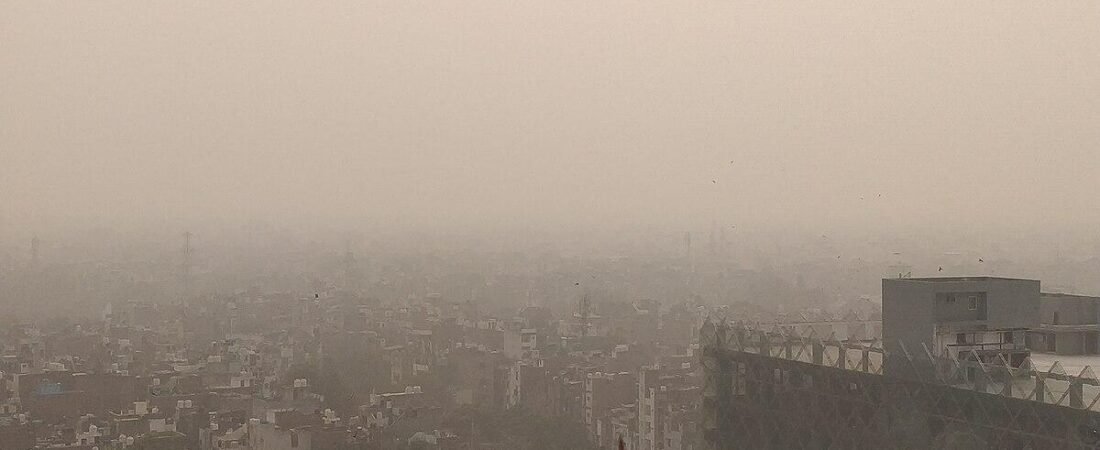
A major environmental governance concern emerged after several air-quality monitoring stations in Delhi failed to report data for hours during Deepavali night.
Environmental experts warned that missing observations may have resulted in an underestimation of actual pollution levels.
What happened?
According to the report:
- Between midnight on November 8 and 5 a.m. on November 9, 227 hourly PM2.5 observations were missing across 59 CPCB monitoring stations.
- Only 14 stations reported complete data.
- The remaining 45 stations had at least one missing hourly observation.
- Anand Vihar recorded PM2.5 concentration of 767 micrograms per cubic metre at 11 p.m.
- Patparganj recorded 930 micrograms per cubic metre at 10 p.m.
- Both locations subsequently experienced gaps in monitoring data.
The WHO’s 24-hour guideline for PM2.5 is 15 micrograms per cubic metre.

Why does missing data matter?
The Air Quality Index is calculated using pollutant concentrations over a specified period. Missing hourly observations can affect the reliability of the resulting index.
PM2.5 refers to particulate matter with a diameter of 2.5 micrometres or less. These particles can penetrate deep into the lungs and enter the bloodstream.
Important technical issue
The newspaper reports that CPCB’s PM2.5 analysers have a measurement range of 0–1,000 micrograms per cubic metre.
A former CPCB laboratory head suggested that if concentrations exceed the instrument’s measurement range, the readings should at least be reported at the upper limit rather than displayed as blank.
Governance concerns
The issue raises questions about:
- Reliability of environmental monitoring infrastructure.
- Transparency in publication of pollution data.
- Accountability of pollution-monitoring agencies.
- Adequacy of real-time environmental information.
- Public trust in official environmental statistics.
The Delhi government said it would examine the issue. Political parties alleged manipulation, but these allegations should not be treated as established findings.
Deepavali and pollution
The newspaper’s editorial also examines the contribution of firecrackers to Delhi’s air pollution.
It notes that pollution levels are influenced by multiple factors:
- Vehicular emissions.
- Industrial pollution.
- Construction dust.
- Stubble burning.
- Firecracker emissions.
- Low wind speed and atmospheric conditions.
The editorial cites a five-day average AQI increase from approximately 350 before Deepavali to 376 afterwards in 2026. It also notes that low-emission crackers reduce emissions by approximately 30–45% under stringent laboratory conditions, according to CSIR-NEERI.
Way forward
- Strengthen the reliability of CPCB and State Pollution Control Board monitoring stations.
- Publish missing-data disclosures and equipment-performance information.
- Improve independent verification and auditing of monitoring systems.
- Adopt an airshed-based pollution-control strategy.
- Enforce emission standards throughout the year rather than relying on seasonal restrictions.
- Improve scientific assessment of the contribution of individual pollution sources.
Mains perspective: Environmental governance requires not only pollution-control regulations but also credible, transparent and independently verifiable environmental data.
Sources: The Hindu, pages 1, 2 and 6.
6. COP31 begins in Türkiye: Debate over the concept of 1.5°C overshoot
GS Paper III – Climate Change
The 31st Conference of the Parties to the UN Framework Convention on Climate Change (COP31) began in Antalya, Türkiye, on November 9.
The conference takes place amid increasing concern that the world may temporarily exceed the 1.5°C warming threshold.
What is climate overshoot?
The term 1.5°C overshoot refers to a situation in which global warming temporarily exceeds 1.5°C but is subsequently brought back below that level by the end of the century.
It has emerged from climate modelling literature and is increasingly being used in climate-policy discussions.
Why is it controversial?
The newspaper’s analysis raises concerns that the concept may allow governments to maintain the appearance of commitment to the 1.5°C target without undertaking sufficient immediate emission reductions.
The concern is that future technological interventions and carbon-removal mechanisms may be used to justify continued fossil-fuel dependence today.

Climate finance: The credibility gap
The article highlights the difference between announced climate-finance commitments and the actual financial resources delivered.
According to the reported figures:
- Developed countries reported mobilising around $137 billion in climate finance in 2024.
- The estimated actual value was only around $33–45 billion.
- Approximately 65% of public climate finance was provided in the form of loans.
The article also points to continued fossil-fuel dependence among developed economies, despite their climate commitments.
Key issues for India
- Climate finance and technology transfer.
- Equity and Common but Differentiated Responsibilities and Respective Capabilities (CBDR-RC).
- Adaptation finance.
- Loss and damage.
- Energy transition and development needs.
- Protection of vulnerable communities.
India’s negotiating position
India’s climate diplomacy needs to balance:
- Developmental requirements and energy security.
- Climate justice and historical responsibility.
- Affordable access to clean technologies.
- Adaptation and resilience.
- Adequate and predictable climate finance.
Mains perspective: Discuss the implications of the 1.5°C overshoot debate for climate justice and the credibility of international climate commitments.
Source: The Hindu, Science section, page 11.
III. Economy, Infrastructure and Technology
7. India’s rural 4G connectivity gap declines by 75% in four years
GS Paper III – Infrastructure and Digital Economy
The number of Indian villages without 4G connectivity has declined substantially, according to Department of Telecommunications data obtained through the Right to Information Act.
| Indicator | Reported figure |
|---|---|
| Villages without 4G in 2022 | 45,180 |
| Villages without 4G in 2026 | 11,372 |
| Approximate reduction | 75% |
| Villages covered under initial BSNL saturation target | 24,680 |
| Additional sites sanctioned | 26,000 |
Factors behind the improvement
- BSNL’s 4G saturation project.
- Supplementary efforts by private telecom operators.
- Intra-circle agreements involving BSNL and Vodafone Idea in some telecom circles.
- Expansion of mobile broadband infrastructure.
Regional disparities
- Odisha had the highest number of villages without 4G coverage: 1,789.
- Arunachal Pradesh ranked second with 1,518.
- The report estimates that around 40 lakh people may still live in villages without 4G reception.
- Scheduled Tribe-dominated villages account for a substantial share of the population in these areas.
Significance
Digital connectivity is an important component of:
- Digital India.
- Financial inclusion.
- E-governance.
- Telemedicine.
- Online education.
- Agricultural information services.
- Digital public infrastructure.
Challenges that remain
- Difficult terrain and high deployment costs.
- Commercial viability in sparsely populated regions.
- Electricity and backhaul infrastructure.
- Affordability of smartphones and data services.
- Digital literacy and language barriers.
- Reliability and quality of connectivity.
UPSC linkage: Digital divide, inclusive growth, universal service obligations, BharatNet, BSNL and digital public infrastructure.
Source: The Hindu, page 13.
8. Meta outlines India pricing for its Muse AI agent
Meta has reportedly set rupee-denominated subscription prices for its AI agent, Muse, ahead of its proposed official launch in India.
The newspaper reports the following prices:
| Subscription tier | Reported price |
|---|---|
| Power | ₹1,799 |
| Maximum | ₹8,999 |
The service reportedly operates through WhatsApp and can assist users with:
- Customer-service interactions.
- Filling online forms.
- Travel planning.
- Booking flight tickets.
The article notes that Muse had crossed 10 million downloads within two months of its launch in supported markets.
However, its functionality in India remains restricted, particularly regarding authorisation to make card payments on behalf of users.
UPSC significance
The development highlights the growing role of AI agents—systems capable of carrying out multi-step tasks with limited human intervention.
Important issues include:
- Data privacy and consent.
- Cybersecurity.
- Consumer protection.
- Accountability for autonomous actions.
- Digital payment regulation.
- Competition in the AI market.
- Access to AI services across income groups.
Analytical point: The next stage of AI adoption may involve a transition from systems that merely generate information to systems that execute tasks and interact with digital infrastructure.
Source: The Hindu, page 13.
9. Foreign portfolio investors return to Indian equity markets
Provisional exchange data indicate that foreign institutional investors purchased Indian shares worth a net ₹45,960 crore during the five trading sessions ending November 6, 2026.
The inflows exceeded the net selling of ₹45,162 crore recorded during October.
Other market developments:
- Nifty Bank rose 1.5%.
- Nifty 50 closed at 25,044.65, up 0.23%.
- Sensex closed at 81,106.58, up 0.13%.
The newspaper reports that investors may book profits after the sharp market rally of the preceding sessions.
UPSC relevance
- Foreign Portfolio Investment (FPI).
- Balance of Payments.
- Capital account movements.
- Exchange-rate stability.
- Stock-market volatility.
- Global liquidity and investor sentiment.
Important distinction: FPI represents investment in financial assets such as shares and bonds, whereas FDI involves a more lasting interest and significant influence in an enterprise.
Source: The Hindu, page 13.
10. OALP deepwater and ultra-deepwater bidding deadline extended
The Directorate General of Hydrocarbons has extended the deadline for submitting bids under the 10th and 11th rounds of the Open Acreage Licensing Policy (OALP) by 25 days, to December 10.
The extension is significant because both rounds concern exploration opportunities in deepwater and ultra-deepwater areas.
UPSC relevance
- India’s energy security.
- Domestic hydrocarbon exploration.
- Reduction of import dependence.
- Exploration and production policy.
- Hydrocarbon resource development.
- Investment in offshore energy infrastructure.
Source: The Hindu, page 13.
11. Karnataka defends its testing of E20 petrol
Karnataka’s Food, Civil Supplies and Consumer Affairs Minister Rizwan Arshad reiterated that the State stood by its test reports showing ethanol-blending levels above 20% in certain petrol samples.
The Minister stated that the tests were conducted in laboratories recognised by the National Accreditation Board for Testing and Calibration Laboratories (NABL).
Oil marketing companies disputed the State’s testing procedure and the laboratories used.
The controversy has also prompted the Keralam government to begin random inspections at fuel outlets in four districts.
UPSC significance
The issue connects with:
- Ethanol blending and energy transition.
- Fuel quality standards.
- Consumer protection.
- Regulatory oversight.
- Food-versus-fuel debate.
- Coordination between State governments and oil marketing companies.
The controversy should be understood as a dispute over test procedures and reported fuel composition, rather than as conclusive evidence that all E20 fuel supplied nationally contains excess ethanol.
Source: The Hindu, page 5.
12. PMEGP loan misuse: ED attaches properties worth ₹10.63 crore
The Enforcement Directorate has attached immovable properties worth ₹10.63 crore under the Prevention of Money Laundering Act in a case involving alleged misuse of the Prime Minister’s Employment Generation Programme (PMEGP).
The agency alleges that loans under the programme were misappropriated through a criminal conspiracy involving borrowers, bank officials and other persons.
UPSC significance
The case highlights the importance of:
- Monitoring government credit-linked subsidy schemes.
- Bank due diligence.
- End-use verification of loans.
- Financial accountability.
- Prevention of money laundering.
- Effective institutional oversight.
PMEGP is a credit-linked subsidy programme intended to promote micro-enterprises and generate employment.
Source: The Hindu, page 4.
IV. International Relations
13. India offers to mediate between Russia and Ukraine on food corridors
GS Paper II – International Relations
India has indicated its willingness to help establish food corridors between Russia and Ukraine, according to Ukrainian President Volodymyr Zelenskyy.
The development followed a telephone conversation between Prime Minister Narendra Modi and President Zelenskyy.
External Affairs Minister S. Jaishankar also spoke with Russian Foreign Minister Sergey Lavrov, with the discussion reportedly focusing on the Ukraine conflict and ongoing diplomatic initiatives.
Context
Peace negotiations involving Russian and Ukrainian representatives were scheduled to resume in Abu Dhabi.
The discussions were expected to cover security guarantees required for a possible ceasefire.
Ukraine has highlighted the impact of disruptions to Black Sea grain exports on global food security.
Why are food corridors important?
Russia and Ukraine are significant participants in global agricultural commodity markets.
Disruptions to grain exports can affect:
- Global food prices.
- Food-import-dependent countries.
- Supply chains.
- Fertiliser and agricultural markets.
- Food security in vulnerable economies.
Significance for India
India’s willingness to contribute to diplomatic initiatives reflects its emphasis on:
- Strategic autonomy.
- Dialogue and diplomacy.
- Global food security.
- Engagement with competing geopolitical blocs.
- A constructive role in conflict resolution.
India must also balance its longstanding defence and energy relations with Russia, its growing strategic engagement with Western countries and its wider interest in maintaining a stable international order.
Mains perspective: Examine the opportunities and constraints associated with India’s emergence as a diplomatic interlocutor in the Russia-Ukraine conflict.
Source: The Hindu, page 10.
14. Sheikh Hasina seeks new passport as Bangladesh presses for extradition
The political and diplomatic uncertainty surrounding former Bangladesh Prime Minister Sheikh Hasina continues.
A London-based legal firm reportedly approached the Bangladesh High Commission in New Delhi seeking a new passport and identity card for her.
Bangladesh’s Acting Foreign Minister stated that the government would seek her return through an acceptable prisoner-exchange process under the India-Bangladesh extradition treaty.
India’s position
- India has acknowledged receiving extradition requests from Bangladesh.
- The Ministry of External Affairs has stated that the requests are being examined through established processes.
- No final decision to hand her over has been announced in the report.
Bangladesh officials also expressed uncertainty over whether the passport request was formally authorised by Hasina.
Issues involved
- India-Bangladesh relations.
- Extradition treaties.
- Political asylum and diplomatic protection.
- Domestic political developments in Bangladesh.
- Neighbourhood diplomacy.
- Regional stability and security.
UPSC perspective: Extradition is a legal process governed by domestic law, treaty obligations and applicable safeguards. It should not be confused with an automatic transfer of a person merely because another country makes a request.
Source: The Hindu, pages 1 and 10.
15. Trump indicates possible trilateral meeting with Xi Jinping and Vladimir Putin
U.S. President Donald Trump indicated the possibility of a trilateral meeting with Chinese President Xi Jinping and Russian President Vladimir Putin on the sidelines of the APEC summit in Shenzhen on November 18–19.
Potential subjects include:
- Russia-Ukraine conflict.
- Iran.
- Nuclear arms control.
- Global energy supplies.
China stated that it was in communication with relevant parties but did not formally confirm the meeting.
Geopolitical significance
The possibility of such a meeting reflects the importance of high-level diplomacy among major powers at a time of:
- Strategic competition between the United States and China.
- Continuing tensions involving Russia and Western countries.
- Conflict-related instability in West Asia.
- Nuclear non-proliferation concerns.
- Uncertainty in global energy markets.
The newspaper notes that an informal exchange may be more realistic than a formal trilateral summit because the three countries have different strategic priorities.
UPSC linkage: Multipolarity, great-power politics, strategic stability, nuclear diplomacy and the changing global order.
Source: The Hindu, pages 1 and 10.
16. Israel: Gadi Eisenkot invited to form the next government
Israeli President Isaac Herzog formally invited Opposition leader Gadi Eisenkot to attempt to form the next government.
The October 27 election produced a fragmented political mandate.
- Benjamin Netanyahu’s Likud secured 27 seats.
- Eisenkot’s Yashar party secured 21 seats.
- Eisenkot reportedly secured the support of 67 legislators in the 120-member Knesset.
- He has 28 days to form a coalition, with a possible two-week extension.
Arab-led parties may play an important role in determining the nature of the next government.
Challenges for the next government
- Political polarisation.
- Relations between Jewish and Arab communities.
- The Gaza conflict.
- Settler violence in the West Bank.
- Israel’s international standing.
- The future of negotiations with Palestinians.
UPSC relevance
The issue is important for understanding West Asian geopolitics, coalition politics, the Israeli parliamentary system and the two-state solution.
Source: The Hindu, pages 6 and 14.
17. West Asia: U.S. expands pressure on Iran
The United States announced a new task force called Iron Gate, intended to disrupt land-based supply routes into Iran that Washington says are used for weapons and illicit materials.
The U.S. Central Command also announced a 20-member team to expand the naval blockade of Iranian ports.
At the same time, President Trump indicated that renewed fighting with Iran was highly unlikely if negotiations produced a sufficiently strong agreement.
UPSC significance
- Economic sanctions and coercive diplomacy.
- Maritime security.
- Energy security.
- Strait of Hormuz and regional trade routes.
- West Asian security architecture.
- Impact of geopolitical instability on global oil markets.
The developments should be viewed in the context of continuing negotiations and competing claims by the parties.
Source: The Hindu, page 14.
18. Yemen conflict: Houthis report rising death toll in Saudi air strikes
The Houthis reported that the death toll from Saudi strikes in Yemen’s Sanaa province had risen to 44, including more than 20 children.
The conflict involves the Iran-aligned Houthi movement and the Saudi-backed Yemeni government.
The reported 2022 truce collapsed in July, leading to renewed hostilities.
UPSC linkage: Proxy conflicts, West Asian regional rivalry, humanitarian crises, maritime security and the role of external powers in regional conflicts.
Source: The Hindu, page 14.
V. Society, Social Justice and Internal Security
19. Inclusive education: Nagaland University develops assessment tool for trainee teachers
Researchers at Nagaland University have developed a 50-item achievement test to assess the understanding of inclusive education among teachers in training.
The tool seeks to measure knowledge of:
- Special educational needs.
- Education policies and legal provisions.
- Inclusive classroom practices.
- Support networks.
- Related concepts and principles.
The researchers observed that existing tools often focus on attitudes and confidence rather than assessing what trainee teachers actually know about inclusive education.
UPSC relevance
The development is connected with:
- Right to Education.
- Inclusive education.
- Rights of children with disabilities.
- Teacher training and capacity building.
- National Education Policy 2020.
- Equal access to quality education.
Analytical point: Inclusive education requires more than physical access to schools. It demands trained teachers, appropriate learning materials, accessible infrastructure and classroom practices that accommodate diverse learning needs.
Source: The Hindu, page 3.
20. Shigella outbreak in Malappuram, Keralam
The Keralam Health Department reported nine confirmed cases of Shigella infection in Malappuram district.
The outbreak came to light after more than 100 people who attended a wedding in Elamkulam reported symptoms.
Preventive measures include:
- Super-chlorination of wells.
- Cleaning of affected areas.
- House-to-house surveillance.
- Public awareness campaigns.
- Special monitoring by local health facilities.
About Shigella
Shigella causes shigellosis, an infectious diarrhoeal disease.
Common symptoms include:
- Fever.
- Abdominal cramps.
- Diarrhoea and dysentery.
It spreads primarily through the faecal-oral route, often through contaminated food and water or poor sanitation.
Public health significance
The outbreak highlights the importance of:
- Safe drinking water.
- Food hygiene.
- Surveillance of communicable diseases.
- Local public health infrastructure.
- Rapid outbreak investigation.
Source: The Hindu, page 5.
21. Chhattisgarh: AI-assisted online content linked to a child murder case
The newspaper reports the arrest of a 27-year-old man in Jashpur, Chhattisgarh, in connection with the killing of a four-year-old child.
According to police, the accused allegedly developed the idea of organ sale after viewing online content. An AI assistant embedded in a chatting application reportedly interacted with him in Hindi and redirected him to other websites.
Police said the accused had no actual understanding of organ transplantation and no identified buyer.
Why is this important?
The case raises questions about the social risks associated with online content and AI-assisted information systems.
Important issues include:
- Digital literacy.
- Online misinformation.
- Algorithmic recommendations.
- AI safety and responsible design.
- Cybercrime prevention.
- Protection of children.
- Regulation of illegal organ trade.
Important distinction: The report describes the police account of the accused’s online interactions. It does not establish that the AI system directly instructed him to commit the crime.
Source: The Hindu, page 10.
22. Drug-free India: Union Home Minister sets 2029 target
Union Home Minister Amit Shah reiterated the target of making India drug-free by December 31, 2029, while setting an earlier deadline of December 31, 2028 for Gujarat.
He emphasised that tackling drug abuse requires cooperation among governments, educational institutions, families and citizens.
The report also highlights the relationship between narcotics trafficking and organised crime, including the financing of terrorism.
UPSC relevance
- Internal security.
- Drug trafficking and organised crime.
- Narco-terrorism.
- Border management.
- Public health.
- Community-based prevention.
- International cooperation against narcotics networks.
Way forward: Combine law-enforcement measures with rehabilitation, awareness, treatment services, financial investigation and international intelligence cooperation.
Source: The Hindu, page 4.
VI. Other Important National Developments
23. Andhra Pradesh tightens fireworks safety regulations
Following explosions at cracker-manufacturing units in Rayavaram and Vetlapalem, Andhra Pradesh has overhauled its fireworks safety framework.
The measures include:
- Centralised monitoring.
- Risk-based inspections.
- Greater accountability of enforcement officials.
- Creation of a State Explosives and Fireworks Safety Cell within 30 days.
UPSC linkage: Industrial safety, disaster management, risk-based regulation and enforcement capacity.
Source: The Hindu, page 5.
24. Andhra Pradesh local body elections
The NDA partners in Andhra Pradesh—TDP, Jana Sena Party and BJP—won 499 of the 582 Zilla Parishad Territorial Constituency seats.
The reported party-wise results were:
| Party | ZPTC seats |
|---|---|
| Telugu Desam Party | 406 |
| Jana Sena Party | 73 |
| BJP | 20 |
| YSR Congress Party | 76 |
The State Election Commission also announced Gram Panchayat elections in three phases on November 26, 29 and December 2.
Source: The Hindu, page 5.
25. Jammu and Kashmir Bank reservation policy triggers debate
The amended reservation policy of Jammu and Kashmir Bank has triggered opposition from regional political parties and social organisations.
The policy reportedly reserves 60% of vacancies for reserved categories, with the remaining 40% under open merit.
The bank is preparing to fill approximately 1,400 vacancies.
The debate concerns the balance between representation, equality of opportunity and employment access for young people in the Union Territory.
UPSC linkage: Reservation policy, substantive equality, social justice and public employment.
Source: The Hindu, page 3.
26. Artist Arpita Singh passes away
Modernist artist Arpita Singh died in New Delhi at the age of 89.
She received the Padma Bhushan in 2011 and the Lalit Kala Akademi Fellowship in 2014.
Her contribution to Indian modernist and figurative art makes the development relevant to Indian art and culture.
Source: The Hindu, page 12.
VII. Science, Technology and Education
27. China’s higher education reform: Lessons for India
The newspaper’s Text and Context article examines China’s ten-year plan to reform its universities, announced in September 2026.
The reform is driven by:
- A challenging employment market for nearly 13 million college graduates.
- Mismatch between university qualifications and industry requirements.
- Slowing economic growth.
- The disruptive impact of artificial intelligence on employment.
Under the plan, some graduate programmes are being discontinued, while universities are being categorised according to their research, application-oriented or skill-development roles.
Lessons for India
The discussion is relevant to India’s higher education system, which faces challenges involving:
- Graduate employability.
- Skill mismatch.
- Research and innovation.
- Industry-academia collaboration.
- Vocational education.
- AI-related changes in the labour market.
Mains perspective: Examine how higher education reforms can address the gap between academic qualifications and changing labour-market requirements.
Source: The Hindu, page 8.
VIII. Important World Developments
| Development | UPSC relevance |
|---|---|
| France accuses Iran’s Revolutionary Guards of cyberattacks on supermarket refrigeration systems | Cybersecurity and critical infrastructure |
| Tens of thousands protest in Amsterdam over the Gaza conflict | International humanitarian law and public diplomacy |
| Poland’s Krakow mass-shooting suspect dies in hospital | Internal security and extremism |
| Senegal migrant boat capsize kills 39, according to the report | Irregular migration and human trafficking |
| Kenya seizes 454 kg of crystal meth worth $27 million | International narcotics trafficking |
Source: The Hindu, page 14 and page 8.
IX. Quick Revision Table
| Topic | Key fact / figure | GS paper |
|---|---|---|
| Manipur Census | On hold until at least April 30, 2027 | GS II |
| Delhi SIR | 47.56 lakh voters in ASDD list | GS II |
| Forest Rights Act | Commercial cultivation in reserve forests not protected under FRA, as per SC’s prima facie view | GS II/III |
| Delhi pollution monitoring | 227 missing hourly PM2.5 observations | GS III |
| COP31 | Began in Antalya, Türkiye | GS III |
| Climate finance | Reported $137 billion; estimated actual value $33–45 billion | GS III |
| Rural 4G connectivity | Villages without 4G fell from 45,180 to 11,372 | GS III |
| FPI investment | Net purchase of ₹45,960 crore in five sessions | GS III |
| India-Ukraine | India offers to help establish food corridors | GS II |
| PMEGP | ED attaches properties worth ₹10.63 crore | GS II/III |
| Shigella | Nine confirmed cases in Malappuram | GS II |
| Drug-free India | Target of December 31, 2029 | GS III |
| Indian chess | Anuj Shrivatri becomes India’s 100th Grandmaster | Miscellaneous |
X. Mains Answer-Writing Practice
1. The conduct of a Census in conflict-affected regions raises complex questions concerning data accuracy, democratic representation and the protection of displaced populations. Discuss.
2. Examine the constitutional and administrative safeguards necessary to ensure that Special Intensive Revision of electoral rolls does not result in wrongful disenfranchisement.
3. The Forest Rights Act seeks to correct historical injustice while protecting forest-dependent communities. Discuss the distinction between community forest rights and commercial exploitation of forest land.
4. Environmental governance depends on the reliability and transparency of environmental data. Examine the implications of missing air-quality monitoring data for pollution-control policy.
5. Critically examine the concept of 1.5°C overshoot in the context of climate justice, emission reduction and international climate finance.
6. Evaluate the role of digital connectivity in promoting inclusive growth, particularly in remote and tribal regions of India.
7. India’s willingness to facilitate food corridors between Russia and Ukraine reflects the growing importance of food security in international diplomacy. Discuss.
8. Examine the opportunities and challenges associated with India’s role as a potential diplomatic interlocutor in contemporary geopolitical conflicts.
9. AI agents are transforming digital services from information generation to autonomous task execution. Discuss the regulatory and ethical challenges associated with their adoption.
10. Drug trafficking is not merely a law-and-order problem but also a public health and national security challenge. Discuss an integrated strategy to address it.
XI. Prelims Practice Questions
Q1. With reference to the Census of India, consider the following statements:
- The House-listing Operation is a stage of the Census exercise.
- Census data can have implications for delimitation and electoral representation.
- The Census is conducted by the Election Commission of India.
Which of the statements given above is/are correct?
(a) 1 and 2 only
(b) 2 and 3 only
(c) 1 and 3 only
(d) 1, 2 and 3
Q2. Consider the following statements regarding the Forest Rights Act, 2006:
- It recognises certain individual and community rights of forest-dwelling communities.
- It automatically protects all commercial plantations within reserve forests.
- It recognises rights over minor forest produce, subject to statutory provisions.
Which of the statements given above is/are correct?
(a) 1 and 2 only
(b) 1 and 3 only
(c) 2 and 3 only
(d) 1, 2 and 3
Q3. PM2.5 refers to:
(a) Particulate matter with a diameter of 2.5 millimetres or less.
(b) Particulate matter with a diameter of 2.5 micrometres or less.
(c) Gaseous pollutants having a concentration of 2.5 ppm.
(d) Particulate matter emitted exclusively by vehicles.
Q4. The concept of 1.5°C overshoot in climate discussions refers to:
(a) Permanently abandoning the 1.5°C climate target.
(b) Temporarily exceeding 1.5°C warming and subsequently bringing it below the threshold.
(c) Limiting global warming to 1.5°C every year.
(d) Increasing fossil-fuel consumption to accelerate economic growth.
Q5. Which of the following is the correct distinction between FDI and FPI?
(a) FDI refers only to investment in government securities.
(b) FPI necessarily involves management control over an enterprise.
(c) FDI generally involves a lasting interest in an enterprise, while FPI involves investment in financial assets.
(d) FDI and FPI are identical forms of capital movement.
Q6. Shigella infection is primarily associated with:
(a) Respiratory infection.
(b) Diarrhoeal disease.
(c) Vector-borne fever.
(d) Fungal infection.
Q7. Which of the following is associated with the Open Acreage Licensing Policy?
(a) Allocation of agricultural land to farmers.
(b) Exploration and production of hydrocarbons.
(c) Allocation of spectrum for mobile communications.
(d) Regulation of forest produce.
Q8. Which of the following are important elements of India’s approach to the Russia-Ukraine conflict, as reflected in the newspaper report?
- Dialogue and diplomacy.
- Support for peaceful resolution.
- Readiness to contribute to food corridors.
- Formal military intervention on behalf of Ukraine.
Select the correct answer:
(a) 1 and 2 only
(b) 1, 2 and 3 only
(c) 2, 3 and 4 only
(d) 1, 2, 3 and 4
Q9. Which of the following is the correct expansion of ASDD in electoral-roll revision?
(a) Absent, Shifted, Dead and Duplicate
(b) Active, Suspended, Deleted and Disputed
(c) Absent, Separated, Disqualified and Displaced
(d) Added, Shifted, Deleted and Deferred
Q10. Which of the following best describes an AI agent?
(a) A system that can only store digital information.
(b) A system that performs autonomous or semi-autonomous tasks to achieve specified objectives.
(c) A conventional database without decision-making capabilities.
(d) A computer system that functions only without internet connectivity.
Answer key and explanations
| Question | Answer | Explanation |
|---|---|---|
| 1 | (a) | The House-listing Operation is part of the Census. Census data can inform delimitation, but the Election Commission does not conduct the Census. |
| 2 | (b) | The FRA recognises specified rights of forest-dwelling communities. It does not automatically protect commercial plantations. |
| 3 | (b) | PM2.5 consists of particles with an aerodynamic diameter of 2.5 micrometres or less. |
| 4 | (b) | Overshoot refers to temporarily crossing the warming threshold and subsequently returning below it. |
| 5 | (c) | FDI involves a lasting interest and significant influence, while FPI generally concerns portfolio investment in financial assets. |
| 6 | (b) | Shigella causes shigellosis, an infectious diarrhoeal disease. |
| 7 | (b) | OALP is associated with hydrocarbon exploration and production. |
| 8 | (b) | The report mentions India’s diplomatic engagement and readiness to assist with food corridors, not military intervention. |
| 9 | (a) | ASDD stands for Absent, Shifted, Dead and Duplicate. |
| 10 | (b) | AI agents can execute multi-step tasks with varying degrees of autonomy. |
XII. Editorial and Analytical Takeaways
The 10 November edition offers several themes that can be developed into broader UPSC answers.
1. Census and democratic representation: The Manipur case illustrates that statistical enumeration must account for displacement, conflict and the legitimacy of population data.
2. Environmental data integrity: Missing pollution-monitoring data raises a fundamental question: can environmental policy be effective without reliable measurement and transparent disclosure?
3. Climate diplomacy and accountability: The COP31 discussion highlights the gap between ambitious climate language and actual emission reductions and climate-finance delivery.
4. Digital inclusion: Expansion of 4G connectivity demonstrates progress, but the remaining gaps are concentrated in difficult and often tribal-dominated regions.
5. India’s diplomatic role: The proposed food-corridor initiative reflects the potential for India to contribute to conflict resolution through humanitarian and economic diplomacy.
6. Forest rights and conservation: The Supreme Court’s observations reinforce the distinction between protecting traditional forest-dependent communities and permitting commercial exploitation of forest ecosystems.
7. Responsible AI: The reports on AI agents and AI-assisted online interactions highlight the need to combine innovation with safety, accountability and digital literacy.
Source note: This compilation is based on the uploaded 10 November 2026 edition of The Hindu. Political statements, allegations, provisional data and claims attributed to authorities have been identified as such. It is a newspaper-based current-affairs compilation, not an independent verification of every reported development.