

Category: Indian Polity and Constitution
Suggested series: Indian Constitution – Foundational Themes
Introduction
The Constitution of India is one of the most comprehensive written constitutions in the world. It establishes the framework of the Indian political system, defines the powers and responsibilities of constitutional institutions, guarantees rights to individuals, lays down the principles guiding the State, and provides mechanisms for democratic governance.
The Indian Constitution is not merely a legal document that distributes governmental powers. It is also an instrument of social transformation, intended to establish a democratic political order based on justice, liberty, equality and fraternity.
Its distinctive character emerges from the combination of several constitutional principles: parliamentary democracy, federalism, fundamental rights, an independent judiciary, secularism, universal adult franchise, social justice and constitutional supremacy.
A proper understanding of these features is essential before studying the individual Parts and Articles of the Constitution. It helps students understand not only what the Constitution provides, but also why its provisions are structured in a particular manner.
1. A Written and Comprehensive Constitution
The Indian Constitution is a written Constitution, in which the structure, powers and functions of government, rights of citizens and other constitutional principles are formally documented.
Unlike the British constitutional system, which is based on a combination of statutes, conventions, judicial decisions and other sources, India has a single comprehensive constitutional document.
1.1 Original size of the Constitution
At the time of its commencement on 26 January 1950, the Constitution contained:
| Component | Original number |
|---|---|
| Articles | 395 |
| Parts | 22 |
| Schedules | 8 |
The Constitution has subsequently undergone numerous amendments. New provisions have been inserted, existing provisions have been modified and certain provisions have been repealed.
1.2 Why is the Indian Constitution so comprehensive?
The detailed character of the Constitution can be attributed to several factors:
- Geographical and cultural diversity: India is characterised by linguistic, religious, ethnic and regional diversity.
- Historical experience: The framers sought to address the political, administrative and social problems inherited from colonial rule.
- Federal structure: The Constitution had to define the distribution of powers between the Union and the States.
- Social transformation: It incorporated provisions relating to social justice, affirmative action and the protection of disadvantaged communities.
- Administrative continuity: Several administrative provisions were incorporated to ensure institutional stability.
- Constitutional safeguards: Detailed provisions were considered necessary to prevent arbitrary exercise of governmental power.
Significance: A comprehensive Constitution provides clarity and certainty in governance. However, excessive detail can also make constitutional interpretation complex and create dependence on formal constitutional provisions.
2. Drawn from Various Constitutional Sources
The Indian Constitution is often described as a product of constitutional borrowing. The framers examined the constitutional experiences of several countries and incorporated provisions that were considered suitable for Indian conditions.
However, this borrowing was not mechanical imitation. Constitutional principles and institutional arrangements were adapted to meet India’s historical, political and socio-economic requirements.
Important sources of the Indian Constitution
| Country / Source | Features adopted or influenced |
|---|---|
| Government of India Act, 1935 | Federal scheme, office of Governor, Public Service Commissions, administrative framework and emergency provisions |
| United Kingdom | Parliamentary system, cabinet government, rule of law, legislative procedures and single citizenship |
| United States | Fundamental Rights, judicial review, independence of judiciary, impeachment of the President and removal of judges |
| Ireland | Directive Principles of State Policy and method of election of the President |
| Canada | Federation with a strong Centre, residuary powers with the Union and appointment of Governors |
| Australia | Concurrent List, freedom of trade and commerce and joint sitting of Parliament |
| Germany (Weimar Constitution) | Emergency provisions relating to suspension of certain rights |
| Former USSR | Fundamental Duties and the emphasis on social, economic and political justice |
| France | Republican ideals of liberty, equality and fraternity |
| South Africa | Procedure for constitutional amendment and election of members of the Rajya Sabha |
| Japan | Procedure established by law |
UPSC perspective: Students should distinguish between the source of a constitutional provision and its actual operation in India. For example, although the parliamentary system was influenced by Britain, India has a written Constitution, constitutional supremacy and judicial review—features that operate differently from the British system.
3. A Sovereign, Socialist, Secular, Democratic Republic
The Preamble declares India to be a Sovereign Socialist Secular Democratic Republic.
These five expressions represent the fundamental political and ideological identity of the Indian State.
3.1 Sovereign
Sovereignty means that India possesses independent authority over its internal and external affairs.
- Internal sovereignty: The Indian State exercises supreme authority within its territory through constitutional institutions.
- External sovereignty: India is independent in its relations with other countries and is not legally subordinate to any foreign power.
India’s membership in international organisations, including the Commonwealth, does not compromise its sovereignty because such membership is based on voluntary association.
3.2 Socialist
The term Socialist was inserted into the Preamble by the 42nd Constitutional Amendment Act, 1976.
Indian socialism is generally understood as democratic socialism, which seeks to reduce socio-economic inequalities through democratic and constitutional methods.
Its objectives include:
- Reduction of inequalities in income and opportunity.
- Prevention of concentration of wealth and economic power.
- Protection of vulnerable sections.
- Promotion of social and economic justice.
- Establishment of a welfare-oriented State.
Indian socialism does not necessarily imply the complete nationalisation of economic activity or the abolition of private property and markets.
3.3 Secular
The term Secular was also inserted into the Preamble by the 42nd Constitutional Amendment Act, 1976. However, the constitutional commitment to religious freedom and equality existed from the beginning.
Indian secularism is based on the principle that the State does not establish an official religion and must respect freedom of conscience and religion.
Its constitutional foundations include:
- Article 14 – Equality before law and equal protection of laws.
- Article 15 – Prohibition of discrimination on specified grounds, including religion.
- Article 16 – Equality of opportunity in public employment.
- Article 25 – Freedom of conscience and free profession, practice and propagation of religion, subject to constitutional limitations.
- Article 26 – Freedom to manage religious affairs.
- Articles 27 and 28 – Protection against certain forms of religious taxation and regulation of religious instruction in educational institutions.
The Indian model of secularism is not necessarily based on an absolute separation between religion and the State. The State may intervene in religious institutions for purposes such as social reform, public order and equality.
3.4 Democratic
India follows a democratic system in which political authority ultimately derives from the people.
The democratic character of the Constitution is reflected in:
- Universal adult franchise.
- Periodic elections.
- Representative institutions.
- Parliamentary accountability.
- Fundamental Rights.
- Independent judiciary.
- Freedom of speech and expression.
- Constitutional limitations on governmental power.
Democracy in India is not confined to elections. It also includes constitutionalism, political participation, civil liberties and accountability.
3.5 Republic
A republic is a political system in which the head of the State is not a hereditary monarch.
India has an elected President as its constitutional head. The President is elected indirectly through an electoral college in accordance with Article 54.
The office of the President is therefore based on constitutional election rather than hereditary succession.
Prelims distinction: India is a republic because its head of State is elected, not because every public office is directly elected by the people.
4. Federal System with a Strong Centre
The Indian Constitution establishes a federal system of government, in which governmental powers are constitutionally divided between the Union and the States.
Federalism is an arrangement in which two levels of government exercise authority over the same territory and population, with each level possessing constitutionally defined powers.
India, however, does not follow the classical federal model in which the constituent units enjoy equal constitutional status and substantial independence from the central government. The Indian federal structure gives the Union a comparatively stronger position.
4.1 Federal features of the Indian Constitution
The following features establish the federal character of the Indian political system:
- Dual polity: The Constitution provides for the Union Government and State Governments.
- Written Constitution: The powers and responsibilities of the two levels of government are constitutionally defined.
- Division of powers: Legislative subjects are distributed through the Union List, State List and Concurrent List under the Seventh Schedule.
- Supremacy of the Constitution: Both Union and State Governments are subject to the Constitution.
- Independent judiciary: The Supreme Court adjudicates constitutional disputes between the Union and States.
- Bicameral Parliament: The Rajya Sabha represents the States at the Union level, although representation is not equal among all States.
- Rigid amendment procedure for federal provisions: Certain constitutional amendments require ratification by at least half of the State Legislatures.
4.2 Unitary features or centralising tendencies
The Constitution also incorporates several provisions that strengthen the Union Government.
- Strong Centre: The Union possesses greater legislative, administrative and financial powers in several important areas.
- Residuary powers: Parliament has the power to legislate on subjects not enumerated in the three lists (Article 248 read with Entry 97 of the Union List).
- Single Constitution: Unlike certain federations, India has one Constitution governing the Union and the States, subject to special constitutional arrangements.
- Single citizenship: The Constitution provides for Indian citizenship rather than separate State citizenship.
- Appointment of Governors: Governors are appointed by the President.
- Emergency provisions: During specified emergencies, the federal distribution of powers can be substantially altered.
- Parliament’s power to reorganise States: Parliament can alter State boundaries and names under Article 3, subject to the prescribed procedure.
- Integrated judiciary: India has a single judicial system administering both Union and State laws.
4.3 Why is India described as a federation with a strong Centre?
The framers believed that a strong Union was necessary to preserve national unity and territorial integrity, particularly in the context of Partition, communal tensions, economic backwardness and regional diversity.
Dr B. R. Ambedkar described India as a Union of States and emphasised that the Indian federation was not the result of an agreement among independent States.
The Constitution therefore combines federal distribution of powers with strong centralising provisions.
4.4 Cooperative and competitive federalism
The operation of Indian federalism has evolved beyond the formal constitutional division of powers.
Cooperative federalism refers to coordination and collaboration between the Union and State Governments in policy formulation and implementation.
Examples include:
- Goods and Services Tax Council.
- NITI Aayog’s Governing Council.
- Centrally sponsored schemes.
- Inter-State Council.
- Joint responses to public health and disaster-management challenges.
Competitive federalism refers to competition among States to improve governance, attract investment, enhance infrastructure and improve socio-economic indicators.
UPSC perspective: Indian federalism should not be understood merely as a system of division of powers. It is also a framework for managing diversity, resolving intergovernmental disputes and promoting national development.
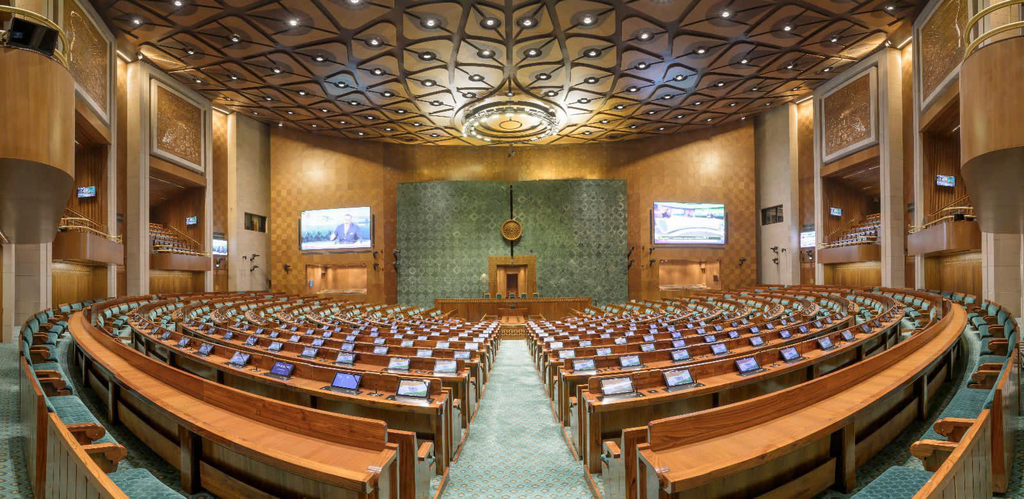
5. Parliamentary Form of Government
India follows the parliamentary system of government, which is based on the principle of collective responsibility of the executive to the legislature.
The system was influenced by the British model of parliamentary government, but operates within the framework of India’s written Constitution.
5.1 Features of the parliamentary system
A. Nominal and real executive
India has a constitutional head of the State and a political executive.
- The President is the nominal or constitutional executive.
- The Prime Minister and Council of Ministers constitute the real political executive at the Union level.
At the State level, the Governor is the constitutional head, while the Chief Minister and Council of Ministers exercise the real executive authority.
B. Collective responsibility
Article 75(3) provides that the Council of Ministers shall be collectively responsible to the Lok Sabha.
This means that the Council of Ministers functions as a team and remains in office only as long as it enjoys the confidence of the Lok Sabha.
If the Lok Sabha passes a no-confidence motion, the Council of Ministers must resign.
C. Dual membership
The Constitution requires that a Minister who is not a member of either House of Parliament for six consecutive months must cease to be a Minister (Article 75(5)).
D. Leadership of the Prime Minister
The Prime Minister is the head of the Council of Ministers and plays a central role in policy formulation, coordination and administration.
E. Dissolution of the Lok Sabha
The Lok Sabha may be dissolved before completing its normal five-year term, subject to constitutional provisions.
The Rajya Sabha, in contrast, is a permanent House and is not subject to dissolution.
5.2 Parliamentary versus Presidential system
| Basis | Parliamentary system | Presidential system |
|---|---|---|
| Executive | Dual executive: nominal and real | President is both head of State and government |
| Relationship between executive and legislature | Close relationship | Separation of personnel and institutional powers |
| Tenure of executive | Depends on legislative confidence | Generally fixed tenure |
| Responsibility | Collective responsibility to legislature | Not collectively responsible to legislature |
| Leadership | Prime Minister | President |
| Example | India, United Kingdom | United States |
5.3 Why did India adopt the parliamentary system?
The Constituent Assembly preferred the parliamentary model because:
- India had experience with parliamentary institutions under colonial constitutional arrangements.
- It promotes executive accountability to the elected legislature.
- It allows the government to be removed without waiting for the completion of a fixed term.
- It provides institutional mechanisms for political debate and scrutiny.
- It was considered suitable for a diverse society requiring political accommodation.
However, the parliamentary system also faces challenges such as frequent disruptions, party dominance, the weakening of legislative scrutiny and excessive concentration of power in the executive.
6. Blend of Rigidity and Flexibility
A Constitution must maintain stability while allowing necessary changes in response to changing political, social and economic conditions.
The Indian Constitution attempts to balance these requirements through a combination of flexible and rigid amendment procedures.
Article 368 provides the principal procedure for constitutional amendments. However, not all constitutional provisions are amended through the same process.
6.1 Three broad methods of constitutional amendment
| Method | Procedure | Examples |
|---|---|---|
| Simple majority of Parliament | Passed like an ordinary law | Formation of new States and alteration of State boundaries under Articles 2–4; certain matters concerning citizenship and State legislatures |
| Special majority of Parliament | Majority of the total membership of each House and at least two-thirds of members present and voting | Most constitutional amendments under Article 368 |
| Special majority plus State ratification | Special majority in Parliament and ratification by at least half of the State Legislatures | Amendments affecting specified federal provisions |
Important: An amendment requiring State ratification generally relates to provisions such as the election of the President, extent of executive power of the Union and States, Supreme Court and High Courts, distribution of legislative powers, representation of States in Parliament and Article 368 itself.
6.2 Significance
The flexible elements allow the Constitution to respond to changing requirements without an unnecessarily difficult amendment process.
The rigid elements protect important constitutional arrangements, particularly those relating to federalism.
This combination prevents the Constitution from becoming either too difficult to amend or too vulnerable to frequent political changes.
7. Fundamental Rights
The Constitution guarantees Fundamental Rights under Part III, Articles 12–35.
These rights protect individual liberty, equality and dignity against arbitrary State action and, in certain cases, private conduct.
They are essential to the establishment of a constitutional democracy.
7.1 Six categories of Fundamental Rights
| Category | Articles | Main objective |
|---|---|---|
| Right to Equality | Articles 14–18 | Equality before law and prohibition of discrimination |
| Right to Freedom | Articles 19–22 | Civil liberties and personal freedoms |
| Right against Exploitation | Articles 23–24 | Prohibition of trafficking, forced labour and child labour in specified circumstances |
| Right to Freedom of Religion | Articles 25–28 | Religious freedom and secularism |
| Cultural and Educational Rights | Articles 29–30 | Protection of cultural, linguistic and educational interests of minorities |
| Right to Constitutional Remedies | Article 32 | Enforcement of Fundamental Rights |
The Right to Property, originally a Fundamental Right under Article 19(1)(f) and Article 31, was removed from Part III by the 44th Constitutional Amendment Act, 1978. It is now a constitutional legal right under Article 300A.
7.2 Important characteristics
- Fundamental Rights are constitutionally guaranteed.
- Certain rights are available to all persons, while others are specifically available to citizens.
- They are enforceable through courts.
- They are not absolute and are subject to constitutionally permitted restrictions.
- Article 13 provides for the invalidity of laws inconsistent with Fundamental Rights, to the extent of inconsistency.
- Articles 32 and 226 provide important remedies for the enforcement of rights.
7.3 Significance
Fundamental Rights limit governmental power and protect individuals against arbitrary actions.
They also promote democratic participation, social equality and individual dignity.
The Supreme Court and High Courts play a crucial role in safeguarding these rights through judicial review and constitutional remedies.
8. Directive Principles of State Policy
The Directive Principles of State Policy (DPSPs) are contained in Part IV, Articles 36–51.
They lay down the socio-economic objectives that the State should pursue while formulating laws and public policies.
The DPSPs are inspired substantially by the Irish Constitution.
8.1 Constitutional character
Article 37 provides that the Directive Principles:
- Are not enforceable by any court.
- Are nevertheless fundamental in the governance of the country.
- It shall be the duty of the State to apply these principles in making laws.
8.2 Major objectives
The Directive Principles seek to establish a welfare-oriented State by promoting:
- Social and economic justice.
- Reduction of inequalities.
- Equal pay for equal work.
- Protection of workers.
- Organisation of village panchayats.
- Promotion of education and public health.
- Protection of the environment.
- Promotion of international peace and security.
- Uniform Civil Code.
8.3 Relationship between Fundamental Rights and DPSPs
Fundamental Rights and Directive Principles are complementary rather than contradictory.
| Fundamental Rights | Directive Principles |
|---|---|
| Primarily protect individual rights and liberties | Primarily promote collective social and economic welfare |
| Justiciable | Non-justiciable |
| Enforceable through courts | Implemented through legislation and policy |
| Limit arbitrary State action | Guide State action towards social transformation |
The Supreme Court has developed an important constitutional jurisprudence concerning the relationship between the two.
In Minerva Mills v. Union of India (1980), the Supreme Court emphasised the importance of maintaining harmony and balance between Fundamental Rights and Directive Principles. The Court held that destroying this balance would damage the basic structure of the Constitution.
9. Fundamental Duties
The Constitution also specifies certain responsibilities expected from citizens.
Fundamental Duties are contained in Part IVA, Article 51A.
They were inserted by the 42nd Constitutional Amendment Act, 1976, following the recommendations of the Swaran Singh Committee.
Originally, ten duties were incorporated. The 86th Constitutional Amendment Act, 2002, added the eleventh duty relating to educational opportunities for children between six and fourteen years of age.
9.1 Important Fundamental Duties
Citizens are expected to:
- Abide by the Constitution and respect its ideals and institutions, the National Flag and the National Anthem.
- Cherish the ideals of the freedom struggle.
- Uphold and protect the sovereignty, unity and integrity of India.
- Defend the country and render national service when called upon.
- Promote harmony and the spirit of common brotherhood.
- Preserve the rich heritage of India’s composite culture.
- Protect and improve the natural environment.
- Develop scientific temper, humanism and the spirit of inquiry and reform.
- Safeguard public property and abjure violence.
- Strive towards excellence in all spheres of individual and collective activity.
- Provide opportunities for education to children between six and fourteen years of age, in the case of parents or guardians.
9.2 Significance
Fundamental Duties remind citizens that constitutional democracy requires responsible civic conduct.
Although they are generally non-justiciable in themselves, Parliament may enact laws to give effect to particular duties. Courts may also refer to them while interpreting constitutional provisions and legislation.
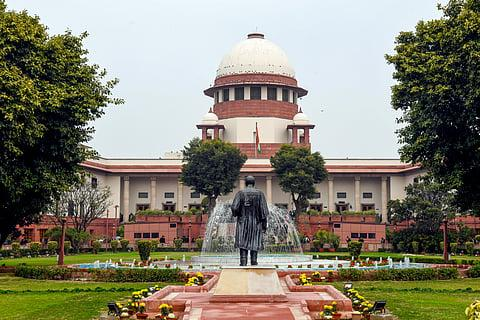
10. Independent and Integrated Judiciary
The Indian Constitution establishes an independent judiciary to protect constitutional supremacy, interpret the Constitution, safeguard Fundamental Rights and resolve disputes.
Judicial independence is essential because the judiciary must be able to review governmental actions without political interference.
10.1 Integrated judicial system
India follows an integrated judicial structure rather than separate federal and State judicial systems.
Integrated Judicial System of India
Supreme Court of India
Apex judicial authority
High Courts
At the State or regional level
Subordinate Courts
District and other lower courts
The Supreme Court is the highest judicial authority. High Courts function at the State or regional level, while subordinate courts administer justice at the district and lower levels.
The same judicial hierarchy administers both Union and State laws.
10.2 Safeguards for judicial independence
The Constitution provides several safeguards, including:
- Security of tenure of judges.
- A prescribed procedure for removal of Supreme Court and High Court judges.
- Salaries and allowances charged on the Consolidated Fund, subject to constitutional provisions.
- Restrictions on legislative discussion of judicial conduct except in the context of removal proceedings.
- Powers of judicial review.
- Authority of courts to punish for contempt.
10.3 Judicial review
Judicial review is the power of constitutional courts to examine the validity of legislative and executive actions.
If a law or governmental action violates the Constitution, the courts can declare it unconstitutional to the extent of the violation.
Important constitutional provisions include Articles 13, 32, 131, 136, 226 and 227, among others.
Judicial review ensures that the legislature and executive remain within their constitutional limits.
10.4 Significance
An independent judiciary:
- Protects Fundamental Rights.
- Maintains constitutional supremacy.
- Resolves disputes between the Union and States.
- Prevents arbitrary governmental action.
- Protects the basic structure of the Constitution.
The judiciary is therefore not merely an institution for dispute resolution; it is also a guardian of constitutional governance.
11. Universal Adult Franchise
The Indian Constitution adopts universal adult franchise, which means that every eligible adult citizen has the right to vote without discrimination on grounds such as religion, race, caste, sex or economic status.
Article 326 provides for elections to the Lok Sabha and State Legislative Assemblies on the basis of adult suffrage, subject to constitutional and statutory qualifications.
11.1 Evolution of voting age
| Period | Minimum voting age |
|---|---|
| At the commencement of the Constitution | 21 years |
| After the 61st Constitutional Amendment Act, 1988 | 18 years |
The voting age was reduced from 21 to 18 years through the 61st Constitutional Amendment Act, 1988, which came into effect in 1989.
11.2 Significance
Universal adult franchise was a remarkable democratic decision in the context of a newly independent country with widespread poverty, illiteracy and social inequality.
It ensured:
- Political equality among citizens.
- Participation of disadvantaged groups in democratic governance.
- Legitimacy of elected governments.
- Expansion of democratic consciousness.
- Representation of diverse social interests.
Unlike several countries that gradually expanded voting rights, India adopted universal adult franchise from the beginning of its constitutional democracy.
12. Single Citizenship
India follows the principle of single citizenship, unlike certain federal countries where citizens may possess both national and State citizenship.
Every Indian citizen is a citizen of India. There is no separate constitutional citizenship of an individual State.
12.1 Significance
Single citizenship promotes:
- National integration.
- Equality of citizenship.
- Common political identity.
- Freedom of movement and residence across the country, subject to constitutional restrictions.
- A sense of common belonging among people belonging to different States.
For example, a citizen of Telangana does not acquire a separate constitutional citizenship of Telangana. The person remains an Indian citizen.
UPSC distinction: Single citizenship does not mean that every citizen enjoys identical access to every public opportunity irrespective of constitutional qualifications. Residence-based requirements and special constitutional provisions may operate in particular contexts.
13. Emergency Provisions
The Indian Constitution provides for emergency powers to address extraordinary circumstances that threaten the security, stability or financial integrity of the country.
These provisions are contained in Part XVIII, Articles 352–360.
The Constitution recognises three types of emergencies.
| Type of Emergency | Article | Constitutional basis |
|---|---|---|
| National Emergency | Article 352 | War, external aggression or armed rebellion |
| President’s Rule / State Emergency | Article 356 | Failure of constitutional machinery in a State |
| Financial Emergency | Article 360 | Threat to the financial stability or credit of India or any part of its territory |
13.1 Impact on federalism
Emergency provisions can substantially alter the normal distribution of powers between the Union and the States.
During a National Emergency, Parliament obtains expanded legislative powers over matters in the State List under Article 250.
Under Article 356, the Union may assume specified functions of the State Government, subject to constitutional limitations and judicial review.
A Financial Emergency permits the Union to issue directions relating to financial propriety and other specified matters.
13.2 Significance and concerns
Emergency provisions were incorporated to protect national unity and constitutional governance during extraordinary circumstances.
However, their misuse can undermine federalism, civil liberties and democratic institutions.
The experience of the 1975–77 Emergency demonstrated the importance of constitutional safeguards and judicial oversight.
The 44th Constitutional Amendment Act, 1978 introduced important safeguards relating to the proclamation and operation of National Emergency.
14. Rule of Law
The Indian Constitution recognises the principle of rule of law, under which governmental authority must operate within the limits prescribed by law.
No individual or institution is above the law.
The principle is closely associated with the constitutional philosophy of A. V. Dicey, who identified important elements such as:
- Supremacy of law over arbitrary power.
- Equality before law.
- Protection of individual rights through ordinary legal processes.
In India, the rule of law is reflected in several constitutional provisions.
- Article 14 guarantees equality before law and equal protection of laws.
- Article 21 protects life and personal liberty except according to procedure established by law, interpreted in accordance with constitutional requirements.
- Article 32 provides remedies for enforcement of Fundamental Rights.
- Article 226 empowers High Courts to issue writs for enforcement of Fundamental Rights and for other purposes.
The rule of law also requires that public authorities exercise their powers for legitimate purposes, follow fair procedures and remain accountable to constitutional institutions.
Important: Equality before law does not prohibit all forms of classification. Reasonable classification is constitutionally permissible when it satisfies the applicable legal tests.
15. Secular State and Religious Freedom
Although secularism is included in the Preamble, it is also a distinctive operational feature of the Indian constitutional system.
The Constitution does not establish any religion as the official religion of India.
Instead, it protects religious freedom while allowing the State to regulate certain secular activities associated with religious institutions and undertake social reform.
Major constitutional provisions
| Provision | Constitutional protection |
|---|---|
| Article 14 | Equality before law |
| Article 15 | Prohibition of discrimination on specified grounds |
| Article 16 | Equality of opportunity in public employment |
| Article 25 | Freedom of conscience and religion |
| Article 26 | Freedom to manage religious affairs |
| Article 27 | Freedom from taxes for promotion of a particular religion |
| Article 28 | Certain protections concerning religious instruction in educational institutions |
Indian secularism seeks to balance religious liberty, equality and social reform.
The State is expected neither to impose a religion nor to discriminate against citizens on religious grounds.
16. Constitutional Supremacy and Limited Government
The Indian Constitution is the supreme law of the land. All organs of government derive their authority from it and must function within its limits.
India follows constitutional supremacy rather than the doctrine of absolute parliamentary sovereignty.
16.1 Constitutional supremacy
The Constitution defines:
- The powers of Parliament and State Legislatures.
- The authority and limitations of the executive.
- The jurisdiction of the judiciary.
- The rights and duties of citizens.
- The relationship between the Union and States.
- The procedure for constitutional amendments.
Parliament is a powerful legislative institution, but its authority is constitutionally limited.
16.2 Basic Structure Doctrine
The Supreme Court, in Kesavananda Bharati v. State of Kerala (1973), established the Basic Structure Doctrine.
The Court held that Parliament has wide powers to amend the Constitution under Article 368, but it cannot destroy or damage its basic structure.
The judgment did not provide an exhaustive list of basic features. Over time, judicial decisions have recognised several principles as components of the basic structure.
These include:
- Supremacy of the Constitution.
- Republican and democratic form of government.
- Secular character of the Constitution.
- Federal character of the Constitution.
- Rule of law.
- Separation of powers.
- Independence of the judiciary.
- Judicial review.
- Free and fair elections.
- Unity and integrity of India.
- Parliamentary system of government.
The doctrine acts as a constitutional limitation on the amending power of Parliament.
The Supreme Court’s official materials on the landmark judgment explain its significance in preserving constitutional supremacy and limiting the amending power. Home+2
17. Welfare State and Commitment to Social Justice
The Indian Constitution seeks to establish a welfare State, in which the government has an affirmative responsibility to promote the well-being of individuals and society.
The Constitution recognises that political democracy cannot be sustained without social and economic justice.
Its welfare orientation is reflected in:
- The Preamble’s commitment to social, economic and political justice.
- Directive Principles of State Policy.
- Provisions for affirmative action.
- Abolition of untouchability.
- Protection against exploitation.
- Promotion of education and public health.
- Protection of workers and vulnerable sections.
- Constitutional recognition of local self-government.
17.1 Social justice and affirmative action
The Constitution provides for special measures to address historical and structural inequalities.
Examples include:
- Article 15(4) and Article 15(5) concerning special provisions for socially and educationally backward classes and specified disadvantaged groups.
- Article 16(4) concerning reservation in public employment for backward classes not adequately represented in State services.
- Articles 330 and 332 concerning reservation of seats for Scheduled Castes and Scheduled Tribes in the Lok Sabha and State Legislative Assemblies.
- Article 46, which directs the State to promote the educational and economic interests of weaker sections, particularly Scheduled Castes and Scheduled Tribes.
These provisions reflect the Constitution’s transformative objective of creating a more equal society.
18. Local Self-Government and Democratic Decentralisation
The Indian Constitution provides for democratic decentralisation through rural and urban local self-government institutions.
The original Constitution did not accord local bodies the same detailed constitutional status that they possess today.
The 73rd and 74th Constitutional Amendment Acts, 1992 introduced a constitutional framework for Panchayati Raj Institutions and Municipalities, respectively.
18.1 Rural local government
The 73rd Amendment inserted Part IX, covering Articles 243–243O, and the Eleventh Schedule.
It provided constitutional recognition to Panchayati Raj Institutions.
Important features include:
- Gram Sabha.
- Three-tier Panchayati Raj structure, subject to constitutional exceptions.
- Regular elections.
- Reservation of seats for Scheduled Castes and Scheduled Tribes.
- Reservation of not less than one-third of seats for women.
- State Finance Commissions.
- State Election Commissions.
18.2 Urban local government
The 74th Amendment inserted Part IXA, covering Articles 243P–243ZG, and the Twelfth Schedule.
It provided a constitutional framework for urban local bodies.
The three broad categories are:
- Nagar Panchayat.
- Municipal Council.
- Municipal Corporation.
18.3 Significance
Local self-government promotes:
- People’s participation in governance.
- Decentralisation of administrative authority.
- Accountability at the grassroots level.
- Inclusive representation.
- Local planning and development.
It gives practical expression to the democratic principle that governance should operate as close to the people as possible.
19. Independent Constitutional Bodies
The Constitution establishes several independent institutions to ensure accountability, impartiality and effective functioning of the political system.
These institutions perform important constitutional functions and help prevent excessive concentration of power.
Major constitutional bodies
| Constitutional body | Relevant provisions | Primary function |
|---|---|---|
| Election Commission of India | Article 324 | Superintendence, direction and control of elections |
| Union Public Service Commission | Articles 315–323 | Recruitment and service-related advisory functions |
| State Public Service Commissions | Articles 315–323 | State-level recruitment and related functions |
| Finance Commission | Article 280 | Recommendations on financial relations between Union and States |
| Comptroller and Auditor General of India | Articles 148–151 | Audit of public finances |
| National Commission for Scheduled Castes | Article 338 | Safeguarding interests of Scheduled Castes |
| National Commission for Scheduled Tribes | Article 338A | Safeguarding interests of Scheduled Tribes |
| Special Officer for Linguistic Minorities | Article 350B | Safeguards for linguistic minorities |
The constitutional status and safeguards of these institutions are intended to protect their independence and enable them to discharge their responsibilities impartially.
20. Special Provisions for Certain States and Regions
The Indian Constitution recognises that different regions have distinct historical, geographical, cultural and administrative circumstances.
Accordingly, it provides special constitutional arrangements for certain States and regions.
These provisions are primarily found in Part XXI and other relevant Parts of the Constitution.
Examples include:
- Article 371 and related provisions concerning special responsibilities or arrangements for certain States.
- Article 371A concerning Nagaland.
- Article 371G concerning Mizoram.
- Article 371J concerning the Hyderabad-Karnataka region, now known as the Kalyana Karnataka region.
- The Sixth Schedule concerning tribal areas in Assam, Meghalaya, Tripura and Mizoram.
- The Fifth Schedule concerning the administration and control of Scheduled Areas and Scheduled Tribes in specified States.
These provisions reflect the Constitution’s commitment to asymmetric federalism.
Asymmetric federalism recognises that all States or regions need not have identical constitutional arrangements. Different provisions may be necessary to accommodate local conditions while preserving national unity.
This is an important feature of India’s approach to managing diversity.
21. A Constitution Combining Political Democracy with Social Transformation
One of the most important features of the Indian Constitution is that it seeks to achieve two objectives simultaneously:
- Establishment of political democracy through representative institutions, universal adult franchise, periodic elections and constitutional government.
- Transformation of Indian society through equality, social justice, affirmative action, economic welfare and protection of disadvantaged communities.
The Constitution was framed in the context of a deeply unequal society characterised by caste discrimination, untouchability, poverty, illiteracy and economic exploitation.
The framers therefore understood that merely introducing elections and representative institutions would not be sufficient to establish a genuinely democratic society.
The Constitution attempts to address this challenge through a combination of Fundamental Rights, Directive Principles, affirmative action, democratic decentralisation and independent constitutional institutions.
This transformative character distinguishes the Indian Constitution from a document concerned exclusively with the organisation of government.
22. The Basic Structure of the Indian Constitution
The various features discussed above are not merely independent constitutional characteristics. Many of them are interconnected and collectively constitute the fundamental identity of the Indian constitutional system.
The Basic Structure Doctrine, developed by the Supreme Court in Kesavananda Bharati v. State of Kerala (1973), places limitations on Parliament’s power to amend the Constitution.
22.1 Important elements of the Basic Structure
Although the Supreme Court has not provided an exhaustive list, judicial decisions have recognised the following as important elements:
| Basic feature | Constitutional significance |
|---|---|
| Supremacy of the Constitution | All organs of government derive authority from the Constitution |
| Republican and democratic government | Political authority is derived from the people |
| Secularism | The State cannot establish or impose an official religion |
| Federalism | Constitutional distribution of powers between Union and States |
| Parliamentary system | Executive accountability to the legislature |
| Rule of law | Governmental power must operate within legal and constitutional limits |
| Judicial review | Courts can examine constitutional validity of laws and executive actions |
| Independence of judiciary | Courts must function without improper external interference |
| Separation of powers | Constitutional functions are distributed among different organs |
| Free and fair elections | Democratic legitimacy depends on genuine electoral competition |
| Unity and integrity of India | Constitutional arrangements must preserve national unity |
| Balance between Fundamental Rights and DPSPs | Individual liberty and social welfare must be harmonised |
22.2 Important judicial decisions
| Case | Year | Constitutional significance |
|---|---|---|
| Kesavananda Bharati v. State of Kerala | 1973 | Established the Basic Structure Doctrine |
| Indira Nehru Gandhi v. Raj Narain | 1975 | Recognised free and fair elections as part of the basic structure |
| Minerva Mills v. Union of India | 1980 | Emphasised limited amending power and balance between Fundamental Rights and DPSPs |
| S. R. Bommai v. Union of India | 1994 | Affirmed secularism and federalism as basic features |
| I. R. Coelho v. State of Tamil Nadu | 2007 | Laws placed in the Ninth Schedule after 24 April 1973 can be reviewed if they damage the basic structure through violation of protected constitutional principles |
The doctrine is significant because it preserves the fundamental identity of the Constitution while allowing Parliament to make necessary constitutional changes. Home+3
23. Critical Evaluation of the Indian Constitution
The Indian Constitution has successfully provided a stable framework for democratic governance in a country characterised by extraordinary diversity. However, its operation has also generated debates concerning institutional balance, federalism and democratic accountability.
23.1 Major strengths
1. Institutional stability: The Constitution has provided a continuous framework for democratic governance since 1950.
2. Democratic inclusion: Universal adult franchise and constitutional safeguards have expanded political participation among historically disadvantaged groups.
3. Social transformation: Constitutional provisions have provided a framework for abolishing untouchability, promoting equality and addressing historical disadvantages.
4. National integration: Federal arrangements, single citizenship and common constitutional institutions have helped maintain national unity.
5. Constitutional accountability: Judicial review, independent constitutional bodies and parliamentary accountability provide mechanisms to control governmental power.
6. Adaptability: The amendment procedure enables constitutional evolution in response to changing social and political requirements.
23.2 Major challenges
1. Centralisation of power: The strong position of the Union can sometimes create tensions with State autonomy.
2. Weakening of parliamentary scrutiny: Frequent disruptions, inadequate legislative debate and excessive reliance on executive decision-making can undermine parliamentary accountability.
3. Judicial delays: Pending cases and delays in delivering justice affect the effective enforcement of constitutional rights.
4. Unequal access to rights: Socio-economic inequalities can prevent disadvantaged communities from fully exercising their constitutional freedoms.
5. Institutional independence: The effective functioning of constitutional institutions depends on transparency, accountability and protection from improper political influence.
6. Constitutional morality: Democratic institutions require not only compliance with constitutional text but also respect for constitutional conventions, tolerance, deliberation and institutional restraint.
23.3 The way forward
The future effectiveness of the Constitution depends on strengthening its institutions and deepening constitutional values.
Some important priorities include:
- Strengthening cooperative federalism.
- Improving parliamentary deliberation and legislative scrutiny.
- Ensuring timely access to justice.
- Protecting the independence of constitutional institutions.
- Promoting civic awareness and constitutional literacy.
- Strengthening local self-government.
- Ensuring that constitutional rights are accessible to all sections of society.
- Promoting constitutional morality in public life.
The Constitution must be understood not merely as a legal framework but as a continuing commitment to democratic governance and social transformation.
24. Summary: Salient Features at a Glance
| No. | Salient feature | Key constitutional aspect |
|---|---|---|
| 1 | Written and comprehensive Constitution | Detailed constitutional document |
| 2 | Borrowed and adapted provisions | Comparative constitutional influences |
| 3 | Sovereign, Socialist, Secular, Democratic Republic | Preamble |
| 4 | Federal system with a strong Centre | Division of powers |
| 5 | Parliamentary government | Collective responsibility |
| 6 | Blend of rigidity and flexibility | Article 368 and other amendment procedures |
| 7 | Fundamental Rights | Part III |
| 8 | Directive Principles | Part IV |
| 9 | Fundamental Duties | Part IVA |
| 10 | Independent and integrated judiciary | Supreme Court, High Courts and subordinate courts |
| 11 | Universal adult franchise | Article 326 |
| 12 | Single citizenship | Common Indian citizenship |
| 13 | Emergency provisions | Part XVIII |
| 14 | Rule of law | Equality and constitutional limitations |
| 15 | Secular State | Religious freedom and equality |
| 16 | Constitutional supremacy | Supremacy of the Constitution |
| 17 | Welfare State | Social and economic justice |
| 18 | Democratic decentralisation | Parts IX and IXA |
| 19 | Independent constitutional bodies | Constitutional accountability |
| 20 | Special provisions for certain regions | Asymmetric federalism |
| 21 | Transformative Constitution | Political democracy and social justice |
| 22 | Basic Structure Doctrine | Limits on the amending power |
25. UPSC Prelims Practice Questions
Question 1
Consider the following statements regarding the Indian Constitution:
- The Indian Constitution establishes a federal system with a strong Centre.
- The States have an unconditional constitutional right to secede from the Union.
- Residuary legislative powers are vested in Parliament.
Which of the statements given above are correct?
(a) 1 and 2 only
(b) 1 and 3 only
(c) 2 and 3 only
(d) 1, 2 and 3
Question 2
With reference to the parliamentary system of government in India, consider the following statements:
- The President is the nominal executive.
- The Council of Ministers is collectively responsible to the Lok Sabha.
- A person who is not a member of Parliament can never be appointed as a Minister.
Which of the statements given above are correct?
(a) 1 and 2 only
(b) 2 and 3 only
(c) 1 and 3 only
(d) 1, 2 and 3
Question 3
Which of the following constitutional provisions are generally amendable through a special majority of Parliament and ratification by at least half of the State Legislatures?
- Election of the President.
- Distribution of legislative powers between the Union and States.
- Fundamental Duties.
- Representation of States in Parliament.
Select the correct answer:
(a) 1, 2 and 4 only
(b) 1 and 3 only
(c) 2, 3 and 4 only
(d) 1, 2, 3 and 4
Question 4
Consider the following statements about Fundamental Rights and Directive Principles of State Policy:
- Fundamental Rights are generally enforceable by courts.
- Directive Principles are fundamental in the governance of the country.
- Directive Principles are directly enforceable by courts.
- The Constitution seeks to maintain harmony between Fundamental Rights and Directive Principles.
Which of the statements given above are correct?
(a) 1 and 2 only
(b) 1, 2 and 4 only
(c) 2 and 3 only
(d) 1, 2, 3 and 4
Question 5
The expression Basic Structure Doctrine is associated with which of the following?
(a) Parliament’s power to amend the Constitution without any limitation.
(b) The power of the President to dissolve Parliament.
(c) The limitation on Parliament’s power to amend the Constitution so as to destroy its basic structure.
(d) The power of State Legislatures to amend the Constitution independently.
Question 6
With reference to the Indian judiciary, consider the following statements:
- India has a single integrated judicial system.
- The Supreme Court is the highest judicial authority.
- High Courts can issue writs only for the enforcement of Fundamental Rights.
Which of the statements given above are correct?
(a) 1 and 2 only
(b) 2 and 3 only
(c) 1 and 3 only
(d) 1, 2 and 3
Question 7
Which of the following statements about Fundamental Duties is correct?
(a) They were incorporated into the original Constitution in 1950.
(b) They were inserted by the 42nd Constitutional Amendment Act, 1976.
(c) They are enforceable directly through Article 32.
(d) They are contained in Part III of the Constitution.
Question 8
Consider the following statements about the Indian Constitution:
- India has a system of dual citizenship.
- The Constitution provides for universal adult franchise.
- The Constitution provides for special arrangements for certain States and regions.
- The Constitution recognises the principle of judicial review.
Which of the statements given above are correct?
(a) 1 and 2 only
(b) 2, 3 and 4 only
(c) 1, 3 and 4 only
(d) 1, 2, 3 and 4
Answer Key and Explanations
| Question | Answer | Explanation |
|---|---|---|
| 1 | (b) | India has a strong Centre, and residuary powers belong to Parliament. States do not possess a right to secede. |
| 2 | (a) | The President is the nominal executive, and the Council of Ministers is collectively responsible to the Lok Sabha. A non-MP can be appointed Minister but must become a member of either House within six months. |
| 3 | (a) | Election of the President, distribution of legislative powers and representation of States are among the provisions requiring State ratification. Fundamental Duties do not require such ratification. |
| 4 | (b) | Fundamental Rights are enforceable, while DPSPs are non-justiciable but fundamental to governance. The Constitution seeks harmony between them. |
| 5 | (c) | The Basic Structure Doctrine limits Parliament’s amending power under Article 368. |
| 6 | (a) | India has an integrated judiciary. High Courts can issue writs for Fundamental Rights as well as for other purposes under Article 226. |
| 7 | (b) | Fundamental Duties were inserted by the 42nd Amendment Act, 1976. |
| 8 | (b) | India has single citizenship, not dual citizenship. It provides universal adult franchise, special regional arrangements and judicial review. |
26. UPSC Mains Practice Questions
GS Paper II – Indian Constitution
10 Marks
- The Indian Constitution combines federal features with strong centralising tendencies. Explain.
- Discuss the significance of Fundamental Rights and Directive Principles in establishing a welfare State.
- Explain the importance of the Basic Structure Doctrine in preserving constitutional supremacy.
- How does the parliamentary system ensure executive accountability in India?
15 Marks
- The Indian Constitution is a unique synthesis of borrowed constitutional principles and indigenous requirements. Discuss.
- Examine the significance of universal adult franchise in the establishment of political democracy in India.
- The Indian Constitution is not merely a framework for political governance but also an instrument of social transformation. Critically examine.
- Discuss the major features of Indian secularism and examine the challenges in implementing constitutional secularism.
- Indian federalism has evolved from a predominantly centralised arrangement towards cooperative and competitive federalism. Analyse.
- Examine the importance of constitutional morality in strengthening democratic institutions in India.
27. Important Sources for Further Reading
For authoritative reading and verification of constitutional provisions, students should refer to the following sources:
- Constitution of India – Legislative Department, Ministry of Law and Justice: Official Constitution of India.
- Supreme Court of India – Constitution: Constitution and constitutional principles.
- Supreme Court – Kesavananda Bharati judgment: Original Supreme Court judgment.
- Supreme Court – Basic Structure Judgment Portal: Background and explanation of the Basic Structure Doctrine.
- Election Commission of India: Constitutional basis of India’s electoral democracy.
- Digital Sansad: Constitution and parliamentary system.