
Category: Indian Polity and Constitution
Suggested series: Indian Constitution – Foundational Themes
Introduction
Citizenship is the legal status that establishes the relationship between an individual and a State. It determines an individual’s membership in a political community and provides the foundation for the enjoyment of certain political and constitutional rights.
In a democratic country, citizenship is particularly important because it establishes who constitutes the political community in whose name the Constitution operates. It also determines eligibility for certain constitutional offices, participation in elections and access to rights that are specifically reserved for citizens.
The Indian Constitution deals with citizenship in Part II, Articles 5–11. These provisions primarily determine who became an Indian citizen at the commencement of the Constitution on 26 January 1950.
However, the Constitution does not provide a comprehensive, permanent code governing every aspect of citizenship. Instead, Article 11 empowers Parliament to regulate the acquisition and termination of citizenship and all other related matters by law.
Exercising this power, Parliament enacted the Citizenship Act, 1955, which continues to be the principal legislation governing Indian citizenship. It has undergone several amendments, including significant changes in 1986, 1992, 2003, 2005, 2015 and 2019.
The subject has acquired contemporary importance because of debates surrounding illegal migration, citizenship by birth, the Citizenship (Amendment) Act, 2019, and the relationship between citizenship, secularism, equality and national identity.
This article examines the constitutional framework, statutory provisions, methods of acquiring and losing citizenship, major amendments, judicial decisions and contemporary debates surrounding Indian citizenship.
1. Meaning and Constitutional Significance of Citizenship
Citizenship refers to the formal legal membership of an individual in a State. It creates a relationship involving rights, duties and obligations between the individual and the State.
A citizen is not merely a person residing within the territory of a country. Citizenship represents a legally recognised political relationship.
1.1 Citizenship and nationality
The terms citizenship and nationality are sometimes used interchangeably, but they are not always identical.
| Citizenship | Nationality |
|---|---|
| Primarily denotes legal membership of a political community. | Often denotes a person’s legal or international relationship with a State. |
| Closely associated with political and civil rights. | Frequently used in international law and diplomatic contexts. |
| Determines eligibility for certain constitutional and political rights. | Establishes the State with which an individual is legally associated. |
In the Indian constitutional context, citizenship is the relevant concept for determining eligibility for political rights and certain constitutional offices.
1.2 Citizenship and fundamental rights
The Constitution distinguishes between rights available to all persons and rights available exclusively to citizens.
Rights available to citizens as well as non-citizens include:
- Article 14 – Equality before law and equal protection of laws.
- Article 20 – Protection in respect of conviction for offences.
- Article 21 – Protection of life and personal liberty.
- Article 22 – Protection against arrest and detention, subject to constitutional exceptions.
- Article 25 – Freedom of conscience and religion.
Rights specifically available to citizens include:
- Article 15 – Prohibition of discrimination on specified grounds.
- Article 16 – Equality of opportunity in public employment.
- Article 19 – Six freedoms, including speech and expression, assembly and movement.
- Article 29 – Protection of the interests of sections of citizens having a distinct language, script or culture.
Certain constitutional offices are also restricted to citizens of India. For example, only an Indian citizen can become President of India under Article 58.
Thus, citizenship determines the scope of political membership and the enjoyment of certain constitutional entitlements.
2. Constitutional Provisions: Part II (Articles 5–11)
Part II of the Constitution deals with citizenship at the commencement of the Constitution and the authority of Parliament to regulate citizenship through legislation.
The six provisions are:
| Article | Subject |
|---|---|
| Article 5 | Citizenship at the commencement of the Constitution |
| Article 6 | Rights of citizenship of certain persons who migrated to India from Pakistan |
| Article 7 | Rights of citizenship of certain migrants to Pakistan |
| Article 8 | Citizenship rights of certain persons of Indian origin residing outside India |
| Article 9 | Persons voluntarily acquiring foreign citizenship not to be citizens |
| Article 10 | Continuance of the rights of citizenship |
| Article 11 | Parliament’s power to regulate citizenship by law |
The constitutional provisions must be understood in the historical context of Partition in 1947, which resulted in large-scale migration between India and Pakistan.
The framers had to address the citizenship status of people who had migrated across the newly created international boundary, including those who subsequently returned.
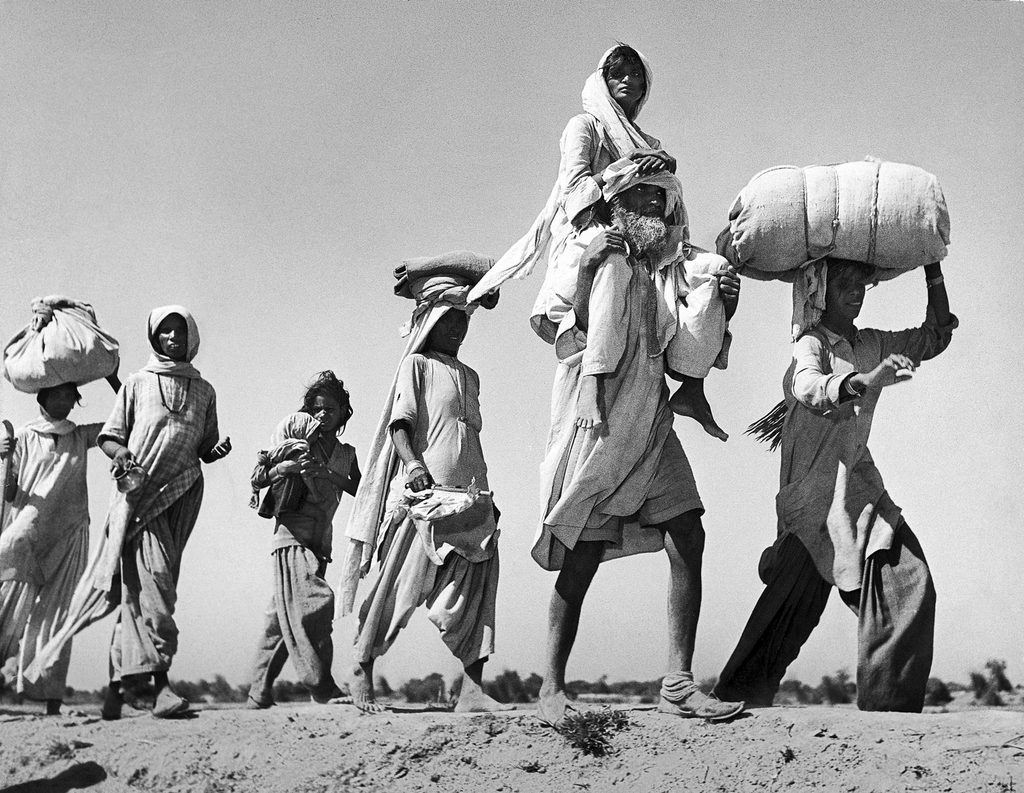
On 75th anniversary of India’s Partition, many look past the bloodshed – CSMonitor.com
3. Article 5: Citizenship at the Commencement of the Constitution
Article 5 determines who was to be regarded as an Indian citizen when the Constitution commenced on 26 January 1950.
It provides that every person who had their domicile in the territory of India and fulfilled any one of the specified conditions would become a citizen of India.
The three conditions were:
- The person was born in the territory of India; or
- Either of the person’s parents was born in the territory of India; or
- The person had been ordinarily resident in the territory of India for at least five years immediately preceding the commencement of the Constitution.
3.1 Meaning of domicile
Domicile refers to the place that a person regards as their permanent home, accompanied by the intention to reside there indefinitely.
It is distinct from temporary residence.
A person may reside in a country for employment, education or other temporary purposes without necessarily acquiring domicile there.
Article 5 therefore required a connection with India through domicile, together with one of the specified birth or residence conditions.
3.2 Significance of Article 5
Article 5 established the initial constitutional basis for determining Indian citizenship.
It was designed to accommodate individuals who had a genuine and legally recognised connection with India at the commencement of the Constitution.
UPSC point: Article 5 deals with citizenship at the commencement of the Constitution. It is not the general provision governing citizenship by birth today. Citizenship by birth is principally governed by Section 3 of the Citizenship Act, 1955.
4. Article 6: Citizenship Rights of Certain Persons Who Migrated from Pakistan to India
Partition resulted in large-scale migration between India and Pakistan. Article 6 addresses the citizenship rights of persons who migrated from the territory now included in Pakistan to India.
It provides special conditions under which such persons could be recognised as Indian citizens at the commencement of the Constitution.
Article 6 divides migrants into two broad categories based on the date of migration.
4.1 Persons who migrated before 19 July 1948
A person who migrated from Pakistan to India before 19 July 1948 would be deemed to be an Indian citizen if:
- The person, or either parent, or any grandparent was born in India as defined in the Government of India Act, 1935; and
- The person had been ordinarily resident in India since the date of migration.
4.2 Persons who migrated on or after 19 July 1948
For persons who migrated to India on or after 19 July 1948, additional conditions applied.
They were required to:
- Have a parent or grandparent born in India as defined under the Government of India Act, 1935.
- Have been registered as an Indian citizen by an officer appointed by the Government of India.
- Have made the prescribed application before the commencement of the Constitution.
- Have resided in India for at least six months immediately before the date of application.
4.3 Why was 19 July 1948 significant?
The date was associated with the introduction of a permit system regulating migration between India and Pakistan.
The constitutional provisions therefore distinguished between migration that occurred before and after the introduction of this system.
Prelims distinction: Article 6 deals with migration from Pakistan to India. Article 7 deals with migration from India to Pakistan.
5. Article 7: Citizenship of Certain Migrants to Pakistan
Article 7 addresses persons who migrated from India to Pakistan after 1 March 1947.
As a general rule, such persons were not considered Indian citizens under Articles 5 and 6.
However, the Constitution provided an important exception.
A person who migrated to Pakistan but subsequently returned to India under a permit for resettlement or permanent return could be considered for citizenship under the provisions of Article 6.
Such a person was treated, for the purpose of Article 6, as having migrated to India after 19 July 1948.
5.1 Significance
Article 7 was intended to address the complicated circumstances arising from Partition.
It recognised that some individuals who had initially migrated to Pakistan subsequently returned to India with the intention of settling permanently.
The provision therefore distinguished between permanent migration to Pakistan and return to India under an authorised resettlement or permanent-return permit.
6. Article 8: Citizenship of Persons of Indian Origin Residing Outside India
Article 8 deals with persons of Indian origin who were residing outside India at the commencement of the Constitution.
It provided that a person, or either of whose parents or any of whose grandparents, was born in India as defined in the Government of India Act, 1935, could be deemed to be an Indian citizen if:
- The person was ordinarily residing in a country outside India; and
- The person was registered as an Indian citizen by an Indian diplomatic or consular representative in that country, on an application made in the prescribed manner.
6.1 Significance
Article 8 recognised the connection between India and people of Indian origin living abroad.
It provided a constitutional route for such persons to obtain Indian citizenship through registration by Indian diplomatic or consular authorities.
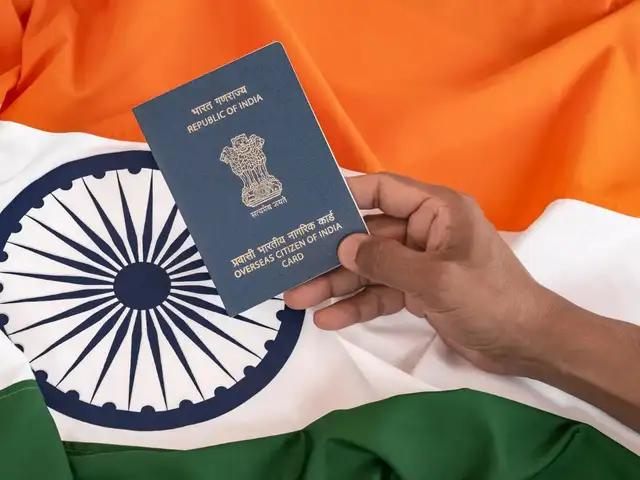
It is important to distinguish this historical constitutional provision from the contemporary concept of Overseas Citizen of India (OCI), which is a statutory status and not dual citizenship.
7. Article 9: Voluntary Acquisition of Foreign Citizenship
Article 9 provides that a person shall not be a citizen of India under Articles 5, 6 or 8 if that person has voluntarily acquired the citizenship of a foreign State.
The provision reflects India’s constitutional position against the simultaneous possession of Indian citizenship and voluntarily acquired foreign citizenship.
It must be read along with the Citizenship Act, 1955, which regulates termination and deprivation of citizenship.
Significance
Article 9 establishes an important constitutional principle: a person who voluntarily acquires foreign citizenship cannot claim Indian citizenship through the specified constitutional provisions.
Prelims point: Article 9 does not itself provide the complete procedure for termination of citizenship. The statutory framework is primarily found in Section 9 of the Citizenship Act, 1955.
8. Article 10: Continuance of Citizenship Rights
Article 10 provides for the continuance of citizenship rights of persons who are citizens under the preceding provisions of Part II.
However, such continuance is subject to any law that may be made by Parliament.
This means that citizenship recognised under Articles 5–9 continues, but remains subject to parliamentary legislation governing acquisition and termination.
The provision creates a constitutional link between the initial citizenship framework and subsequent citizenship legislation.
9. Article 11: Parliament’s Power to Regulate Citizenship
Article 11 is one of the most important provisions in Part II.
It empowers Parliament to make laws concerning:
- Acquisition of citizenship.
- Termination of citizenship.
- All other matters relating to citizenship.
This power operates notwithstanding the preceding provisions of Part II.
9.1 Significance of Article 11
Article 11 provides the constitutional basis for Parliament to enact a comprehensive citizenship law.
The framers did not intend Articles 5–10 to become an exhaustive and permanent code of citizenship.
Instead, they empowered Parliament to regulate citizenship in response to changing circumstances.
Parliament exercised this power by enacting the Citizenship Act, 1955.
The Act has subsequently been amended to address changing patterns of migration, citizenship by birth and descent, naturalisation, overseas Indians and other matters.CDNBBSR+1
10. Citizenship Act, 1955: The Statutory Framework
The Citizenship Act, 1955 was enacted by Parliament under the authority of Article 11. It provides the principal statutory framework governing Indian citizenship.
The Act regulates:
- Acquisition of citizenship.
- Registration and naturalisation.
- Citizenship by incorporation of territory.
- Overseas Citizenship of India.
- Renunciation of citizenship.
- Termination of citizenship.
- Deprivation of citizenship.
The Act has been amended several times to respond to changes in migration patterns, India’s relationship with its diaspora and evolving citizenship policies.
10.1 Important amendments to the Citizenship Act
| Year | Amendment | Major significance |
|---|---|---|
| 1985 | Citizenship (Amendment) Act, 1985 | Incorporated special provisions relating to the Assam Accord through Section 6A |
| 1986 | Citizenship (Amendment) Act, 1986 | Introduced restrictions on citizenship by birth |
| 1992 | Citizenship (Amendment) Act, 1992 | Enabled citizenship by descent through either parent, replacing the earlier father-based provision |
| 2003 | Citizenship (Amendment) Act, 2003 | Introduced the concept of illegal migrant into the Act and tightened citizenship by birth; provided for OCI-related arrangements |
| 2005 | Citizenship (Amendment) Act, 2005 | Expanded the Overseas Citizenship framework |
| 2015 | Citizenship (Amendment) Act, 2015 | Merged the Person of Indian Origin (PIO) and OCI schemes and introduced the present OCI terminology |
| 2019 | Citizenship (Amendment) Act, 2019 | Created a special citizenship pathway for specified religious communities from Afghanistan, Bangladesh and Pakistan |
Important distinction: The Citizenship (Amendment) Act, 2019 received presidential assent on 12 December 2019 and came into force on 10 January 2020. The rules to implement its application procedure were notified on 11 March 2024. Ministry of Home Affairs+2
11. Methods of Acquiring Indian Citizenship
Under the Citizenship Act, 1955, Indian citizenship can be acquired through five principal methods:
- Citizenship by birth – Section 3.
- Citizenship by descent – Section 4.
- Citizenship by registration – Section 5.
- Citizenship by naturalisation – Section 6.
- Citizenship by incorporation of territory – Section 7.
Acquisition of Indian Citizenship
Citizenship Act, 1955
By birth
Section 3
By descent
Section 4
By registration
Section 5
By naturalisation
Section 6
By incorporation of territory
Section 7
11.1 Citizenship by Birth – Section 3
Citizenship by birth is based on the place of birth, subject to the conditions prescribed by law.
The Citizenship Act has progressively moved away from an unrestricted jus soli principle (citizenship based primarily on birth within the territory) towards a more restricted system that also considers the citizenship or immigration status of parents.
The applicable conditions depend on the date of birth.
| Date of birth | Conditions for citizenship by birth |
|---|---|
| 26 January 1950 to 30 June 1987 | Every person born in India was generally an Indian citizen, irrespective of parents’ citizenship, subject to statutory exceptions |
| 1 July 1987 to 2 December 2004 | At least one parent must have been an Indian citizen at the time of birth |
| On or after 3 December 2004 | Both parents must be Indian citizens, or one must be an Indian citizen and the other must not be an illegal migrant |
The Citizenship (Amendment) Act, 1986 introduced the first major restriction, while the 2003 amendment introduced the more restrictive present framework.
Exceptions: A person is not entitled to citizenship by birth under Section 3 in specified circumstances, including where a parent enjoys diplomatic immunity and is not an Indian citizen, or where the parent is an enemy alien and the birth occurs in territory under enemy occupation.
Illustration:
- A person born in India in 1975 would generally have acquired Indian citizenship by birth irrespective of the citizenship of the parents.
- A person born in India in 1995 would acquire citizenship by birth if either parent was an Indian citizen at the time of birth.
- A person born in India in 2010 would acquire citizenship if both parents were Indian citizens, or one was an Indian citizen and the other was not an illegal migrant.
UPSC significance: The three date-based categories under Section 3 are frequently relevant to questions on citizenship by birth.
11.2 Citizenship by Descent – Section 4
Citizenship by descent applies to persons born outside India to Indian citizen parents.
The conditions have evolved over time.
| Date of birth outside India | Citizenship condition |
|---|---|
| 26 January 1950 to 9 December 1992 | Father must have been an Indian citizen at the time of birth |
| 10 December 1992 to 2 December 2004 | Either parent must have been an Indian citizen at the time of birth |
| On or after 3 December 2004 | Either parent must be an Indian citizen, and the birth must be registered at an Indian consulate in the prescribed manner |
For births after 3 December 2004, registration at an Indian consulate is generally required within one year of birth or with the permission of the Central Government after the prescribed period.
The parents must also make the prescribed declaration concerning the minor not holding the passport of another country.
The Act contains additional safeguards where the Indian parent is a citizen by descent rather than by birth or registration.
11.3 Citizenship by Registration – Section 5
The Central Government may register certain categories of persons as Indian citizens, subject to statutory conditions.
The principal categories include:
- A person of Indian origin ordinarily resident in India for seven years before applying.
- A person of Indian origin ordinarily resident outside undivided India.
- A person married to an Indian citizen and ordinarily resident in India for seven years.
- Minor children of Indian citizens.
- A person whose parents are registered as Indian citizens under specified provisions.
- A person who, or either of whose parents, was earlier a citizen of independent India and who satisfies the prescribed residence requirement.
- A registered OCI cardholder who satisfies the statutory residence and other requirements.
For the categories requiring seven years of ordinary residence, the Act prescribes a specific calculation: residence throughout the immediately preceding twelve months and residence for not less than six years during the preceding eight years.
Registration is not an automatic entitlement merely because a person belongs to one of these categories. The Central Government must be satisfied that the statutory requirements have been met.
11.4 Citizenship by Naturalisation – Section 6
Naturalisation is the process through which a foreign national acquires Indian citizenship after fulfilling prescribed legal conditions.
It is generally available to an adult of full capacity who is not an illegal migrant and satisfies the qualifications specified in the Third Schedule to the Citizenship Act.
The principal qualifications include:
- The applicant must not be an illegal migrant.
- The applicant must have resided in India, or been in the service of an Indian Government, for the prescribed period.
- The applicant must be of good character.
- The applicant must possess adequate knowledge of a language specified in the Eighth Schedule.
- The applicant must intend to reside in India or enter into or continue service under an Indian Government or specified international organisation.
The ordinary residence requirement under the Third Schedule consists of:
- Twelve months of residence immediately before the application; and
- Residence in India for an aggregate of not less than eleven years during the preceding fourteen years.
The Central Government may waive all or any of these conditions in the case of a person who has rendered distinguished service to the cause of science, philosophy, art, literature, world peace or human progress generally.
Important: The Citizenship (Amendment) Act, 2019 provides a reduced residence requirement for the specified communities and countries through a special statutory route under Section 6B. It should not be confused with the general naturalisation requirement.
11.5 Citizenship by Incorporation of Territory – Section 7
When a foreign territory becomes part of India, the Central Government may specify the persons who shall become Indian citizens by reason of their connection with that territory.
This provision enables the government to determine citizenship arrangements when India acquires a new territory.
Examples of territorial integration include:
- Incorporation of Goa, Daman and Diu into India in 1961.
- Incorporation of Sikkim into India in 1975.
- Incorporation of former French and Portuguese territories into the Indian Union through the relevant historical and constitutional processes.
The acquisition of citizenship in such circumstances is governed by the relevant legal arrangements and government orders.
UPSC point: Section 7 concerns citizenship arising from the incorporation of a foreign territory into India. It is different from citizenship by birth, descent, registration or naturalisation.Indian Citizenship Online+2
12. Special Provisions under Section 6A: Assam Accord
Section 6A was inserted into the Citizenship Act, 1955 through the Citizenship (Amendment) Act, 1985, following the signing of the Assam Accord on 15 August 1985.
The Assam Accord was an agreement between the Government of India and representatives of the Assam Movement, which had raised concerns about large-scale migration into Assam and its implications for the region’s demographic, cultural and political identity.
Section 6A establishes a special citizenship framework for persons of Indian origin who migrated from the specified territory (the territory that became Bangladesh) to Assam.
12.1 Three categories under Section 6A
| Date of entry into Assam | Legal treatment |
|---|---|
| Before 1 January 1966 | Persons of Indian origin covered by the provision are deemed to be Indian citizens |
| Between 1 January 1966 and 24 March 1971 | Persons are required to be detected as foreigners and registered; they acquire citizenship subject to the statutory ten-year framework and related conditions |
| On or after 25 March 1971 | Not covered by the citizenship protection under Section 6A |
Persons covered by the second category are required to register themselves under the prescribed procedure. Their names are removed from electoral rolls for the statutory period of ten years from the date of detection, after which they are treated as Indian citizens subject to the law.
12.2 Significance of Section 6A
Section 6A is significant because it recognises the special historical circumstances of Assam.
It attempts to balance:
- The humanitarian concerns of persons who migrated before the specified cut-off dates.
- The protection of the cultural and linguistic identity of Assam.
- The regulation of illegal migration.
- The constitutional principle of equality.
12.3 Supreme Court judgment of 2024
In In Re: Section 6A of the Citizenship Act, 1955 (17 October 2024), a Constitution Bench of the Supreme Court examined the constitutional validity of Section 6A.
The Court upheld Section 6A by a 4:1 majority.
The majority considered the historical circumstances of Assam, the Assam Accord and the constitutional permissibility of the special citizenship arrangement.
The dissenting judge, Justice J. B. Pardiwala, considered Section 6A unconstitutional prospectively on the ground of temporal unreasonableness.
The majority also emphasised the need for effective implementation of the legal framework dealing with illegal migration.
Significance for UPSC: The judgment illustrates the relationship between citizenship, federalism, cultural identity, migration and Article 14. It also demonstrates how Parliament may adopt region-specific citizenship arrangements to address distinctive historical circumstances. Sci API+2
13. Citizenship Amendment Act, 2019
The Citizenship (Amendment) Act, 2019 is one of the most debated amendments to the Citizenship Act, 1955.
It amended the definition of an illegal migrant and inserted Section 6B, creating a special route for specified religious communities from three neighbouring countries.
13.1 Background
The amendment was introduced against the background of migration from Afghanistan, Bangladesh and Pakistan.
The stated legislative objective was to provide a pathway to Indian citizenship for specified minority communities who had entered India after facing religious persecution or fear of religious persecution in these countries.
13.2 Communities and countries covered
The amendment covers persons belonging to the following six religious communities:
- Hindus
- Sikhs
- Buddhists
- Jains
- Parsis
- Christians
The countries covered are:
- Afghanistan
- Bangladesh
- Pakistan
The relevant persons must have entered India on or before 31 December 2014 and must satisfy the statutory conditions, including the applicable exemption requirements.
13.3 Major provisions of the 2019 amendment
1. Amendment to the definition of illegal migrant
The Act provides that members of the six specified communities from the three specified countries who entered India on or before 31 December 2014 and fulfil the prescribed exemption conditions will not be treated as illegal migrants for the purposes of the Citizenship Act.
2. Special provision under Section 6B
The Central Government or an authority specified by it may grant a certificate of registration or naturalisation to eligible persons under Section 6B.
3. Reduced residence requirement
The amendment reduces the residence or government-service qualification for naturalisation under the Third Schedule from the ordinary eleven-year aggregate requirement to five years for the specified beneficiaries.
4. Deemed citizenship from date of entry
A person granted citizenship under Section 6B is deemed to be an Indian citizen from the date of entry into India, subject to fulfilment of the statutory requirements.
5. Exemptions for certain areas
The special provisions do not apply to:
- Tribal areas included in the Sixth Schedule to the Constitution in Assam, Meghalaya, Mizoram and Tripura.
- Areas covered under the Inner Line Permit system notified under the Bengal Eastern Frontier Regulation, 1873.
13.4 Citizenship Amendment Rules, 2024
The Citizenship (Amendment) Rules, 2024 were notified on 11 March 2024.
They operationalised the application process under Section 6B.
The process includes:
- Submission of an electronic application.
- Scrutiny of supporting documents.
- Verification by the prescribed authorities.
- Examination by the Empowered Committee.
- Administration of the oath of allegiance.
- Grant of citizenship certificate to eligible applicants.
The official Indian Citizenship Online portal provides application facilities and prescribed forms under Section 6B. Indian Citizenship Online+2
13.5 Areas excluded from the CAA framework
The 2019 amendment specifically excludes certain areas from the operation of Section 6B.
These include:
- Tribal areas included in the Sixth Schedule in Assam, Meghalaya, Mizoram and Tripura.
- Areas covered by the Inner Line Permit system under the Bengal Eastern Frontier Regulation, 1873.
The exclusions are intended to preserve the distinct constitutional and administrative arrangements applicable to certain tribal and protected regions.
13.6 Citizenship Rules, 2026: Latest procedural developments
For current-affairs-oriented UPSC preparation, it is important to note that the Citizenship Rules, 2009 have undergone further amendments in 2026.
The Ministry of Home Affairs lists amendments dated 30 April 2026, 18 May 2026 and 19 August 2026. These are amendments to the rules governing implementation and procedure; they should not be confused with a new amendment to the substantive eligibility criteria under the Citizenship Amendment Act, 2019. Ministry of Home Affairs+1
An important development is the Citizenship (Third Amendment) Rules, 2026, notified on 19 August 2026.
The amendment provides that, for applicants ordinarily residing in the following areas, applications under Section 6B are to be submitted electronically to the jurisdictional Collector, who is empowered to receive, scrutinise and dispose of the applications:
- Gujarat
- Rajasthan
- Punjab
- West Bengal
- Assam, excluding tribal areas
- Tripura, excluding tribal areas
- Union Territories of Jammu and Kashmir and Ladakh
The Collector is required to verify documents, conduct necessary enquiries, administer the oath of allegiance and determine eligibility. The amendment therefore expands the role of district-level authorities in processing eligible Section 6B applications. Indian Citizenship Online
UPSC relevance: Distinguish between an amendment to the Citizenship Act and an amendment to the Citizenship Rules. The former changes the statutory framework; the latter may modify the procedure for implementing it.
13.7 Arguments surrounding the Citizenship Amendment Act
The CAA has generated significant constitutional and political debate.
Arguments advanced in support of the Act:
- It provides relief to specified religious minorities from three neighbouring countries.
- It recognises the historical circumstances of communities that entered India after facing persecution or fear of persecution.
- It creates a special pathway rather than automatically granting citizenship.
- It does not abolish the existing methods of acquiring citizenship available to other eligible foreign nationals.
- It excludes certain tribal and Inner Line Permit areas to protect their distinctive arrangements.
Concerns raised by critics:
- The selection of beneficiaries based on religion raises questions concerning Article 14 and the secular character of the Constitution.
- The exclusion of Muslim communities and other persecuted groups from the special pathway has been criticised as under-inclusive.
- The absence of a similar special provision for persecuted communities from other neighbouring countries has generated debate.
- The interaction between the CAA and possible citizenship-verification exercises has raised concerns about equality and the treatment of vulnerable populations.
- Its implementation in Assam and other northeastern regions has generated concerns relating to demographic change, language and cultural identity.
These are competing constitutional and policy arguments. The legal validity of the Act must ultimately be determined by the Supreme Court.
13.8 Supreme Court proceedings on the CAA
The constitutional validity of the Citizenship (Amendment) Act, 2019 has been challenged before the Supreme Court, including on the grounds that its classification violates Article 14 and the constitutional commitment to secularism.
On 19 February 2026, the Supreme Court scheduled final hearings to begin in the week commencing 5 May 2026, separating the pan-India cases from those concerning Assam and Tripura. Sci API+1
As reflected in the Supreme Court Observer’s case status updated on 22 September 2026, the constitutional challenge remains pending. Therefore, the CAA should not be described as having been judicially upheld or struck down. Supreme Court Observer
14. Overseas Citizenship of India (OCI)
The Indian Constitution provides for single citizenship. It does not recognise dual citizenship.
However, Parliament has created a statutory arrangement known as Overseas Citizenship of India (OCI) for eligible persons of Indian origin and certain specified family members.
The OCI scheme was introduced through the Citizenship (Amendment) Act, 2005 and subsequently modified, including through the 2015 amendment.
OCI is governed by Sections 7A–7D of the Citizenship Act, 1955.
14.1 Who can register as an OCI cardholder?
Subject to statutory exclusions and eligibility requirements, the scheme is available to specified persons of Indian origin and eligible family members.
Broadly, it includes:
- A person who was a citizen of India on or after 26 January 1950.
- A person who was eligible to become a citizen of India on 26 January 1950.
- A person who belonged to a territory that became part of India after 15 August 1947.
- Certain descendants of such persons.
- Certain foreign spouses of eligible Indian citizens or OCI cardholders, subject to prescribed conditions.
Persons who are or have been citizens of Pakistan or Bangladesh, or whose parents, grandparents or great-grandparents were citizens of those countries, are generally excluded under the statutory framework. Other statutory exclusions also apply.
14.2 Rights and privileges of OCI cardholders
OCI cardholders enjoy several facilities, including:
- Multiple-entry, lifelong visa facilities for visiting India, subject to applicable rules.
- Exemption from registration requirements for any length of stay in India, subject to applicable conditions.
- Parity with Non-Resident Indians in certain economic, financial and educational fields, as prescribed by the Central Government.
- Certain facilities relating to domestic air fares and entry fees to national parks and wildlife sanctuaries, subject to the applicable framework.
14.3 Limitations of OCI status
OCI cardholders are not full Indian citizens.
They do not enjoy:
- The right to vote in elections.
- The right to contest elections to Parliament or State Legislatures.
- Eligibility for constitutional offices reserved for Indian citizens.
- Eligibility for appointment to specified public services and government posts reserved for citizens.
- The general right to purchase agricultural land, plantation property or farmhouses, subject to applicable legal provisions.
14.4 Difference between Indian citizenship and OCI status
| Basis | Indian citizen | OCI cardholder |
|---|---|---|
| Legal status | Full Indian citizenship | Statutory overseas status |
| Right to vote | Yes, subject to electoral law | No |
| Contest elections | Yes, subject to constitutional qualifications | No |
| Constitutional offices | Eligible subject to qualifications | Not eligible |
| Indian passport | Entitled to Indian passport | Not entitled to Indian passport |
| Visa to India | Not required | Lifelong visa facility, subject to rules |
| Agricultural land | Subject to Indian laws applicable to citizens | Generally restricted |
| Dual citizenship | Not recognised | OCI is not dual citizenship |
Important UPSC distinction: OCI does not mean dual citizenship. It is a statutory facility providing specified privileges to eligible foreign nationals of Indian origin without conferring the full rights of Indian citizenship. Indian Citizenship Online+2
15. Modes of Losing Indian Citizenship
The Citizenship Act, 1955 provides three principal methods through which Indian citizenship may be lost:
- Renunciation – Section 8.
- Termination – Section 9.
- Deprivation – Section 10.
15.1 Renunciation of citizenship – Section 8
Renunciation is the voluntary declaration by which an Indian citizen gives up Indian citizenship.
An adult Indian citizen who is also a citizen or national of another country may make a declaration renouncing Indian citizenship in the prescribed manner.
Once the declaration is registered by the prescribed authority, the person ceases to be an Indian citizen.
Effect on minor children: Where a parent renounces Indian citizenship, the minor children of that person may also cease to be Indian citizens. However, the Act provides an option for such children to resume Indian citizenship within one year after attaining full age, subject to the statutory conditions.
15.2 Termination of citizenship – Section 9
Section 9 deals with the voluntary acquisition of foreign citizenship.
If an Indian citizen voluntarily acquires the citizenship of another country, Indian citizenship terminates, subject to the provisions of the Act.
The question whether, when and how a person voluntarily acquired foreign citizenship is determined in accordance with the statutory framework.
This provision reflects India’s rejection of dual citizenship.
15.3 Deprivation of citizenship – Section 10
Deprivation refers to the compulsory withdrawal of citizenship by the Central Government in specified circumstances.
It generally applies to persons who acquired citizenship by naturalisation or registration.
The Central Government may deprive a person of citizenship on specified grounds, including:
- Citizenship obtained by fraud, false representation or concealment of material facts.
- Disloyalty or disaffection towards the Constitution of India, as prescribed.
- Unlawful trade or communication with an enemy during war.
- Conviction within five years of registration or naturalisation for an offence punishable with imprisonment of two years or more.
- Continuous ordinary residence outside India for seven years, subject to statutory exceptions.
The Act also provides procedural safeguards, including an opportunity for the person concerned to have the case referred to an inquiry committee in specified circumstances.
15.4 Difference between the three methods
| Basis | Renunciation | Termination | Deprivation |
|---|---|---|---|
| Nature | Voluntary | Arises by operation of law | Compulsory |
| Principal reason | Individual voluntarily gives up citizenship | Voluntary acquisition of foreign citizenship | Statutory grounds such as fraud or specified conduct |
| Authority | Declaration registered by prescribed authority | Determined under statutory provisions | Central Government |
| Relevant section | Section 8 | Section 9 | Section 10 |
UPSC point: Renunciation and termination arise from the individual’s voluntary actions, while deprivation is an action taken by the State under specified statutory conditions.
16. Single Citizenship and the Rejection of Dual Citizenship
India follows the principle of single citizenship, which means that an individual is a citizen of India and does not hold a separate citizenship of the State in which the person resides.
The Constitution does not recognise dual citizenship in the sense of simultaneously holding Indian citizenship and the citizenship of another sovereign country.
16.1 Why did India adopt single citizenship?
The framers considered single citizenship important for:
- Promoting national unity and integration.
- Establishing a common political identity.
- Preventing the development of separate State-based citizenship identities.
- Ensuring a common constitutional relationship between individuals and the Indian Union.
16.2 Does India recognise dual nationality through OCI?
No. OCI is a statutory immigration and overseas-status arrangement. It does not confer Indian citizenship or political rights.
An Indian citizen who voluntarily acquires foreign citizenship ordinarily ceases to be an Indian citizen under Section 9 of the Citizenship Act.
Illustration: An Indian citizen who voluntarily acquires British citizenship cannot continue to claim Indian citizenship merely by obtaining an OCI card. The person may, however, apply for OCI status if eligible.
17. Citizenship, Domicile and Residence: Important Distinctions
These concepts are closely related but have different legal meanings.
| Citizenship | Domicile | Residence |
|---|---|---|
| Legal membership of a State | Permanent legal home of a person | Place where a person actually lives |
| Determines political membership and certain constitutional rights | Indicates permanent attachment and intention to remain | May be temporary or permanent |
| Governed by constitutional and statutory citizenship provisions | Determined by applicable legal principles | Depends on factual and legal circumstances |
| A person can be a citizen while residing abroad | A person may have a domicile despite temporary absence | Residence alone does not necessarily confer citizenship |
17.1 Citizenship and domicile under Article 5
Article 5 specifically used the concept of domicile to determine citizenship at the commencement of the Constitution.
However, domicile and citizenship are not interchangeable.
A person may be an Indian citizen while ordinarily residing abroad. Similarly, a foreign national may reside in India for several years without automatically acquiring Indian citizenship.
17.2 Citizenship and the right to reside in India
Article 19(1)(e), which guarantees the right to reside and settle in any part of India, is available only to citizens.
Foreign nationals do not enjoy this Fundamental Right.
However, Article 21 protects the life and personal liberty of all persons, including non-citizens, subject to the Constitution and law.
This distinction is important in understanding the constitutional position of refugees, migrants and foreign nationals.
18. Important Judicial Decisions Relating to Citizenship
The Supreme Court has interpreted citizenship provisions in the context of migration, equality, domicile, foreign nationals and constitutional identity.
The following decisions are particularly important for UPSC preparation.
| Case | Year | Principle / Significance |
|---|---|---|
| State of Arunachal Pradesh v. Khudiram Chakma | 1994 | Examined the legal position and protection of Chakma refugees and the obligations of the State |
| Sarbananda Sonowal v. Union of India | 2005 | Examined illegal migration into Assam and struck down the Illegal Migrants (Determination by Tribunals) Act, 1983 |
| Louis De Raedt v. Union of India | 1991 | Held that foreigners do not enjoy the Article 19(1)(e) right to reside and settle in India, while Article 21 protection extends to all persons |
| In Re: Section 6A of the Citizenship Act, 1955 | 2024 | Upheld the constitutional validity of Section 6A by a 4:1 majority |
| Indian Union Muslim League v. Union of India | Pending | Constitutional challenge to the Citizenship (Amendment) Act, 2019 |
18.1 Sarbananda Sonowal v. Union of India (2005)
This judgment is particularly important in the context of illegal migration into Assam.
The Supreme Court examined the constitutional validity of the Illegal Migrants (Determination by Tribunals) Act, 1983.
The Act prescribed a special mechanism for identifying illegal migrants in Assam.
The Court struck down the Act, holding that its framework was inadequate for addressing the problem of illegal migration and that it had created serious difficulties in detecting and deporting illegal migrants.
The judgment emphasised the importance of national security and the constitutional responsibility of the Union to protect the country against external aggression and internal disturbance.
18.2 Louis De Raedt v. Union of India (1991)
This case clarified the constitutional rights of foreign nationals.
The Supreme Court distinguished between rights available to citizens and rights available to all persons.
It held that foreigners do not enjoy the right under Article 19(1)(e) to reside and settle in any part of India because that right is specifically available to citizens.
However, foreigners are protected by Article 21, which applies to all persons.
UPSC significance: Fundamental Rights are not uniformly available to citizens and non-citizens. The constitutional text must be examined to determine the beneficiaries of each right.
19. Citizenship and the National Register of Citizens (NRC)
The National Register of Citizens (NRC) is a register containing particulars of Indian citizens.
The legal basis for the National Register of Citizens is found in Section 14A of the Citizenship Act, 1955, inserted by the Citizenship (Amendment) Act, 2003.
Section 14A provides for:
- Compulsory registration of every citizen of India.
- Maintenance of a National Register of Indian Citizens.
- Issue of national identity cards to registered citizens.
- Appointment of a Registrar General of Citizen Registration.
19.1 NRC in Assam
The NRC exercise in Assam was conducted in the context of the Assam Accord and the special citizenship framework under Section 6A.
The final NRC for Assam was published on 31 August 2019.
It included approximately 3.11 crore applicants and excluded approximately 19.06 lakh applicants.
However, exclusion from the NRC does not automatically mean that a person has been declared a foreigner. The legal process for determining citizenship and the availability of remedies must be followed.
19.2 NRC and CAA: Distinction
| NRC | Citizenship Amendment Act, 2019 |
|---|---|
| A register of Indian citizens | An amendment to the Citizenship Act |
| Concerns identification and registration of citizens | Provides a special citizenship pathway for specified migrants |
| Legal basis includes Section 14A of the Citizenship Act | Legal basis is the Citizenship (Amendment) Act, 2019 |
| Assam has had a specific NRC exercise | CAA applies to eligible persons covered by Section 6B |
| Does not itself create a new category of citizenship | Creates a special route for acquisition of citizenship |
Important clarification: The CAA and NRC are legally distinct. The existence of one does not automatically establish the implementation of the other at the national level.
20. Constitutional and Policy Issues Relating to Citizenship
Citizenship is not merely an administrative question. It raises important constitutional issues involving equality, secularism, national security, migration, human rights and national identity.
20.1 Citizenship and secularism
The Constitution declares India to be a secular republic.
The relationship between citizenship legislation and religious classification therefore raises important questions concerning the meaning and application of secularism.
The debate surrounding the CAA has brought this issue into sharp focus.
20.2 Citizenship and equality
Article 14 guarantees equality before law and equal protection of laws to all persons.
The constitutional validity of citizenship legislation involving classifications based on religion, country of origin and date of entry must therefore be assessed against the applicable equality principles.
The pending challenge to the CAA makes this an important contemporary constitutional issue.
20.3 Citizenship and national security
Illegal migration can raise concerns relating to:
- Border management.
- Internal security.
- Demographic changes.
- Trafficking and organised crime.
- Pressure on public services.
- Protection of vulnerable migrant populations.
The State must balance national security concerns with constitutional safeguards and humanitarian considerations.
20.4 Citizenship and refugees
India does not have a single comprehensive national refugee law comparable to the refugee-specific legislative frameworks of some other countries.
India is not a party to the 1951 Refugee Convention or its 1967 Protocol.
Refugees and other foreign nationals in India are governed by applicable domestic laws, government policies and constitutional protections.
Article 21 remains particularly important because its protection extends to all persons, including foreign nationals.
20.5 The way forward
A balanced citizenship framework should seek to:
- Ensure clarity and predictability in citizenship laws.
- Strengthen transparent procedures for determining citizenship.
- Protect individuals against arbitrary deprivation of legal status.
- Maintain effective border management.
- Ensure compliance with constitutional equality and due process.
- Address refugee and migration issues through coherent policy and legal arrangements.
- Preserve national security while respecting human dignity.
21. Quick Revision: Citizenship under the Indian Constitution
A. Constitutional provisions
| Article | Key provision |
|---|---|
| Article 5 | Citizenship at commencement of Constitution |
| Article 6 | Migrants from Pakistan to India |
| Article 7 | Persons who migrated from India to Pakistan |
| Article 8 | Persons of Indian origin residing abroad |
| Article 9 | Voluntary acquisition of foreign citizenship |
| Article 10 | Continuance of citizenship |
| Article 11 | Parliament’s power to regulate citizenship |
B. Citizenship Act, 1955
| Section | Subject |
|---|---|
| Section 3 | Citizenship by birth |
| Section 4 | Citizenship by descent |
| Section 5 | Citizenship by registration |
| Section 6 | Citizenship by naturalisation |
| Section 6A | Special provisions relating to Assam Accord |
| Section 6B | Special provisions under CAA, 2019 |
| Section 7 | Citizenship by incorporation of territory |
| Sections 7A–7D | Overseas Citizenship of India |
| Section 8 | Renunciation |
| Section 9 | Termination |
| Section 10 | Deprivation |
| Section 14A | National Register of Citizens |
C. Important dates
| Date / Year | Event |
|---|---|
| 1 March 1947 | Reference date used in Article 7 |
| 19 July 1948 | Introduction of the permit system relevant to Articles 6 and 7 |
| 26 January 1950 | Commencement of the Constitution |
| 30 December 1955 | Citizenship Act enacted |
| 15 August 1985 | Assam Accord signed |
| 1985 | Section 6A incorporated |
| 1986 | Citizenship by birth restricted |
| 10 December 1992 | Citizenship by descent extended to either parent |
| 2003 | Citizenship by birth further restricted; NRC framework introduced |
| 2015 | PIO and OCI schemes merged |
| 12 December 2019 | Citizenship Amendment Act received Presidential assent |
| 10 January 2020 | CAA came into force |
| 11 March 2024 | CAA Rules notified |
| 17 October 2024 | Supreme Court upheld Section 6A by 4:1 majority |
| 19 August 2026 | Citizenship (Third Amendment) Rules, 2026 notified |
22. UPSC Prelims Practice Questions
Question 1
With reference to the citizenship provisions of the Indian Constitution, consider the following statements:
- Part II of the Constitution deals with citizenship.
- Article 11 empowers Parliament to regulate the acquisition and termination of citizenship.
- The Constitution provides a comprehensive and permanent code governing all aspects of citizenship.
Which of the statements given above are correct?
(a) 1 and 2 only
(b) 2 and 3 only
(c) 1 and 3 only
(d) 1, 2 and 3
Question 2
Consider the following statements regarding citizenship by birth under the Citizenship Act, 1955:
- Every person born in India between 26 January 1950 and 30 June 1987 was generally entitled to citizenship by birth, irrespective of the citizenship of parents.
- For persons born in India between 1 July 1987 and 2 December 2004, at least one parent must have been an Indian citizen.
- For persons born in India on or after 3 December 2004, both parents must necessarily be Indian citizens.
Which of the statements given above are correct?
(a) 1 and 2 only
(b) 2 and 3 only
(c) 1 and 3 only
(d) 1, 2 and 3
Question 3
With reference to citizenship by descent, consider the following statements:
- Before 10 December 1992, citizenship by descent was generally based on the citizenship of the father.
- From 10 December 1992, citizenship by descent could be acquired through either parent.
- Every person born outside India to an Indian citizen automatically becomes an Indian citizen without any registration requirement.
Which of the statements given above are correct?
(a) 1 and 2 only
(b) 2 and 3 only
(c) 1 and 3 only
(d) 1, 2 and 3
Question 4
Which of the following are recognised methods of acquiring Indian citizenship under the Citizenship Act, 1955?
- Birth
- Descent
- Registration
- Naturalisation
- Incorporation of territory
Select the correct answer:
(a) 1, 2 and 3 only
(b) 1, 2, 3 and 4 only
(c) 2, 3, 4 and 5 only
(d) 1, 2, 3, 4 and 5
Question 5
With reference to Section 6A of the Citizenship Act, 1955, consider the following statements:
- It was inserted to implement the Assam Accord.
- It provides special citizenship provisions for certain persons who migrated to Assam from the specified territory.
- Persons who entered Assam on or after 25 March 1971 are covered by its citizenship protection.
Which of the statements given above are correct?
(a) 1 and 2 only
(b) 2 and 3 only
(c) 1 and 3 only
(d) 1, 2 and 3
Question 6
With reference to the Citizenship (Amendment) Act, 2019, consider the following statements:
- It covers specified religious communities from Afghanistan, Bangladesh and Pakistan.
- It applies to eligible persons who entered India on or before 31 December 2014.
- It automatically grants citizenship to all members of the specified communities.
- It excludes certain tribal areas and areas covered under the Inner Line Permit system.
Which of the statements given above are correct?
(a) 1 and 2 only
(b) 1, 2 and 4 only
(c) 2, 3 and 4 only
(d) 1, 2, 3 and 4
Question 7
Consider the following statements regarding Overseas Citizenship of India:
- OCI cardholders are full Indian citizens.
- OCI cardholders do not have the right to vote in Indian elections.
- OCI status is a statutory arrangement and not dual citizenship.
- OCI cardholders are generally prohibited from acquiring agricultural land in India.
Which of the statements given above are correct?
(a) 1 and 2 only
(b) 2 and 3 only
(c) 2, 3 and 4 only
(d) 1, 2, 3 and 4
Question 8
Which of the following provisions of the Citizenship Act, 1955 deal with the loss of Indian citizenship?
- Renunciation
- Termination
- Deprivation
- Naturalisation
Select the correct answer:
(a) 1 and 2 only
(b) 1, 2 and 3 only
(c) 2, 3 and 4 only
(d) 1, 2, 3 and 4
Question 9
Consider the following statements:
- Article 19 is available to citizens of India.
- Article 21 is available only to Indian citizens.
- Foreign nationals are protected under Article 21.
- Foreign nationals enjoy the right under Article 19(1)(e) to reside and settle in any part of India.
Which of the statements given above are correct?
(a) 1 and 3 only
(b) 1, 2 and 3 only
(c) 2 and 4 only
(d) 1, 3 and 4 only
Question 10
With reference to the Citizenship (Third Amendment) Rules, 2026, consider the following statements:
- They amended the Citizenship Act, 1955 itself.
- They expanded the role of jurisdictional Collectors in processing specified applications under Section 6B.
- They altered the six religious communities covered by the Citizenship Amendment Act, 2019.
Which of the statements given above are correct?
(a) 1 only
(b) 2 only
(c) 1 and 3 only
(d) 2 and 3 only
Answer Key and Explanations
| Question | Answer | Explanation |
|---|---|---|
| 1 | (a) | Part II deals with citizenship. Article 11 empowers Parliament to legislate on citizenship. The Constitution does not provide a complete permanent citizenship code. |
| 2 | (a) | The third statement is incorrect. After 3 December 2004, either both parents must be citizens, or one must be a citizen and the other must not be an illegal migrant. |
| 3 | (a) | The 1992 amendment extended citizenship by descent through either parent. Registration requirements apply to specified categories of overseas births. |
| 4 | (d) | All five are recognised methods under Sections 3–7 of the Citizenship Act. |
| 5 | (a) | Section 6A implements the Assam Accord framework. The cut-off date for the third category is 25 March 1971. |
| 6 | (b) | The CAA creates a pathway for eligible applicants; it does not automatically confer citizenship on everyone belonging to the specified communities. |
| 7 | (c) | OCI is not full citizenship or dual citizenship. OCI cardholders cannot vote and are generally restricted from acquiring agricultural land. |
| 8 | (b) | Sections 8, 9 and 10 deal with renunciation, termination and deprivation respectively. Naturalisation is a method of acquiring citizenship. |
| 9 | (a) | Article 19 is citizen-specific. Article 21 protects all persons, including foreigners. Foreigners do not enjoy Article 19(1)(e). |
| 10 | (b) | The 2026 Rules amend the procedural framework, including the role of Collectors under Section 6B; they do not amend the substantive eligibility categories in the 2019 Act. |
23. UPSC Mains Practice Questions
GS Paper II – Indian Constitution
10 Marks
- Explain the constitutional provisions relating to citizenship under Articles 5–11 of the Indian Constitution.
- Distinguish between citizenship by birth, descent, registration and naturalisation under the Citizenship Act, 1955.
- Explain the significance of Article 11 in the constitutional framework of Indian citizenship.
- Distinguish between Indian citizenship and Overseas Citizenship of India (OCI).
15 Marks
- Examine the evolution of India’s citizenship framework from the commencement of the Constitution to the Citizenship Amendment Act, 2019.
- Discuss the special citizenship provisions relating to Assam under Section 6A of the Citizenship Act, 1955. Examine their constitutional significance in the light of the 2024 Supreme Court judgment.
- The Citizenship (Amendment) Act, 2019 has generated significant constitutional debates concerning equality and secularism. Critically examine.
- Explain the constitutional and statutory framework governing the acquisition and termination of Indian citizenship.
- Discuss the relationship between citizenship, migration, national security and constitutional rights in India.
- India follows single citizenship despite having a federal system. Examine the constitutional rationale and implications of this arrangement.