
Latest posts
-
Determinants of Ethics in Human Actions: Individual, Social, Cultural and Institutional Influences

Examine the individual, social, cultural, educational, economic, institutional and situational factors that shape ethical and unethical behaviour, with examples relevant to civil services.
-
Essence of Ethics in Human Actions: Intention, Means, Duty and Moral Judgement

Explore how intention, means, duties, conscience and consequences shape the ethical evaluation of human actions, with practical examples and applications in public administration.
-
Ethics and Human Interface: Meaning, Nature and Foundations

Understand the meaning, nature, scope and philosophical foundations of ethics, its relationship with morality, law and values, and its importance in the study of ethical conduct and public administration.
-
Constitutional Amendment in India: Article 368, Procedure and Basic Structure Doctrine
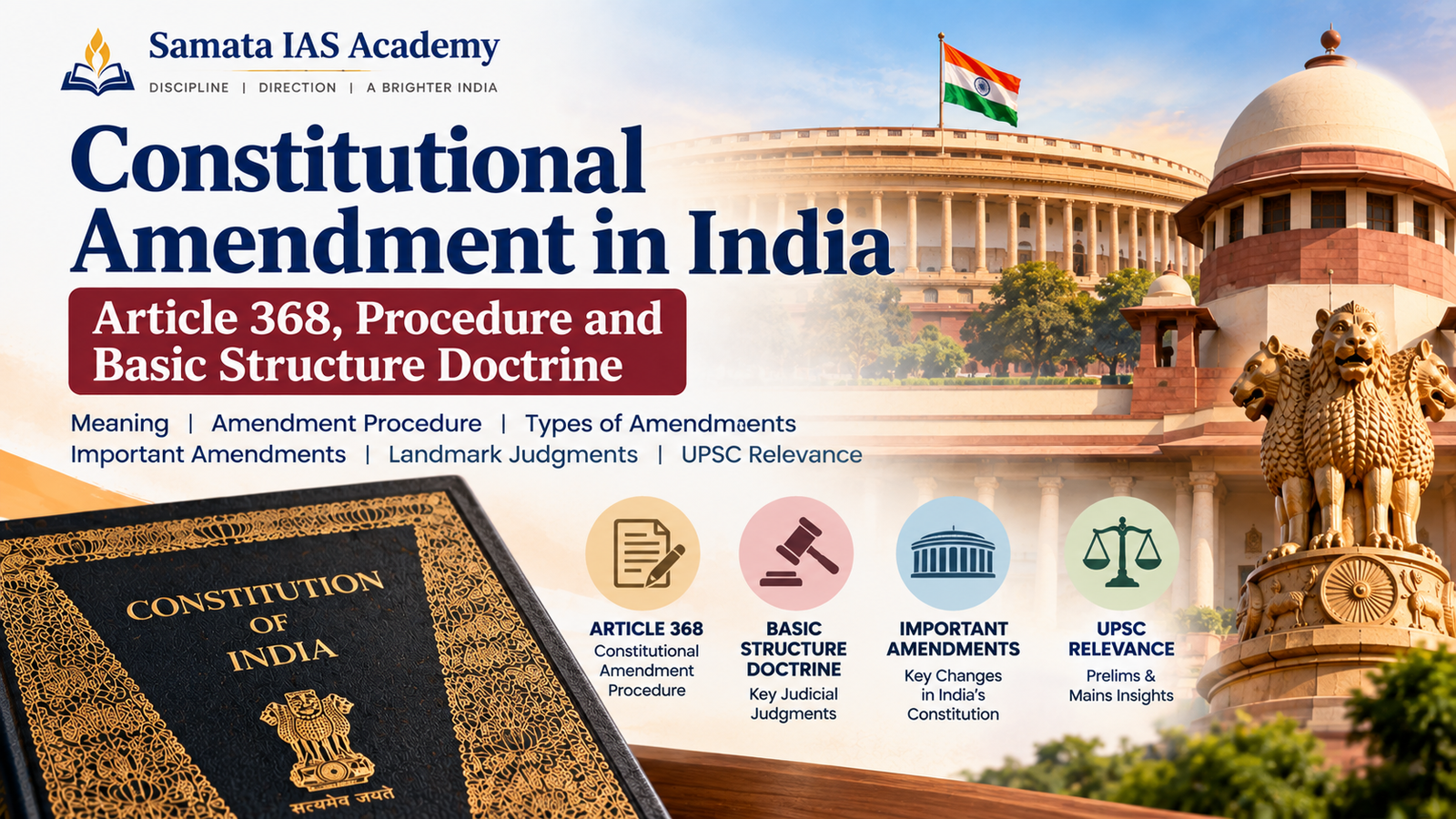
Constitutional amendments enable India to adapt its Constitution to changing circumstances while preserving its essential principles. Understand Article 368, the three amendment procedures, important constitutional amendments, landmark Supreme Court judgments and the Basic Structure Doctrine for UPSC Prelims and Mains.
-
Separation of Powers in India: Constitutional Provisions, Checks and Balances
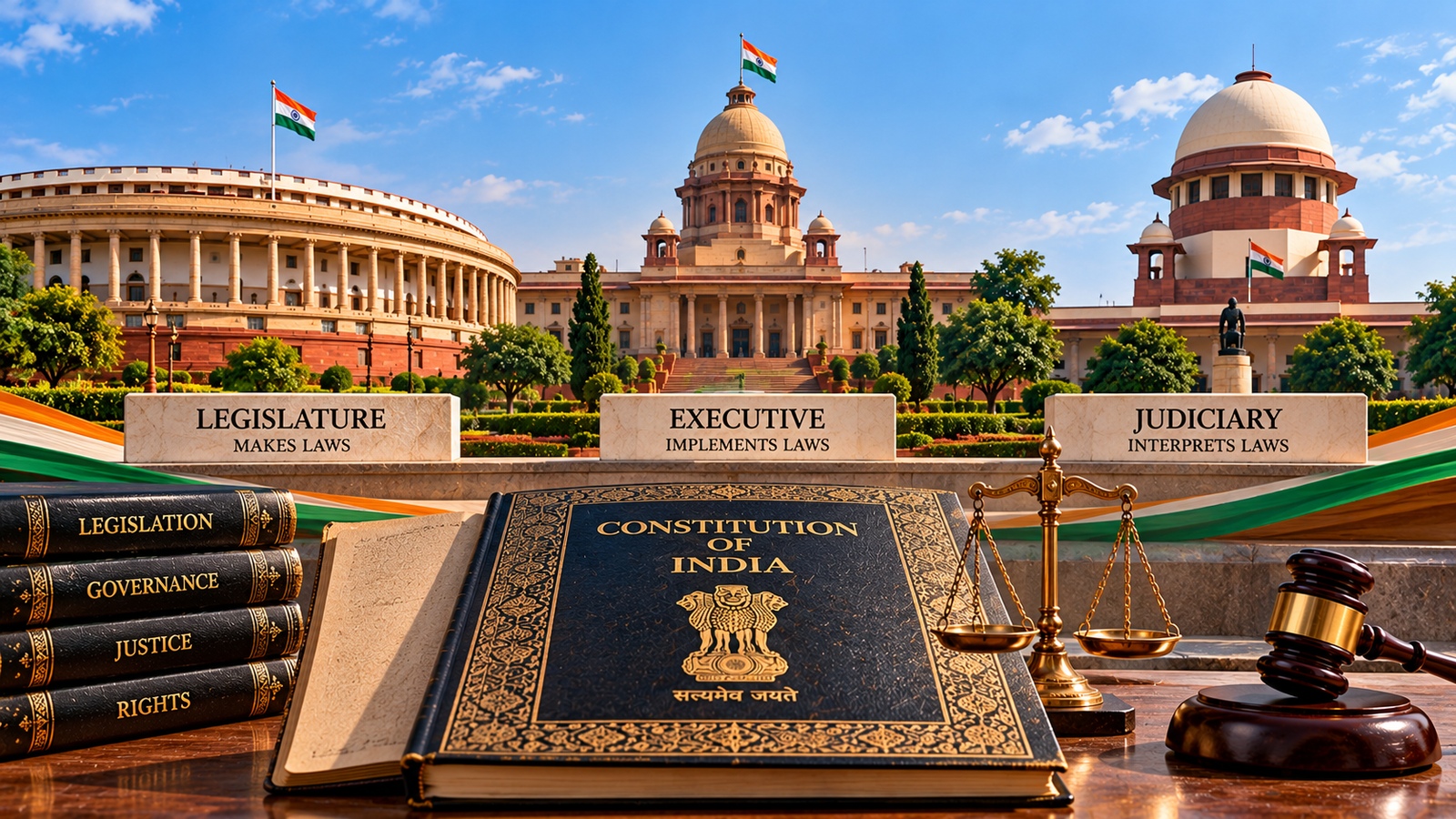
Learn how the Indian Constitution distributes powers among the legislature, executive and judiciary, with key constitutional provisions and landmark judgments for UPSC.
-
Judicial Review in India: Meaning, Constitutional Provisions and Landmark Judgments
Explore the constitutional basis of judicial review in India, its role in protecting Fundamental Rights and the landmark judgments that shaped its development.
-
Basic Structure Doctrine: Evolution, Landmark Judgments and Constitutional Significance

Explore the Basic Structure Doctrine, Parliament’s amending power, judicial review and landmark Supreme Court judgments for UPSC Indian Polity.
-
Fundamental Duties in the Indian Constitution: Article 51A, 42nd Amendment and UPSC Relevance
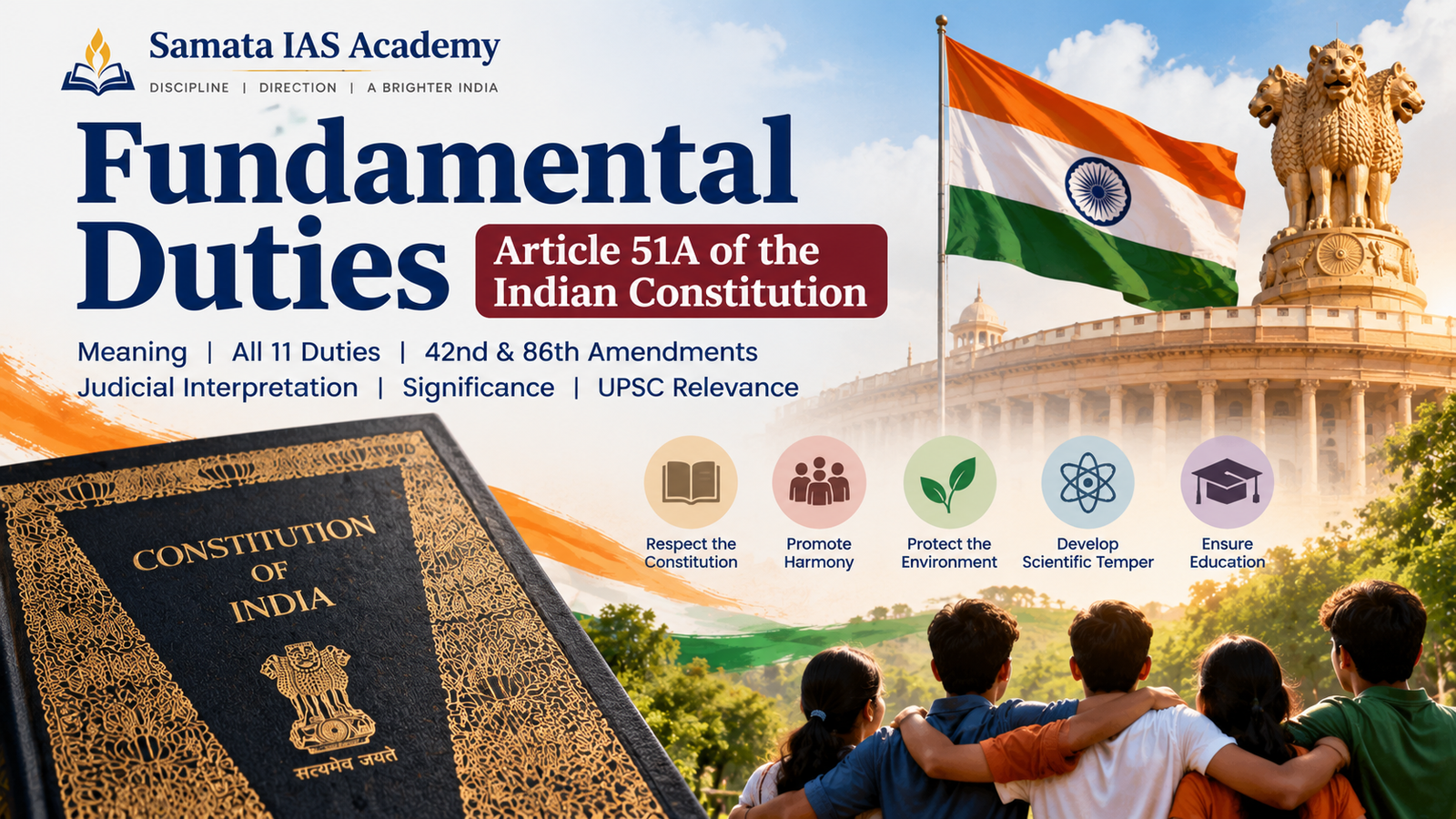
Fundamental Duties in the Indian Constitution: Article 51A, 42nd Amendment and UPSC Relevance Introduction The Constitution of India establishes a democratic political system based on justice, liberty, equality and fraternity. While Fundamental Rights protect the freedoms and entitlements of individuals, and the Directive Principles of State Policy guide the State towards social and economic justice,…
-
Directive Principles of State Policy (DPSP): Articles 36–51, Classification and UPSC Significance
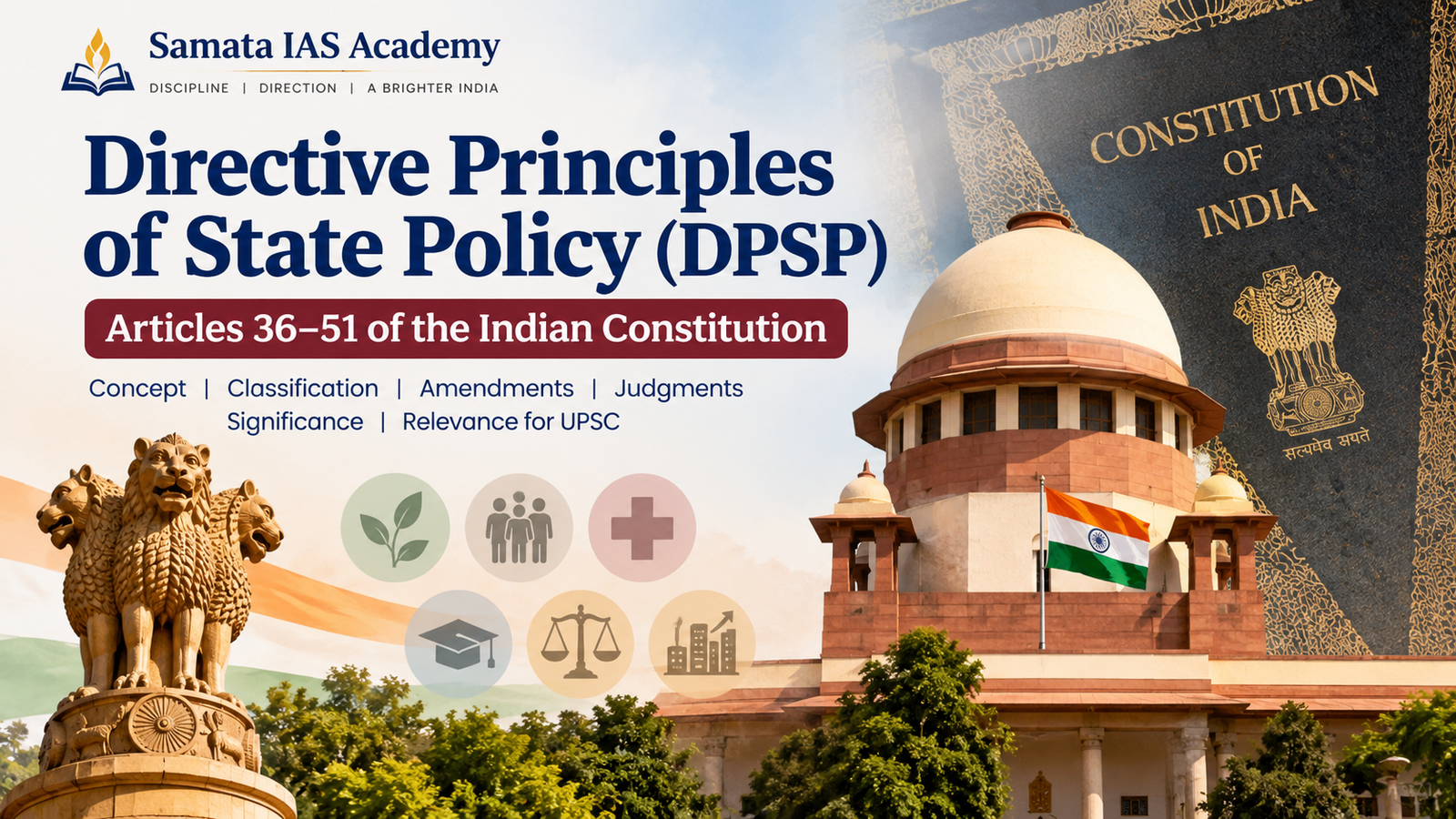
Understand the Directive Principles of State Policy (DPSP) under Articles 36–51 of the Indian Constitution, including their classification, constitutional amendments, landmark Supreme Court judgments, significance and relevance for UPSC Prelims and Mains GS Paper II.
-
Fundamental Rights in the Indian Constitution: Articles, Features, Limitations and Judicial Interpretation
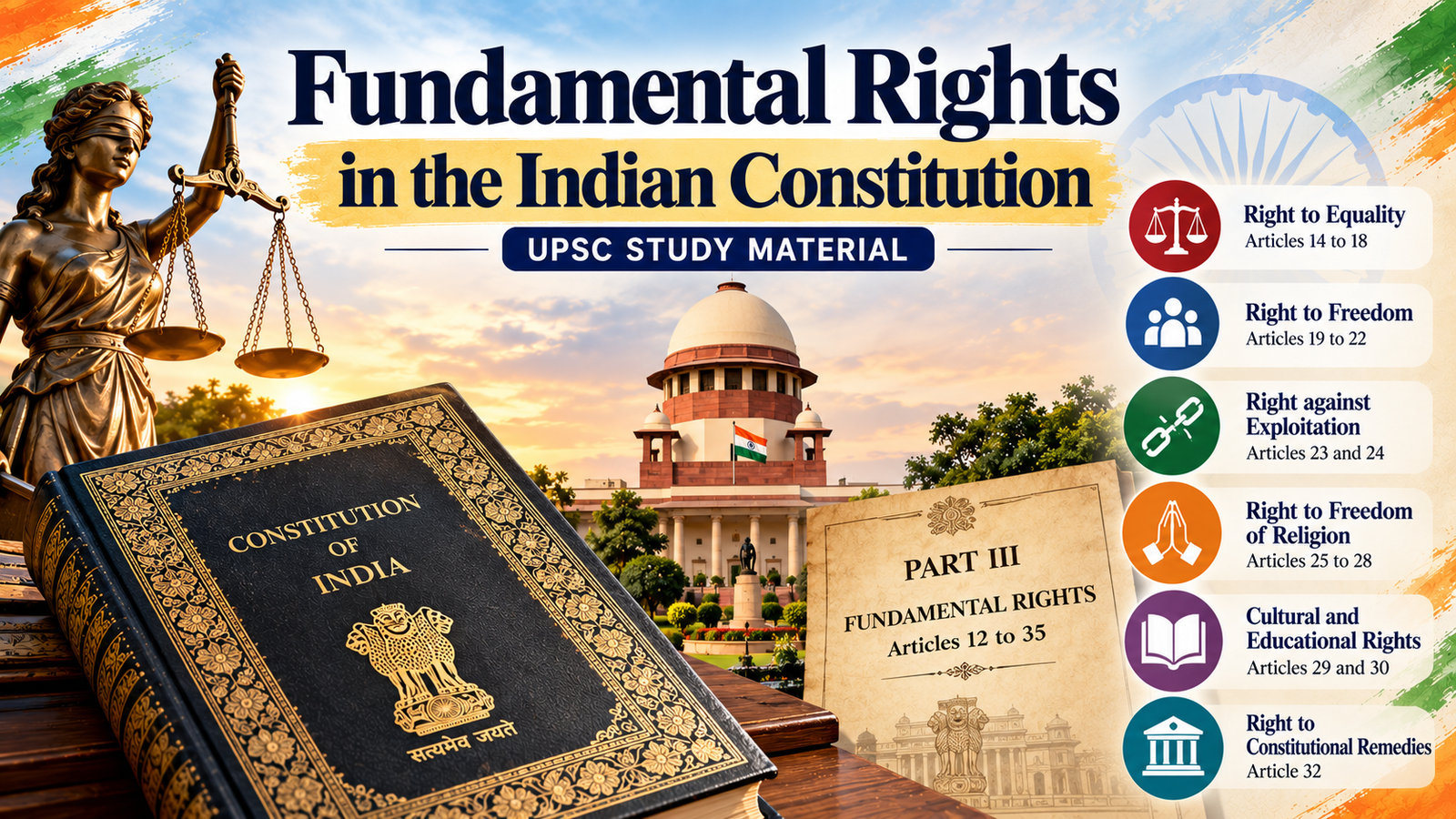
Fundamental Rights under Part III of the Indian Constitution protect equality, liberty, dignity and democratic freedoms. This UPSC study material explains Articles 12–35, major rights, constitutional limitations and landmark judicial interpretations.