
1. Introduction
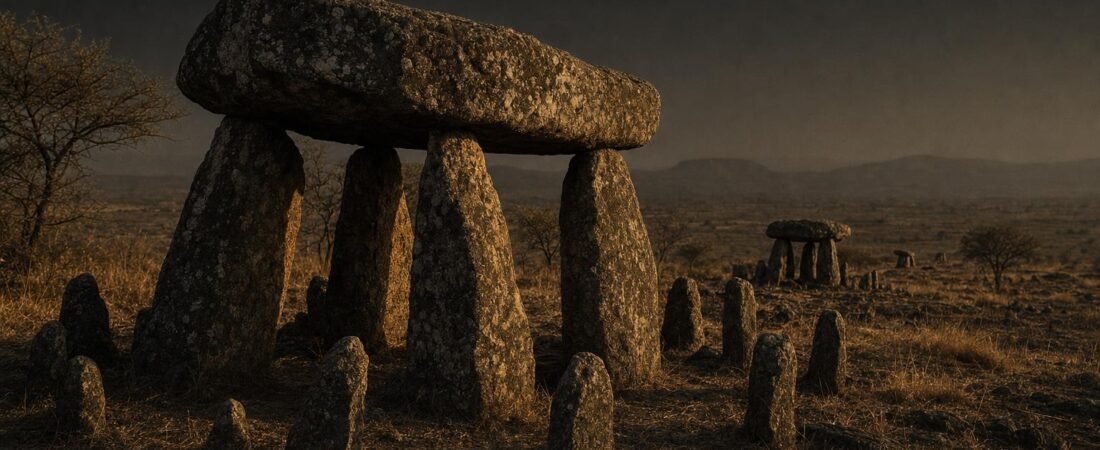
The Megalithic Culture represents an important archaeological tradition in ancient Indian history, particularly associated with the construction of large stone structures used for commemorating or marking burials.
The term Megalith is derived from two Greek words:
- Mega – Large.
- Lithos – Stone.
Thus, the term Megalith literally means large stone.
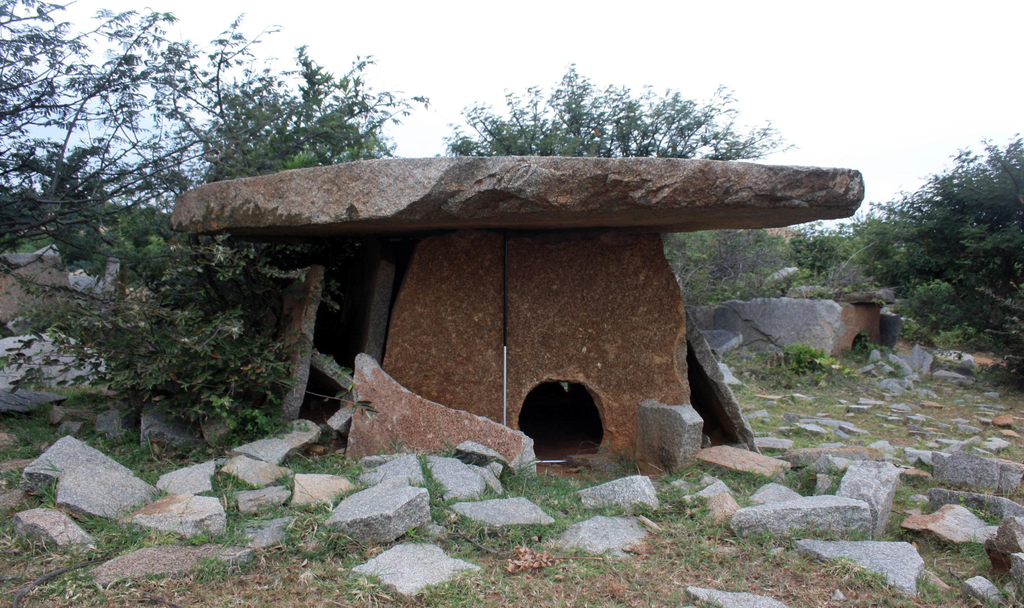
Megalithic monuments were constructed using large stones, either placed vertically, arranged in circles, or used to create chambers and other burial structures.
In India, megalithic cultures are particularly prominent in the Deccan Plateau and southern parts of the subcontinent. Important archaeological evidence has also been discovered in central India, eastern India, Kashmir and other regions.
Megalithic traditions are especially associated with the Iron Age, although their chronology and cultural characteristics vary considerably across regions.
The discovery of megalithic burial sites has provided valuable information about the social organisation, technological development, burial customs, religious beliefs and economic activities of ancient communities.
Unlike literary sources, which provide information about the beliefs and activities of particular societies, megalithic monuments offer direct archaeological evidence of burial practices and material culture.
The study of megalithic cultures is particularly important for understanding the transition from prehistoric communities to early historic societies in different parts of India.
2. Chronology and Geographical Background
Megalithic traditions in India developed over a long period and cannot be assigned to one uniform chronological framework.
In several regions, particularly southern India, megalithic burial traditions became prominent during the first millennium BCE and continued into the early centuries CE.
The broad chronology often associated with South Indian Iron Age megalithic traditions is approximately 1200 BCE to 300 CE, although individual sites and regional traditions have different dates.
Some traditions began earlier, while others continued well into the historical period.
2.1 Relationship with the Iron Age
Megalithic cultures in India are closely associated with the development and increasing use of iron technology.
Iron tools and weapons discovered in megalithic burial contexts include:
- Iron swords.
- Spears.
- Knives.
- Axes.
- Agricultural implements.
- Iron arrowheads.
- Other metal objects.
The presence of iron objects in burials indicates the technological capabilities and material culture of these communities.
However, the terms Megalithic Culture and Iron Age Culture should not be treated as completely interchangeable.
Iron technology was used by communities that did not necessarily construct megalithic monuments, while some megalithic traditions included objects and practices that varied regionally.
2.2 Geographical Distribution
Megalithic monuments have been discovered across several parts of India.
Important regions include:
- South India: Karnataka, Kerala, Tamil Nadu, Andhra Pradesh and Telangana.
- Central India: Madhya Pradesh and adjoining regions.
- Eastern India: Odisha, Jharkhand and West Bengal.
- Western India: Maharashtra and adjoining areas.
- Northern India: Kashmir and parts of the Himalayan region.
The largest concentration of well-known megalithic burial monuments is found in the Deccan and southern peninsula.
2.3 Major Characteristics
The important characteristics of Indian megalithic cultures include:
- Construction of large stone burial monuments.
- Use of stone circles, dolmens and cists.
- Burial of the dead in pits, chambers or urns.
- Placement of iron tools and weapons in graves.
- Deposition of pottery and ornaments.
- Evidence of agricultural and pastoral activities.
- Development of iron technology.
- Regional variations in burial practices.
- Possible beliefs concerning death and an afterlife.
The burial monuments are the most distinctive archaeological feature of these cultures.
3. Origin and Development of Megalithic Traditions
The origin of megalithic traditions in India is an important subject of archaeological research.
The practice of constructing stone monuments is found in several parts of the world, including Europe, West Asia, Africa and Asia.
However, similarities in monument construction do not necessarily establish a common origin or direct cultural transmission.
Indian megalithic traditions developed within different regional contexts and were associated with local communities, environmental conditions and technological developments.
3.1 Global Background
Megalithic monuments are found in several parts of the world.
Important examples include:
- Stonehenge in England.
- Dolmens in western Europe.
- Megalithic tombs in Ireland.
- Stone circles in parts of Africa.
- Burial chambers in East Asia.
These structures demonstrate that the use of large stones for funerary and ceremonial purposes was a widespread phenomenon in ancient human societies.
However, the chronology, construction techniques and cultural significance of these monuments varied considerably.
3.2 Indian Context
In India, megalithic monuments are particularly associated with Iron Age communities.
The archaeological evidence suggests that these communities possessed considerable knowledge of:
- Stone construction.
- Iron metallurgy.
- Pottery production.
- Agriculture.
- Animal husbandry.
- Burial customs.
Megalithic sites frequently contain elaborate burial structures and a variety of grave goods.
The diversity of monuments suggests that there was no single uniform megalithic culture across the Indian subcontinent.
3.3 Megalithic Cultures and Earlier Archaeological Traditions
Megalithic traditions developed after several earlier prehistoric and protohistoric cultural developments.
These included:
- Palaeolithic stone-tool traditions.
- Mesolithic hunter-gatherer communities.
- Neolithic agricultural settlements.
- Chalcolithic communities.
- Early metal-using societies.
The transition was not uniform across India.
Different communities adopted agriculture, settled life, copper technology, iron technology and megalithic burial practices at different times.
Therefore, megalithic traditions should be understood as part of the wider archaeological transition towards increasingly complex societies.
4. Types of Megalithic Monuments in India
One of the most important aspects of megalithic cultures is the diversity of burial structures.
Archaeologists classify megalithic monuments according to their construction techniques, arrangement of stones and burial arrangements.
The principal types include:
- Menhirs.
- Dolmens.
- Dolmenoid cists.
- Cists.
- Cairn circles.
- Stone circles.
- Rock-cut chambers.
- Urn burials.
- Sarcophagi.
4.1 Menhirs
<AsyncImage query=”Megalithic menhir standing stone monument ancient India landscape” aspectRatio=”16:9″ width=”100%”/>
A Menhir is a large upright stone erected vertically, usually in isolation or as part of a larger monument.
The stone may be placed directly into the ground.
Characteristics
- Large upright stone.
- Usually uninscribed in Indian contexts.
- May mark a burial or memorial location.
- Sometimes associated with groups of other megalithic structures.
Menhirs are particularly important in the study of memorial and commemorative practices.
4.2 Dolmens
<AsyncImage query=”Indian megalithic dolmen stone burial chamber capstone vertical slabs Karnataka” aspectRatio=”16:9″ width=”100%”/>
A Dolmen is a stone structure consisting of large vertical slabs supporting a horizontal capstone.
It generally resembles a stone table or chamber.
Characteristics
- Constructed using large stone slabs.
- Usually contains a chamber-like space.
- May be associated with burials.
- Sometimes contains an opening or port-hole in one of its vertical slabs.
Dolmens are found in several parts of southern India.
4.3 Dolmenoid Cists
Dolmenoid cists are burial structures similar to dolmens but generally constructed below or partly below ground level.
Characteristics
- Stone slabs form a chamber.
- The chamber is covered with a capstone.
- Some structures contain circular openings.
- They are frequently associated with burial remains.
4.4 Cists
<AsyncImage query=”Megalithic cist burial stone slab chamber archaeological excavation India” aspectRatio=”16:9″ width=”100%”/>
A Cist is a burial chamber constructed using stone slabs.
The slabs are arranged vertically to form a rectangular or square chamber, which is generally covered by another slab.
Cists may be located underground or partially exposed.
Some cists are associated with stone circles or cairns.
4.5 Cairn Circles
A cairn is a mound or heap of stones constructed over or around a burial.
A Cairn Circle generally consists of a circular arrangement of stones associated with a stone-covered burial.
Characteristics
- Circular arrangement of stones.
- Central burial or burial chamber.
- Stone packing or covering.
- Sometimes associated with pottery and iron objects.
4.6 Stone Circles
<AsyncImage query=”Indian megalithic stone circles burial monuments Deccan plateau archaeological site” aspectRatio=”16:9″ width=”100%”/>
Stone circles consist of stones arranged in a circular pattern.
They are among the most frequently identified forms of megalithic monuments in peninsular India.
Major characteristics
- Stones arranged in a circular formation.
- May enclose a burial pit or chamber.
- Sometimes contain central burial structures.
- May be associated with cairns or cists.
Stone circles are important for understanding the spatial organisation of megalithic cemeteries.
4.7 Rock-Cut Chambers
Some megalithic burial structures were excavated directly into natural rock.
These are generally referred to as rock-cut burial chambers.
They may contain:
- Burial chambers.
- Passageways.
- Entrances.
- Niches.
- Other architectural features.
The rock-cut chambers of Kerala are particularly important examples.
4.8 Urn Burials
<AsyncImage query=”Ancient South Indian megalithic urn burial terracotta funerary pot archaeological excavation” aspectRatio=”16:9″ width=”100%”/>
Urn burials involve the placement of human skeletal remains or cremated remains inside large pottery vessels.
These vessels were generally buried in pits.
Some urn burials also contained:
- Smaller pottery vessels.
- Iron objects.
- Beads.
- Other grave goods.
Urn burials are particularly important in the archaeological traditions of Tamil Nadu.
4.9 Sarcophagi
A Sarcophagus is a large container, often made of terracotta or stone, used for containing human remains.
Some South Indian archaeological sites have yielded terracotta sarcophagi.
They may have multiple legs or supporting projections.
Sarcophagi demonstrate the diversity of funerary practices among megalithic communities.
4.10 Comparison of Major Megalithic Structures
| Type | Main characteristic |
|---|---|
| Menhir | Large upright standing stone |
| Dolmen | Vertical stone supports with a horizontal capstone |
| Dolmenoid cist | Cist-like chamber with a capstone, often partly underground |
| Cist | Burial chamber made of stone slabs |
| Cairn circle | Circular arrangement associated with a stone-covered burial |
| Stone circle | Stones arranged in a circular pattern |
| Rock-cut chamber | Burial chamber excavated into natural rock |
| Urn burial | Human remains placed in a large pottery urn |
| Sarcophagus | Large container used for human remains |
UPSC point: The ability to identify these structures from their physical characteristics is important for archaeological questions in Prelims.
5. Burial Practices and Mortuary Traditions
Burial practices are the most important source of information for understanding Indian megalithic cultures.
The megalithic communities followed different methods of disposing of the dead.
These practices varied according to region, period and cultural traditions.
5.1 Primary Burial
Primary burial involves placing the body of the deceased directly in a grave.
The body may be placed in an extended or contracted position.
Some burials were accompanied by pottery, iron objects and ornaments.
5.2 Secondary Burial
Secondary burial refers to the practice of collecting skeletal remains after the initial decomposition of the body and placing them in another burial location.
The remains could be placed in urns or other burial structures.
This practice is important for understanding the diversity of funerary customs.
5.3 Fractional Burial
Fractional burial involves the placement of selected skeletal remains in a burial structure rather than the complete skeleton.
The precise ritual significance varied and cannot always be established from archaeological evidence.
5.4 Urn Burial
Large pottery urns were used in several South Indian burial traditions.
The urns could contain:
- Human skeletal remains.
- Cremated remains.
- Pottery.
- Iron objects.
- Other grave goods.
Adichanallur in Tamil Nadu is particularly important for its extensive urn burial evidence.
5.5 Burial Goods
Megalithic burials frequently contain objects placed alongside the deceased.
These objects are known as grave goods.
Important examples include:
- Iron weapons.
- Agricultural implements.
- Pottery.
- Beads.
- Ornaments.
- Bronze objects.
- Animal remains.
- Other household artefacts.
The presence of grave goods suggests that certain communities associated burial with ritual practices and possibly beliefs about existence after death.
However, the precise beliefs cannot be reconstructed with certainty.
5.6 Social Differentiation through Burials
Differences in burial structures and grave goods may indicate social distinctions among megalithic communities.
Some burials contain more elaborate structures and a greater number of artefacts than others.
These differences may reflect:
- Social status.
- Occupational identity.
- Age or gender distinctions.
- Community membership.
- Ritual importance.
However, the relationship between burial wealth and social hierarchy must be interpreted cautiously.
Not every elaborate burial necessarily represents a political elite or wealthy individual.
5.7 What Do Burial Practices Tell Us?
Megalithic burial evidence provides information about:
- Attitudes towards death.
- Ritual and ceremonial practices.
- Technological capabilities.
- Metal use.
- Social differentiation.
- Craft production.
- Food and material culture.
- Regional cultural identities.
Thus, megalithic burial sites are important archaeological sources for reconstructing the history of communities that left limited written records.
6. Iron Technology and Metallurgical Developments
The increasing use of iron was one of the most important technological developments associated with several Indian megalithic cultures.
Iron objects are frequently found in megalithic burial contexts, particularly in southern India.
6.1 Important Iron Objects
Archaeological excavations have revealed:
- Swords.
- Spears.
- Daggers.
- Knives.
- Axes.
- Arrowheads.
- Sickles.
- Agricultural tools.
- Other utilitarian objects.
These objects indicate the widespread use of iron in different aspects of community life.
6.2 Importance of Iron Technology
Iron technology contributed to:
A. Agricultural Development
Iron implements could be used for:
- Clearing vegetation.
- Cutting wood.
- Preparing agricultural land.
- Harvesting crops.
- Other agricultural operations.
B. Military Technology
Iron weapons such as swords, spears and arrowheads improved the range of available military equipment.
C. Craft Production
Iron tools supported carpentry, construction, agriculture and other specialised occupations.
D. Economic Development
The development of iron production and the increasing availability of metal implements contributed to changes in economic organisation.
6.3 Metallurgical Knowledge
The presence of iron objects demonstrates knowledge of:
- Ore processing.
- Smelting.
- Forging.
- Heating.
- Shaping and finishing metal objects.
The precise scale and organisation of iron production varied between regions.
It is important to distinguish between evidence for the use of iron objects and evidence for local iron production.
7. Economic Life of Megalithic Communities
Megalithic communities were not exclusively dependent on burial-related activities.
Archaeological evidence suggests that they practised agriculture, animal husbandry, hunting, fishing and craft production.
7.1 Agriculture
Agriculture formed an important component of the economy in several megalithic regions.
The crops cultivated varied according to local environmental conditions.
Important crops included:
- Rice.
- Millets.
- Pulses.
- Other cereals.
The archaeological evidence from different regions suggests the use of both dryland and wetland agricultural systems.
7.2 Animal Husbandry
Megalithic communities reared several domesticated animals.
Important animals included:
- Cattle.
- Sheep.
- Goats.
- Buffaloes.
- Pigs.
Animal remains discovered at archaeological sites provide evidence of pastoral activities and dietary practices.
7.3 Hunting and Fishing
Hunting and fishing continued to supplement agricultural and pastoral activities.
Animal bones, fishing-related objects and other archaeological remains provide evidence of the use of natural resources.
7.4 Craft Production
Megalithic communities possessed specialised craft skills.
Important activities included:
- Ironworking.
- Pottery production.
- Bead-making.
- Stone-working.
- Weaving.
- Jewellery production.
7.5 Trade and Exchange
The distribution of certain raw materials and finished products suggests the existence of exchange networks between different settlements.
Important traded materials may have included:
- Iron objects.
- Beads.
- Stone.
- Pottery.
- Agricultural products.
- Other craft goods.
The precise organisation of trade is difficult to establish because of the limited written evidence.
8. Pottery and Other Material Remains
Pottery is one of the most important archaeological materials found in megalithic burial sites.
It helps archaeologists identify cultural traditions, settlement patterns and chronological developments.
8.1 Black-and-Red Ware
<AsyncImage query=”South Indian Iron Age black and red ware pottery archaeological museum collection” aspectRatio=”16:9″ width=”100%”/>
Black-and-Red Ware is frequently found in association with South Indian megalithic archaeological contexts.
It is characterised by a distinctive combination of black and red surfaces.
The colouring is produced through differences in firing conditions.
Important characteristics
- Red outer surface in certain areas.
- Black inner surface or blackened portions.
- Wheel-made pottery in many contexts.
- Different vessel forms.
- Use in domestic and funerary contexts.
8.2 Red Ware
Red Ware is another important pottery category.
It was used for:
- Cooking.
- Storage.
- Serving food.
- Burial-related purposes.
8.3 Other Pottery Traditions
Other pottery types discovered in megalithic contexts include:
- Black Ware.
- Red Polished or fine red pottery in particular regional contexts.
- Painted pottery.
- Coarse utilitarian pottery.
The pottery traditions varied regionally.
8.4 Beads and Ornaments
Megalithic burial sites have yielded:
- Carnelian beads.
- Agate beads.
- Quartz beads.
- Glass beads.
- Shell ornaments.
- Gold objects.
- Copper and bronze ornaments.
These artefacts indicate the development of craft skills and exchange networks.
8.5 Animal Remains
Animal bones discovered at megalithic sites provide information about:
- Domesticated animals.
- Food habits.
- Pastoral activities.
- Hunting practices.
- Ritual use of animals.
The study of faunal remains is an important component of archaeological reconstruction.
9. Major Megalithic Sites in India
The geographical distribution of megalithic sites is one of the most important topics for UPSC preparation.
Different regions display distinctive burial traditions and material cultures.
9.1 South Indian Megalithic Sites
South India contains a particularly large concentration of megalithic monuments.
Important sites are found in Karnataka, Kerala, Tamil Nadu, Andhra Pradesh and Telangana.
A. Brahmagiri
<AsyncImage query=”Brahmagiri megalithic burial site Karnataka stone circles archaeological monuments” aspectRatio=”16:9″ width=”100%”/>
Location: Chitradurga district, Karnataka.
Brahmagiri is an important archaeological site associated with megalithic burial traditions.
It was excavated by Mortimer Wheeler in 1947.
Important findings
- Megalithic burials.
- Iron objects.
- Pottery.
- Burial structures.
- Evidence of different cultural phases.
Historical significance
Brahmagiri is important because it provides evidence of the relationship between megalithic cultures and the subsequent development of early historic settlements.
The site also played an important role in establishing the archaeological chronology of southern India.
B. Maski
Location: Raichur district, Karnataka.
Maski is an important archaeological site associated with prehistoric and early historic cultural remains.
It is particularly famous for the discovery of an Ashokan inscription that explicitly mentions the name Ashoka.
The site is also relevant to the broader archaeological study of southern India.
C. Hire Benakal
<AsyncImage query=”Hire Benakal megalithic dolmens stone burial monuments Karnataka India” aspectRatio=”16:9″ width=”100%”/>
Location: Koppal district, Karnataka.
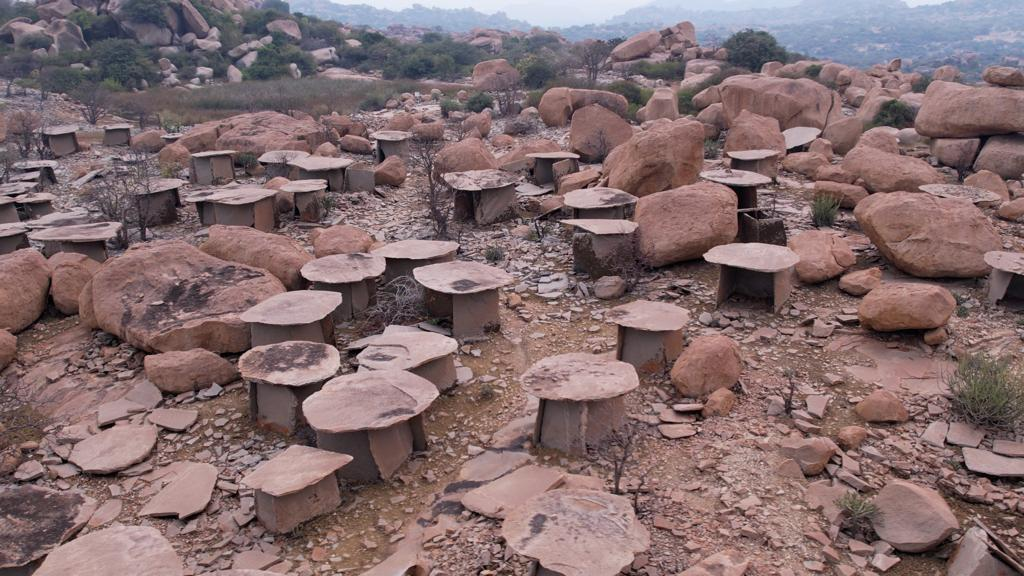
Hire Benakal is one of the most important megalithic monument complexes in India.
Important features
- Large concentration of megalithic monuments.
- Dolmens.
- Stone circles.
- Burial structures.
- Memorial monuments.
It is particularly significant for understanding the diversity of megalithic architecture in the Deccan.
D. Hallur
Location: Haveri district, Karnataka.
Hallur is an important archaeological site associated with Iron Age and early historic cultural developments.
Important findings
- Iron objects.
- Pottery.
- Evidence of agricultural activities.
- Settlement remains.
- Cultural transitions.
Hallur is significant for understanding the spread and use of iron technology in southern India.
E. Piklihal
Location: Raichur district, Karnataka.
Piklihal is an important archaeological site associated with prehistoric pastoral communities and later cultural developments in the region.
Its archaeological significance includes evidence of animal husbandry and settlement activity.
F. Utnur
Location: Telangana region.
Utnur is an important archaeological site associated with prehistoric and early farming traditions of the Deccan.
It is particularly relevant to the study of Neolithic pastoral and cattle-penning traditions.
It should be distinguished from the major Iron Age megalithic burial centres.
G. Adichanallur
<AsyncImage query=”Adichanallur archaeological site ancient urn burial excavation Tamil Nadu” aspectRatio=”16:9″ width=”100%”/>
Location: Thoothukudi district, Tamil Nadu.
Adichanallur is one of the most important archaeological sites associated with ancient burial traditions in southern India.
Important discoveries
- Large burial urns.
- Human skeletal remains.
- Iron objects.
- Bronze objects.
- Pottery.
- Ornaments.
- Other funerary artefacts.
The site is particularly famous for its extensive urn burial evidence.
It provides important information about the mortuary practices, material culture and technological development of ancient communities in Tamil Nadu.
H. Sanur
Location: Chengalpattu region, Tamil Nadu.
Sanur is an important megalithic burial site.
It is associated with:
- Stone circles.
- Burial structures.
- Pottery.
- Iron objects.
It is useful for understanding the distribution of megalithic burial traditions in Tamil Nadu.
I. Kodumanal
<AsyncImage query=”Kodumanal archaeological site Tamil Nadu megalithic burial iron objects beads excavation” aspectRatio=”16:9″ width=”100%”/>
Location: Erode district, Tamil Nadu.
Kodumanal is an important archaeological site associated with megalithic burials and early historic craft production.
Important findings
- Megalithic burial structures.
- Iron objects.
- Beads.
- Carnelian artefacts.
- Pottery.
- Evidence of specialised craft activities.
- Evidence of exchange networks.
Historical significance
Kodumanal is particularly important for understanding the relationship between megalithic communities, craft specialisation and the emergence of early historic economic networks.
J. Porkalam
Location: Thrissur district, Kerala.
Porkalam is an important megalithic burial site.
It is associated with:
- Burial structures.
- Stone circles.
- Pottery.
- Other funerary remains.
It provides evidence of megalithic traditions in Kerala.
K. Marayur
Location: Idukki district, Kerala.
Marayur is known for its megalithic monuments, particularly dolmens.
The region contains several ancient stone structures associated with burial and memorial traditions.
L. Porkalam and Other Kerala Sites
Kerala contains several important megalithic sites.
These include:
- Porkalam.
- Marayur.
- Kottamala.
- Anakkara.
- Other regional burial complexes.
They demonstrate the diversity of megalithic architectural traditions in the western coastal region.
9.2 Telangana and Andhra Pradesh
Megalithic remains are found at several locations in Telangana and Andhra Pradesh.
Important examples include:
- Mudumal.
- Gollathagudi.
- Yeleswaram.
- Nagarjunakonda region.
- Other sites in the Deccan.
Mudumal Megalithic Menhirs
<AsyncImage query=”Mudumal megalithic menhirs standing stones Telangana India archaeological site” aspectRatio=”16:9″ width=”100%”/>
Location: Narayanpet district, Telangana.
Mudumal is particularly important for its concentration of standing stones or menhirs.
Important features
- Large standing stones.
- Stone arrangements.
- Megalithic monuments.
- Evidence of prehistoric and Iron Age cultural traditions in the wider region.
Mudumal is particularly relevant to understanding the megalithic landscape of Telangana.
9.3 Central Indian Megalithic Sites
Megalithic monuments are also found in parts of central India.
Important archaeological locations include:
- Vidarbha region of Maharashtra.
- Nagpur region.
- Madhya Pradesh.
- Chhattisgarh.
Vidarbha Megalithic Tradition
The Vidarbha region of Maharashtra is particularly important for megalithic burial practices.
Important sites include:
- Mahurjhari.
- Naikund.
- Bhagimahari.
- Takalghat-Khapa.
Important discoveries
- Iron objects.
- Horse-related burial remains in some contexts.
- Chariots and associated fittings in particular burials.
- Pottery.
- Ornaments.
- Burial chambers.
The megalithic burials of Vidarbha provide valuable information about the material culture and social differentiation of Iron Age communities.
9.4 Northern India: Kashmir
Megalithic monuments have also been discovered in Kashmir.
Burzahom
<AsyncImage query=”Burzahom Kashmir Neolithic archaeological site pit dwellings stone structures” aspectRatio=”16:9″ width=”100%”/>
Burzahom is primarily a Neolithic archaeological site rather than a typical South Indian Iron Age megalithic cemetery.
It is important for its:
- Pit dwellings.
- Stone tools.
- Bone tools.
- Burial practices.
- Human and animal remains.
It should not be classified as a conventional Iron Age megalithic burial centre merely because certain stone structures and burial features occur there.
This distinction is important for avoiding confusion between Neolithic archaeological cultures and later megalithic traditions.
10. Megalithic Culture and Society
Megalithic burial practices provide valuable insights into the social organisation of ancient communities.
Although direct literary evidence is limited, the archaeological remains reveal considerable diversity in social and economic life.
10.1 Social Differentiation
Differences in burial structures and grave goods suggest that some communities experienced social differentiation.
Some individuals were buried with more elaborate objects and structures than others.
These differences may reflect:
- Status.
- Wealth.
- Occupational identity.
- Community roles.
- Ritual significance.
10.2 Occupational Specialisation
The presence of iron tools and specialised craft products indicates the existence of different occupational groups.
These included:
- Farmers.
- Pastoralists.
- Metalworkers.
- Potters.
- Bead-makers.
- Craftspeople.
- Traders.
10.3 Community Organisation
The construction of large stone monuments would have required considerable labour and coordination.
The movement and placement of large stones suggest collective effort and organised community participation.
This provides evidence of the ability of communities to mobilise labour for ritual and commemorative activities.
10.4 Beliefs Concerning Death and Afterlife
The placement of food vessels, weapons, ornaments and other objects alongside the dead may indicate beliefs concerning the afterlife or continued existence after death.
However, the exact nature of these beliefs cannot be established conclusively.
Archaeological interpretation should therefore distinguish between observable burial practices and inferred religious beliefs.
11. Megalithic Cultures and the Emergence of Early Historic Societies
Megalithic traditions are particularly important because several megalithic communities existed during the period of transition towards early historic societies.
The relationship between megalithic cultures and early historic political and economic formations is complex.
11.1 Expansion of Iron Technology
The increasing use of iron tools contributed to changes in agriculture, craft production and settlement patterns.
11.2 Agricultural Expansion
Agricultural production and the development of settled communities created opportunities for economic specialisation and exchange.
11.3 Growth of Trade
The discovery of beads, iron objects and other specialised products suggests the existence of exchange networks.
11.4 Emergence of Craft Centres
Sites such as Kodumanal provide evidence of specialised craft production and commercial connections.
11.5 Transition to Early Historic Period
Some regions witnessed the coexistence of megalithic burial traditions and early historic material culture.
This demonstrates that the transition from prehistoric to historic societies was gradual rather than sudden.
12. Megalithic Cultures and Sangam Literature
The megalithic cultures of South India are particularly important for understanding the historical background of the Sangam Age.
Sangam literature provides valuable information about the social, political and economic life of ancient Tamil communities.
Archaeological evidence from megalithic and early historic sites helps historians reconstruct the material background of these societies.
12.1 Sangam Age
The Sangam Age is generally associated with the early historic period of Tamilakam.
Its literary traditions provide information about:
- Cheras.
- Cholas.
- Pandyas.
- Warfare.
- Agriculture.
- Trade.
- Social relationships.
- Religious practices.
12.2 Archaeological Connections
Megalithic sites and early historic settlements in Tamil Nadu have yielded:
- Iron objects.
- Black-and-Red Ware.
- Beads.
- Burial monuments.
- Craft-production remains.
- Other material artefacts.
These discoveries help establish the archaeological context for understanding early historic Tamil society.
12.3 Important Sites
Important archaeological sites associated with the broader megalithic and early historic transition include:
- Adichanallur.
- Kodumanal.
- Porunthal.
- Korkai.
- Keeladi.
- Arikamedu.
However, these sites do not all represent the same archaeological phase or the same type of settlement.
For example, Arikamedu is particularly important for early historic trade, while Keeladi is associated with an early historic urban settlement context.
Their inclusion demonstrates the wider transformation of South Indian society rather than a uniform megalithic culture.
13. Megalithic Culture and Archaeological Significance
Megalithic remains are among the most important archaeological sources for reconstructing the history of ancient communities.
Their significance can be examined under several dimensions.
13.1 Understanding Burial Practices
Megalithic monuments provide direct evidence of burial customs and mortuary traditions.
13.2 Understanding Iron Technology
Iron objects discovered in burial contexts provide evidence of metallurgy and technological developments.
13.3 Understanding Social Hierarchy
Differences in burial structures and grave goods help identify possible social distinctions.
13.4 Understanding Economic Activities
Agricultural implements, pottery, animal remains and craft products provide information about economic life.
13.5 Understanding Cultural Diversity
The geographical variation in megalithic structures demonstrates that ancient Indian communities developed different regional cultural traditions.
13.6 Understanding the Transition to History
Megalithic sites provide important archaeological evidence for the period preceding and overlapping with the emergence of early historic societies.
14. Comparison between Neolithic, Chalcolithic and Megalithic Cultures
A comparative understanding is important for distinguishing the archaeological characteristics of these cultures.
| Feature | Neolithic | Chalcolithic | Megalithic |
|---|---|---|---|
| Major technological feature | Polished stone tools | Copper and stone tools | Iron technology in many Indian traditions |
| Economy | Agriculture and animal husbandry | Agriculture, pastoralism and crafts | Agriculture, pastoralism and crafts |
| Settlements | Permanent or semi-permanent villages | Villages and larger settlements | Settlements and burial complexes |
| Pottery | Increasingly important | Well-developed pottery traditions | Black-and-Red Ware and other regional types |
| Burial practices | Diverse burial customs | Regional burial practices | Large stone monuments and burial chambers in many traditions |
| Major sites | Mehrgarh, Burzahom, Chirand | Ahar, Malwa, Jorwe | Brahmagiri, Adichanallur, Hire Benakal, Kodumanal |
| Broad historical significance | Transition to food production | Development of metal-using communities | Iron Age traditions and mortuary monuments |
Important qualification: These are broad archaeological distinctions. The cultures overlapped chronologically and did not follow an identical sequence in every region.
15. Decline and Transformation of Megalithic Traditions
Megalithic traditions did not disappear through one single historical event.
Their decline and transformation occurred gradually and varied across regions.
Several factors contributed to changes in megalithic practices.
15.1 Development of Settled Communities
The expansion of agricultural settlements and increasingly complex social organisation altered community practices.
15.2 Emergence of Territorial States
The development of larger political formations and early historic societies transformed economic and social relationships.
15.3 Changing Burial Customs
Burial practices evolved over time, and some communities gradually abandoned the construction of elaborate stone monuments.
15.4 Religious and Cultural Transformations
The development of new religious traditions and changing ritual practices may have influenced burial customs.
However, these developments varied across regions and cannot be treated as a universal explanation.
15.5 Growth of Early Historic Urban Centres
The expansion of trade, craft production and urban settlements contributed to the transformation of regional communities.
The relationship between megalithic traditions and early historic cultures was therefore one of continuity, interaction and change rather than complete replacement.
16. Conclusion
The Megalithic Cultures of India represent an important phase in the archaeological and technological history of the subcontinent.
Their distinctive stone burial monuments, iron objects, pottery, ornaments and other artefacts provide valuable evidence about the lives of ancient communities.
The concentration of megalithic sites in southern India and the Deccan makes them particularly important for understanding regional Iron Age developments.
The archaeological evidence demonstrates that these communities possessed knowledge of iron technology, agriculture, animal husbandry, craft production and organised burial practices.
Megalithic traditions also provide an important link between prehistoric communities and early historic societies.
Their study helps us understand the gradual development of social differentiation, technological specialisation, regional cultural traditions and increasingly complex economic networks.
For UPSC preparation, the central theme is to understand megalithic cultures as diverse archaeological traditions rather than a single uniform civilisation, with particular emphasis on burial architecture, iron technology, regional sites and the transition towards early historic societies.
17. Important Facts for UPSC Prelims
| Topic | Important fact |
|---|---|
| Meaning of Megalith | Large stone |
| Origin of term | Greek: Mega + Lithos |
| Main archaeological association in India | Iron Age burial traditions |
| Menhir | Upright standing stone |
| Dolmen | Stone chamber with capstone |
| Cist | Burial chamber constructed using stone slabs |
| Cairn | Heap or mound of stones |
| Urn burial | Human remains placed in large pottery vessels |
| Important site in Karnataka | Brahmagiri |
| Brahmagiri excavation | Mortimer Wheeler, 1947 |
| Important monument complex | Hire Benakal, Karnataka |
| Important urn burial site | Adichanallur, Tamil Nadu |
| Important craft and burial centre | Kodumanal, Tamil Nadu |
| Important Telangana site | Mudumal |
| Important Maharashtra sites | Mahurjhari and Naikund |
| Common pottery in South Indian megalithic contexts | Black-and-Red Ware |
| Important technological development | Increasing use of iron |
| Kashmir Neolithic site | Burzahom |
| Famous Ashokan inscription site in Karnataka | Maski |
18. UPSC Prelims: Practice MCQs
Q1. With reference to megalithic cultures in India, consider the following statements:
- Megalithic monuments are generally associated with the use of large stones in burial or commemorative structures.
- Indian megalithic traditions are exclusively restricted to the southern peninsula.
- Iron objects have been discovered in several Indian megalithic burial sites.
Which of the statements given above is/are correct?
(a) 1 only
(b) 1 and 2 only
(c) 1 and 3 only
(d) 1, 2 and 3
Q2. Consider the following pairs:
| Megalithic structure | Characteristic |
|---|---|
| 1. Menhir | Upright standing stone |
| 2. Dolmen | Stone chamber with a capstone |
| 3. Cist | Burial chamber made of stone slabs |
Which of the pairs given above are correctly matched?
(a) 1 only
(b) 1 and 2 only
(c) 2 and 3 only
(d) 1, 2 and 3
Q3. Which of the following archaeological sites is particularly famous for urn burials?
(a) Adichanallur
(b) Harappa
(c) Lothal
(d) Kalibangan
Q4. Hire Benakal, an important megalithic site, is located in:
(a) Tamil Nadu
(b) Karnataka
(c) Kerala
(d) Maharashtra
Q5. Consider the following statements regarding Indian megalithic cultures:
- Black-and-Red Ware is found in several South Indian megalithic contexts.
- All megalithic monuments were constructed exclusively for royal burials.
- Burial goods provide information about the material culture of ancient communities.
Which of the statements given above is/are correct?
(a) 1 only
(b) 1 and 3 only
(c) 2 and 3 only
(d) 1, 2 and 3
Answer key: 1 – (c); 2 – (d); 3 – (a); 4 – (b); 5 – (b).
19. UPSC Mains Practice Questions
10-mark questions
- Explain the meaning and major characteristics of megalithic cultures in India.
- Discuss the different types of megalithic burial structures found in India.
- Examine the significance of iron technology in Indian megalithic cultures.
- Discuss the archaeological importance of Adichanallur.
15-mark questions
- Megalithic burial practices provide important insights into the social and economic life of ancient communities. Discuss.
- Examine the geographical distribution and regional variations of megalithic cultures in India.
- Discuss the relationship between megalithic cultures and the emergence of early historic societies in South India.
- Explain the significance of megalithic archaeological sites in reconstructing the Iron Age history of India.
- The megalithic traditions of India demonstrate considerable regional diversity. Examine with suitable examples.
Important analytical question
Megalithic cultures represent an important archaeological link between prehistoric communities and early historic societies in India. Critically examine.
Students should discuss the evidence of burial practices, iron technology, agricultural activities, craft production, social differentiation and the gradual emergence of early historic economic and political formations.