
The Hindu News Analysis | UPSC Civil Services Examination
Today’s edition of The Hindu highlights important developments in electoral democracy, social justice, judicial accountability, energy policy, food security, environmental governance, artificial intelligence, economic policy and international relations.
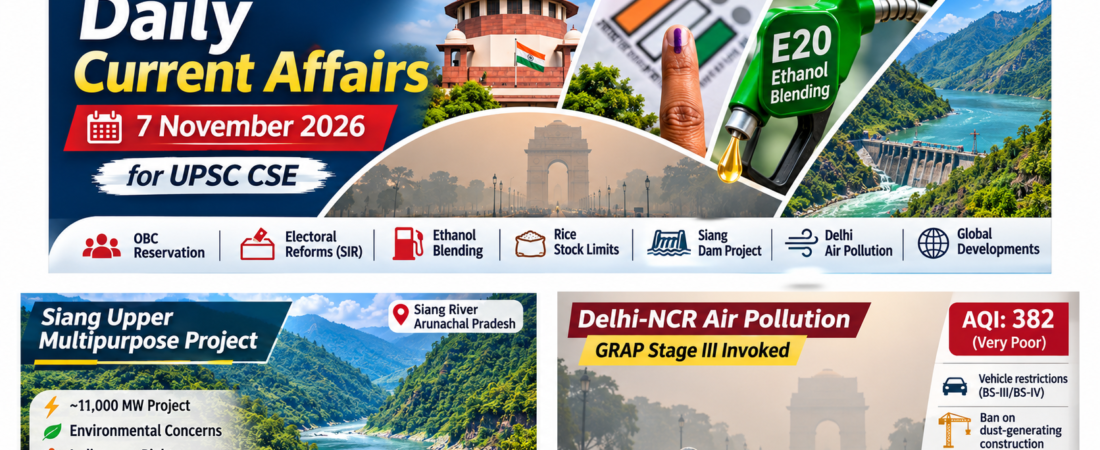
The most significant themes are the Election Commission’s corrective directions to voters excluded during the Special Intensive Revision (SIR), the Supreme Court’s clarification on the implementation of the OBC creamy-layer ruling, the controversy over ethanol blending in petrol, the proposed Siang hydroelectric project in Arunachal Pradesh, and the intensification of air-pollution restrictions in Delhi-NCR.
The following compilation is organised thematically, with an emphasis on Prelims facts, GS paper linkages and Mains-oriented analysis. It is based on the uploaded 7 November 2026 edition of The Hindu. Political allegations and contested claims are identified as such rather than treated as established findings.
th.th_delhi.07_11_2026.pdf
1. ⚖️ Polity, Constitution and Governance
1.1 Supreme Court clarifies the implementation of the OBC creamy-layer ruling
GS Paper II – Polity, Social Justice, Reservation
The Supreme Court clarified that its judgment of 11 March 2026 concerning the determination of the OBC non-creamy layer status does not require a wholesale revision of previous appointments, service allocations or seniority across earlier recruitment years.
The March 2026 judgment had upheld a 1993 Office Memorandum which excluded parental salary and agricultural income from the income/wealth test used for determining OBC creamy-layer status.
The Union government had expressed apprehensions that retrospective implementation could affect completed recruitment processes, service allocation, seniority, pay and promotions. It referred to the possible implications for more than 6.69 lakh reserved vacancies, including 3.7 lakh OBC vacancies, filled over the preceding decade.
The Supreme Court clarified the scope of its earlier judgment:
- The March 11 ruling would not automatically reopen concluded selections and appointments.
- It would not require a general revision of service allocations or seniority across successive recruitment years.
- It would not confer individual relief on persons who were not parties to the original proceedings.
- However, the creamy-layer principle interpreted in the judgment would govern the allocation of services to OBC candidates selected through the Civil Services Examination 2025, as service allocation was still pending.
Constitutional and administrative significance
The ruling raises important questions concerning the relationship between:
- Substantive equality: Ensuring that reservation benefits reach the intended beneficiaries.
- Administrative finality: Protecting completed recruitment and appointment processes from indefinite reopening.
- Legitimate expectations: Balancing the rights of candidates who participated under an existing selection framework.
- Judicial interpretation: Determining the scope and prospective or retrospective application of a judicial ruling.
UPSC perspective
The issue is relevant to Articles 14, 15(4), 16(4) and 16(4A), the concept of substantive equality, reservation jurisprudence and the creamy-layer principle.
A key distinction is that excluding particular income components from the creamy-layer calculation is not equivalent to abolishing the creamy-layer principle itself.
1.2 ECI allows excluded voters to resubmit enumeration forms during SIR
GS Paper II – Electoral Reforms, Election Commission, Democratic Rights
The Election Commission of India (ECI) has directed electoral authorities in seven States and Union Territories to permit certain voters excluded from the draft electoral rolls during the ongoing Special Intensive Revision (SIR) to resubmit their enumeration forms.
The directive concerns electors classified under the category:
ASDD – Absent, Shifted, Dead and Duplicate.
These voters had been marked as absent because enumeration forms issued to them were not received back. Consequently, their names were not included in the draft electoral rolls.
The ECI’s corrective directions include:
- Fresh display of booth-wise lists of excluded ASDD electors at polling stations.
- Mentioning the probable reasons for non-inclusion.
- Generating partially filled enumeration forms afresh through the ECINET platform.
- Allowing electors who have not shifted residence to resubmit their enumeration forms along with a statement explaining the delay.
- Allowing voters who have shifted within the State to submit the form with their new address and Assembly Constituency details.
The seven States/UTs covered by the directive are Delhi, Maharashtra, Haryana, Andhra Pradesh, Jharkhand, Telangana and Nagaland.
The directive follows questions raised by the Supreme Court regarding the requirement that excluded existing voters submit Form 6, which is primarily meant for the registration of first-time voters.
The Commission clarified that those who have already submitted Form 6 need not submit the enumeration form again.
Why is this important?
The development brings out a fundamental distinction between:
- Registration of a new voter, and
- Restoration of an existing voter whose name has been omitted during electoral-roll revision.
The use of an inappropriate form may create procedural difficulties, particularly when an existing voter is required to declare that they are not registered elsewhere.
Constitutional dimensions
| Provision | Relevance |
|---|---|
| Article 324 | Superintendence, direction and control of elections vested in the ECI |
| Article 325 | No person to be ineligible for inclusion in electoral rolls on grounds of religion, race, caste or sex |
| Article 326 | Elections to the Lok Sabha and State Legislative Assemblies on the basis of adult suffrage |
| Representation of the People Act, 1950 | Preparation and revision of electoral rolls |
Mains analysis
Electoral-roll revision is necessary to eliminate duplicate entries, deceased voters and incorrect records. However, the process must satisfy the principles of transparency, procedural fairness, inclusion and verifiability.
The exclusion of an eligible voter affects not merely an administrative record but the effective exercise of democratic participation.
1.3 Debate over the use of voter identity cards for welfare-beneficiary identification
GS Paper II – Welfare State, Aadhaar, Electoral Governance
A political and constitutional debate has emerged following remarks by the Union Panchayati Raj Minister that voter identity cards, supported by biometric authentication, would be used in identifying beneficiaries and making payments under Ministry schemes.
The issue became controversial because of concerns that the electoral roll could indirectly become a basis for determining access to welfare benefits.
The distinction is important:
- An electoral roll is prepared to determine eligibility to vote.
- A welfare-beneficiary database is designed to identify persons eligible under specific social protection schemes.
- An EPIC is issued on the basis of inclusion in the electoral roll.
The newspaper’s editorial argues that using electoral-roll inclusion as a test for welfare eligibility would be legally and constitutionally problematic. It refers to the Supreme Court’s observations that the ECI’s inquiry into citizenship is limited to electoral purposes and that consequences of deletion from electoral rolls are confined to electoral rights.
The Minister subsequently stated that voter ID, biometric authentication and Aadhaar would be used together. The newspaper reports that this clarification was not made in the original public remarks.
Key issues for examination
- Universal access to welfare: Not every citizen is an eligible voter, and not every eligible welfare beneficiary necessarily belongs to the same category as an elector.
- Exclusion errors: Errors in electoral rolls should not automatically result in the loss of social-security benefits.
- Purpose limitation: A database collected for one legal purpose should not be indiscriminately used for unrelated purposes.
- Privacy and data protection: Linking identity databases creates concerns about profiling, surveillance and data security.
- Federal and administrative coordination: Welfare schemes are implemented through different Union and State institutions, each with distinct eligibility requirements.
Way forward: Welfare eligibility should be determined by the law and rules governing the particular scheme. Identity verification should be designed to reduce duplication and fraud without creating new barriers for vulnerable beneficiaries.
1.4 Gauhati High Court quashes activist’s detention under the NSA
GS Paper II – Fundamental Rights, Preventive Detention, Environmental Justice
The Gauhati High Court quashed the preventive detention of Assam-based land-rights activist Pranab Doley under the National Security Act (NSA).
He had been detained following protests against a luxury hotel project near Kaziranga National Park and spent 118 days in custody.
The High Court found that the grounds relied upon by the authorities lacked the required proximity to justify preventive detention.
Significance
Preventive detention is an exceptional power that permits detention without an ordinary criminal trial in advance. Its use must be subject to strict constitutional safeguards.
Relevant provisions include:
- Article 21: Protection of life and personal liberty.
- Article 22: Safeguards relating to arrest and detention, including special provisions governing preventive detention.
- National Security Act, 1980: Provides for preventive detention in specified circumstances.
The case also demonstrates the intersection of environmental activism, land rights and civil liberties.
Preventive detention should not become a routine instrument for dealing with peaceful dissent. At the same time, the validity of detention in a particular case must be assessed on the basis of the statutory grounds and judicial findings.
1.5 Supreme Court refuses to suspend Tarun Tejpal’s sentence
GS Paper II – Judiciary, Criminal Justice
The Supreme Court declined to suspend the 10-year prison sentence imposed on journalist Tarun Tejpal by the Bombay High Court’s Goa Bench in a 2013 rape case.
However, it agreed to hear his appeal against the High Court’s judgment overturning his acquittal by the trial court.
The Court’s refusal to suspend the sentence at this stage is distinct from the final adjudication of the appeal.
UPSC relevance: Appellate remedies, suspension of sentence, criminal justice procedure and the distinction between an interim order and a final judgment.
1.6 Supreme Court issues notice to Kerala Congress leaders over social-media post on the CJI
The Supreme Court sought responses from office-bearers of the Kerala Pradesh Congress Committee over a petition seeking contempt proceedings in connection with a now-deleted social-media post targeting the Chief Justice of India.
The Court observed that judicial independence is a constitutional guarantee and that freedom of expression cannot be used as a shield for intimidation or interference with the administration of justice.
Important distinction: Criticism of judicial decisions is constitutionally permissible. The legal question arises when expression crosses into conduct that may obstruct or undermine the administration of justice.
Relevant provisions include Article 19(1)(a) and the constitutional framework governing contempt of court.
1.7 Delhi High Court orders takedown of AI-generated videos targeting the Chief Minister
The Delhi High Court directed the removal of social-media posts and videos allegedly depicting Delhi Chief Minister Rekha Gupta in a defamatory manner through AI-generated images and deepfake videos.
The Court observed that the material crossed the line between political satire and personal attacks and that freedom of speech and humour could not be used to reduce an individual holding constitutional office to an object of insult.
UPSC relevance
- Freedom of speech and expression under Article 19(1)(a).
- Reasonable restrictions under Article 19(2).
- Defamation and digital-platform accountability.
- Deepfakes, generative AI and electoral integrity.
- The balance between political satire and protection of individual dignity.
1.8 Jharkhand High Court quashes cancellation of JSSC-CGL examination
The Jharkhand High Court quashed the State government’s decision to cancel the Jharkhand Staff Selection Commission Combined Graduate Level examination.
The Court directed the reinstatement of candidates selected under the relevant recruitment advertisement and ordered that their service be treated as continuous.
The State government had cancelled the examination process following a CID report and protests over alleged irregularities.
The High Court observed that it was possible to identify candidates involved in irregularities through investigation instead of cancelling the entire recruitment process. It also noted the absence of concrete evidence establishing systematic irregularities across the selection process.
Governance lesson: Recruitment integrity requires both the prevention of examination fraud and protection of candidates who have not been shown to be involved in wrongdoing.
2. 🌾 Indian Economy, Agriculture and Energy
2.1 Karnataka raises concerns over excessive ethanol blending in petrol
GS Paper III – Energy Security, Biofuels, Consumer Protection
The Karnataka government has alleged that petrol samples collected from several districts contained ethanol substantially above the prescribed 20% blending level.
According to the State government’s claims, laboratory tests found the following ethanol concentrations:
| Oil marketing company | Reported ethanol content |
|---|---|
| Indian Oil Corporation | 31.2% |
| Hindustan Petroleum | 30.5% |
| Bharat Petroleum | 26.5% |
| Nayara | 26.1% |
| Shell | 25.5% |
The samples were reportedly collected from Bengaluru Urban, Bengaluru Rural, Kolar, Chikkaballapura, Tumakuru and Dakshina Kannada districts.
The Karnataka government alleged that initial in-house laboratory reports did not disclose the ethanol content, while subsequent tests at laboratories recognised by NABL showed higher blending levels.
However, the oil marketing companies disputed the testing process and stated that the tests had not followed prescribed statutory and technical procedures.
Important editorial caution: These are contested claims reported by the newspaper. They should not be treated as an established nationwide finding or as proof that every petrol outlet is dispensing fuel above E20.
What is ethanol blending?
Ethanol is an alcohol-based biofuel produced through the fermentation of sugar-containing and starch-containing materials, including sugarcane and grains.
Ethanol blending refers to mixing ethanol with petrol to reduce the consumption of fossil fuels and promote alternative energy sources.
- E10: Petrol containing 10% ethanol.
- E20: Petrol containing 20% ethanol.
India’s ethanol-blending programme: Objectives
- Reduce dependence on imported crude oil.
- Improve energy security.
- Reduce the carbon intensity of transport fuels.
- Create an additional market for agricultural produce.
- Support farmers and the biofuel industry.
- Promote a circular economy through the use of agricultural residues and other feedstocks.
Concerns emerging from the controversy
A. Vehicle compatibility
Vehicles are designed and certified for specific fuel-blend levels. Higher-than-certified ethanol concentrations may create compatibility concerns, particularly in older vehicles.
B. Fuel efficiency
Ethanol has a lower energy density than petrol. A higher ethanol proportion can affect mileage, depending on engine design and vehicle compatibility.
C. Consumer protection
Consumers need transparent information about fuel composition, quality and compatibility.
D. Testing and regulatory accountability
The dispute raises questions regarding laboratory standards, sampling protocols, quality certification and the enforcement of fuel specifications.
E. Agricultural implications
Greater ethanol demand may encourage sugarcane and grain diversion towards fuel production. This creates a policy challenge involving food security, water use and agricultural diversification.
Way forward
- Standardised and transparent fuel-quality testing.
- Independent laboratory verification.
- Public disclosure of ethanol-blend percentages.
- Clear vehicle compatibility and consumer advisories.
- Stronger quality-control mechanisms at fuel outlets.
- Sustainable feedstock diversification, including agricultural residues.
- A balance between biofuel expansion, food security and water conservation.
Mains linkage: Energy security should not be pursued at the cost of consumer protection, vehicle compatibility or ecological sustainability.
2.2 Centre mandates weekly disclosure of rice and paddy stocks
GS Paper III – Agriculture, Food Security, Inflation Management
The Union government has directed traders, retailers, wholesalers, processors and millers to declare their stocks of rice and paddy through the Food Stock Portal.
The decision comes amid rising rice prices attributed in the newspaper to a deficient and uneven monsoon.
The categories covered include:
- Basmati rice
- Non-Basmati premium rice
- Non-Basmati rice
- Parboiled rice
- Broken rice
- Paddy
Entities holding stocks are required to update their details every Friday.
The government has also permitted Andhra Pradesh, Karnataka, Kerala, Tamil Nadu and Telangana to impose stock limits on paddy and rice through control orders. The restrictions are to remain in force until January 31, 2027.
The government has also announced measures to improve market availability:
- Additional rice stocks to NAFED, NCCF and Kendriya Bhandar for sale as Bharat Rice.
- Doubling of the 2026–27 rice sales target under the Open Market Sale Scheme (Domestic) from 25 lakh tonnes to 50 lakh tonnes.
- Monitoring of stock disclosures to prevent hoarding and black marketing.
Legal framework
The Essential Commodities Act, 1955 empowers the government to regulate the production, supply, distribution and trade of essential commodities in specified circumstances.
Sections 6 and 7 provide for the operation and enforcement of orders issued under the Act, including penalties for contraventions.
Why are stock limits imposed?
- To prevent hoarding.
- To curb speculative accumulation.
- To improve market availability.
- To moderate abnormal price increases.
- To protect consumers from excessive food inflation.
Policy dilemma
Stock limits may help improve short-term availability, but excessive or unpredictable restrictions can discourage private investment in storage, processing and agricultural supply chains.
The long-term solution lies in strengthening:
- Agricultural productivity.
- Irrigation and climate resilience.
- Storage infrastructure.
- Warehousing and cold chains.
- Market information systems.
- Transparent procurement and distribution.
UPSC linkage: Food security, buffer stocks, Essential Commodities Act, inflation management, agricultural markets and the Public Distribution System.
2.3 Supreme Court settles the Bhakra-Beas power dues dispute
GS Paper II and III – Federalism, Water and Energy Resources
The Supreme Court accepted the Centre’s proposal for settling a long-standing inter-State energy dispute involving Himachal Pradesh, Punjab and Haryana.
The dispute concerned power dues arising from the Bhakra Nangal and Beas hydroelectric projects since 1966.
Under the arrangement reported by the newspaper:
- Himachal Pradesh will receive 11,973 million units of electricity from Punjab and Haryana.
- The supply will be spread over 20 years.
- The settlement follows the allocation framework recognised in a 2011 Supreme Court judgment.
- An adjustment of approximately ₹420 crore towards historical capital costs has been incorporated.
- Himachal Pradesh will not be required to make a payment to Punjab and Haryana under the proposed settlement.
The original entitlement was calculated at 13,066 million units by the Central Electricity Authority.
Significance
The case illustrates the role of constitutional and judicial mechanisms in resolving disputes over shared natural resources.
It is relevant to:
- Inter-State water and energy disputes.
- Hydropower development.
- Federal fiscal relations.
- Resource-sharing arrangements.
- Cooperative federalism.
2.4 Centre directs States to monitor rice stocks amid price pressures
The rice-stock directive is also significant from the perspective of agricultural market regulation.
The weekly disclosure requirement creates a mechanism for improving the government’s visibility over private stocks. This can help identify abnormal accumulation and improve the design of interventions.
However, stock data must be reliable, timely and verifiable. Digital disclosure alone cannot replace effective market inspections and transparent enforcement.
2.5 AI investment concerns trigger global technology-stock sell-off
GS Paper III – Indian Economy, Emerging Technologies, Financial Markets
Global technology stocks witnessed a sharp sell-off amid concerns over the massive capital expenditure associated with artificial intelligence infrastructure.
The newspaper reports that:
- The Nasdaq-100 fell 6.36% on November 5.
- The Nasdaq Composite declined 5.52%.
- The S&P 500 fell 4.36%.
- The Dow Jones Industrial Average declined 3.44%.
- The Philadelphia Semiconductor Index fell 12.2%.
The report also notes that Indian equities moved in the opposite direction on November 6, with the Sensex rising 2.17% and the Nifty 50 advancing 2.01%.
Why are AI investments attracting market scrutiny?
The AI boom requires massive investment in:
- Data centres.
- High-performance computing.
- Semiconductors.
- Electricity supply.
- Cooling infrastructure.
- Cloud services.
- Network connectivity.
Investors are increasingly examining whether the revenue generated by AI services will justify the scale of capital expenditure.
There are also regulatory concerns relating to data-centre power connections, water consumption, emissions from backup generators, zoning and taxation.
Broader implications for India
India’s ambitions to become a major AI and semiconductor hub require more than investment announcements. They require:
- Reliable and affordable electricity.
- Water-efficient cooling technologies.
- Domestic semiconductor capabilities.
- Skilled technical manpower.
- Predictable regulatory frameworks.
- Commercially sustainable AI business models.
2.6 NPCI establishes a technology subsidiary focused on AI and blockchain
The National Payments Corporation of India (NPCI) has established a wholly owned subsidiary, NPCI Tech Solutions Ltd. (NTSL).
Its proposed focus areas include:
- Artificial intelligence.
- Blockchain.
- Digital financial infrastructure.
- Global Capability Centre services.
- eKYC Setu.
- Unified Ticketing Platform.
- Other Digital Public Infrastructure initiatives.
The development reflects the expansion of NPCI’s role beyond its traditional payments infrastructure mandate.
UPSC relevance: Digital Public Infrastructure, financial inclusion, digital payments, fintech, AI and blockchain applications in governance.
2.7 Government approves 12 additional projects under ECMS
The Ministry of Electronics and Information Technology has approved 12 additional projects under the Electronics Components Manufacturing Scheme (ECMS).
The broader policy objective is to develop domestic capabilities in the capital equipment and components required by India’s electronics industry.
Significance
India’s electronics manufacturing ambitions require a shift from assembly-led production towards deeper domestic value addition.
The development is relevant to:
- Make in India.
- Atmanirbhar Bharat.
- Electronics manufacturing.
- Global value chains.
- Import dependence.
- Semiconductor and component ecosystems.
3. 🌱 Environment, Ecology and Disaster Management
3.1 Siang Upper Multipurpose Project: Development versus indigenous rights
GS Paper III – Environment, Biodiversity, Infrastructure and Disaster Management
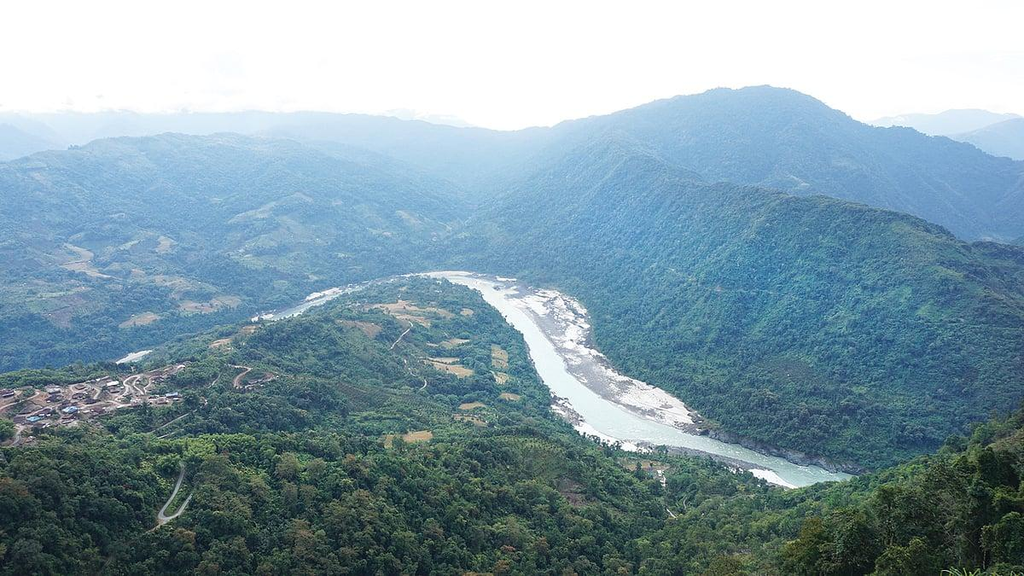
One of the most important ground reports in today’s edition concerns opposition to the Siang Upper Multipurpose Project (SUMP) in Arunachal Pradesh.
The proposed project, being developed by the National Hydroelectric Power Corporation (NHPC), is an approximately 11,000 MW hydroelectric project on the Siang river.
The project was declared a national project in 2008.
The Adi communities of Siang, East Siang and Upper Siang districts have opposed the project, arguing that it could affect their land, livelihoods, cultural identity and ancestral heritage.
The resistance has been organised through groups such as:
- Siang Indigenous Farmers’ Forum (SIFF).
- SUMP Affected Areas Youth Association (SAAYA).
Why is the project strategically significant?
The Siang is the Indian name for the river that enters Arunachal Pradesh from Tibet as the Yarlung Tsangpo and later becomes part of the Brahmaputra river system.
The newspaper connects the renewed push for the SUMP feasibility study with reports of China’s construction of a major dam project in the Medog region of Tibet.
This gives the project a strategic dimension beyond domestic electricity generation.
Potential objectives include:
- Hydroelectric power generation.
- Strengthening India’s energy security.
- Developing infrastructure in a strategically sensitive border region.
- Improving India’s capacity to manage river flows.
- Responding to upstream developments in China.
Concerns raised by the local communities
The Adi communities argue that the project may affect:
- Agricultural livelihoods: Paddy cultivation and orange orchards along riverbanks.
- Land and settlement: Possible displacement and submergence of villages.
- Cultural heritage: Ancestral burial grounds and locations associated with Adi civilisation.
- Ecological systems: Riverine biodiversity and local ecosystems.
- Community consent: Alleged irregularities in obtaining consent for preliminary feasibility studies.
The report states that local groups estimate that the project could affect as many as 40 villages, with 27 potentially facing full submergence. These are community estimates reported in the newspaper, not a final government-approved displacement assessment.
The article also describes allegations of coercion and irregularities in obtaining signatures on memoranda of understanding for the preliminary feasibility report. These allegations require independent verification and due process.
Key environmental and social concerns
A. Displacement and rehabilitation
Large dams may lead to the displacement of communities and loss of agricultural land, forests and traditional livelihoods.
B. Ecological fragmentation
Hydroelectric projects can alter river flow regimes, sediment transport, fish migration and downstream ecological processes.
C. Seismic vulnerability
The Himalayan region is tectonically active. Large infrastructure projects in such regions require careful assessment of seismic risks, slope stability and cumulative impacts.
D. Transboundary river governance
The Siang-Brahmaputra system has an important transboundary dimension because the river originates in Tibet and flows through India and Bangladesh.
E. Community participation
Development projects affecting indigenous communities must incorporate meaningful consultation, transparent information disclosure and legally appropriate consent processes.
Relevant legal and institutional framework
- Article 21: Right to life, which has been interpreted to include environmental dimensions.
- Article 244: Administration of Scheduled Areas and Tribal Areas.
- Fifth and Sixth Schedules: Special administrative arrangements for tribal areas in specified parts of India; their applicability must be assessed in the context of the particular region.
- Forest Rights Act, 2006: Recognition of forest rights of eligible forest-dwelling communities.
- Environment (Protection) Act, 1986.
- Environmental Impact Assessment framework.
- Forest (Conservation) Act framework, as amended.
- Land acquisition and rehabilitation legislation, where applicable.
Way forward
A sustainable approach should integrate:
- Independent environmental and social impact assessment.
- Cumulative impact assessment of the river basin.
- Transparent public consultation.
- Protection of customary land and forest rights.
- Fair rehabilitation and livelihood restoration.
- Independent verification of consent documents.
- Continuous monitoring of ecological impacts.
Mains perspective
The Siang project highlights the challenge of reconciling national energy security, strategic infrastructure, ecological sustainability and indigenous rights.
National security considerations may strengthen the case for developing strategic infrastructure, but they cannot eliminate the need for environmental assessment and democratic consultation.
3.2 Delhi-NCR pollution: GRAP Stage III invoked
GS Paper III – Environment and Ecology
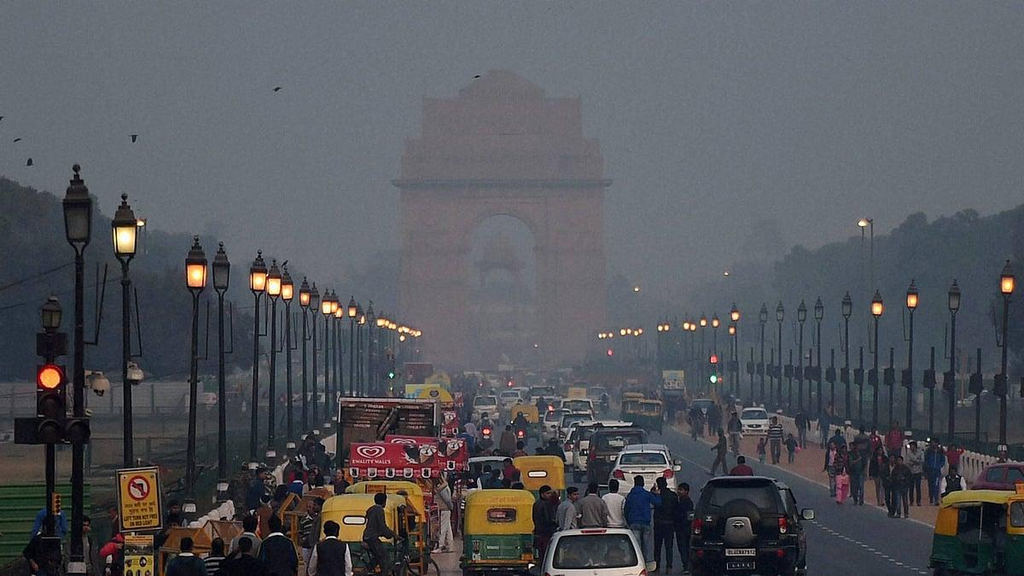
The Commission for Air Quality Management (CAQM) invoked Stage III of the Graded Response Action Plan (GRAP) across Delhi-NCR as air pollution worsened.
The 24-hour average Air Quality Index (AQI) of Delhi stood at 382 at 4 p.m. on November 6, according to the Central Pollution Control Board’s bulletin.
The newspaper reported that the AQI was expected to deteriorate further.
Major restrictions under GRAP Stage III
- Restrictions on the plying of BS-III petrol and BS-IV diesel and older light motor vehicles in Delhi and specified neighbouring NCR districts, subject to State implementation orders.
- Ban on dust-generating construction and demolition activities, subject to specified exceptions.
- Hybrid-mode classes for students up to Grade 5 in Delhi and adjoining districts covered by the order, with the exception noted in the report.
The restrictions were imposed in addition to existing seasonal construction restrictions.
Supreme Court questions the effectiveness of pollution-control measures
The Supreme Court described recurring measures such as vehicle bans and construction restrictions as “old, tried and failed tools” and questioned whether the Centre and CAQM had more scientific and effective solutions.
The government argued that GRAP measures should not be considered a complete failure because they can arrest pollution at certain levels.
The Court also drew attention to the disproportionate impact of air pollution on poorer sections of society.
Understanding the AQI
| AQI range | Category |
|---|---|
| 0–50 | Good |
| 51–100 | Satisfactory |
| 101–200 | Moderate |
| 201–300 | Poor |
| 301–400 | Very Poor |
| 401–450 | Severe |
| Above 450 | Severe+ under the applicable classification framework |
The table gives the commonly used Indian AQI categories; the newspaper’s report specifically records Delhi’s AQI at 382 on November 6.
Major sources of air pollution in Delhi-NCR
- Vehicular emissions.
- Industrial emissions.
- Construction and road dust.
- Thermal power generation and other combustion sources.
- Stubble burning in neighbouring States.
- Waste burning.
- Household and commercial fuel combustion.
- Firecrackers and other seasonal sources.
- Adverse meteorological conditions and temperature inversion.
The newspaper reported that stubble burning contributed 7.9% of Delhi’s PM2.5 levels on November 6, down from 14.2% on the previous day.
Why are emergency restrictions insufficient?
GRAP is an emergency-response mechanism. It is not a substitute for long-term structural reforms.
An effective strategy must include:
- Clean public transport.
- Electric mobility and improved vehicle inspection.
- Industrial emission control.
- Dust management.
- Scientific waste management.
- Regional coordination across the NCR airshed.
- Clean household energy.
- Continuous source-apportionment studies.
- Stronger enforcement and accountability.
Mains perspective: Delhi’s air-pollution crisis is not merely a seasonal environmental problem. It is a challenge involving urban planning, public health, inter-State coordination, transport policy and environmental justice.
3.3 Environmental and social costs of large infrastructure projects
The Siang dam report and the Delhi pollution debate together raise a broader question: how should India evaluate the social and ecological costs of infrastructure development?
A sustainable development model should not measure infrastructure success only through installed capacity, investment or construction speed.
It should also account for:
- Displacement and livelihood loss.
- Ecosystem services.
- Public health costs.
- Climate resilience.
- Intergenerational equity.
- Community participation.
4. 👥 Society, Social Justice and Human Development
4.1 Northeast migration corridors to southern India: Survey findings
GS Paper I – Indian Society; GS Paper III – Employment
A survey covering 693 households across eight districts in Assam, Meghalaya and Tripura has identified distinct migration corridors connecting the Northeast with southern India.
The study analysed 705 migration records.
Important findings
| Indicator | Survey finding |
|---|---|
| Households citing lack of village-level work | 88% |
| Households identifying at least one push factor | 91% |
| Migrants aged 30 or below | 60% |
| Migrants working outside their home State | 72.6% |
| Migrants finding work through family/friends | 70% |
| Migrants earning ₹20,000 or less per month | 86.5% |
| Households receiving remittances | 92% |
| Workers reporting long working hours | 53% |
| Workers receiving paid leave | 19% |
Major migration destinations
- Karnataka: 22.7%.
- Assam, mainly Guwahati: 22.3%.
- Tamil Nadu: 13.8%.
- Kerala: 10.1%.
- Meghalaya, mainly Shillong: 8.7%.
- Delhi: 4.5%.
- Telangana: 4.5%.
The survey also identified specific migration corridors, such as Tripura’s Dhalai district towards Karnataka and Assam’s Nagaon district towards Hyderabad.
Push and pull factors
Push factors
- Lack of employment opportunities.
- Inadequate agricultural income.
- Small and insufficient landholdings.
- Household indebtedness.
- Limited local economic diversification.
Pull factors
- Better employment opportunities.
- Higher wages.
- Improved living conditions.
- Existing social networks at destinations.
The median monthly earnings of migrants were reported at ₹15,000. The survey also found that workers spent an average of ₹7,000 per month on food, healthcare and education.
A significant finding is that 88% of households indicated that migrants would prefer to remain in their villages if viable livelihood opportunities were available.
Policy implications
Migration should be a matter of choice rather than economic compulsion.
Policy priorities include:
- Rural employment generation.
- Development of local enterprises.
- Agricultural diversification.
- Skill development linked to local demand.
- Protection of inter-State migrant workers.
- Portability of ration, health and social-security benefits.
- Better access to formal recruitment channels.
- Affordable housing and healthcare at destination locations.
UPSC linkage: Internal migration, regional inequality, informal employment, demographic transition and inclusive development.
4.2 Women achieve historic representation in AMU Students’ Union
Women candidates won six of the 13 posts in the Aligarh Muslim University Students’ Union elections, including the vice-president’s position.
Nashra Naim became the first woman to be elected vice-president in the 105-year history of the institution.
The elections were held after an eight-year gap.
Significance
The development is relevant to:
- Women’s political participation.
- Gender representation in educational institutions.
- Leadership opportunities.
- Student democracy.
- Institutional inclusion.
It also highlights the importance of ensuring regular and democratic student representation in universities.
4.3 Demonetisation and the hidden public-health costs of cash shortages
GS Paper III – Indian Economy and Health
An important analytical article in the newspaper examines how the 2016 demonetisation exercise affected access to essential medicines.
The article draws on research using monthly sales data across 805 pharmaceutical firms, 31 regions and 18 illness categories.
The research distinguishes between:
- Chronic medicines: Medicines purchased regularly for long-term conditions.
- Acute medicines: Medicines required suddenly for conditions such as infections, pain and gastrointestinal illness.
The study found that sales volume of medicines for acute conditions fell by nearly 3.6%, while sales value fell by approximately 3.1%, relative to chronic medicines.
The authors argue that sudden cash shortages affected unplanned purchases of essential medicines because consumers had less opportunity to search for alternatives or delay purchases.
The article also finds that areas with weaker public-health infrastructure experienced larger declines in medicine consumption.
Key economic concept: Liquidity as a determinant of health
Liquidity is generally understood as the availability of money or readily usable financial resources.
The article highlights that in a country with substantial out-of-pocket healthcare expenditure, access to cash can directly affect the ability to purchase essential medicines.
Policy lessons
- Monetary and financial reforms should incorporate an assessment of welfare costs.
- Essential medicine supply chains must be protected during major payment disruptions.
- Public health infrastructure can act as a buffer against economic shocks.
- Digital payments can improve access but cannot be assumed to be universally available.
- Better household-level data are needed to assess the health consequences of major economic interventions.
Mains perspective: Economic policy must be evaluated not only through macroeconomic outcomes but also through its distributional effects on vulnerable households.
5. 🌐 International Relations and World Affairs
5.1 India-born Nithya Raman elected Mayor of Los Angeles
GS Paper II – International Relations and Indian Diaspora
Nithya Raman, an India-born political leader, was elected Mayor of Los Angeles after defeating incumbent Karen Bass.
The newspaper reports that Raman secured 52% of the votes against Bass’s 48%, with three-fourths of the votes counted at the time of the report.
Her campaign focused on local urban issues such as:
- Road infrastructure.
- Broken streetlights.
- Pavement maintenance.
- Housing affordability.
- Urban governance.
Her victory is significant in the context of the growing political participation of Indian-origin individuals in the United States.
UPSC relevance
- Indian diaspora and India’s soft power.
- Political participation of immigrants.
- Local governance in the United States.
- Urban policy and affordable housing.
The significance of diaspora participation should not be reduced merely to symbolic representation; it also reflects the growing social and political integration of immigrant communities.
5.2 Asian political parties adopt the Seoul Declaration
GS Paper II – International Relations, United Nations and Global Governance
The 13th General Assembly of the International Conference of Asian Political Parties (ICAPP), held in Seoul from November 4 to 6, adopted the Seoul Declaration.
Representatives from 83 political parties participated.
The declaration emphasised:
- State sovereignty.
- Territorial integrity.
- Non-interference in internal affairs.
- Peaceful settlement of disputes.
- Adherence to the principles of the UN Charter.
- Opposition to unilateral actions and the threat or use of force.
The declaration also expressed concern about intensifying geopolitical rivalries and weakening international cooperation.
Significance
The declaration reflects concerns about the weakening of multilateralism and the increasing use of unilateral measures in international relations.
UPSC linkage: UN Charter, sovereignty, territorial integrity, peaceful dispute settlement, multilateralism and Asian regional diplomacy.
5.3 Political developments in Israel: Opposition attempts to form a government
Israel’s Opposition indicated progress in its effort to form a government and replace Prime Minister Benjamin Netanyahu.
The political situation follows the October 27 election, in which neither Netanyahu nor Opposition leader Gadi Eisenkot secured a majority.
The possibility of an Opposition coalition has raised questions about:
- Participation of Israeli-Arab political groups.
- Military-service exemptions for ultra-Orthodox Jews.
- The future of Israel’s domestic political alliances.
- The impact of prolonged conflict on Israeli society.
UPSC relevance: Coalition politics, West Asian geopolitics, domestic political instability and the relationship between religion, military service and citizenship.
5.4 Yemen: Deadly air strikes reported in Taiz province
The newspaper reports that at least 30 people were killed in air strikes on a market in southwestern Yemen.
The Houthi authorities and the Saudi-backed Yemeni government traded accusations over responsibility for the attack.
The report notes that the incident occurred amid renewed fighting between the Houthis and Saudi-backed forces.
Why is Yemen important for UPSC?
Yemen occupies a strategically significant position near:
- The Bab-el-Mandeb Strait.
- The Red Sea.
- The Gulf of Aden.
- Major maritime trade routes connecting Europe and Asia.
Instability in Yemen can affect shipping, energy trade, maritime security and regional geopolitical balances.
5.5 Iran reports tanker fires in the Strait of Hormuz
Iran’s Revolutionary Guards claimed that two oil tankers caught fire in the Strait of Hormuz.
The claim followed earlier Iranian assertions regarding five other tankers.
The incident is significant because the Strait of Hormuz is one of the world’s most important maritime energy chokepoints.
Strategic significance
- A substantial proportion of globally traded petroleum passes through the Strait.
- Disruptions can increase shipping and insurance costs.
- Energy-importing countries such as India remain vulnerable to price and supply shocks.
- Maritime instability can affect global inflation and economic growth.
India’s interests
India must safeguard:
- Energy supply diversification.
- Maritime security.
- Safety of Indian seafarers and vessels.
- Strategic engagement with Gulf countries.
- Resilience of petroleum reserves and supply chains.
The tanker-fire reports are attributed to Iranian statements in the newspaper and should not be treated as independently verified maritime findings.
5.6 Myanmar announces by-elections for April 2027
Myanmar’s election commission announced that by-elections would be held in April 2027 in areas where voting could not previously be conducted due to the country’s civil war.
The announcement comes amid continuing conflict and military efforts to consolidate control over territory.
UPSC relevance
- Political instability in Myanmar.
- Military rule and democratic transition.
- Refugee movements.
- India’s Act East Policy.
- Border security and insurgency.
- Connectivity projects in Northeast India.
5.7 Islamic State-linked militants attack village in eastern Congo
An attack attributed to the Allied Democratic Forces (ADF), an Islamic State-linked militant organisation, reportedly killed at least 33 people in eastern Democratic Republic of Congo.
The incident highlights the continuing threat posed by transnational extremist groups in parts of Africa.
UPSC relevance: Terrorism, non-State actors, regional instability and the global security implications of extremist networks.
5.8 United States reports rise in measles cases
The United States recorded 5,182 confirmed measles cases during the year, the highest number in 35 years, according to the newspaper’s report.
Measles had been declared eliminated in the United States in 2000, but falling vaccination rates have contributed to its resurgence.
Public-health significance
- Importance of universal immunisation.
- Vaccine hesitancy.
- Herd immunity.
- Disease surveillance.
- Cross-border transmission of infectious diseases.
India linkage: India’s Universal Immunisation Programme and Mission Indradhanush seek to improve immunisation coverage and reduce the burden of vaccine-preventable diseases.
6. 🏛️ Other Important National Developments
6.1 Supreme Court’s Bhakra-Beas settlement
The resolution of the power-dues dispute involving Himachal Pradesh, Punjab and Haryana is relevant to inter-State resource sharing and cooperative federalism. The settlement involves the transfer of 11,973 million units of electricity to Himachal Pradesh over 20 years.
6.2 Parliamentary panel reviews tourism projects in Kerala
The Parliamentary Public Accounts Committee reviewed the implementation of the Swadesh Darshan scheme and tourism-related projects in Kerala.
Members reportedly raised concerns regarding inadequate project planning and the sanctioning of projects without resolving land-acquisition requirements.
UPSC linkage: Parliamentary financial oversight, tourism infrastructure, public expenditure management and accountability.
6.3 Three major fires in Delhi ahead of Deepavali
The Delhi Fire Services reported 78 fire-related calls between midnight and 7.30 p.m. on Friday. Three major fires at commercial establishments resulted in seven reported injuries, while at least 15 people were rescued.
The report highlights the need for:
- Fire-safety compliance.
- Adequate ventilation.
- Emergency exits.
- Fire detection and suppression systems.
- Regular inspection of commercial buildings.
- Urban disaster preparedness.
6.4 Building collapse in Old Delhi
Three contractors were arrested in connection with the collapse of a three-storey building in Chawri Bazar, which killed at least two people. Four labourers remained unaccounted for at the time of the report.
The incident raises questions concerning unauthorised construction, building safety, labour protection and municipal enforcement.
6.5 Assam activist’s detention and Kaziranga conservation debate
The Gauhati High Court’s decision to quash Pranab Doley’s detention under the NSA also brings attention to land rights and development pressures around Kaziranga National Park.
The issue involves balancing tourism investment, conservation priorities, local livelihoods and constitutional freedoms.
7. 📊 Quick Revision Table for UPSC Prelims
| Topic | Key fact / concept |
|---|---|
| OBC creamy layer | Supreme Court clarifies scope of March 11, 2026 ruling |
| SIR | ECI permits certain excluded ASDD voters to resubmit enumeration forms |
| Article 326 | Adult suffrage |
| Article 324 | ECI’s constitutional authority |
| NSA | Preventive detention legislation, 1980 |
| Ethanol blending | Karnataka alleges petrol samples exceeded E20 |
| E20 | Petrol containing 20% ethanol |
| Essential Commodities Act | Stock regulation and anti-hoarding measures |
| Rice stocks | Weekly disclosure through Food Stock Portal |
| Bhakra-Beas | Himachal Pradesh to receive 11,973 million units over 20 years |
| SUMP | Siang Upper Multipurpose Project, Arunachal Pradesh |
| Siang | Becomes part of the Brahmaputra river system |
| GRAP | Emergency air-pollution response framework |
| AQI 382 | Very Poor category in the newspaper’s report |
| CAQM | Commission for Air Quality Management |
| NPCI | Establishes NPCI Tech Solutions Ltd. |
| ECMS | Electronics Components Manufacturing Scheme |
| ICAPP | International Conference of Asian Political Parties |
| Seoul Declaration | Sovereignty, territorial integrity and UN Charter principles |
| Strait of Hormuz | Strategic maritime energy chokepoint |
| Bab-el-Mandeb | Connects the Red Sea with the Gulf of Aden |
| ADF | Islamic State-linked militant group in eastern Congo |
8. ✍️ Mains Answer-Writing Practice
GS Paper II – Polity and Governance
1. The integrity of electoral rolls is essential for democratic legitimacy. Examine the challenges associated with intensive revision of electoral rolls in India and suggest measures to ensure inclusiveness and transparency.
2. Discuss the constitutional and administrative implications of linking welfare-beneficiary identification with electoral databases.
3. The creamy-layer principle seeks to ensure substantive equality within reservation policy. Discuss its constitutional significance and the challenges involved in its implementation.
4. Preventive detention is an exceptional power that must be exercised within constitutional limits. Examine the safeguards available under the Indian Constitution.
5. Examine the challenges posed by AI-generated deepfakes to freedom of expression, individual dignity and democratic discourse.
GS Paper III – Economy, Agriculture and Energy
6. Ethanol blending can contribute to India’s energy security, but its expansion must be balanced against consumer protection, vehicle compatibility and food security. Discuss.
7. Examine the role of stock limits and mandatory stock disclosure in controlling food inflation. What are their possible limitations?
8. Discuss the importance of domestic electronics-component manufacturing for India’s integration into global value chains.
9. Liquidity is an important determinant of access to essential healthcare. Discuss with reference to the economic and public-health consequences of demonetisation.
10. Evaluate the importance of local livelihood generation in addressing distress migration from the Northeast to southern India.
GS Paper III – Environment and Disaster Management
11. The Siang Upper Multipurpose Project illustrates the tension between strategic infrastructure development and indigenous rights. Critically examine.
12. Delhi’s air-pollution crisis cannot be resolved through emergency restrictions alone. Discuss the need for a regional, scientific and long-term approach to air-quality management.
GS Paper II – International Relations
13. Examine the strategic importance of the Strait of Hormuz for India’s energy security and maritime interests.
14. Discuss the relevance of sovereignty, territorial integrity and non-interference in the contemporary international order.
15. Analyse the implications of political instability in Myanmar for India’s Act East Policy and security in the Northeast.
9. 📝 UPSC Prelims Practice Questions
Q1. With reference to the creamy-layer principle in OBC reservation, consider the following statements:
- The principle seeks to exclude relatively advanced sections within the OBC category from reservation benefits.
- The Supreme Court’s March 2026 ruling, as reported, excluded parental salary and agricultural income from the income/wealth test under the relevant 1993 Office Memorandum.
- The subsequent clarification directed the reopening of all completed appointments made during the preceding decade.
Which of the statements given above are correct?
(a) 1 and 2 only
(b) 2 and 3 only
(c) 1 and 3 only
(d) 1, 2 and 3
Q2. Consider the following statements regarding the Election Commission of India:
- Article 324 provides for the superintendence, direction and control of elections to Parliament and State Legislatures.
- Article 326 provides for elections on the basis of adult suffrage.
- Article 325 prohibits exclusion from electoral rolls solely on grounds of religion, race, caste or sex.
Which of the statements given above are correct?
(a) 1 only
(b) 1 and 2 only
(c) 2 and 3 only
(d) 1, 2 and 3
Q3. With reference to ethanol blending in petrol, consider the following statements:
- E20 petrol contains 20% ethanol.
- Ethanol has a higher energy density than conventional petrol.
- Higher ethanol blending can raise vehicle-compatibility concerns.
Which of the statements given above are correct?
(a) 1 and 2 only
(b) 1 and 3 only
(c) 2 and 3 only
(d) 1, 2 and 3
Q4. The Essential Commodities Act, 1955, empowers the government to:
- Regulate the production and supply of essential commodities.
- Impose stock limits in specified circumstances.
- Take action against violations of orders issued under the Act.
Select the correct answer:
(a) 1 only
(b) 1 and 2 only
(c) 2 and 3 only
(d) 1, 2 and 3
Q5. Consider the following statements regarding the Siang river:
- It is part of the Brahmaputra river system.
- It originates in the Tibetan Plateau.
- It flows through Arunachal Pradesh before becoming part of the Brahmaputra system downstream.
Which of the statements given above are correct?
(a) 1 only
(b) 1 and 2 only
(c) 2 and 3 only
(d) 1, 2 and 3
Q6. With reference to the Graded Response Action Plan (GRAP), consider the following statements:
- It is an emergency-response framework for air-pollution management in the Delhi-NCR region.
- It includes restrictions that can be intensified as air quality deteriorates.
- It is a substitute for long-term structural measures to control air pollution.
Which of the statements given above are correct?
(a) 1 and 2 only
(b) 2 and 3 only
(c) 1 and 3 only
(d) 1, 2 and 3
Q7. Which of the following is/are important concerns associated with large hydroelectric projects in the Himalayan region?
- Seismic vulnerability.
- Disruption of riverine ecosystems.
- Displacement of local communities.
- Changes in sediment transport.
Select the correct answer:
(a) 1 and 2 only
(b) 1, 2 and 3 only
(c) 2, 3 and 4 only
(d) 1, 2, 3 and 4
Q8. The Strait of Hormuz is strategically important because it:
(a) Connects the Mediterranean Sea with the Red Sea.
(b) Connects the Persian Gulf with the Gulf of Oman.
(c) Connects the Black Sea with the Aegean Sea.
(d) Connects the Red Sea with the Gulf of Aden.
Q9. Consider the following statements regarding the National Payments Corporation of India:
- NPCI operates important retail payment systems in India.
- NPCI has established a technology subsidiary with a focus on AI and blockchain, according to the newspaper.
- NPCI is a constitutional body established under the Constitution of India.
Which of the statements given above are correct?
(a) 1 only
(b) 1 and 2 only
(c) 2 and 3 only
(d) 1, 2 and 3
Q10. Which of the following best explains the concept of liquidity in the context of household welfare?
(a) The ability of a government to increase tax rates.
(b) The availability of money or readily usable financial resources to meet immediate payments.
(c) The long-term increase in the productive capacity of an economy.
(d) The ability of banks to issue government securities.
Answer Key and Explanations
| Question | Answer | Explanation |
|---|---|---|
| 1 | (a) | The Court clarified that the ruling did not require a general reopening of completed appointments. |
| 2 | (d) | Articles 324, 325 and 326 address the ECI’s authority, non-discrimination in electoral rolls and adult suffrage respectively. |
| 3 | (b) | E20 means 20% ethanol. Ethanol has lower energy density than petrol, and compatibility is an important concern. |
| 4 | (d) | The Act enables regulation of essential commodities, stock limits and enforcement action. |
| 5 | (d) | The Siang originates in Tibet and forms part of the Brahmaputra river system. |
| 6 | (a) | GRAP is an emergency-response mechanism, not a replacement for long-term pollution-control measures. |
| 7 | (d) | All four are important environmental and social concerns associated with large Himalayan dams. |
| 8 | (b) | The Strait of Hormuz connects the Persian Gulf with the Gulf of Oman. |
| 9 | (b) | NPCI operates retail payment infrastructure and has established the reported technology subsidiary; it is not a constitutional body. |
| 10 | (b) | Liquidity refers to the availability of funds or readily usable resources for immediate transactions. |
10. 🔎 Editorial and Analytical Takeaways
Today’s newspaper raises five broader questions that deserve attention beyond the individual news reports.
First, electoral integrity must be accompanied by procedural inclusion. Cleaning electoral rolls is a legitimate administrative objective, but eligible voters must have accessible and transparent mechanisms to challenge wrongful exclusion.
Second, social justice requires clarity in the implementation of reservation policy. The creamy-layer debate illustrates the need to balance substantive equality with administrative certainty and the rights of candidates.
Third, energy transition must be evidence-based. Ethanol blending can reduce fossil-fuel dependence, but fuel-quality standards, consumer protection and vehicle compatibility cannot be ignored.
Fourth, infrastructure development must incorporate community participation. The Siang project demonstrates that strategic and economic objectives need to be reconciled with ecological sustainability and indigenous rights.
Fifth, pollution control requires structural transformation. Repeated emergency restrictions cannot replace cleaner transport, regional coordination, industrial regulation, scientific monitoring and effective urban planning.
The wider lesson is that good governance requires not merely the capacity to make policy, but also the ability to implement it transparently, scientifically and equitably.
Source: The Hindu, Delhi City Edition, Saturday, 7 November 2026. The compilation reflects the reporting and editorial material in the supplied newspaper edition. Allegations and claims attributed to political actors, governments or other organisations have been identified as such.