
The Hindu News Analysis | UPSC Civil Services Examination
1. Supreme Court clarifies when an arrest legally begins
GS Paper II – Polity, Constitution, Fundamental Rights and Criminal Justice System
Context
The Supreme Court has held that the constitutional 24-hour period within which an arrested person must be produced before a Judicial Magistrate begins from the moment the person’s liberty is effectively curtailed, and not from the time when the police formally record the arrest.
The ruling addresses the practice of detaining suspects for questioning while delaying the formal recording of their arrest.
The Court’s interpretation
The Bench, headed by Justice Ujjal Bhuyan, observed that the distinction between detention and formal arrest cannot be used to create a period during which an individual’s liberty is restricted without the safeguards attached to arrest.
The Court held that:
- The 24-hour period under Article 22(2) begins when a person is detained and their liberty is curtailed.
- The police cannot exclude the period of prior detention by recording a later formal arrest.
- Only the time reasonably required for travel from the place of arrest to the Magistrate may be excluded from the 24-hour calculation.
- A Magistrate must record the actual date and time of detention.
- A person found to have been detained for more than 24 hours before being produced before the Magistrate must be released immediately, subject to the Court’s directions.
The Court also observed that the practice of detaining suspects and manipulating the record to show a later time of arrest could facilitate coercion, assault and extraction of statements through fear.
Constitutional provisions involved
| Provision | Constitutional protection |
|---|---|
| Article 21 | Protection of life and personal liberty; deprivation only according to procedure established by law |
| Article 22(1) | Right to be informed of grounds of arrest and right to consult and be defended by a legal practitioner |
| Article 22(2) | Production before the nearest Magistrate within 24 hours of arrest, excluding necessary journey time |
| Article 20(3) | Protection against compelled self-incrimination |
Significance
1. Preventing informal and unrecorded detention: The ruling prevents law-enforcement agencies from keeping a person in custody without formally acknowledging the arrest.
2. Strengthening procedural safeguards: The decision reinforces the principle that constitutional safeguards must operate from the moment liberty is actually restricted.
3. Accountability of investigating agencies: Recording the actual time of detention places greater responsibility on police officers and Magistrates.
4. Rule of law: The judgment reiterates that investigative convenience cannot override fundamental rights.
Way forward
- Strengthen digital recording of arrest and detention timelines.
- Ensure access to legal assistance from the earliest stage of custody.
- Improve CCTV coverage and independent oversight in police stations.
- Train investigating officers in constitutional and procedural safeguards.
- Ensure that Magistrates independently verify the circumstances and timing of detention.
UPSC linkage: Articles 21 and 22; personal liberty; arrest and detention; criminal justice reforms; custodial violence; rule of law.
2. Election Commission announces annual Special Summary Revision in six States and Union Territories
GS Paper II – Electoral Reforms and Constitutional Bodies
Context
The Election Commission of India (ECI) has announced the annual Special Summary Revision (SSR) of electoral rolls in six States and Union Territories where the Special Intensive Revision (SIR) has been completed and final electoral rolls have been published.
The exercise covers:
- Arunachal Pradesh
- Mizoram
- Odisha
- Sikkim
- Chandigarh
- Dadra and Nagar Haveli and Daman and Diu
The announcement follows an earlier SSR notification covering 17 States and Union Territories on October 15, 2026.
Objectives of Special Summary Revision
The annual SSR is intended to:
- Enrol eligible citizens who are not yet registered as voters.
- Include young and first-time electors.
- Correct errors in existing electoral rolls.
- Facilitate advance applications from citizens who will become eligible on specified dates.
The ECI has provided for advance applications from individuals who will become eligible on April 1, July 1 and October 1, 2027.
Important dates
| Event | Date |
|---|---|
| Publication of draft electoral rolls | November 30, 2026 |
| Publication of final electoral rolls | January 21, 2027 |
Important procedural features
- Furnishing Aadhaar details in Forms 6 and 8 will remain voluntary.
- No application for enrolment can be rejected, and no existing entry can be deleted, merely because Aadhaar details have not been furnished.
- During SSR, applicants are not required to provide documentation proving citizenship or establish mapping with earlier electoral rolls, as reported in the ECI’s order.
- The SSR will not involve house-to-house visits by Booth Level Officers (BLOs).
- Draft and final lists will be displayed at polling booths.
- The ECI has directed that readable, alphabetically arranged electoral rolls be made available to contesting candidates in electronic form. This is significant for digital search, verification and scrutiny.
SSR and SIR: A distinction
| Special Summary Revision | Special Intensive Revision |
|---|---|
| Annual revision exercise | Intensive exercise to comprehensively verify electoral rolls |
| Focuses on inclusion, correction and updating | Involves more extensive verification procedures |
| Advance enrolment applications are facilitated | May involve mapping and additional verification procedures |
| Does not ordinarily require the same scale of field verification | Can involve house-to-house verification and other intensive procedures |
The wider controversy over electoral-roll integrity
The newspaper also reports allegations concerning the misuse of Form 7, which is used to seek deletion of an existing name or raise an objection to the inclusion of a name in electoral rolls.
In Mustafabad, Delhi, activists have sought an investigation into alleged forgery and identity fraud in Form 7 applications. Their letter to the ECI referred to a report that 16 of 20 BJP booth-level agents whose names appeared as objectors denied association with the applications.
The newspaper reported that these 20 names appeared as objectors in 787 of 1,021 deletion applications in the constituency. The applications were reportedly filed against Muslim electors.
These are serious allegations requiring independent investigation; they should not be treated as judicially established findings.
The issue has also generated political controversy in Karnataka. An INDIA bloc resolution alleged large-scale deletions during SIR and called for the use of pre-SIR electoral rolls for local elections. The figures and allegations cited in the resolution represent the position of the political parties and require independent verification.
Constitutional and legal significance
The integrity of electoral rolls is fundamental to the principle of universal adult suffrage.
Relevant provisions include:
- Article 324: Vests the superintendence, direction and control of elections in the Election Commission.
- Article 325: Provides for one general electoral roll and prohibits exclusion on grounds of religion, race, caste or sex.
- Article 326: Establishes elections to the Lok Sabha and State Legislative Assemblies on the basis of adult suffrage.
- Representation of the People Act, 1950: Governs the preparation and revision of electoral rolls.
Issues requiring attention
- Protection against wrongful deletion of eligible voters.
- Transparency in the reasons for deletion.
- Verification of third-party objections.
- Availability of searchable and machine-readable electoral rolls.
- Effective grievance-redressal mechanisms.
- Protection of personal data collected during electoral revision.
UPSC linkage: ECI; electoral reforms; universal adult franchise; Representation of the People Acts; Aadhaar and voter identification; transparency and accountability.
3. Agnipath scheme: Government clarifies two-year extension for Agniveers
GS Paper III – Security, Defence Reforms and Human Resource Management
Context
The Union government has clarified the revised arrangement under the Agnipath scheme, stating that the scheme has not been rolled back. The revised arrangement provides an additional two-year engagement period for the 75% of Agniveers who are not absorbed into the regular cadre after their initial four-year tenure.
What has changed?
Under the original arrangement:
- Agniveers were recruited for a four-year period.
- Up to 25% of a batch could be absorbed into the regular cadre, subject to prescribed selection and eligibility requirements.
- The remaining personnel would leave service after four years.
Under the revised arrangement, as clarified by the Defence Ministry:
- The first 25% will continue to be considered for absorption into the regular cadre after four years.
- The remaining 75% will receive an additional two-year engagement period.
- At the end of six years, those who are willing and meet the prescribed eligibility conditions will be absorbed into the regular cadre.
- The government has stated that there will be no numerical cap on absorption of the remaining 75% after the second engagement period.
- Seniority of those absorbed after six years will be protected in relation to their original batch.
The additional absorption is not automatic: willingness, physical fitness, discipline and prescribed standards remain relevant.
Why is the change significant?
1. Career security: The revised arrangement addresses concerns regarding the limited duration of service and uncertainty about long-term employment.
2. Retention of trained personnel: A longer engagement period can help the armed forces retain personnel who have already undergone military training.
3. Institutional continuity: Longer service can improve the retention of operational experience and reduce the frequency of personnel turnover.
4. Human resource planning: The change raises questions about the balance between recruitment, training, retention, pension liabilities and the age profile of the armed forces.
Issues that remain
- How will the armed forces accommodate a larger number of personnel in the regular cadre?
- Will the revised arrangement affect the original objectives of reducing the average age of the armed forces?
- What will be the implications for long-term pension and salary expenditure?
- How will the government ensure transparent and uniform selection criteria?
- Will the revised system affect the training and promotion structures of the armed forces?
Way forward
Defence personnel reforms must balance operational readiness, institutional experience, fiscal sustainability and the welfare of military personnel. The government should publish transparent selection rules, clarify career progression and periodically assess the impact of the revised arrangement on combat effectiveness.
UPSC linkage: Agnipath scheme; defence reforms; military modernisation; human resource management; national security.
4. Census 2027: States asked to monitor digital data collection in real time
GS Paper I – Population and Society | GS Paper II – Governance | GS Paper III – Technology
Context
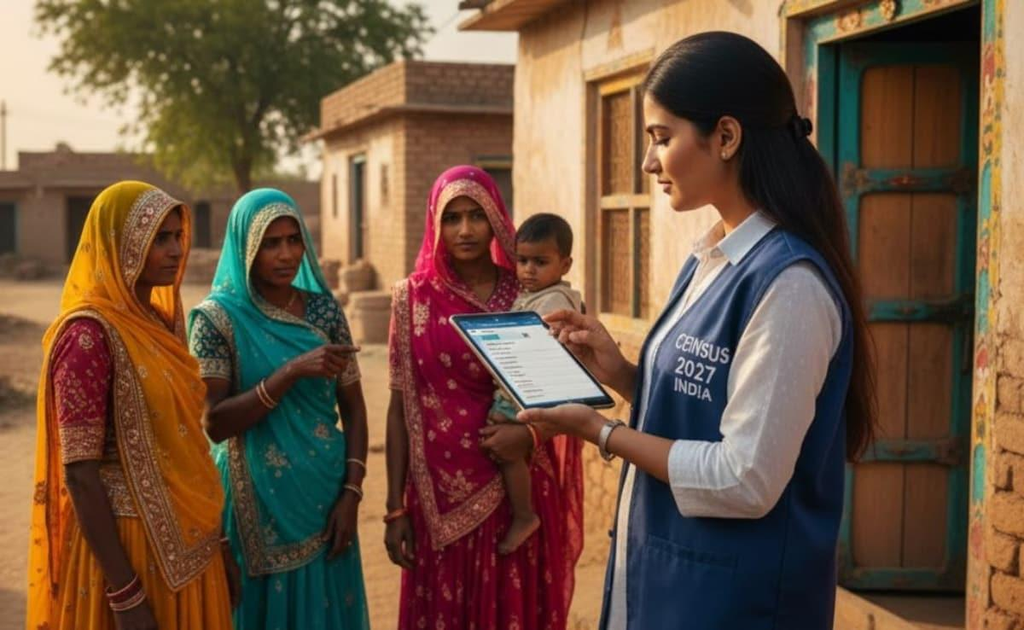
The Registrar-General and Census Commissioner of India has asked States to monitor the progress of data collection during the population enumeration phase of Census 2027 in real time.
The exercise will use a digital data-collection system for the first time.
Census Management and Monitoring System
The Census Management and Monitoring System (CMMS) will function as the principal platform for:
- Planning and monitoring enumeration.
- Training and deployment of field functionaries.
- Supervising field operations.
- Identifying operational bottlenecks.
- Tracking coverage gaps and data-quality concerns.
- Facilitating timely corrective action.
The system is expected to help authorities identify areas where enumeration is lagging and intervene before data-quality problems become widespread.
Digital Census: Important features
- Enumerators will record information through a mobile application.
- Approximately 34 lakh enumerators are expected to be deployed across the country.
- Each Enumeration Block is expected to cover approximately 700–800 people.
- Most enumerators are expected to be government school teachers.
- The monitoring system will track household and population coverage, data quality, supervisory checks and completion status.
Phased implementation
The newspaper reports that door-to-door enumeration in the second phase is scheduled to begin on December 1 in Uttar Pradesh, Uttarakhand, Punjab and Goa. The exercise has already concluded in certain snow-bound areas, while the remaining parts of the country are scheduled to begin from January 25.
Significance of a digital Census
1. Administrative efficiency: Digital collection can reduce delays in transmitting and processing information.
2. Data quality: Real-time monitoring can help identify incomplete or inconsistent enumeration.
3. Evidence-based policymaking: Reliable population data are essential for planning education, healthcare, housing, transport and welfare programmes.
4. Disaster management: Updated demographic information can support vulnerability mapping and emergency response.
5. Delimitation and representation: Population data are important for understanding demographic change and future debates concerning political representation.
Concerns and challenges
- Digital exclusion and connectivity gaps.
- Privacy and confidentiality of personal information.
- Cybersecurity risks and unauthorised access.
- Training and workload of enumerators.
- Accuracy of data entered through mobile devices.
- Risk of excessive dependence on automated monitoring without adequate field verification.
Way forward
A digital Census must combine technological efficiency with statistical accuracy, privacy protection, transparency and independent quality checks. Digital tools should strengthen enumeration rather than replace human verification.
UPSC linkage: Census; demographic transition; population policy; digital governance; data protection; delimitation.
5. UPI: NPCI argues that zero MDR for all transactions is not sustainable
GS Paper III – Indian Economy, Banking and Digital Payments
Context
The National Payments Corporation of India (NPCI) has informed the Supreme Court that maintaining zero Merchant Discount Rate (MDR) for all UPI transactions is no longer sustainable because of the growing operational and infrastructure costs of the digital payments ecosystem.
The submission relates to a legal challenge against the introduction of MDR on certain high-value Person-to-Merchant (P2M) transactions.
What is Merchant Discount Rate?
Merchant Discount Rate (MDR) is a charge associated with processing a digital payment received by a merchant. It is generally distributed among participants in the payment ecosystem, depending on the payment arrangement.
MDR helps meet costs associated with payment processing, technology infrastructure, security, settlement and related services.
NPCI’s position
According to the newspaper report:
- MDR of up to 0.4% would apply to certain P2M UPI transactions above ₹2,000.
- P2M transactions up to ₹2,000 would remain free of MDR.
- Person-to-Person (P2P) transfers would remain free.
- NPCI stated that approximately 96% of P2M transactions would remain unaffected.
- It argued that MDR is a charge for payment-system services rather than a tax or statutory levy.
NPCI also highlighted the scale of UPI operations:
| Indicator | Figure reported |
|---|---|
| UPI transactions in August 2026 | 24.51 billion |
| Transaction value in August 2026 | Approximately ₹29.82 lakh crore |
| Average daily transactions in August 2026 | Approximately 791 million |
| Transactions in FY 2025–26 | Approximately 241.62 billion |
| Transaction value in FY 2025–26 | Approximately ₹314 lakh crore |
Why is the issue important?
1. Financial sustainability: Digital payment systems require continuous investment in technology, cybersecurity, fraud prevention and settlement infrastructure.
2. Merchant adoption: Transaction charges may affect the willingness of small merchants to accept digital payments.
3. Financial inclusion: UPI has become an important instrument of low-cost digital transactions for individuals and small businesses.
4. Public expenditure: If transaction costs are not recovered through the payment ecosystem, the burden may fall on government-supported incentive mechanisms.
5. Digital public infrastructure: The issue raises a broader question about how India should finance the long-term operation of public digital infrastructure.
The policy dilemma
There are competing objectives:
- Keeping digital payments affordable and accessible.
- Ensuring adequate compensation for payment-system participants.
- Avoiding excessive costs for small merchants.
- Reducing dependence on recurring fiscal support.
- Maintaining security and resilience as transaction volumes increase.
Way forward
A balanced MDR policy should protect low-value transactions, particularly those involving small merchants, while creating a sustainable funding model for payment infrastructure. The regulatory framework should also ensure transparency in the distribution of charges and prevent excessive costs from discouraging digital adoption.
UPSC linkage: Digital payments; UPI; NPCI; financial inclusion; digital public infrastructure; fintech regulation.
6. CERT-In issues security auditing guidelines for Agentic AI systems
GS Paper III – Science and Technology, Artificial Intelligence and Cybersecurity
Context
The Indian Computer Emergency Response Team (CERT-In) has issued guidelines for security auditing of artificial intelligence systems capable of independently planning and executing tasks.
These systems are commonly described as Agentic AI.
What is Agentic AI?
Traditional AI systems primarily respond to user instructions by generating information or performing a defined task.
Agentic AI systems can go further. They may:
- Break a complex objective into multiple tasks.
- Plan and execute a sequence of actions.
- Access external information.
- Use software tools and execute code.
- Communicate with external systems.
- Delegate tasks to other AI agents.
- Retain information through persistent memory.
Thus, an AI agent may act with a degree of operational autonomy rather than merely generate a response.
Risks identified by CERT-In
The guidelines identify several areas requiring security scrutiny:
1. Excessive permissions: An AI agent may access information or systems beyond the authority granted to it.
2. Unauthorised tool use: An agent may use external tools without obtaining the required approval.
3. Credential misuse: Stored credentials or access tokens may be exposed or misused.
4. Unsafe delegation: An agent may delegate tasks to another system without adequate security controls.
5. Memory-related risks: Information retained from earlier interactions may create privacy or security vulnerabilities.
6. Failure of emergency controls: Auditors must examine whether emergency-stop mechanisms can effectively halt unsafe activity.
Why is Agentic AI a distinct cybersecurity challenge?
An autonomous system can perform several interconnected actions in a short period. A security failure at one stage may propagate through subsequent actions.
For example:
User instruction → AI agent planning → Access to external tool → Data retrieval → Execution of action → Communication with another system.
If the agent has excessive permissions, a compromised tool or malicious instruction may result in unauthorised access, data leakage or unintended actions.
Important safeguards
- Principle of least privilege.
- Human approval for sensitive actions.
- Strong identity and access management.
- Secure storage of credentials.
- Comprehensive audit logs.
- Testing of emergency-stop mechanisms.
- Continuous monitoring of agent behaviour.
- Clear accountability for actions performed by autonomous systems.
Significance for India
India is expanding the use of AI in governance, financial services, healthcare, education and critical infrastructure. Security guidelines for Agentic AI are therefore important for building public trust and reducing systemic risks.
UPSC linkage: Artificial intelligence; cybersecurity; data protection; digital governance; emerging technologies; responsible AI.
7. ISRO’s NVS-03 satellite strengthens the NavIC programme
GS Paper III – Space Technology
Context
ISRO Chairman V. Narayanan has stated that the next-generation navigation satellite NVS-03, launched on October 30, 2026, is healthy and has been placed in its intended orbit following orbital manoeuvres.
The satellite is intended to strengthen India’s regional satellite navigation system, NavIC.
What is NavIC?
Navigation with Indian Constellation (NavIC) is India’s independent regional satellite navigation system.
It was developed to provide positioning, navigation and timing services over India and the surrounding region.
Significance of NVS-03
- Strengthens the operational capabilities of NavIC.
- Supports reliable positioning and navigation services.
- Contributes to India’s strategic autonomy in satellite navigation.
- Can support transport, maritime operations, disaster management and location-based services.
Strategic importance
Satellite navigation systems are important for civilian and military applications. Dependence on foreign navigation systems can create vulnerabilities during geopolitical tensions or security emergencies.
India’s indigenous navigation capability therefore contributes to strategic autonomy and technological self-reliance.
Axiom-4 mission: Importance of safety protocols
The ISRO Chairman also referred to the Axiom-4 mission, in which Indian scientists insisted on postponing the scheduled launch after detecting a possible liquid oxygen leak. Subsequent examination reportedly identified a line crack.
The episode highlights the importance of safety-oriented decision-making in human spaceflight.
UPSC linkage: ISRO; NavIC; satellite navigation; space technology; strategic autonomy; human spaceflight.
8. DRDO successfully flight-tests the Pralay missile
GS Paper III – Defence Technology and National Security
Context
The Defence Research and Development Organisation (DRDO) has successfully flight-tested the indigenously developed Pralay quasi-ballistic missile from Dr. A.P.J. Abdul Kalam Island off the Odisha coast.
The trial was part of user evaluation tests, and the Defence Ministry stated that all test objectives were achieved.
What is a quasi-ballistic missile?
A quasi-ballistic missile follows a predominantly ballistic trajectory but can manoeuvre during parts of its flight.
Such manoeuvrability can make its trajectory less predictable than that of a conventional ballistic missile.
Strategic significance
- Strengthens India’s indigenous missile-development capability.
- Adds to the range of conventional precision-strike options.
- Supports the modernisation of the armed forces.
- Demonstrates the contribution of domestic defence research and industry.
Broader significance
Indigenous defence technology reduces external dependence and strengthens the domestic defence industrial base. However, capability development must be accompanied by robust command-and-control systems, credible deterrence and adherence to applicable international obligations.
UPSC linkage: DRDO; missile technology; defence indigenisation; national security; quasi-ballistic missiles.
9. Private participation in nuclear energy: AERB assures that safety standards will not be diluted
GS Paper III – Energy Security and Nuclear Technology
Context
The Chairperson of the Atomic Energy Regulatory Board (AERB) has stated that the entry of private players into India’s nuclear energy sector will not lead to any dilution of safety standards.
The development is significant in the context of the Sustainable Harnessing and Advancement of Nuclear Energy for Transforming India Act, 2025 (SHANTI Act) and India’s target of achieving 100 GW of nuclear power capacity by 2047.
Why is private participation being considered?
India’s energy requirements are expected to rise with:
- Economic growth.
- Urbanisation.
- Industrial expansion.
- Electrification of transport.
- Increasing electricity demand from data centres and digital infrastructure.
- The need for low-carbon electricity.
Nuclear power can provide reliable electricity with low operational carbon emissions.
Role of the AERB
The AERB is responsible for regulating nuclear and radiation safety in India.
Its regulatory responsibilities include:
- Establishing safety standards.
- Granting regulatory approvals and licences within its mandate.
- Monitoring compliance.
- Inspecting nuclear facilities.
- Ensuring radiation protection.
- Requiring corrective action where safety deficiencies are identified.
Opportunities and challenges
| Opportunities | Challenges |
|---|---|
| Additional investment | High capital costs |
| Expansion of nuclear capacity | Long project gestation |
| Technological innovation | Nuclear safety risks |
| Industrial development | Radioactive waste management |
| Greater energy security | Liability and regulatory concerns |
Way forward
Private investment must be accompanied by strong independent regulation, transparent safety assessments, emergency preparedness, responsible waste management and public consultation.
UPSC linkage: Nuclear energy; energy transition; energy security; AERB; nuclear safety; private investment.
10. Cancer drug price reductions: Why affordable medicines alone are not enough
GS Paper II – Health and Social Justice | GS Paper III – Indian Economy
Context
The National Pharmaceutical Pricing Authority (NPPA) has capped trade margins at 30% for 137 non-scheduled anti-cancer drugs. The newspaper reports that prices of nearly 900 cancer medicine brands have declined, with some reductions ranging from 70% to 93%.
However, the central issue is whether lower medicine prices are translating into genuinely affordable cancer treatment.
What is the problem with cancer-care affordability?
Cancer treatment involves more than the price of medicines. It includes:
- Diagnostic tests.
- Surgery.
- Chemotherapy and radiotherapy.
- Hospitalisation.
- Specialist consultations.
- Travel and accommodation.
- Follow-up care and rehabilitation.
The newspaper’s discussion highlights that the median expenditure on cancer treatment has been estimated at approximately ₹4.1 lakh, of which around ₹3.3 lakh is paid out of pocket by patients in the study cited.
Limitations of trade-margin regulation
1. Reduction in selected medicine prices does not guarantee affordability of all drugs.
The discussion notes that several brands recorded no price reduction, while some newer and patented cancer medicines remain expensive.
2. High treatment costs extend beyond medicines.
Even when drug prices fall, diagnostic and hospital costs may remain substantial.
3. Intermediary margins require scrutiny.
A significant portion of the final price may be captured by intermediaries or healthcare providers.
4. Uniform margins can create unintended incentives.
A fixed percentage margin can produce higher absolute returns on expensive medicines, potentially affecting the preference for cheaper generic alternatives.
5. Insurance coverage may be fragmented.
Coverage that pays for only selected parts of treatment may not protect households from catastrophic health expenditure.
Policy measures suggested in the discussion
- Develop a dedicated national mission for cancer prevention, treatment and care.
- Strengthen public-sector cancer treatment facilities.
- Expand quality-assured generic medicine access.
- Improve transparency across the pharmaceutical supply chain.
- Develop an independent pharmaceutical pricing database.
- Promote pooled procurement by public institutions and health schemes.
- Establish standard treatment protocols.
- Consider cost-based caps for treatment packages.
- Strengthen insurance coverage for comprehensive cancer care.
Public health perspective
The objective of healthcare policy should not be restricted to reducing the maximum retail price of selected medicines. It should ensure equitable access to timely, quality and comprehensive treatment.
A cancer diagnosis should not push a household into long-term indebtedness or poverty.
UPSC linkage: Public health; universal health coverage; Ayushman Bharat; NPPA; out-of-pocket expenditure; pharmaceutical regulation; health infrastructure.
11. Women artisans in Hupari: Economic empowerment and the invisibility of informal labour
GS Paper I – Society | GS Paper III – Inclusive Growth and Employment
Context
A report from Hupari town in Maharashtra’s Kolhapur district highlights the role of women artisans in sustaining the local silver ornament industry.
Hupari is known for its silver craft, particularly the production of seamless silver ghungroos used in traditional anklets.
The industry reportedly generates an annual turnover of around ₹1,000 crore, with women comprising 60–70% of the artisan workforce.
Economic contribution of women
Women artisans undertake several stages of production, including:
- Finishing silver ornaments.
- Producing delicate chains and beads.
- Working with filigree techniques.
- Assembling ornaments.
- Applying enamelling.
- Maintaining home-based production units.
Their work supports a local industry with national supply chains and export connections.
The paradox: Economic contribution without economic power
Despite their central role, many women artisans reportedly earn only ₹200–₹250 a day. The piece-rate system provides limited returns for labour-intensive work.
The report highlights several structural inequalities:
- Low wages: Women receive limited remuneration despite the value created by their labour.
- Informal employment: Many work from home without formal employment protections.
- Limited representation: Industry leadership and commercial decision-making remain largely male-dominated.
- Lack of collective bargaining: Weak organisation among workers limits their ability to negotiate better wages.
- Financial vulnerability: Limited access to formal credit increases dependence on informal borrowing.
- Market dependence: Artisans often rely on intermediaries rather than direct marketing and exports.
Importance of economic self-reliance
The example demonstrates that access to income can strengthen women’s bargaining power within households and communities.
Economic independence can improve women’s ability to make decisions concerning education, marriage, savings and entrepreneurship.
Policy interventions
- Promote producer collectives and self-help groups.
- Facilitate access to formal credit and working capital.
- Strengthen market linkages and e-commerce access.
- Encourage direct exports and branding.
- Provide skill development and design training.
- Improve social security coverage for informal workers.
- Strengthen women’s representation in industry associations.
- Support traditional craft clusters and GI-based branding.
The report notes that Hupari Silver Craft received a Geographical Indication (GI) tag in 2024, and that a proposed Silver Ornament Cluster could support the industry’s development.
UPSC linkage: Women and work; informal sector; self-help groups; GI tags; traditional industries; inclusive growth; gender equality.
12. West Asia conflict: Houthi attacks and risks to Saudi Arabia’s oil infrastructure
GS Paper II – International Relations | GS Paper III – Energy Security
Context
Saudi Arabia has issued alerts warning of potential danger in Yanbu, a major Red Sea oil-export hub, amid renewed Houthi attacks linked to the widening regional conflict involving the United States, Israel and Iran.
The Saudi-led coalition stated that it had intercepted a ballistic missile launched towards the Medina region. The Houthis denied targeting the city and stated that their operations were directed at oil facilities and military bases.
The newspaper also reports claims by Iran’s Revolutionary Guards that two oil tankers and a tugboat caught fire after incidents involving mines in the Strait of Hormuz. These claims had not been independently confirmed by maritime authorities at the time of reporting.
Strategic importance of the Red Sea and Strait of Hormuz
The two maritime regions are critical to global energy and trade networks.
Strait of Hormuz
- Connects the Persian Gulf with the Gulf of Oman and the Arabian Sea.
- Is a major route for global oil and gas shipments.
- Is particularly important for energy exports from Gulf producers.
Red Sea and Bab-el-Mandeb
- Connect the Indian Ocean with the Mediterranean through the Suez Canal.
- Are important for trade between Asia and Europe.
- Are vulnerable to disruption from regional conflicts and attacks on shipping.
Implications for India
1. Energy security: India depends substantially on imported crude oil. Disruptions can increase import costs and inflationary pressures.
2. Shipping and insurance: Threats to commercial vessels may increase freight rates, insurance premiums and delivery times.
3. Trade: Longer shipping routes can increase the cost of Indian exports and imports.
4. Diaspora: A large Indian expatriate population lives and works in West Asian countries.
5. Strategic balancing: India must maintain relations with Gulf countries, Israel, Iran and other regional partners while protecting its economic and security interests.
Way forward
India should strengthen maritime domain awareness, diversify energy sources, maintain strategic petroleum reserves, deepen diplomatic engagement and coordinate with regional and international partners to protect freedom of navigation.
UPSC linkage: West Asia; Strait of Hormuz; Red Sea; Bab-el-Mandeb; energy security; maritime security; Indian diaspora.
13. U.S. midterm election results and their implications for global politics
GS Paper II – International Relations and Comparative Politics
Context
The newspaper reports that the Democratic Party has won control of both chambers of the U.S. Congress in the 2026 midterm elections, ending Republican control of the House of Representatives and the Senate.
The result represents a major political setback for President Donald Trump.
Why are midterm elections important?
The United States Congress consists of:
- House of Representatives: The lower chamber, with representation based on population.
- Senate: The upper chamber, with two senators from each State.
Midterm elections take place halfway through a President’s four-year term. They can alter the balance of power between the executive and legislature.
Implications for the Trump administration
A Congress controlled by the opposition can:
- Scrutinise executive actions.
- Conduct investigations and oversight hearings.
- Influence budgetary and legislative decisions.
- Block or modify legislative proposals.
- Exercise greater control over congressional committees.
However, the President retains constitutional powers, including the veto. A two-thirds majority in both chambers is required to override a presidential veto.
Foreign policy implications
The newspaper’s analysis identifies the war involving Iran, the cost of living, inflation, immigration policy and U.S. support for Israel as major political issues.
The results may affect:
- U.S. policy towards Iran.
- Military and financial support for Israel.
- Trade and tariff policy.
- Immigration enforcement.
- U.S. engagement with allies and strategic partners.
Implications for India
India should prepare for a more complex U.S. political environment, particularly in relation to:
- Trade and tariffs.
- Technology and investment cooperation.
- Defence and strategic partnerships.
- Energy markets.
- Diaspora-related issues.
- Indo-Pacific security cooperation.
The election result should not be interpreted as an automatic change in the entire U.S. foreign-policy framework. Domestic political constraints and institutional continuity will also shape policy.
UPSC linkage: U.S. political system; separation of powers; midterm elections; Congress; India-U.S. relations; West Asian geopolitics.
14. India-Nepal relations: Foreign Secretary prepares for Nepal Prime Minister’s visit
GS Paper II – International Relations
Context
Foreign Secretary Vikram Misri met Nepal Prime Minister Balendra Shah and other senior leaders during his official visit to Kathmandu.
The discussions focused on the forthcoming visit of the Nepalese Prime Minister to India and possible initiatives to advance bilateral cooperation.
Areas of cooperation
India and Nepal share deep historical, cultural, economic and geographical ties.
Important areas include:
- Trade and investment.
- Connectivity and infrastructure.
- Hydropower cooperation.
- Cross-border energy trade.
- Development assistance.
- Security cooperation.
- People-to-people relations.
The newspaper also reports Nepal’s appreciation of India’s humanitarian and technical assistance following floods in the Bhotekoshi region.
Outstanding challenges
The Lipulekh-Kalapani-Limpiyadhura territorial dispute remains a sensitive issue.
Nepal has raised the dispute in its bilateral relationship with India, while India maintains that the issue should be resolved through bilateral dialogue.
Significance for India
Nepal’s geographical location gives it strategic importance in India’s Himalayan neighbourhood.
Stable relations with Nepal are essential for:
- Border security.
- Regional connectivity.
- Himalayan ecological management.
- Energy cooperation.
- Countering external strategic competition.
- Strengthening India’s Neighbourhood First policy.
Way forward
India should pursue a relationship based on mutual respect, regular high-level dialogue, development partnership, connectivity and sensitivity to Nepal’s domestic political concerns.
UPSC linkage: India-Nepal relations; neighbourhood policy; Himalayan geopolitics; border disputes; hydropower cooperation.
15. Census and delimitation: Lessons from U.S. redistricting
GS Paper II – Indian Constitution, Representation and Electoral Reforms
Context
An opinion article examines the political consequences of attempts at partisan redrawing of electoral boundaries in the United States and draws lessons for India’s future delimitation debate.
What is gerrymandering?
Gerrymandering refers to the manipulation of electoral constituency boundaries to provide an electoral advantage to a political party or group.
Two common techniques are:
- Packing: Concentrating the opposition’s supporters in a limited number of constituencies.
- Cracking: Splitting a community or voting group across multiple constituencies to reduce its electoral influence.
Why does delimitation matter in India?
Delimitation is the process of determining the boundaries of territorial constituencies and, where applicable, the allocation of seats.
It is important for ensuring that representation reflects population distribution and constitutional requirements.
Relevant constitutional provisions include:
- Article 82: Parliament provides for readjustment of Lok Sabha constituencies after each Census, subject to constitutional provisions.
- Article 170: Provides for the composition and territorial constituencies of State Legislative Assemblies.
- Article 327: Empowers Parliament to make laws relating to elections, subject to the Constitution.
Major issues in India’s delimitation debate
1. Population-based representation: Constituency boundaries and representation are linked to population data.
2. Federal balance: States that have successfully implemented population-control measures may be concerned about losing relative representation if seat allocation is based solely on current population.
3. Regional equity: The interests of States with different demographic trajectories need to be balanced.
4. Political neutrality: Delimitation must be based on transparent, objective and legally defensible criteria.
5. Democratic legitimacy: Electoral boundaries should not be manipulated to favour a particular party or community.
Lessons from the U.S. experience
The article argues that redrawing constituency boundaries cannot guarantee electoral success when public opinion shifts substantially.
Electoral institutions must measure political preferences rather than become instruments for manipulating them.
Way forward
India’s delimitation exercise must be guided by constitutional principles, federal balance, transparency, independent institutional oversight and broad political consultation.
UPSC linkage: Delimitation Commission; Articles 82 and 170; federalism; representation; electoral integrity; gerrymandering.
16. Delhi’s air pollution remains a major public-health concern
GS Paper III – Environment and Ecology
Context
Delhi’s air quality remained in the very poor category for the fourth consecutive day, with several locations recording severe pollution. The Air Quality Early Warning System warned of a possible further deterioration during Deepavali.
Understanding the Air Quality Index
The Air Quality Index (AQI) communicates the level of air pollution and its potential health impact.
The broad Indian AQI categories are:
| AQI range | Category |
|---|---|
| 0–50 | Good |
| 51–100 | Satisfactory |
| 101–200 | Moderate |
| 201–300 | Poor |
| 301–400 | Very Poor |
| 401–500 | Severe |
Major sources of pollution in Delhi-NCR
- Vehicular emissions.
- Industrial pollution.
- Construction dust.
- Road dust.
- Waste burning.
- Crop-residue burning in surrounding regions.
- Firecrackers.
- Secondary particulate formation under unfavourable meteorological conditions.
Why is a seasonal approach inadequate?
Air pollution is not confined to Deepavali or winter. It is a year-round problem involving multiple sources across the National Capital Region and adjoining States.
Way forward
- Adopt an airshed-based approach.
- Strengthen public transport and non-motorised mobility.
- Enforce construction-dust standards.
- Improve industrial emission monitoring.
- Prevent waste burning.
- Promote cleaner fuels and technologies.
- Strengthen regional coordination among States.
- Expand reliable air-quality monitoring and public disclosure.
UPSC linkage: Air pollution; AQI; particulate matter; airshed management; public health; environmental governance.
17. Cyclone-related disasters: Odisha landslide deaths and Andhra Pradesh crop losses
GS Paper III – Disaster Management
Context
The newspaper reports continuing disaster impacts in Odisha and Andhra Pradesh following recent cyclonic weather events.
In Odisha’s Ganjam district, five bodies were recovered from landslide debris following Cyclone Arnab, taking the reported death toll at the site to seven.
In Andhra Pradesh, preliminary assessments placed losses from Cyclone Murasu at approximately ₹1,919 crore.
Andhra Pradesh: Reported impact of Cyclone Murasu
| Indicator | Reported figure |
|---|---|
| Preliminary estimated loss | ₹1,919 crore |
| Agricultural crop damage | 1,43,122 hectares |
| Farmers affected | 1,86,063 |
| Horticulture crop damage | 6,749 hectares |
| Horticulture farmers affected | 12,586 |
| Houses damaged | 983 |
| Boats damaged | 346 |
| Fishing nets damaged | 220 |
The State government has prioritised restoration of electricity and uninterrupted drinking-water supply.
Key disaster-management concerns
1. Early warning: Timely warnings must reach vulnerable communities.
2. Evacuation: Coastal and landslide-prone settlements require effective evacuation planning.
3. Agricultural resilience: Crop insurance, resilient crop varieties and localised relief are essential.
4. Infrastructure resilience: Roads, power lines, bridges and communication networks must be designed to withstand extreme weather.
5. Community preparedness: Local disaster-management institutions and trained volunteers are important for rapid response.
Way forward
India must strengthen integrated cyclone-risk management, early-warning dissemination, resilient infrastructure, ecosystem-based protection and post-disaster livelihood restoration.
UPSC linkage: Disaster Management Act, 2005; NDMA; early-warning systems; cyclone preparedness; landslides; climate resilience.
18. Delhi building collapse: Urban governance and construction safety
GS Paper II – Governance and Urban Local Bodies | GS Paper III – Disaster Management
Context
A three-storey building under construction collapsed in Chawri Bazar, Old Delhi, killing at least two workers, while several others were feared trapped at the time of reporting.
The newspaper reports that the Delhi Police had flagged unauthorised construction at the property to the Municipal Corporation of Delhi (MCD) five months earlier.
The MCD’s preliminary inquiry indicated that fresh construction had allegedly been undertaken without sanctioned building plans or permissions, under the guise of repair work.
Governance failures highlighted
- Weak enforcement of building bye-laws.
- Inadequate inspection of construction sites.
- Failure to act on prior complaints or official warnings.
- Unsafe construction practices.
- Lack of accountability among building owners, contractors and civic officials.
- Poor accessibility for emergency services in congested urban settlements.
Urban policy implications
The incident highlights the need to strengthen:
- Building-permission systems.
- Risk-based inspections.
- Accountability of municipal engineers.
- Structural safety certification.
- Labour safety at construction sites.
- Emergency access in congested urban areas.
- Transparent monitoring of unauthorised construction.
Way forward
Urban local bodies must move beyond periodic safety audits towards continuous enforcement, digital building-permission records, independent structural inspections and clear accountability for violations.
UPSC linkage: Urban governance; 74th Constitutional Amendment; municipal administration; building safety; disaster preparedness; informal labour.
19. Environmental destruction in Gaza: International law and climate justice
GS Paper II – International Relations and International Law | GS Paper III – Environment
Context
An opinion article examines the ecological consequences of the conflict in Gaza and discusses the responsibility of parties to armed conflicts under international law.
Environmental dimensions of armed conflict
War can cause extensive environmental damage through:
- Destruction of water and sanitation infrastructure.
- Contamination of soil and groundwater.
- Damage to agricultural land.
- Destruction of ecosystems.
- Debris and hazardous waste.
- Air pollution from fires and explosions.
- Damage to biodiversity and coastal ecosystems.
International legal principles
The article refers to the principle that States may incur international responsibility for environmental damage caused by internationally wrongful acts connected with armed conflict.
It also discusses the principle of permanent sovereignty over natural resources, including the rights of peoples living under occupation.
The article invokes the International Court of Justice’s advisory opinion of July 19, 2024, concerning the legal consequences of Israel’s policies and practices in the Occupied Palestinian Territory, including East Jerusalem.
Why does environmental damage matter in conflict zones?
Environmental destruction can have consequences long after active hostilities end. It can undermine:
- Public health.
- Food security.
- Water security.
- Livelihoods.
- Reconstruction.
- Intergenerational rights.
Climate justice and conflict
The issue demonstrates that climate justice is not limited to emissions reduction. It also involves environmental protection, accountability, ecological restoration and the rights of vulnerable populations.
UPSC linkage: International humanitarian law; environmental law; ICJ; climate justice; Palestine; sustainable development.
20. AI data centres: Energy, water and community accountability
GS Paper III – Science and Technology | Environment and Ecology
Context
OpenAI has announced a set of commitments for communities hosting its future AI data-centre campuses in the United States.
The commitments include bearing the full cost of electricity and grid infrastructure for its campuses, disclosing environmental impacts, developing water plans and publishing site-level electricity and water consumption.
The newspaper notes that the issue is relevant to India because of growing investments in AI infrastructure.
Why do AI data centres matter?
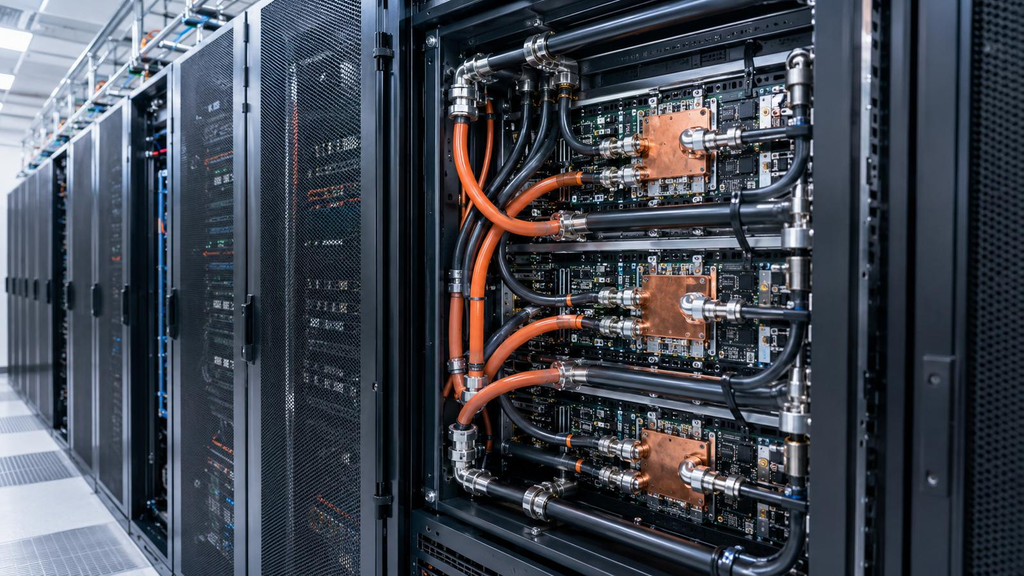
AI data centres require:
- Large quantities of electricity.
- Cooling infrastructure.
- Water or alternative cooling technologies.
- High-capacity communication networks.
- Reliable power supply.
- Land and supporting urban infrastructure.
As AI models become larger and more widely used, demand for computing capacity can increase substantially.
Environmental concerns
1. Electricity demand: Large data centres can increase pressure on regional electricity grids.
2. Water consumption: Cooling systems can place additional pressure on local water resources.
3. Land use: Hyperscale facilities may require large parcels of land and supporting infrastructure.
4. Local externalities: Communities may bear environmental and infrastructure costs without receiving proportionate benefits.
Policy relevance for India
India is attracting major investments in AI infrastructure. The newspaper refers to planned data-centre investments and partnerships involving Indian companies and global technology firms, including projects in Gujarat and Andhra Pradesh.
Such investments can strengthen India’s digital economy, but approvals should consider local environmental and social impacts.
Way forward
- Require environmental and water-impact assessments.
- Promote energy-efficient computing.
- Encourage renewable-energy procurement.
- Prefer closed-loop and low-water cooling systems.
- Ensure transparent reporting of electricity and water use.
- Assess local grid capacity before approvals.
- Establish clear community-benefit and grievance-redressal mechanisms.
UPSC linkage: AI infrastructure; data centres; energy transition; water security; environmental governance; digital economy.
21. UGC equity regulations: Centre considers review committee
GS Paper II – Education and Social Justice
Context
The Union government has informed the Supreme Court that it is considering a special committee to review the University Grants Commission (Promotion of Equity in Higher Education Institutions) Regulations, 2026.
The regulations were intended to address discrimination in higher educational institutions but triggered protests from students who argued that the framework was one-sided.
The Supreme Court had stayed the 2026 regulations in January, describing them as too sweeping and vague. It directed that the UGC Regulations, 2012 would continue to remain in force.
Key policy questions
- How can universities prevent caste-based and other forms of discrimination?
- How should complaints be independently investigated?
- What safeguards are necessary to prevent misuse of grievance procedures?
- How can universities ensure equality while protecting due process?
- What should be the role of institutional committees and independent oversight?
Way forward
Equity regulations must provide clear definitions, fair procedures, confidentiality, protection against retaliation, time-bound grievance redressal and accountability for institutional discrimination.
UPSC linkage: Higher education; UGC; social justice; equality; institutional accountability; educational governance.
22. Immigration and Foreigners (Exemption) Order, 2026: Visa requirement for specified migrants
GS Paper II – Citizenship, Immigration and Internal Security
Context
The Ministry of Home Affairs has amended the Immigration and Foreigners (Exemption) Order, 2025.
The amendment requires members of six specified non-Muslim communities from Afghanistan, Bangladesh and Pakistan, who entered India on or before December 31, 2024, under the relevant exemption, to obtain an appropriate visa for their continued stay.
The six communities are:
- Hindus
- Sikhs
- Buddhists
- Jains
- Parsis
- Christians
Background
The 2025 exemption had provided specified relief from the requirement of valid passports or visas for eligible members of these communities who entered India under the prescribed conditions.
The 2026 amendment aligns the categories with the framework associated with the Citizenship (Amendment) Act, 2019.
Important distinction: CAA and the latest immigration order
The Citizenship (Amendment) Act, 2019 amended the Citizenship Act, 1955, to provide an accelerated route to citizenship for eligible members of the six specified communities from Afghanistan, Bangladesh and Pakistan who entered India on or before December 31, 2014, subject to the law’s conditions.
The latest immigration amendment concerns the regulatory framework for continued stay and specified exemptions. It should not be confused with an automatic grant of citizenship.
Significance
The issue raises questions concerning:
- Citizenship and immigration law.
- Protection of religious minorities.
- Border management.
- Documentation and legal status.
- Humanitarian considerations.
- India’s neighbourhood policy.
UPSC linkage: Citizenship Act, 1955; CAA, 2019; Immigration and Foreigners Act, 2025; migration; refugees; internal security.
23. India’s digital payment and cyber ecosystem: AI-driven attacks on financial institutions
GS Paper III – Cybersecurity and Financial Technology
Context
CERT-In has identified a hacking group referred to as Crafty Falcon, which is alleged to have targeted non-bank lenders, fintech firms and cryptocurrency exchanges using AI-assisted cyberattack tools.
The advisory reportedly names four tools: ARTEX, PentAGI, Cairn and CyberStrikeAI.
Why is this significant?
AI can reduce the time and technical effort required to conduct certain cyber operations. Attackers may use automated tools to identify vulnerabilities, conduct reconnaissance and execute attacks at scale.
Potential risks to India’s financial sector
- Data theft.
- Identity fraud.
- Financial losses.
- Ransomware attacks.
- Disruption of payment services.
- Compromise of customer information.
- Loss of trust in digital financial systems.
Measures required
- Strengthen cybersecurity audits.
- Improve threat intelligence sharing.
- Conduct regular vulnerability assessments.
- Secure APIs and third-party integrations.
- Strengthen incident reporting.
- Develop AI-assisted defensive capabilities.
- Improve coordination between CERT-In, RBI-regulated entities and financial institutions.
UPSC linkage: Cybersecurity; CERT-In; fintech; digital payments; critical information infrastructure.
24. Important additional developments
A. India-Japan-U.S.-Australia naval cooperation
The Indian Navy’s indigenous stealth frigate INS Sahyadri has reached Yokosuka Naval Base in Japan to participate in MALABAR 2026, involving the navies of India, Japan, the United States and Australia.
The exercise seeks to improve operational coordination, interoperability and maritime cooperation.
UPSC relevance: QUAD; Indo-Pacific; maritime security; naval exercises.
B. Telangana: SDRF personnel rescued after boats capsize
Ten personnel of Telangana’s State Disaster Response Force and Fire Department, who went missing after two inflatable boats capsized in the swollen Bethupalli Peddacheruvu in Khammam district, were rescued after a search operation lasting more than 12 hours.
The incident highlights the importance of rescue training, equipment, operational risk assessment and safety protocols for disaster-response personnel.
UPSC relevance: Disaster response; SDRF; institutional capacity; emergency management.
C. Andhra Pradesh: Workers rescued from flash floods
Police rescued 22 workers trapped in flash floods near Routhugudem village in Eluru district. The workers were engaged in bridge construction in an agency area.
UPSC relevance: Flash floods; early warning; infrastructure safety; local disaster response.
D. Supreme Court declines to transfer Tirupati laddu ghee case
The Supreme Court refused to transfer the trial in the Tirupati laddu ghee adulteration case outside Andhra Pradesh. The investigation is being conducted by the Central Bureau of Investigation. The newspaper reports that the CBI and Enforcement Directorate investigations have revealed an alleged ₹250-crore scam involving the supply of fake and synthetic ghee.
UPSC relevance: Food safety; religious institutions and governance; criminal investigation; federal institutions.
E. Supreme Court asks panel to proceed with July 20 police-brutality inquiry
The Supreme Court noted that the High Powered Enquiry Committee had received very few complaints through its online portal concerning alleged police brutality and sexual abuse during the July 20 protests linked to the NEET-UG 2026 paper-leak controversy.
The Court permitted petitioners to forward relevant material, including video clips, and asked the committee to submit its first fact-finding report within a month.
UPSC relevance: Police accountability; right to protest; privacy; freedom of assembly; institutional oversight.
F. Israel’s coalition formation
The newspaper reports that Arab-majority political lists in Israel have backed Gadi Eisenkot to form the next government after the October 27 election. Neither Eisenkot nor Benjamin Netanyahu had secured a clear majority.
UPSC relevance: West Asian politics; coalition governments; Israel-Palestine conflict.
G. Bangladesh: Sheikh Hasina says she plans to return
Former Bangladesh Prime Minister Sheikh Hasina has told the Associated Press that she intends to return to Bangladesh in December despite having been sentenced to death in connection with the crackdown on protesters.
UPSC relevance: India-Bangladesh relations; political stability; extradition and asylum-related questions.
H. Hong Kong: Joshua Wong receives additional prison sentence
A Hong Kong court has sentenced pro-democracy activist Joshua Wong to an additional ten years in prison under a Beijing-imposed national security law.
UPSC relevance: China; Hong Kong’s political status; civil liberties; national security legislation.
Prelims Quick Revision: Important Facts
| Topic | Key fact |
|---|---|
| Article 21 | Protection of life and personal liberty |
| Article 22(2) | Production of arrested person before Magistrate within 24 hours, excluding necessary journey time |
| Article 324 | Superintendence, direction and control of elections vested in ECI |
| Article 325 | One general electoral roll; no exclusion on specified discriminatory grounds |
| Article 326 | Adult suffrage for Lok Sabha and State Assembly elections |
| Form 6 | Application for inclusion of name in electoral roll |
| Form 7 | Objection to inclusion or application for deletion of an existing entry |
| Form 8 | Application for correction, shifting of residence and related changes |
| Agnipath | Revised arrangement adds two years of engagement for the 75% not absorbed after four years |
| Census 2027 | First digital Census, with mobile-based enumeration and real-time monitoring |
| CMMS | Census Management and Monitoring System |
| NPCI | National Payments Corporation of India |
| MDR | Merchant Discount Rate |
| P2P | Person-to-Person payment |
| P2M | Person-to-Merchant payment |
| CERT-In | Indian Computer Emergency Response Team |
| Agentic AI | AI systems capable of planning and executing multi-step tasks |
| NavIC | India’s regional satellite navigation system |
| NVS-03 | Next-generation navigation satellite |
| Pralay | Indigenous quasi-ballistic missile developed by DRDO |
| AERB | Atomic Energy Regulatory Board |
| SHANTI Act | Sustainable Harnessing and Advancement of Nuclear Energy for Transforming India Act, 2025 |
| NPPA | National Pharmaceutical Pricing Authority |
| GI tag | Hupari Silver Craft received a GI tag in 2024 |
| Bab-el-Mandeb | Strategic maritime passage connecting the Red Sea with the Gulf of Aden |
| Strait of Hormuz | Strategic passage connecting the Persian Gulf with the Gulf of Oman |
| MALABAR | Naval exercise involving India, Japan, the U.S. and Australia |
Mains Answer Writing Practice
GS Paper II
- The Supreme Court’s interpretation of the 24-hour arrest safeguard reinforces the constitutional protection of personal liberty. Discuss its significance in preventing arbitrary detention and custodial abuse.
- Electoral-roll revision is essential for ensuring free and fair elections. However, wrongful deletion of eligible voters can undermine universal adult suffrage. Examine the institutional and procedural safeguards required.
- Examine the significance of digital electoral rolls in improving transparency, accessibility and accountability in the electoral process.
- Discuss the constitutional and federal challenges associated with delimitation in India. How can the country balance population-based representation with the interests of States?
- Evaluate the challenges involved in designing effective equity regulations for higher educational institutions while ensuring due process and institutional accountability.
- Discuss the importance of a comprehensive national strategy for cancer care that goes beyond the regulation of medicine prices.
GS Paper III
- The transition to a digital Census can improve administrative efficiency and data quality, but it also creates new challenges concerning privacy, cybersecurity and digital exclusion. Discuss.
- Examine the economic and regulatory challenges involved in ensuring the long-term sustainability of India’s UPI ecosystem.
- Agentic AI creates a new category of cybersecurity risks because of its ability to plan, execute and delegate tasks autonomously. Discuss the regulatory and technical safeguards required.
- Assess the role of indigenous satellite navigation and missile technologies in strengthening India’s strategic autonomy.
- Discuss the opportunities and risks associated with private-sector participation in India’s nuclear energy programme.
- The expansion of AI data centres creates a growing intersection between digital infrastructure, energy security and water governance. Examine.
- Explain how informal home-based industries can contribute to women’s economic empowerment while simultaneously reproducing gender-based inequalities.
- India’s vulnerability to disruptions in the Strait of Hormuz and the Red Sea highlights the need for a comprehensive energy and maritime security strategy. Discuss.
- Examine the importance of an integrated, multi-hazard approach to disaster management in the context of cyclones, landslides and flash floods.
Essay themes
- Technology can strengthen governance, but cannot substitute for accountability.
- Economic empowerment is incomplete without control over resources and decision-making.
- Democracy requires not only elections but also the integrity of electoral institutions.
- Energy security is an essential component of strategic autonomy.
- Public health is a measure of social justice, not merely a healthcare outcome.
Prelims Practice: 10 MCQs
1. With reference to Article 22(2) of the Constitution, consider the following statements:
- An arrested person must be produced before the nearest Magistrate within 24 hours of arrest.
- The time necessary for the journey from the place of arrest to the Magistrate’s court is excluded.
- The 24-hour period can begin only after the police formally record the arrest.
Which of the statements given above is/are correct?
(a) 1 and 2 only
(b) 2 and 3 only
(c) 1 and 3 only
(d) 1, 2 and 3
2. Consider the following statements about electoral-roll forms:
- Form 6 is used for inclusion of a name in the electoral roll.
- Form 7 is used for objections to inclusion or deletion of an existing entry.
- Form 8 is used for correction and shifting of residence.
Which of the statements given above is/are correct?
(a) 1 only
(b) 1 and 2 only
(c) 2 and 3 only
(d) 1, 2 and 3
3. Consider the following statements regarding the Census Management and Monitoring System:
- It is intended to support real-time monitoring of Census operations.
- It can help identify data-quality concerns and operational bottlenecks.
- It replaces the need for field enumerators.
Which of the statements given above is/are correct?
(a) 1 and 2 only
(b) 2 and 3 only
(c) 1 and 3 only
(d) 1, 2 and 3
4. Merchant Discount Rate (MDR) is best described as:
(a) A tax imposed on all digital transactions by the Union government.
(b) A charge associated with processing digital payments received by merchants.
(c) A fee charged only on person-to-person transfers.
(d) An interest rate charged by the RBI on bank lending.
5. Which of the following best describes Agentic AI?
(a) AI systems that can only classify images.
(b) AI systems that only generate text in response to a prompt.
(c) AI systems capable of planning and executing multi-step tasks using tools and external systems.
(d) AI systems that function without any computational infrastructure.
6. NavIC is associated with:
(a) India’s regional satellite navigation system.
(b) India’s deep-sea exploration programme.
(c) India’s human spaceflight programme.
(d) India’s missile defence system.
7. With reference to the Atomic Energy Regulatory Board, consider the following statements:
- It is associated with nuclear and radiation safety regulation.
- Its role includes monitoring compliance with safety requirements.
- It is responsible for conducting all nuclear power generation operations in India.
Which of the statements given above is/are correct?
(a) 1 and 2 only
(b) 2 and 3 only
(c) 1 and 3 only
(d) 1, 2 and 3
8. Which of the following are important considerations in making cancer treatment affordable?
- Medicine prices
- Diagnostic costs
- Hospitalisation and follow-up care
- Out-of-pocket expenditure
Select the correct answer using the code below:
(a) 1 and 2 only
(b) 1, 2 and 3 only
(c) 2, 3 and 4 only
(d) 1, 2, 3 and 4
9. The Strait of Hormuz connects:
(a) The Red Sea and the Mediterranean Sea.
(b) The Persian Gulf and the Gulf of Oman.
(c) The Gulf of Aden and the Arabian Sea.
(d) The Black Sea and the Mediterranean Sea.
10. With reference to gerrymandering, consider the following statements:
- Packing involves concentrating a particular voting group in a limited number of constituencies.
- Cracking involves splitting a voting group across several constituencies.
- Gerrymandering is intended to improve the neutrality of electoral boundaries.
Which of the statements given above is/are correct?
(a) 1 and 2 only
(b) 2 and 3 only
(c) 1 and 3 only
(d) 1, 2 and 3
Answer Key with Explanations
| Question | Answer | Explanation |
|---|---|---|
| 1 | (a) | Article 22(2) requires production within 24 hours, excluding necessary journey time. The Supreme Court has held that the period begins when liberty is effectively curtailed, not when the formal arrest is recorded. |
| 2 | (d) | Form 6 concerns inclusion; Form 7 concerns objections/deletion; Form 8 concerns correction and shifting-related changes. |
| 3 | (a) | CMMS is intended to monitor Census operations and identify gaps. It does not replace enumerators. |
| 4 | (b) | MDR is a charge associated with processing merchant payments. |
| 5 | (c) | Agentic AI can plan, use tools and execute multi-step tasks with a degree of autonomy. |
| 6 | (a) | NavIC is India’s regional satellite navigation system. |
| 7 | (a) | AERB is associated with nuclear and radiation safety regulation; it does not operate all nuclear power plants. |
| 8 | (d) | Comprehensive affordability requires attention to medicines, diagnostics, hospitalisation and out-of-pocket costs. |
| 9 | (b) | The Strait of Hormuz connects the Persian Gulf with the Gulf of Oman. |
| 10 | (a) | Packing and cracking are methods of manipulating constituency boundaries. Gerrymandering undermines electoral neutrality. |
Conclusion
The developments reported on 6 November 2026 underline three important governance priorities for India: constitutional accountability, technological capacity with adequate safeguards, and resilience in the face of economic and geopolitical uncertainty.
The Supreme Court’s ruling on arrest and detention reinforces the importance of personal liberty. The electoral-roll debate highlights the need for transparent and verifiable democratic processes. The digital Census, Agentic AI guidelines, UPI policy debate and indigenous space and defence technologies demonstrate the growing role of technology in governance and national security. Meanwhile, cancer-care affordability, women’s informal labour and disaster-related losses remind us that development must be measured by its impact on people’s lives.
For UPSC preparation, the central task is to connect these developments with their constitutional, institutional, economic, technological and social dimensions rather than study them as isolated news events.