

1. Introduction
The Indus Valley Civilisation, also known as the Harappan Civilisation, was one of the earliest urban civilisations of the ancient world. It developed in the north-western part of the Indian subcontinent during the Bronze Age and flourished approximately between 2600 BCE and 1900 BCE in its Mature Harappan phase.
It was contemporary with other major Bronze Age civilisations, particularly Mesopotamia and ancient Egypt.
The Harappan Civilisation is distinguished by its extensive geographical distribution, well-planned cities, sophisticated drainage systems, standardised weights and measures, specialised craft production and long-distance trade networks.
Unlike many other ancient civilisations, the Harappans did not leave behind decipherable historical records. Their script remains undeciphered, and consequently, our understanding of their political institutions, religious beliefs and social organisation depends primarily on archaeological evidence.
The civilisation is particularly significant because it represents the emergence of a highly organised urban society in the Indian subcontinent, demonstrating advanced knowledge of architecture, engineering, water management, metallurgy, craft production and commercial exchange.
1.1 Why is it called the Indus Valley Civilisation?
The civilisation was initially identified through archaeological discoveries in the Indus River Valley, particularly at Harappa and Mohenjo-daro, both located in present-day Pakistan.
The term Indus Valley Civilisation was therefore used to describe the newly discovered archaeological culture.
However, subsequent excavations revealed that its geographical distribution extended considerably beyond the Indus Valley.
Major settlements were discovered in present-day Gujarat, Rajasthan, Haryana, Punjab, western Uttar Pradesh and other regions.
Consequently, the term Harappan Civilisation became increasingly common because Harappa was the first major site to be excavated and because the civilisation extended across a much wider geographical region.
Both terms are used interchangeably in historical literature.
1.2 Chronological Framework
The Harappan Civilisation did not emerge suddenly as a fully developed urban civilisation. It evolved through several stages of cultural development.
For historical understanding, it is broadly divided into three major phases:
| Phase | Approximate chronology | Major characteristics |
|---|---|---|
| Early Harappan | c. 3200–2600 BCE | Agricultural settlements, fortified towns, regional cultural traditions and increasing craft specialisation |
| Mature Harappan | c. 2600–1900 BCE | Fully developed urban civilisation, standardisation, extensive trade and sophisticated town planning |
| Late Harappan | c. 1900–1300 BCE | Decline of major urban centres, regionalisation, changing settlement patterns and transformation of material culture |
Note: These are conventional broad dates. Chronological boundaries vary across archaeological regions and individual sites. Some settlements have evidence of occupation extending beyond the dates shown.
The Mature Harappan phase represents the period of greatest urban development.
1.3 Contemporary Civilisations
The Harappan Civilisation was part of a wider network of Bronze Age civilisations.
| Civilisation | Major geographical region | Broad period |
|---|---|---|
| Mesopotamian Civilisation | Tigris-Euphrates region | From the fourth millennium BCE onwards |
| Egyptian Civilisation | Nile Valley | From the late fourth millennium BCE onwards |
| Harappan Civilisation | North-western Indian subcontinent | Mature phase c. 2600–1900 BCE |
| Chinese Bronze Age cultures | Yellow River region and adjoining areas | From the second millennium BCE onwards |
The Harappans maintained commercial and cultural contacts with regions of West Asia, particularly Mesopotamia and the Persian Gulf.
2. Discovery and Archaeological Excavations
The discovery of the Harappan Civilisation was a landmark development in the study of Indian history.
Before the 1920s, the antiquity of Indian civilisation was often discussed primarily through literary and religious traditions.
The excavations at Harappa and Mohenjo-daro established the existence of a highly developed urban civilisation in the Indian subcontinent during the third millennium BCE.
2.1 Early Discoveries
Alexander Cunningham
Alexander Cunningham, the first Director-General of the Archaeological Survey of India, visited Harappa during the nineteenth century.
He reported the discovery of an ancient seal from the site in the 1870s. However, the significance of the civilisation was not fully recognised at that time.
The archaeological remains of Harappa were also damaged through the removal of ancient bricks for railway construction.
2.2 Excavation of Harappa – 1921
<AsyncImage query=”Harappa archaeological site ancient Indus civilization excavated brick structures Pakistan” aspectRatio=”16:9″ width=”100%”/>
In 1921, Daya Ram Sahni conducted systematic excavations at Harappa in present-day Punjab, Pakistan.
The excavations revealed the remains of an ancient urban settlement containing:
- Brick structures.
- Seals.
- Pottery.
- Terracotta objects.
- Stone and metal artefacts.
- Evidence of an organised settlement.
The discoveries indicated the existence of a previously unknown ancient civilisation.
2.3 Excavation of Mohenjo-daro – 1922
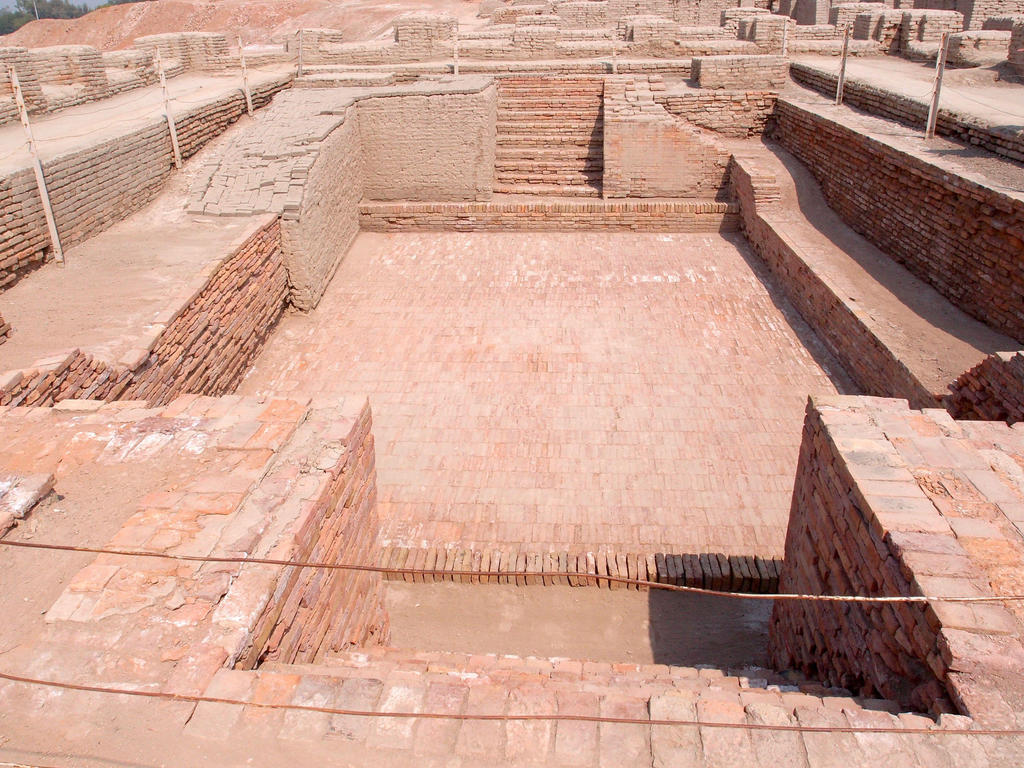
In 1922, Rakhal Das Banerji (R.D. Banerji) discovered and began excavating the ancient site of Mohenjo-daro in present-day Sindh, Pakistan.
The site revealed an exceptionally developed urban settlement containing:
- The Great Bath.
- Large residential structures.
- Advanced drainage systems.
- Streets and lanes.
- Wells.
- Seals and other artefacts.
The discoveries established the existence of a major Bronze Age civilisation.
2.4 Official Announcement – 1924
In 1924, Sir John Marshall, the then Director-General of the Archaeological Survey of India, officially announced the discovery of the Indus Valley Civilisation.
This announcement brought international attention to the archaeological importance of Harappa and Mohenjo-daro.
2.5 Important Archaeologists and Their Contributions
| Archaeologist | Major contribution |
|---|---|
| Alexander Cunningham | Early identification and reporting of Harappa artefacts |
| Daya Ram Sahni | Excavations at Harappa in 1921 |
| R.D. Banerji | Discovery and excavation of Mohenjo-daro in 1922 |
| John Marshall | Official announcement of the civilisation in 1924 |
| M.S. Vats | Important excavations at Harappa |
| Ernest Mackay | Excavations at Mohenjo-daro and Chanhudaro |
| N.G. Majumdar | Archaeological explorations in Sindh |
| Sir Mortimer Wheeler | Further excavations at Harappa and development of archaeological interpretations |
| B.B. Lal | Important contributions to Indian protohistoric archaeology, including Kalibangan |
| S.R. Rao | Excavations at Lothal |
| J.P. Joshi | Important excavations and explorations, including Dholavira |
| R.S. Bisht | Extensive excavations at Dholavira |
The contributions of these archaeologists helped establish the geographical extent, chronology and material characteristics of the Harappan Civilisation.
3. Origin and Evolution of the Harappan Civilisation
The Harappan Civilisation did not emerge independently or suddenly during the Mature Harappan phase.
It developed gradually through a series of agricultural, pastoral and early settlement cultures in the north-western subcontinent.
The evolution of the civilisation is closely associated with the development of agriculture, settled communities, craft production, exchange networks and increasingly complex social organisation.
3.1 Pre-Harappan Background
The north-western region of the Indian subcontinent witnessed the development of agricultural communities long before the emergence of the Mature Harappan cities.
One of the most important early agricultural settlements was Mehrgarh, located in present-day Balochistan, Pakistan.
Mehrgarh provides evidence of:
- Early agriculture.
- Domestication of animals.
- Mud-brick houses.
- Food storage.
- Pottery and craft production in later phases.
- Increasingly complex settlement patterns.
These developments formed part of the broader cultural background of the later Harappan urban civilisation.
However, the Harappan Civilisation was not simply the expansion of Mehrgarh. It emerged through interactions among several regional cultural traditions.
3.2 Early Harappan Phase (c. 3200–2600 BCE)
The Early Harappan phase witnessed the development of increasingly organised agricultural and craft-producing communities.
Major characteristics
- Growth of settled agricultural villages and towns.
- Development of fortified settlements in several regions.
- Increasing specialisation in pottery production.
- Expansion of craft activities.
- Development of regional trade networks.
- Increasing standardisation of certain material forms.
- Emergence of settlement hierarchies.
Important archaeological cultures and traditions associated with this broader phase include:
- Kot Diji culture.
- Amri culture.
- Sothi-Siswal tradition.
- Early Ravi phase at Harappa.
- Damb Sadaat culture.
Kot Diji
Kot Diji is an important Early Harappan archaeological site in Sindh, Pakistan.
It is associated with fortified settlement remains and distinctive pottery traditions.
The site provides evidence of the transition towards more complex settlements preceding the Mature Harappan urban phase.
Amri
Amri, located in Sindh, provides evidence of early settlement traditions and regional cultural developments preceding the Mature Harappan phase.
Sothi-Siswal
The Sothi-Siswal tradition is associated with parts of Rajasthan and Haryana.
It provides important evidence of the regional cultural background of Harappan developments in north-western India.
3.3 Mature Harappan Phase (c. 2600–1900 BCE)
The Mature Harappan phase represents the period of greatest urban development.
During this period, several large cities emerged, supported by agricultural production, specialised crafts and extensive commercial networks.
Major characteristics
- Planned urban settlements.
- Standardised bricks and weights.
- Developed drainage systems.
- Extensive use of seals.
- A widely shared script.
- Specialised craft production.
- Long-distance trade.
- Monumental and public architecture.
- Regional integration through common material traditions.
Major urban centres included:
- Harappa.
- Mohenjo-daro.
- Dholavira.
- Rakhigarhi.
- Ganweriwala.
- Kalibangan.
The civilisation developed a distinctive urban culture while retaining regional variations in architecture, settlement planning and material production.
3.4 Late Harappan Phase (c. 1900–1300 BCE)
Around 1900 BCE, the Mature Harappan urban system began undergoing major changes.
Large cities declined, long-distance trade networks weakened, and several settlements were abandoned or transformed.
However, the decline of urban centres did not mean the complete disappearance of the Harappan population or culture.
Several communities continued to inhabit different parts of the subcontinent, developing regional cultural traditions.
Major characteristics
- Decline of major urban centres.
- Reduction in standardisation.
- Disappearance or reduced use of certain types of seals.
- Changes in pottery traditions.
- Decline of long-distance commercial networks.
- Expansion of smaller rural settlements.
- Movement of populations towards eastern and southern regions in some areas.
Important Late Harappan cultural traditions include:
- Cemetery H culture in the Punjab region.
- Jhukar culture in Sindh.
- Late Harappan traditions in Haryana and western Uttar Pradesh.
- Regional developments in Gujarat.
The Late Harappan phase is therefore better understood as a period of deurbanisation and cultural transformation, rather than the sudden extinction of a civilisation.
4. Geographical Extent of the Harappan Civilisation
The geographical extent of the Harappan Civilisation was exceptionally large.
It extended across a vast area of the north-western Indian subcontinent, covering parts of present-day India, Pakistan and Afghanistan.
The civilisation was not confined to the Indus River Valley. Its settlements were distributed across several river systems, coastal areas, semi-arid regions and inland plains.
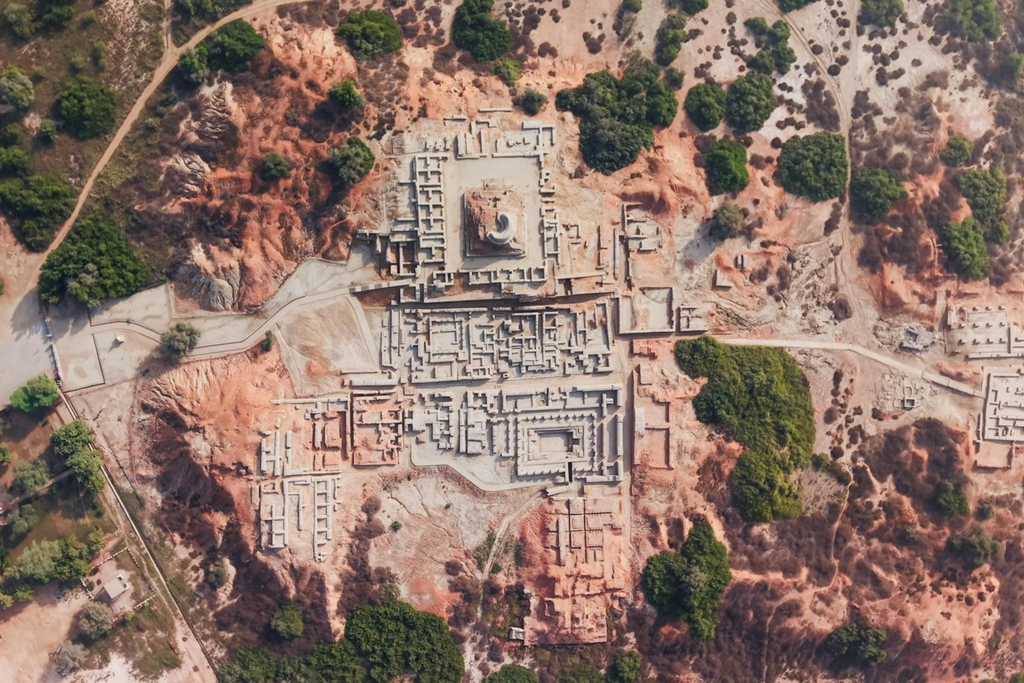
4.1 Geographical Boundaries
The conventional extreme geographical limits are often represented by the following sites:
| Direction | Important site | Present location |
|---|---|---|
| North | Manda | Jammu and Kashmir, India |
| South | Daimabad | Maharashtra, India |
| East | Alamgirpur | Uttar Pradesh, India |
| West | Sutkagen Dor | Balochistan, Pakistan |
These sites represent the broad geographical distribution of Harappan cultural remains. They should not be interpreted as precise political borders.
4.2 Major Geographical Regions
A. Indus Valley Region
The Indus River system formed the core geographical region of the civilisation.
Important sites included Harappa, Mohenjo-daro and other settlements along the Indus and its tributaries.
B. Ghaggar-Hakra Region
A large concentration of Harappan settlements has been identified along the Ghaggar-Hakra palaeochannel system, particularly in present-day Haryana and Rajasthan and adjoining regions.
Important sites include:
- Rakhigarhi.
- Kalibangan.
- Banawali.
- Bhirrana.
- Kunal.
The precise relationship between the ancient river systems and the modern Ghaggar-Hakra channels is complex and remains an important area of research.
C. Gujarat Region
Gujarat witnessed several important Harappan settlements.
Important sites include:
- Dholavira.
- Lothal.
- Surkotada.
- Rangpur.
- Desalpur.
- Rojdi.
These settlements demonstrate the importance of maritime trade, craft production and adaptation to semi-arid environments.
D. North-Western Frontier Region
Harappan cultural connections extended towards present-day Afghanistan.
Shortugai in Afghanistan is particularly important because of its association with the Harappan trading network and access to lapis lazuli resources.
4.3 Importance of Geographical Distribution
The geographical spread of the civilisation demonstrates:
- The development of extensive communication networks.
- Adaptation to different ecological conditions.
- Expansion of agriculture and craft production.
- Integration of settlements through trade.
- The existence of regional centres within a wider cultural system.
The large geographical distribution also makes the Harappan Civilisation one of the most extensive Bronze Age cultural traditions of the ancient world.
5. Important Harappan Archaeological Sites
For UPSC preparation, the identification of important Harappan sites and their distinctive discoveries is extremely important.
5.1 Harappa
Location: Punjab, Pakistan, on the Ravi River region.
Harappa was the first major Harappan site to be systematically excavated and gave its name to the civilisation.
Important discoveries
- Fortified settlement remains.
- Brick structures.
- Granary-like structures or brick platforms, whose precise function remains debated.
- Seals and sealings.
- Pottery.
- Terracotta figurines.
- Evidence of craft production.
- Cemetery R-37.
- Cemetery H, associated with a Late Harappan cultural phase.
Historical significance
Harappa provides important evidence of urban planning, burial practices, craft production and the transition from the Mature to Late Harappan phases.
5.2 Mohenjo-daro
<AsyncImage query=”Mohenjo daro great bath Indus Valley Civilization archaeological site aerial” aspectRatio=”16:9″ width=”100%”/>
Location: Sindh, Pakistan, near the Indus River.
Mohenjo-daro, meaning Mound of the Dead in Sindhi, was one of the largest and most important urban centres of the Harappan Civilisation.
Important discoveries
- Great Bath.
- Large residential structures.
- Advanced drainage systems.
- Numerous wells.
- Assembly-hall-like structures.
- Seals and inscriptions.
- Bronze dancing girl.
- Priest-King sculpture.
- Stone sculptures.
- Evidence of craft production.
Historical significance
Mohenjo-daro provides exceptional evidence of sophisticated urban planning, water management and residential architecture.
5.3 Dholavira
<AsyncImage query=”Dholavira Harappan civilization excavated city stone fortifications reservoirs Gujarat India” aspectRatio=”16:9″ width=”100%”/>
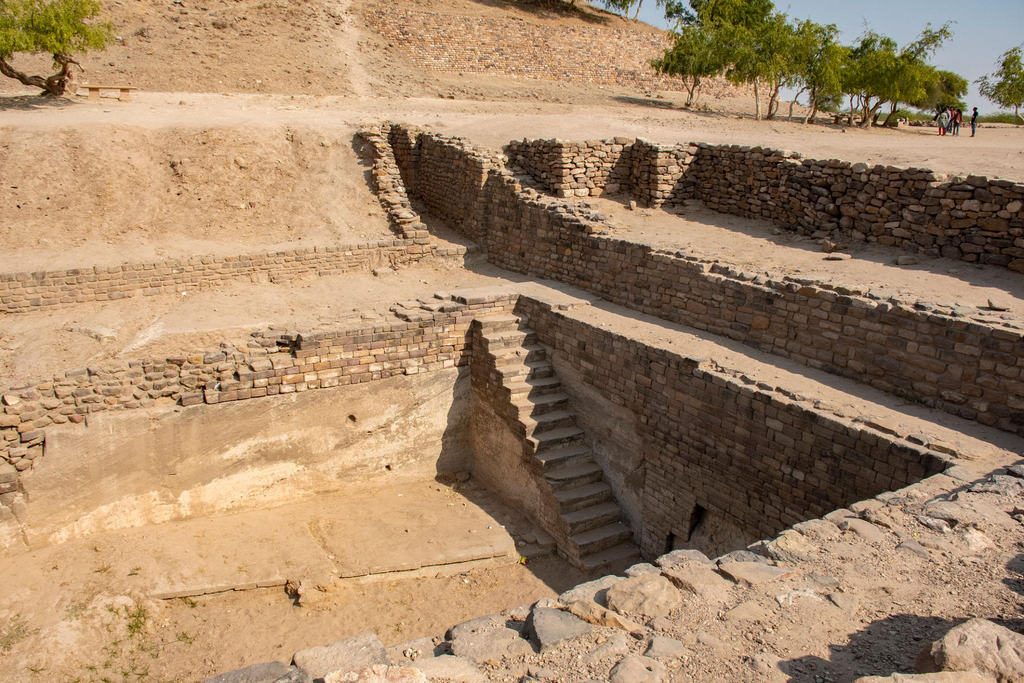
Location: Khadir Bet, Kutch district, Gujarat.
Dholavira is one of the most important Harappan settlements in India.
It was excavated extensively under the direction of R.S. Bisht.
Important discoveries
- Fortified urban settlement.
- Sophisticated water reservoirs.
- Water conservation and drainage arrangements.
- Distinctive urban divisions.
- Large stone structures.
- A large signboard containing Harappan signs.
- Cemetery and memorial structures.
- Bead-manufacturing evidence.
Distinctive urban divisions
The city had a complex layout consisting of:
- Castle.
- Bailey.
- Middle Town.
- Lower Town.
- Ceremonial Ground.
- Water reservoirs and associated structures.
Dholavira is particularly important for its sophisticated water management system, developed to cope with the arid environment of Kutch.
It was inscribed on the UNESCO World Heritage List in 2021.
5.4 Lothal
<AsyncImage query=”Lothal Harappan archaeological site dockyard basin Gujarat India aerial view” aspectRatio=”16:9″ width=”100%”/>
Location: Gujarat, near the Gulf of Khambhat region.
Lothal is an important Harappan settlement associated with maritime trade and craft production.
Important discoveries
- A large basin traditionally identified as a dockyard.
- Warehouse-like structures.
- Bead-making workshops.
- Shell-working evidence.
- Seals.
- Weights and measures.
- Pottery.
- Evidence of trade connections.
Historical significance
Lothal provides important evidence of the Harappans’ commercial and craft activities.
The basin is traditionally interpreted as a dockyard, but its precise function has been debated by scholars. Therefore, it is appropriate to describe it as a structure commonly identified as a dockyard rather than an interpretation beyond dispute.
5.5 Kalibangan
<AsyncImage query=”Kalibangan Harappan archaeological site Rajasthan excavated ruins ploughed field” aspectRatio=”16:9″ width=”100%”/>
Location: Hanumangarh district, Rajasthan, on the ancient Ghaggar river system.
Kalibangan is particularly important for its evidence relating to agricultural practices and ritual structures.
Important discoveries
- Evidence of a ploughed agricultural field.
- Fire-altars or structures interpreted as fire altars.
- Fortified settlement.
- Early and Mature Harappan occupational phases.
- Distinctive pottery.
- Evidence of brick structures.
- Burial remains.
Historical significance
The ploughed field is one of the most important discoveries at Kalibangan.
Its furrows indicate the use of a distinctive agricultural arrangement, often interpreted as evidence of mixed cropping or different crop rows.
The site also provides evidence of ritual practices, although the precise interpretation of certain structures remains debated.
5.6 Rakhigarhi
<AsyncImage query=”Rakhigarhi Harappan civilisation archaeological excavation Haryana India mound site” aspectRatio=”16:9″ width=”100%”/>
Location: Hisar district, Haryana.
Rakhigarhi is one of the largest known Harappan urban settlements and the largest major Harappan site identified in present-day India.
Important discoveries
- Extensive settlement remains.
- Fortifications.
- Pottery.
- Seals.
- Beads and ornaments.
- Burial remains.
- Evidence of craft activities.
- Human skeletal remains.
Historical significance
Rakhigarhi demonstrates the extensive development of Harappan urban culture in the Ghaggar-Hakra region.
It is also important for the study of population history and the biological remains of Harappan communities.
5.7 Banawali
Location: Fatehabad district, Haryana.
Important discoveries
- Early and Mature Harappan cultural remains.
- Fortified settlement.
- Distinctive pottery.
- Beads and other craft objects.
- A terracotta model commonly identified as a plough.
Banawali is important for understanding the agricultural and settlement patterns of the Harappan civilisation in Haryana.
5.8 Chanhudaro
Location: Sindh, Pakistan.
Chanhudaro was an important craft-production centre.
Important discoveries
- Bead-making workshops.
- Shell-working evidence.
- Metalworking.
- Seals.
- Pottery.
- Evidence of specialised craft activities.
The site is particularly significant because it provides evidence of craft specialisation within the Harappan urban economy.
5.9 Surkotada
Location: Kutch district, Gujarat.
Important discoveries include:
- Fortified settlement.
- Harappan pottery.
- Animal remains.
- Evidence of settlement occupation during different phases.
Surkotada is frequently discussed in connection with claims of horse remains. However, the identification and interpretation of these remains have been disputed.
It is important not to treat the presence of domesticated horses in the Mature Harappan Civilisation as conclusively established.
5.10 Alamgirpur
Location: Meerut district, Uttar Pradesh.
Alamgirpur represents the eastern geographical extension of Harappan cultural remains.
Important findings include:
- Pottery.
- Beads.
- Terracotta objects.
- Settlement remains.
- Evidence of craft activities.
The site is important for understanding the eastern spread of Harappan cultural traditions.
5.11 Manda
Location: Jammu region, India, near the Chenab River.
Manda represents the northern geographical extension of Harappan cultural remains.
It is important for understanding the northern distribution of the civilisation.
5.12 Shortugai
Location: Northern Afghanistan.
Shortugai was an important Harappan-related settlement associated with trade and access to valuable mineral resources, particularly lapis lazuli.
It demonstrates the expansion of Harappan commercial connections beyond the core urban region.
5.13 Other Important Sites
| Site | Present location | Important feature |
|---|---|---|
| Ganweriwala | Cholistan, Pakistan | Major Harappan settlement; relatively less excavated |
| Rangpur | Gujarat | Late Harappan occupation and rice-related evidence |
| Desalpur | Gujarat | Fortified settlement |
| Rojdi | Gujarat | Harappan regional settlement |
| Kunal | Haryana | Early Harappan cultural remains |
| Bhirrana | Haryana | Early settlement sequence; chronology debated |
| Nageshwar | Gujarat | Shell-working centre |
| Balakot | Balochistan, Pakistan | Coastal settlement and shell-working |
| Sutkagen Dor | Balochistan, Pakistan | Western geographical extent and trade connections |
| Daimabad | Maharashtra | Southern geographical extent of Harappan-related remains; important regional Chalcolithic context |
UPSC point: Daimabad represents the southernmost limit commonly cited for the broad distribution of Harappan cultural remains. It should not be assumed that it was a major Mature Harappan urban centre comparable to Mohenjo-daro or Harappa.
6. Town Planning and Urban Architecture
One of the most remarkable features of the Harappan Civilisation was its advanced urban planning.
The Harappan cities demonstrate considerable attention to settlement layout, street organisation, drainage, construction materials and water management.
The urban centres were not merely collections of houses. They were systematically organised settlements reflecting sophisticated planning and engineering practices.
6.1 Grid Pattern of Town Planning
Many Harappan settlements followed an organised street layout.
The principal streets frequently intersected at approximately right angles, creating a grid-like pattern.
Important characteristics
- Main streets and secondary lanes.
- Planned residential blocks.
- Organised house layouts.
- Drainage channels along streets.
- Division of certain urban areas into different sectors.
- Fortifications at several settlements.
The grid pattern is particularly evident at Mohenjo-daro and Harappa, although urban planning varied between sites.
6.2 Citadel and Lower Town
Several major Harappan settlements displayed a division between elevated fortified areas and lower residential areas.
The elevated section is conventionally described as the Citadel, while the larger residential area is referred to as the Lower Town.
Citadel
- Generally situated on an elevated or fortified platform.
- Contained important public or specialised structures.
- Included major architectural complexes.
- Was sometimes surrounded by defensive walls.
Lower Town
- Contained residential structures.
- Included streets, houses and drainage systems.
- Accommodated a substantial part of the urban population.
However, this division was not identical in every Harappan settlement.
Dholavira, for example, had a more complex arrangement of fortified urban divisions.
6.3 Construction Materials
The Harappans made extensive use of:
- Baked bricks.
- Mud bricks.
- Stone.
- Timber.
- Other locally available materials.
The use of baked bricks was particularly prominent in major urban settlements.
A characteristic brick proportion was:
1 : 2 : 4
This represents the conventional ratio of brick thickness, width and length.
Standardised brick dimensions indicate the existence of shared construction practices across different Harappan settlements.
However, the use of materials varied according to local availability. Dholavira, for example, made extensive use of stone.
6.4 Residential Architecture
Harappan houses displayed considerable variation in size and internal arrangement.
Many houses contained:
- A central courtyard.
- Several rooms.
- Bathrooms.
- Drainage outlets.
- Access to wells or nearby water sources.
- Entrances opening into side streets or lanes.
The courtyard provided light and ventilation.
Some larger residential structures suggest differences in household resources and social status.
The presence of bathrooms and drainage arrangements demonstrates the importance attached to water disposal and domestic sanitation.
6.5 Drainage System
<AsyncImage query=”Mohenjo daro ancient Harappan covered brick drainage system street archaeological remains” aspectRatio=”16:9″ width=”100%”/>
The drainage system was one of the most remarkable achievements of Harappan urban engineering.
Major characteristics
- Many houses had bathing spaces.
- Domestic wastewater was channelled into street drains.
- Several drains were constructed using bricks.
- Many major drains were covered with slabs.
- Inspection and cleaning arrangements were provided at different points.
- Wastewater was directed away from residential structures.
The drainage arrangements reveal a considerable degree of planning and attention to urban sanitation.
They also suggest the presence of institutional arrangements for maintaining common urban infrastructure.
6.6 Water Supply and Wells
Wells were an important component of the water supply system at several Harappan settlements.
Mohenjo-daro is particularly known for the large number of wells discovered during excavations.
Water was also obtained from:
- Rivers.
- Seasonal streams.
- Reservoirs.
- Other local sources.
Dholavira is especially important for its elaborate water-harvesting and storage arrangements.
6.7 Public Architecture
Several Harappan structures have traditionally been identified as public or community-related buildings.
These include:
- Great Bath.
- Large halls.
- Warehouse-like structures.
- Granary-like structures.
- Reservoirs.
- Fortifications.
The exact function of some structures remains debated because the Harappan script has not been deciphered.
It is therefore necessary to distinguish between the archaeological remains themselves and the interpretations assigned to them.
7. Great Bath of Mohenjo-daro
<AsyncImage query=”Great Bath Mohenjo daro excavated ancient water tank brick waterproof bitumen” aspectRatio=”16:9″ width=”100%”/>
The Great Bath is one of the most remarkable architectural discoveries of the Harappan Civilisation.
It was discovered at Mohenjo-daro.
Architectural features
- A large rectangular bathing tank.
- Brick construction.
- Carefully arranged steps at both ends.
- Surrounding rooms and structures.
- Waterproofing arrangements involving bitumen.
- Provision for filling and draining water.
The tank was supplied with water through a nearby well.
Its construction indicates advanced knowledge of water management and waterproofing techniques.
Possible significance
The Great Bath is generally interpreted as having served a ritual or ceremonial bathing function.
However, its precise purpose cannot be established with certainty.
Historical importance
The Great Bath demonstrates:
- Advanced hydraulic engineering.
- Skilled brick construction.
- Sophisticated waterproofing.
- The importance of water in Harappan cultural practices.
- The development of specialised public architecture.
8. Granaries and Storage Structures
Large brick platforms and structures at Harappa and other settlements have traditionally been interpreted as granaries or storage facilities.
These structures have been used to argue that agricultural surplus played an important role in supporting urban populations.
However, the identification of particular buildings as granaries remains debated.
Archaeological evidence establishes the existence of large storage or platform-like structures, but their precise functions cannot always be determined conclusively.
This distinction is important for historical interpretation.
9. Agricultural Economy
Agriculture formed the economic foundation of the Harappan Civilisation.
The growth of large urban settlements required a relatively stable supply of food and other agricultural products.
The Harappans practised agriculture in different ecological regions, adapting their crops and cultivation practices to local conditions.
9.1 Major Crops
Important crops included:
- Wheat.
- Barley.
- Peas.
- Sesame.
- Mustard.
- Various pulses.
- Millets in some regions.
- Rice in certain settlements and regional contexts.
The importance of individual crops varied across geographical regions.
9.2 Evidence of Agriculture
Archaeological evidence for agricultural practices includes:
- Charred grains.
- Agricultural tools.
- Grinding stones.
- Storage structures.
- Animal remains.
- Agricultural field features.
The discovery of a ploughed field at Kalibangan is particularly significant.
It provides direct archaeological evidence of agricultural land preparation.
9.3 Agricultural Techniques
The Harappans used different agricultural techniques depending on local environmental conditions.
These included:
- Plough cultivation.
- Seasonal agriculture.
- Irrigation or water-management practices in suitable locations.
- Use of animal power.
- Crop processing and storage.
The terracotta model of a plough from Banawali is an important artefact associated with agricultural practices.
9.4 Cotton Cultivation
The Harappans were among the earliest known communities to cultivate and use cotton.
Evidence of cotton fibres and textile-related activities indicates the development of cotton-based production.
Cotton textiles formed an important component of Harappan material culture and commercial activity.
9.5 Animal Husbandry
The Harappans domesticated and reared several animals.
Important domesticated animals included:
- Humped cattle or zebu.
- Sheep.
- Goats.
- Buffaloes.
- Pigs.
- Dogs.
The humped bull appears frequently in Harappan artefacts and artistic representations.
Animal husbandry contributed to food production, agricultural labour and the supply of raw materials.
The evidence for horses is limited and controversial, and their widespread domestication during the Mature Harappan phase has not been conclusively established.
9.6 Food Habits
Harappan food habits included a combination of agricultural and animal-based products.
Evidence indicates the consumption of:
- Wheat.
- Barley.
- Pulses.
- Fruits.
- Animal products.
- Fish and other aquatic resources.
The availability of different food resources depended on regional ecological conditions.
10. Industries and Craft Production
The Harappan Civilisation displayed considerable specialisation in craft production.
Archaeological discoveries indicate that different settlements developed specialised industries and manufacturing activities.
Important industries included:
- Pottery.
- Bead-making.
- Metalworking.
- Shell-working.
- Stone carving.
- Textile production.
- Jewellery manufacturing.
- Seal-making.
10.1 Pottery
<AsyncImage query=”Harappan civilization painted red pottery black geometric designs archaeological museum” aspectRatio=”16:9″ width=”100%”/>
Pottery was one of the most widespread archaeological materials of the Harappan Civilisation.
Major characteristics
- Pottery was generally made using the potter’s wheel.
- Red pottery with black painted designs was common.
- Geometric and natural motifs were used.
- Various types of vessels were manufactured.
- Some pottery was decorated with animal and plant motifs.
Common designs included:
- Geometric patterns.
- Circles.
- Lines.
- Plants.
- Animals.
- Stylised decorative forms.
Pottery was used for storage, cooking, transportation and other domestic purposes.
10.2 Bead-Making Industry
<AsyncImage query=”Harappan carnelian etched beads agate bead making archaeological artefacts” aspectRatio=”16:9″ width=”100%”/>
Bead-making was one of the most specialised industries of the Harappan Civilisation.
Important raw materials included:
- Carnelian.
- Agate.
- Lapis lazuli.
- Steatite.
- Shell.
- Faience.
Chanhudaro, Lothal and Dholavira provide important evidence of bead production.
The Harappans developed sophisticated techniques for cutting, drilling, polishing and decorating beads.
Carnelian beads were particularly valued in long-distance trade.
10.3 Shell Industry
Shell-working was an important specialised craft.
The Harappans manufactured:
- Bangles.
- Ornaments.
- Decorative objects.
- Inlays.
- Other utilitarian objects.
Important shell-working centres included Nageshwar in Gujarat and Balakot in present-day Pakistan.
10.4 Metalworking
The Harappans were familiar with several metals.
Important metals included:
- Copper.
- Bronze.
- Gold.
- Silver.
- Lead.
- Tin.
Copper and bronze were used to manufacture tools, weapons, ornaments and household objects.
The Harappans were skilled in metal casting and other metallurgical techniques.
Iron was not a characteristic metal of the Harappan Civilisation.
10.5 Bronze Dancing Girl
<AsyncImage query=”Mohenjo daro bronze dancing girl sculpture Harappan artefact museum” aspectRatio=”16:9″ width=”100%”/>
The bronze Dancing Girl is one of the most famous artefacts of the Harappan Civilisation.
It was discovered at Mohenjo-daro.
Characteristics
- Made of bronze.
- Depicts a young female figure.
- One hand is placed on the hip.
- The other arm is decorated with numerous bangles.
- The figure displays a confident standing posture.
The sculpture was manufactured using the lost-wax technique, also known as the cire perdue method.
This technique involves creating a wax model, covering it with a moulding material, heating it to remove the wax and then pouring molten metal into the resulting cavity.
The bronze Dancing Girl demonstrates the technical skill and artistic sensibility of Harappan metalworkers.
10.6 Lost-Wax Technique
The lost-wax technique was an important metallurgical innovation.
It enabled artisans to produce complex metal objects with detailed forms.
The discovery of bronze artefacts at Harappan sites indicates that the technique was known and used during this period.
10.7 Sculpture and Artistic Traditions
Other important artistic objects include:
A. Priest-King
<AsyncImage query=”Mohenjo daro priest king steatite sculpture bust archaeological museum” aspectRatio=”16:9″ width=”100%”/>
A bearded male bust made of steatite was discovered at Mohenjo-daro.
It is popularly known as the Priest-King.
Its distinctive features include:
- A bearded face.
- A headband.
- A patterned robe.
- A composed facial expression.
The identification of the figure as a priest or king is conventional and not conclusively established.
B. Terracotta Figurines
The Harappans produced several terracotta figurines depicting:
- Humans.
- Animals.
- Carts.
- Birds.
- Other objects.
C. Animal Representations
Animals such as bulls, elephants, rhinoceroses, tigers and other creatures appear on seals and artefacts.
These representations provide valuable evidence of artistic practices and the natural environment.
11. Trade and Commercial Relations
Trade was an essential component of the Harappan economy.
The civilisation maintained extensive internal and external commercial networks.
The development of specialised craft production and the availability of surplus agricultural products supported the growth of exchange.
11.1 Internal Trade
Internal trade connected different Harappan settlements and ecological regions.
Important commodities included:
- Agricultural products.
- Copper.
- Stone.
- Shell.
- Beads.
- Pottery.
- Ornaments.
- Other manufactured goods.
Raw materials were often transported over long distances to specialised production centres.
For example, Gujarat provided access to several important raw materials, including shell and agate.
11.2 External Trade
The Harappans maintained commercial connections with regions of West Asia, particularly Mesopotamia.
Mesopotamian records refer to a trading region known as Meluhha, which many scholars associate with the Indus region.
Other important trading regions included:
- Dilmun, generally associated with Bahrain and adjoining Gulf regions.
- Magan, generally associated with Oman and adjoining areas.
Major trade commodities
Harappan exports and traded products included:
- Carnelian beads.
- Shell objects.
- Cotton textiles.
- Timber.
- Ivory.
- Precious and semi-precious stones.
- Other craft products.
Imports or incoming raw materials included:
- Lapis lazuli.
- Copper.
- Tin.
- Silver.
- Other minerals and raw materials.
The precise source of individual commodities varied and is sometimes debated.
11.3 Evidence of External Trade
The evidence for trade includes:
- Harappan seals discovered in Mesopotamian contexts.
- Mesopotamian references to Meluhha.
- Shared commercial artefacts.
- Standardised weights.
- Imported raw materials.
- Harappan artefacts found in West Asian settlements.
- Evidence of maritime and overland trade routes.
11.4 Maritime Trade
The Harappans were familiar with water transport and maritime exchange.
Coastal settlements in Gujarat were particularly important for their commercial connections.
Lothal is traditionally associated with maritime trade because of the large basin discovered at the site.
The interpretation of the basin as a dockyard remains debated, but the wider evidence for maritime trade is well established.
11.5 Transport
The Harappans used different modes of transportation.
These included:
- Bullock carts.
- Boats.
- River transport.
- Coastal maritime transport.
- Pack animals and other forms of overland movement.
Terracotta models of carts and boats provide important evidence of transportation technology.
12. Weights and Measures
Standardised weights and measures were an important feature of Harappan commercial activity.
The discovery of stone weights at several settlements indicates the use of systematic measurement practices.
Major characteristics
- Cubical weights were common.
- Chert was frequently used.
- Standardised weight systems were followed across several settlements.
- Binary progressions were common in smaller denominations.
- Decimal multiples also occurred in certain higher denominations.
Standardisation facilitated trade and exchange between geographically distant settlements.
It also suggests a degree of economic coordination across the civilisation.
13. Harappan Script
<AsyncImage query=”Indus Valley Harappan script inscriptions on steatite seals close up museum” aspectRatio=”16:9″ width=”100%”/>
The Harappan script is one of the most important and unresolved aspects of the civilisation.
Despite extensive archaeological discoveries, the script has not yet been conclusively deciphered.
13.1 Characteristics of the Script
- It consisted of symbols or signs.
- It was used on seals, tablets, pottery and other objects.
- Most inscriptions are relatively short.
- The number of distinct signs depends on the classification method used by scholars.
- The script appears to have been written predominantly from right to left.
- Some inscriptions show changes in direction or other writing arrangements.
The number of signs is generally estimated at several hundred, depending on whether variations and compound signs are counted separately.
13.2 Materials Used
Harappan inscriptions have been found on:
- Steatite seals.
- Copper objects.
- Pottery.
- Tablets.
- Other small artefacts.
The short length of most inscriptions makes decipherment particularly difficult.
13.3 Why Has the Script Not Been Deciphered?
Several factors contribute to the difficulty:
- No conclusively established bilingual inscription has been discovered.
- Most inscriptions are very short.
- The underlying language is unknown.
- The precise relationship between symbols and spoken language remains uncertain.
- There is insufficient long-form textual material for linguistic analysis.
Various theories have been proposed regarding the language represented by the script, including Dravidian-related and other possibilities.
However, no proposal has achieved universal scholarly acceptance.
UPSC significance: The Harappan script remains undeciphered. Therefore, the civilisation is conventionally classified as protohistoric rather than fully historic.
14. Religious Beliefs and Practices
The religious beliefs of the Harappans are reconstructed primarily through seals, figurines, burial practices and other archaeological objects.
Since the script remains undeciphered, interpretations of Harappan religion must be approached cautiously.
Several artefacts have been interpreted as evidence of religious or ritual practices.
14.1 Mother Goddess Interpretation
<AsyncImage query=”Harappan terracotta female figurines Indus civilization archaeological museum” aspectRatio=”16:9″ width=”100%”/>
Several female terracotta figurines have been discovered at Harappan sites.
Some early scholars interpreted these figurines as representations of a Mother Goddess or fertility deity.
This interpretation was based on the assumption that female figures were associated with fertility and agricultural prosperity.
However, the precise religious significance of these figurines remains uncertain.
They may have served religious, domestic, decorative or other purposes.
14.2 Pashupati Seal
<AsyncImage query=”Mohenjo daro Pashupati seal horned seated figure animals Harappan seal museum” aspectRatio=”16:9″ width=”100%”/>
One of the most famous Harappan seals depicts a horned human-like figure seated in a posture surrounded by animals.
The figure is commonly known as the Pashupati Seal.
It was interpreted by John Marshall as a possible representation of a proto-Shiva figure.
The interpretation is based on:
- Horned headdress.
- Seated posture.
- Animals surrounding the figure.
- Possible association with fertility and animal symbolism.
However, identifying the figure directly with the later Hindu deity Shiva remains controversial.
It is more accurate to describe it as a horned figure traditionally interpreted by some scholars as a proto-Shiva or Pashupati representation.
14.3 Worship of Trees and Animals
Certain seals and figurines indicate the symbolic importance of trees and animals.
Important representations include:
- Peepal-like trees.
- Bulls.
- Elephants.
- Tigers.
- Rhinoceroses.
- Other animals.
Some scholars interpret these representations as evidence of symbolic or ritual significance.
However, the precise nature of the beliefs cannot be conclusively established.
14.4 Fire Altars
Structures interpreted as fire altars have been discovered at Kalibangan and some other sites.
These discoveries have led to discussions about ritual fire practices among the Harappans.
However, the interpretation of such structures as religious fire altars is based on archaeological context and remains subject to scholarly examination.
14.5 Great Bath and Ritual Purification
The Great Bath at Mohenjo-daro is frequently interpreted as a structure used for ritual bathing or ceremonial purification.
Its waterproof construction and carefully arranged architecture suggest that it had a special function.
However, its precise religious significance remains unknown.
14.6 Burial Practices
Harappan burial practices provide additional evidence about their beliefs and attitudes towards death.
Different types of burial practices have been identified.
These include:
- Extended inhumation.
- Fractional burial.
- Secondary burial.
- Burial in urns in certain contexts.
- Symbolic or memorial burials.
Cemetery R-37 at Harappa is particularly important.
The variety of burial practices indicates that mortuary customs were not entirely uniform across the civilisation.
15. Social Organisation
The social organisation of the Harappan Civilisation is reconstructed through settlement patterns, residential architecture, burial practices and the distribution of artefacts.
The absence of decipherable written records makes it difficult to establish the exact nature of Harappan social institutions.
15.1 Social Differentiation
Differences in house sizes, settlement locations and access to certain artefacts suggest the existence of social differentiation.
Some households possessed larger residential structures and access to specialised goods.
However, the extent and nature of social hierarchy remain subjects of scholarly discussion.
15.2 Occupational Specialisation
The Harappan economy involved several specialised occupations.
These included:
- Farmers.
- Pastoralists.
- Potters.
- Metalworkers.
- Bead-makers.
- Traders.
- Shell workers.
- Builders.
- Artisans.
- Transport workers.
The development of specialised occupations indicates the complexity of the urban economy.
15.3 Gender and Family
The exact nature of family structures and gender relations cannot be reconstructed conclusively.
Female figurines and other artefacts provide material evidence, but they cannot independently establish the status of women or the structure of gender relations.
15.4 Political Organisation
The political organisation of the Harappan Civilisation remains an important subject of debate.
Unlike Egypt and Mesopotamia, the Harappan archaeological record has not yet revealed unambiguous evidence of:
- Monumental royal tombs.
- Clearly identifiable royal palaces.
- Large royal statues with secure identifications.
- Long inscriptions recording the achievements of kings.
The uniformity of weights, bricks, seals and urban practices suggests considerable coordination.
However, the precise nature of political authority remains uncertain.
Possible interpretations include:
- Centralised political authority.
- Regional administrative centres.
- Collective or corporate forms of governance.
- Networks of influential elites and trading groups.
None of these interpretations can currently be regarded as conclusively established.
16. Science and Technology
The Harappan Civilisation demonstrated considerable technological achievements in several fields.
16.1 Metallurgy
The Harappans possessed knowledge of copper and bronze metallurgy.
They manufactured:
- Tools.
- Weapons.
- Ornaments.
- Domestic objects.
- Sculptures.
Their use of the lost-wax technique demonstrates advanced metalworking capabilities.
16.2 Engineering
Harappan engineering is evident in:
- Planned streets.
- Covered drains.
- Wells.
- Reservoirs.
- Fortifications.
- Brick construction.
- Waterproof structures.
16.3 Water Management
Dholavira provides exceptional evidence of water conservation and storage.
Its reservoirs, channels and water-harvesting arrangements demonstrate adaptation to a water-scarce environment.
16.4 Measurement Systems
Standardised weights, brick proportions and urban planning indicate the use of systematic measurement practices.
16.5 Craft Technology
The production of beads, shell ornaments, pottery and metal objects required specialised technical knowledge.
These activities demonstrate the high level of craft specialisation achieved by Harappan communities.
17. Art and Cultural Achievements
The Harappans developed distinctive artistic traditions.
Their art was primarily expressed through small sculptures, seals, figurines, pottery and ornaments.
17.1 Seals
<AsyncImage query=”Harappan Indus civilization steatite seals unicorn bull script museum collection” aspectRatio=”16:9″ width=”100%”/>
Seals are among the most important artefacts of the Harappan Civilisation.
They were generally made of steatite, although other materials were also used.
Major characteristics
- Square or rectangular shapes were common.
- Animal representations were frequent.
- Harappan signs were often engraved on the surface.
- Many seals had a boss or perforated projection at the back.
Common animal representations included:
- Unicorn-like animal.
- Humped bull.
- Elephant.
- Rhinoceros.
- Tiger.
- Buffalo.
- Other animals.
The so-called unicorn is one of the most frequently represented figures on Harappan seals.
Seals probably served commercial, administrative, identifying or symbolic purposes, although their exact functions remain debated.
17.2 Terracotta Art
Terracotta objects were widely used.
Important examples include:
- Female figurines.
- Male figurines.
- Animal models.
- Toy carts.
- Bird figurines.
- Decorative objects.
These objects provide insights into everyday material culture.
17.3 Stone Sculptures
The Priest-King bust and other stone objects demonstrate the artistic skills of Harappan craftsmen.
17.4 Ornaments
The Harappans manufactured ornaments using:
- Gold.
- Silver.
- Copper.
- Carnelian.
- Agate.
- Lapis lazuli.
- Shell.
- Faience.
- Terracotta.
Beads, bangles, necklaces and other ornaments were important components of Harappan material culture.
17.5 Toys and Games
Several archaeological discoveries suggest the existence of recreational activities.
These include:
- Terracotta carts.
- Animal figurines.
- Small game pieces.
- Dice-like objects.
- Other play-related artefacts.
Such objects provide insights into the everyday cultural life of Harappan communities.
18. Urban Centres and Rural Settlements
The Harappan Civilisation was not exclusively urban.
It consisted of a network of large cities, smaller towns, villages and specialised settlements.
18.1 Major Urban Centres
Important cities included:
- Harappa.
- Mohenjo-daro.
- Dholavira.
- Rakhigarhi.
- Ganweriwala.
These settlements functioned as major centres of administration, craft production, exchange and population concentration.
18.2 Smaller Settlements
Several smaller settlements were located around major urban centres.
They supported:
- Agricultural production.
- Animal husbandry.
- Raw-material extraction.
- Craft production.
- Regional exchange.
The relationship between urban centres and their surrounding settlements was important for sustaining the urban economy.
18.3 Regional Diversity
Although Harappan settlements shared several common characteristics, they were not identical.
For example:
- Dholavira had a distinctive fortified layout and water-management system.
- Lothal was associated with maritime and craft activities.
- Kalibangan provided important evidence of agricultural practices.
- Chanhudaro was known for craft specialisation.
- Rakhigarhi was a major urban centre in the eastern part of the Harappan distribution.
This regional diversity demonstrates that the civilisation was a complex network of settlements rather than a collection of identical cities.
19. Decline of the Harappan Civilisation
The decline of the Mature Harappan urban system began around 1900 BCE.
Major urban centres underwent significant transformations, long-distance trade declined and several settlements were abandoned or reorganised.
The decline of the civilisation has been one of the most debated subjects in ancient Indian history.
Earlier explanations often attempted to identify a single cause. However, modern archaeological research increasingly supports a multi-causal and regionally differentiated explanation.
The decline was gradual and varied across regions.
19.1 Aryan Invasion Theory
One early explanation attributed the decline of the Harappan Civilisation to an invasion by Indo-Aryan groups.
This interpretation was partly influenced by Mortimer Wheeler’s reading of certain skeletal remains at Mohenjo-daro and references in the Rigveda.
However, the archaeological evidence does not establish a widespread violent invasion as the cause of urban decline.
There is no convincing evidence of a single military event that destroyed the entire civilisation.
The invasion theory is therefore not accepted as a sufficient explanation for the decline of the Mature Harappan urban system.
19.2 Climate Change and Weakening Monsoons
Changes in climatic conditions are among the important explanations for the decline.
Evidence indicates that the region experienced weakening monsoon conditions during the period of urban decline.
Reduced rainfall may have affected:
- Agricultural productivity.
- Availability of water.
- River systems.
- Settlement sustainability.
- Food production.
Changes in rainfall patterns may have encouraged populations to shift towards regions with more favourable ecological conditions.
19.3 Changes in River Systems
Changes in river courses and the hydrological environment may have affected several Harappan settlements.
Some settlements depended on rivers and seasonal water systems that underwent changes over time.
Changes in river flow, flooding and sedimentation could have affected agricultural production and settlement stability.
The precise relationship between individual river systems and Harappan settlement decline varies by region.
19.4 Floods
Repeated flooding has been suggested as one of the factors affecting some settlements, particularly Mohenjo-daro.
Flood deposits and evidence of rebuilding indicate that certain urban areas experienced repeated environmental disturbances.
However, floods cannot explain the decline of the entire civilisation because the evidence is geographically uneven.
19.5 Decline of Long-Distance Trade
The Harappans maintained important commercial connections with Mesopotamia and the Persian Gulf region.
Changes in West Asian trade networks during the late third and early second millennia BCE may have affected Harappan economic activities.
A decline in long-distance trade could have weakened:
- Craft specialisation.
- Commercial centres.
- Urban economic networks.
- Access to imported raw materials.
This may have contributed to the transformation of urban settlements.
19.6 Ecological Stress
Environmental changes, pressure on local resources and changes in agricultural productivity may have contributed to settlement transformation.
The sustainability of large urban centres would have depended on reliable access to water, agricultural resources and commercial networks.
Disruptions in these systems may have encouraged the dispersal of urban populations.
19.7 Regional Migration and Settlement Transformation
As major cities declined, some populations shifted towards eastern and southern regions.
Several Late Harappan settlements continued to exist, but their material culture and settlement organisation changed.
This suggests that the Harappan population did not disappear. Instead, the urban system was transformed into a more regionally differentiated pattern of settlement.
19.8 Modern Understanding of the Decline
The decline of the Mature Harappan Civilisation is best understood through the interaction of multiple factors:
- Weakening monsoon conditions.
- Changes in river systems.
- Flooding in certain regions.
- Decline of long-distance trade.
- Economic and ecological stress.
- Transformation of settlement networks.
- Population movement and regionalisation.
No single explanation adequately accounts for the archaeological evidence across the entire geographical extent of the civilisation.
The decline of Harappan urbanism should not be equated with the extinction of the Harappan people or the complete disappearance of their cultural traditions.
20. Legacy and Historical Significance of the Harappan Civilisation
The Harappan Civilisation occupies an important place in the history of the Indian subcontinent.
Its achievements demonstrate the development of a sophisticated urban society during the Bronze Age.
20.1 Early Urbanisation
The Harappans developed some of the earliest large urban centres in South Asia.
Their cities demonstrate planned streets, organised residential areas and sophisticated drainage arrangements.
20.2 Engineering and Water Management
The drainage systems, wells, reservoirs and water-harvesting arrangements demonstrate advanced engineering knowledge.
Dholavira is a particularly important example of environmental adaptation and water conservation.
20.3 Economic Organisation
Agriculture, animal husbandry, craft specialisation and trade formed the foundation of Harappan economic life.
The standardisation of weights and measures indicates considerable coordination in commercial activities.
20.4 Long-Distance Trade
The commercial links with Mesopotamia, Dilmun and Magan demonstrate that the Harappans participated in extensive interregional trade networks.
20.5 Artistic Achievements
The seals, bronze sculptures, pottery, terracotta figurines and ornaments demonstrate sophisticated artistic and craft traditions.
20.6 Regional Cultural Development
The Harappan Civilisation contributed to the development of regional cultural traditions across the north-western subcontinent.
Its archaeological legacy remains essential for understanding the long-term evolution of South Asian societies.
20.7 UNESCO Recognition
Dholavira was inscribed on the UNESCO World Heritage List in 2021.
It is recognised for its outstanding evidence of urban planning, water management, architecture and Bronze Age cultural development.
21. Harappan Civilisation: Comparison with Mesopotamian and Egyptian Civilisations
A comparative study helps understand the distinctive features of the Harappan Civilisation.
| Feature | Harappan | Mesopotamian | Egyptian |
|---|---|---|---|
| Geographical region | Indus and adjoining river systems | Tigris-Euphrates region | Nile Valley |
| Major urban centres | Harappa, Mohenjo-daro, Dholavira | Ur, Uruk, Lagash | Memphis, Thebes |
| Writing system | Undeciphered script | Cuneiform | Hieroglyphic |
| Major construction | Planned cities, drainage, reservoirs | Ziggurats, temples and palaces | Pyramids, temples and tombs |
| Political organisation | Uncertain; debated | City-states and kingdoms | Strong monarchical institutions |
| Trade | Internal and long-distance trade | Extensive regional trade | Regional and long-distance trade |
| Major river systems | Indus and other regional systems | Tigris and Euphrates | Nile |
The Harappan Civilisation is particularly distinguished by the widespread standardisation of urban infrastructure and its extensive drainage arrangements.
22. Important Facts for UPSC Prelims
| Topic | Important fact |
|---|---|
| First major site excavated | Harappa |
| Harappa excavated by | Daya Ram Sahni, 1921 |
| Mohenjo-daro excavated by | R.D. Banerji, 1922 |
| Official announcement | John Marshall, 1924 |
| Great Bath | Mohenjo-daro |
| Ploughed field | Kalibangan |
| Large water reservoirs | Dholavira |
| Signboard with Harappan signs | Dholavira |
| Traditional dockyard identification | Lothal |
| Bead-making centre | Chanhudaro |
| Shell-working centre | Nageshwar |
| Bronze Dancing Girl | Mohenjo-daro |
| Priest-King sculpture | Mohenjo-daro |
| Important northern site | Manda |
| Important southern site | Daimabad |
| Important eastern site | Alamgirpur |
| Important western site | Sutkagen Dor |
| Pit dwellings | Burzahom (Neolithic, not Harappan) |
| Mature Harappan phase | c. 2600–1900 BCE |
| Script | Undeciphered |
| Common metal technology | Copper and bronze |
| Characteristic brick ratio | 1:2:4 |
| UNESCO World Heritage site | Dholavira, inscribed in 2021 |
23. Important Prelims Concepts and Common Confusions
1. Harappan Civilisation and Indus Valley Civilisation
Both terms refer to the same broad archaeological civilisation. The term Harappan is widely used because of the extensive geographical distribution beyond the Indus Valley.
2. Harappan Script
The script remains undeciphered. No universally accepted reading or linguistic identification exists.
3. Lothal Dockyard
The large basin at Lothal is traditionally identified as a dockyard, but its exact function remains debated.
4. Great Bath
It is generally interpreted as a structure associated with ritual or ceremonial bathing, but its precise function is unknown.
5. Pashupati Seal
The identification of the horned figure with Shiva is an interpretation, not an established fact.
6. Horse
Evidence for horses in the Mature Harappan context is disputed. Do not treat widespread horse domestication as an established feature.
7. Iron
Iron was not a characteristic metal of the Harappan Civilisation. Copper and bronze were important.
8. Decline
The civilisation did not disappear suddenly. The Mature urban system declined, followed by regional cultural transformations.
9. Political organisation
The existence of a single centralised empire ruled by a king has not been conclusively established.
10. Largest site
Mohenjo-daro is conventionally identified as one of the largest Harappan cities overall. Rakhigarhi is among the largest known sites and is generally regarded as the largest major Harappan site in present-day India. Rankings can vary according to the criteria and excavated extent used.
24. Conclusion
The Indus Valley Civilisation represents one of the most remarkable achievements of the Bronze Age.
Its planned urban settlements, drainage systems, water-management techniques, standardised weights, specialised crafts and extensive trade networks demonstrate a highly organised society.
The civilisation developed gradually through earlier agricultural and settlement traditions and reached its urban peak during the Mature Harappan phase.
Although the major urban centres declined after approximately 1900 BCE, the Harappan population and several cultural traditions continued in different regions.
The decline was a complex process involving environmental, economic and settlement transformations rather than a single catastrophic event.
The study of the Harappan Civilisation is essential for understanding the beginnings of urbanisation, economic specialisation, technological development and cultural diversity in the Indian subcontinent.
For UPSC aspirants, the central theme is to understand the Harappan Civilisation not merely as an archaeological culture, but as an integrated urban system whose political, economic, technological and cultural dimensions were interconnected.
25. UPSC Mains Practice Questions
10-mark questions
- Discuss the major features of urban planning in the Indus Valley Civilisation.
- Examine the significance of the Great Bath of Mohenjo-daro.
- Explain the importance of Dholavira in understanding Harappan water-management techniques.
- Discuss the economic activities of the Harappan people.
15-mark questions
- The Harappan Civilisation represented a remarkable phase of urban development in the ancient world. Examine.
- Discuss the geographical extent and regional diversity of the Harappan Civilisation.
- Examine the possible causes behind the decline of the Mature Harappan urban system.
- Analyse the significance of trade and craft specialisation in the development of the Harappan Civilisation.
- The Harappan Civilisation was characterised by considerable urban uniformity despite its vast geographical distribution. Discuss.
Important analytical theme
Was the decline of the Harappan Civilisation a collapse or a process of transformation?
Students should critically examine the distinction between the decline of large urban centres and the continued existence of regional populations and cultural traditions.