
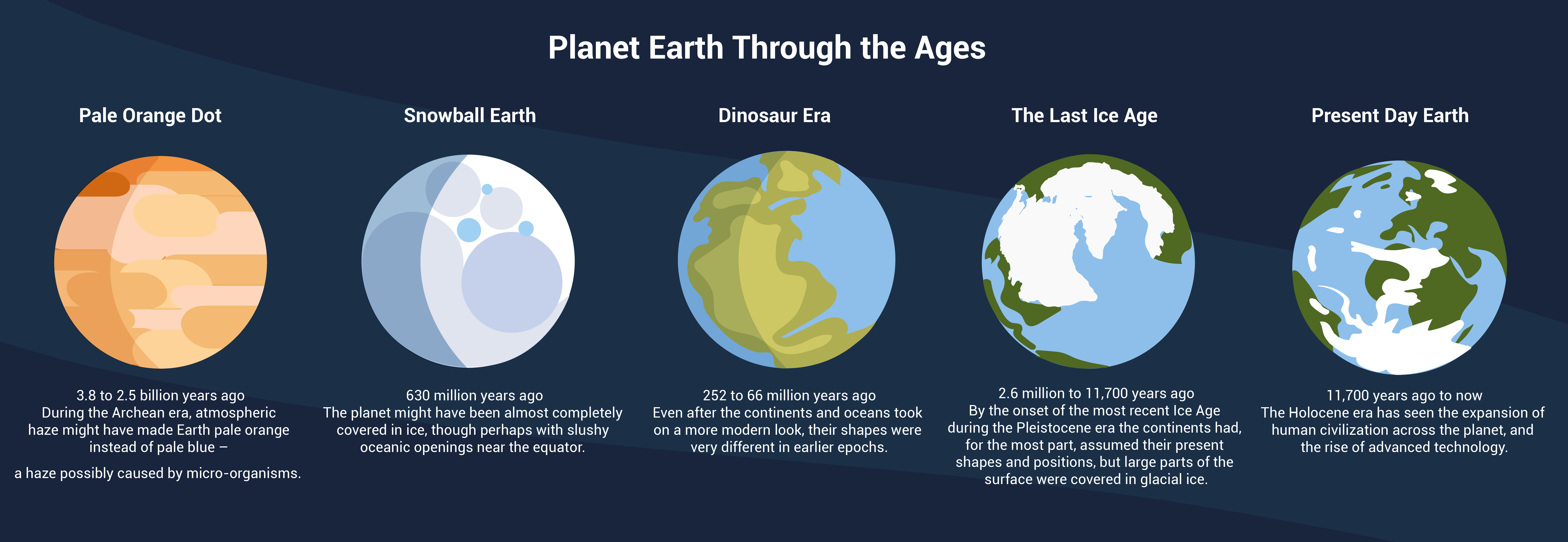
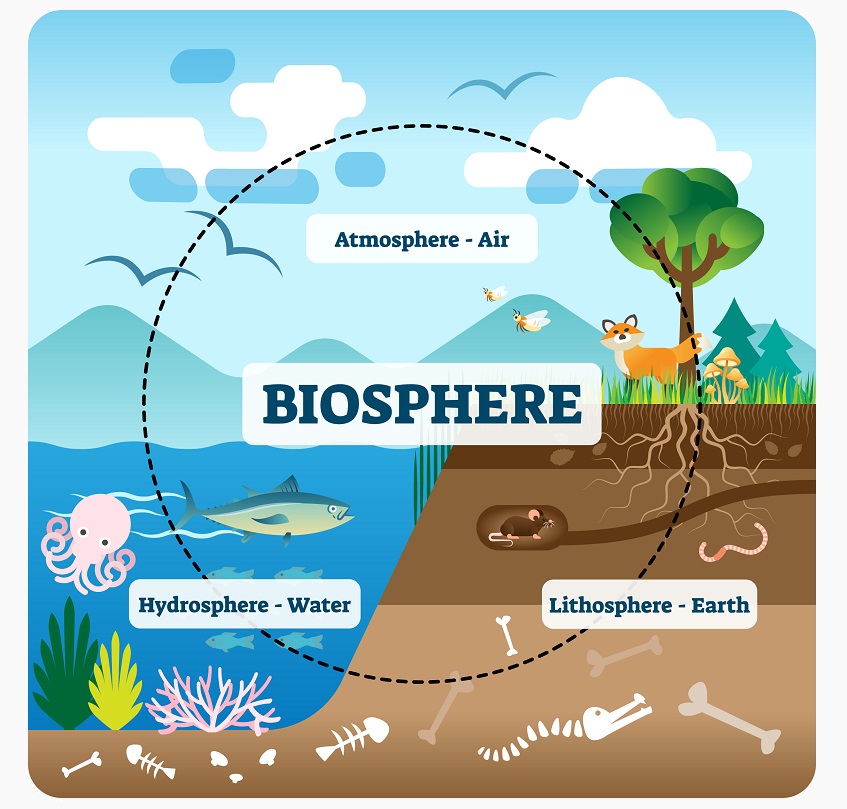
The evolution of Earth encompasses a vast timescale and involves complex processes that have shaped the planet over billions of years. The four major components of Earth’s evolution are the lithosphere, atmosphere, hydrosphere, and the origin of life. Let’s discuss their evolution individually while highlighting the key terms.
- Lithosphere:
The lithosphere refers to the rigid outer layer of Earth, consisting of the crust and uppermost part of the mantle. The evolution of the lithosphere can be traced back to the formation of Earth itself, approximately 4.6 billion years ago, through the process of accretion. During this period, small planetesimals and asteroids collided and merged to form larger bodies, ultimately giving rise to Earth.
Over time, the lithosphere experienced various geological processes, including tectonic activity, volcanic eruptions, and the formation of mountains. Plate tectonics played a crucial role in the evolution of the lithosphere. Earth’s lithosphere is divided into several tectonic plates that move relative to one another. This movement has led to the formation and breakup of supercontinents, such as Pangaea, and the creation of new ocean basins.
- Atmosphere:
The atmosphere is the gaseous envelope surrounding Earth. Its evolution can be understood through the study of atmospheric composition and changes throughout geological history. Early in Earth’s history, the atmosphere primarily consisted of volcanic gases, such as water vapor, carbon dioxide, nitrogen, and small amounts of methane and ammonia.
Around 2.7 billion years ago, a significant event called the Great Oxygenation Event occurred. This event marked the release of oxygen by photosynthetic cyanobacteria, which dramatically changed the atmosphere. Oxygen accumulated and led to the development of an oxygen-rich atmosphere, similar to what we have today. This oxygenation played a critical role in the evolution of life forms, as aerobic organisms emerged and thrived.
The atmosphere has also experienced fluctuations in greenhouse gas concentrations, leading to periods of global warming and cooling. For instance, during the Mesozoic era, the concentration of carbon dioxide was higher, resulting in warmer temperatures and a different climate compared to the present.
- Hydrosphere:
The hydrosphere refers to Earth’s water bodies, including oceans, lakes, rivers, groundwater, and atmospheric water vapor. Water has played a crucial role in shaping Earth’s surface and influencing its evolution. It is believed that water originated from volcanic outgassing and cometary impacts during the early stages of Earth’s formation.
As the planet cooled, water vapor condensed, leading to the formation of the oceans. Over time, the hydrosphere has been involved in the erosion of land, the deposition of sediments, and the chemical weathering of rocks. Water also acts as a vital medium for various biological processes and is crucial for the development and sustenance of life.
The hydrosphere has experienced significant changes in terms of sea level fluctuations, ice ages, and the formation of glaciers. These changes have influenced Earth’s climate patterns and the distribution of ecosystems.
- Origin of Life:
The origin of life on Earth remains a topic of scientific investigation. Several hypotheses propose how life may have originated. One prominent hypothesis is the “primordial soup” theory, which suggests that the early Earth’s oceans contained a mixture of organic molecules, including amino acids, sugars, and other building blocks of life. These organic compounds may have originated from chemical reactions in the atmosphere or from extraterrestrial sources like comets or meteorites.

Under suitable conditions, these organic molecules could have undergone further chemical reactions, leading to the formation of self-replicating molecules, such as RNA or primitive forms of DNA. These early replicators could have gradually evolved into more complex and diverse forms of life through processes of natural selection and genetic variation, ultimately giving rise to the first living organisms.
In summary, the evolution of Earth and the evolution of the lithosphere, atmosphere, hydrosphere, and origin of life are intricately linked processes that have shaped our planet over billions of years. The geological activity of the lithosphere, changes in atmospheric composition, the dynamic nature of water bodies, and the emergence of life forms have collectively influenced Earth’s history, its biodiversity, and its ongoing trajectory of evolution.