
REPORTS AND DOCUMENTS | INTERNATIONAL REPORTS | OCTOBER 2026
Introduction
Poverty is conventionally understood in terms of inadequate income or consumption expenditure. However, income alone cannot adequately capture the multiple disadvantages experienced by individuals and households. A person may earn an income above a specified poverty line but still lack access to adequate nutrition, quality education, sanitation, safe drinking water, electricity or decent housing.
The concept of multidimensional poverty addresses this limitation by examining poverty through multiple, overlapping forms of deprivation.
The 2026 Global Multidimensional Poverty Index (MPI): Statistical Update, published jointly by the United Nations Development Programme (UNDP) and the Oxford Poverty and Human Development Initiative (OPHI), provides an updated assessment of acute multidimensional poverty across 108 developing countries.
The report is particularly important because it highlights the persistence of poverty despite improvements in several development indicators. It also draws attention to the disproportionate burden borne by children and rural populations.
According to the report, approximately 1.2 billion people, representing 18.9% of the population covered, experience acute multidimensional poverty. Human Development Reports+1
1. About the Global Multidimensional Poverty Index
The Global MPI was introduced in the 2010 Human Development Report. Since 2018, it has been jointly produced by the Human Development Report Office of UNDP and OPHI.
The index seeks to identify people experiencing simultaneous deprivations in three fundamental dimensions:
- Health
- Education
- Standard of living
Unlike conventional monetary poverty measurements, the MPI examines the actual conditions in which people live.
Objectives of the Global MPI
- To measure acute poverty beyond income deprivation.
- To identify the overlapping disadvantages experienced by poor households.
- To identify the intensity and composition of poverty.
- To support evidence-based policymaking and targeted interventions.
- To monitor progress towards the Sustainable Development Goals, particularly SDG 1.
How is multidimensional poverty measured?
The Global MPI uses 10 indicators across three dimensions.
| Dimension | Indicators | Weight of each indicator |
|---|---|---|
| Health | Nutrition, Child mortality | 1/6 |
| Education | Years of schooling, School attendance | 1/6 |
| Standard of living | Cooking fuel, Sanitation, Drinking water, Electricity, Housing, Assets | 1/18 |
The three dimensions carry equal overall weight, with one-third assigned to each dimension.
A person is classified as multidimensionally poor when the weighted deprivation score reaches at least one-third of the total indicators’ weight.
People experiencing deprivation in at least one-fifth but less than one-third of the weighted indicators are considered vulnerable to multidimensional poverty. Those deprived in at least half of the weighted indicators are classified as severely poor. Human Development Reports+1
Understanding the MPI formula
MPI = H * A
Where:
- H – Headcount ratio: Proportion of the population identified as multidimensionally poor.
- A – Intensity of poverty: Average proportion of weighted deprivations experienced by multidimensionally poor people.
The MPI therefore captures both the incidence and intensity of poverty.
For instance, two countries may have the same proportion of people classified as poor, but the country where poor households experience a greater number of simultaneous deprivations will have a higher MPI value.
2. Major Findings of the 2026 Report
The 2026 report presents several important findings about the global distribution and nature of multidimensional poverty.
2.1 Global multidimensional poverty
| Indicator | Findings |
|---|---|
| Countries covered | 108 |
| Population covered | 6.3 billion |
| Multidimensionally poor population | 1.2 billion |
| Share of population experiencing poverty | 18.9% |
| Severely multidimensionally poor | 534 million |
| Vulnerable to multidimensional poverty | 952 million |
The report estimates that approximately 44.6% of the multidimensionally poor population experiences severe poverty.
An important observation is that multidimensional poverty is not confined to low-income countries. Approximately 65.1% of the global multidimensionally poor population lives in middle-income countries.
This demonstrates that economic growth and an increase in national income do not automatically eliminate deprivation in health, education and living standards. Human Development Reports+1
2.2 Children bear a disproportionate burden
One of the most significant findings concerns the relationship between age and poverty.
- Approximately 617 million people experiencing multidimensional poverty are children below 18 years.
- Children constitute 51.5% of the total multidimensionally poor population.
- Nearly one in every three children experiences multidimensional poverty.
- In comparison, approximately one in every seven adults experiences multidimensional poverty.
This indicates that poverty has a particularly severe intergenerational dimension.
Children deprived of nutrition, healthcare, education and basic living conditions are more likely to experience disadvantages throughout their lives.
Consequently, addressing child poverty is essential for breaking the intergenerational transmission of poverty. Human Development Reports+1
2.3 Rural–urban divide
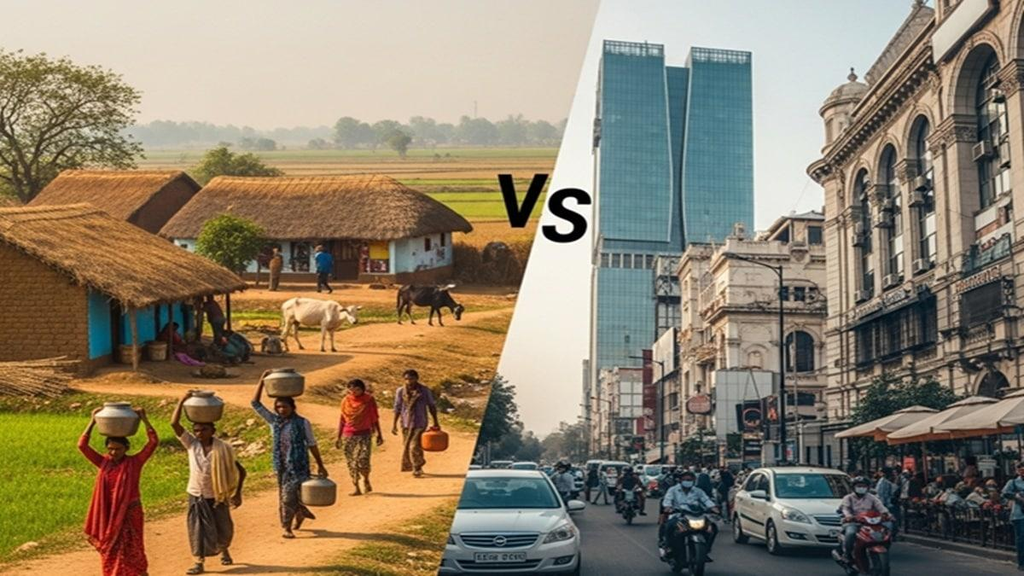
The report highlights a substantial difference between rural and urban poverty.
| Indicator | Rural areas | Urban areas |
|---|---|---|
| MPI value | 0.143 | 0.031 |
| Poverty incidence | 28.7% | 7.0% |
| Poverty intensity | 50.0% | 43.7% |
Approximately 998 million multidimensionally poor people live in rural areas, compared with 200 million in urban areas.
The rural MPI value is more than four times the urban MPI value.
This reflects the continuing challenges associated with inadequate infrastructure, limited access to essential services, educational disadvantages and livelihood insecurity in rural areas. Human Development Reports
2.4 Regional distribution of poverty
Sub-Saharan Africa accounts for the largest share of the global multidimensionally poor population.
- Sub-Saharan Africa: 616 million people, representing 51.4% of its population.
- South Asia: 393 million people.
- East Asia and the Pacific: 104 million people.
- Arab States: 51 million people.
- Latin America and the Caribbean: 33 million people.
- Europe and Central Asia: 1.2 million people.
Sub-Saharan Africa and South Asia together account for a substantial majority of global multidimensional poverty.
The report also highlights that South Asia has particularly significant deprivations in nutrition, housing and years of schooling. Human Development Reports
3. India’s Position in the 2026 Global MPI
India’s performance in the Global MPI is particularly relevant for understanding the relationship between economic growth, welfare interventions and human development.
According to the India country note accompanying the 2026 report, the latest publicly available survey data used for India’s Global MPI estimation relate to 2019–2021.
The report provides the following estimates:
| Indicator | India’s position |
|---|---|
| MPI value | 0.069 |
| Multidimensional poverty headcount | 16.4% |
| Population experiencing multidimensional poverty | 237.849 million |
| Intensity of deprivation | 42.0% |
| Vulnerable to multidimensional poverty | 18.7% |
| Population in severe multidimensional poverty | 4.2% |
The report also estimates that India’s MPI value declined from 0.283 in 2005–2006 to 0.069 in 2019–2021.
Similarly, the incidence of multidimensional poverty declined from 55.1% to 16.4% over the same period. Human Development Reports+1
3.1 India’s performance in comparison with neighbouring countries
The report provides the following comparative figures:
| Country | MPI value | Poverty incidence |
|---|---|---|
| India | 0.069 | 16.4% |
| Bangladesh | 0.067 | 14.9% |
| Pakistan | 0.198 | 38.3% |
| South Asia | 0.090 | 19.9% |
These figures should be interpreted in the context of different survey years. They do not represent estimates generated from simultaneous household surveys.
3.2 What explains India’s progress?
India’s improvement in multidimensional poverty is associated with progress in several areas of basic service delivery and social protection.
Important policy interventions include:
- Pradhan Mantri Jan Dhan Yojana: Expansion of access to formal financial services.
- Swachh Bharat Mission: Improvement in sanitation infrastructure and access to toilets.
- Jal Jeevan Mission: Expansion of household tap-water connections.
- Pradhan Mantri Ujjwala Yojana: Promotion of LPG connections among eligible poor households.
- Saubhagya: Expansion of household electricity connections.
- Poshan Abhiyaan: Addressing malnutrition and improving nutritional outcomes.
- Samagra Shiksha: Strengthening school education and improving educational access.
- National Food Security Act: Providing subsidised foodgrains to eligible beneficiaries.
These interventions illustrate the importance of combining income support, public infrastructure and human development policies to address multiple dimensions of deprivation.
However, the improvement in MPI should not be interpreted as the complete elimination of poverty. A significant proportion of the population continues to experience overlapping disadvantages.
Important methodological caution: India’s figures in the 2026 Global MPI are based on the 2019–2021 survey, not fresh household data collected in 2026. The population estimate is projected for 2024. Therefore, the figures should not be presented as India’s current poverty incidence in October 2026. Human Development Reports
4. Why is Multidimensional Poverty Different from Monetary Poverty?
Monetary poverty measures deprivation primarily through income or consumption expenditure. Multidimensional poverty, on the other hand, examines whether people have access to essential services and minimum living conditions.
The two approaches are complementary rather than mutually exclusive.
| Basis | Monetary poverty | Multidimensional poverty |
|---|---|---|
| Primary focus | Income or consumption | Multiple forms of deprivation |
| Measurement | Poverty line | Weighted deprivation indicators |
| Nature | Economic | Socio-economic |
| Identifies | People below a specified monetary threshold | People experiencing overlapping disadvantages |
| Policy focus | Income enhancement and transfers | Health, education, nutrition and living standards |
An individual may be above the monetary poverty line but still lack access to safe drinking water, adequate housing or quality education.
Similarly, a household may experience several forms of deprivation even when its monetary income does not fall below a particular poverty threshold.
The MPI therefore provides a broader understanding of poverty and helps policymakers identify the specific disadvantages that need to be addressed.
5. Challenges in Eliminating Multidimensional Poverty
Despite progress in several countries, the report highlights the continuing challenges associated with poverty reduction.
5.1 Intergenerational transmission of poverty
Children experiencing nutritional deprivation, poor health and inadequate educational opportunities may face reduced opportunities for social mobility.
This creates a cycle in which poverty is transmitted across generations.
5.2 Regional inequalities
National-level averages often conceal substantial differences between regions, states and districts.
Even when national poverty indicators improve, disadvantaged geographical regions may continue to experience high levels of deprivation.
5.3 Gender inequalities
Women and girls may experience multiple disadvantages relating to nutrition, education, healthcare, property ownership and access to economic opportunities.
These disadvantages can reinforce household-level poverty.
5.4 Inadequate quality of public services
Access to a school, hospital or sanitation facility does not necessarily guarantee quality service delivery.
The effectiveness of poverty-reduction programmes depends on the quality, affordability and accessibility of essential services.
5.5 Climate change and vulnerability
Climate-related disasters, droughts, floods and livelihood disruptions can push vulnerable households into deeper poverty.
Poor households often have limited financial resources and institutional support to recover from such shocks.
6. Policy Implications for India
The findings of the Global MPI have several implications for India’s development strategy.
First, strengthen human capital. Investments in nutrition, healthcare, early childhood development and quality education are essential for reducing long-term deprivation.
Second, improve the quality of public service delivery. Government programmes should move beyond measuring physical access and focus on actual outcomes.
Third, adopt geographically targeted interventions. District-level identification of deprivation can help concentrate resources in areas facing multiple disadvantages.
Fourth, strengthen women’s economic empowerment. Improving women’s access to education, healthcare, property, credit and employment can contribute to poverty reduction.
Fifth, promote rural development. Investment in rural infrastructure, non-farm employment, irrigation, agricultural productivity and connectivity can reduce the rural–urban divide.
Sixth, strengthen social protection. Effective implementation of food security, healthcare, pensions and livelihood programmes can protect vulnerable households from economic and environmental shocks.
Seventh, improve data systems. Regular household surveys and reliable administrative data are essential for identifying emerging forms of deprivation and evaluating policy outcomes.
7. Global MPI and Sustainable Development Goals
The Global MPI is closely associated with Sustainable Development Goal 1: No Poverty.
In particular, SDG Target 1.2 seeks to reduce by at least half the proportion of men, women and children living in poverty in all its dimensions by 2030.
SDG Indicator 1.2.2 specifically relates to the proportion of men, women and children of all ages living in poverty in all its dimensions according to national definitions.
The 2026 report notes that 33 countries have halved their MPI value in fewer than 15 years.
This demonstrates that multidimensional poverty reduction is achievable through sustained public investment, effective governance and targeted interventions. Human Development Reports+1
8. Critical Analysis
The 2026 Global MPI provides a valuable framework for understanding poverty beyond income deprivation. Its emphasis on overlapping disadvantages helps policymakers identify the specific dimensions in which households require support.
However, certain limitations must be recognised.
- Data limitations: Household surveys are conducted at different intervals across countries, affecting the comparability and timeliness of estimates.
- Indicator limitations: The index captures selected dimensions of deprivation but cannot represent every aspect of poverty, such as political exclusion, insecurity or subjective well-being.
- Intra-household inequalities: Household-level indicators may not fully capture unequal access to food, education and resources among individual members.
- National context: A globally standardised index may not fully reflect country-specific development priorities and deprivation patterns.
- Quality of services: The existence of a school, electricity connection or sanitation facility does not necessarily indicate the quality of the service received.
Therefore, the Global MPI should be used alongside monetary poverty estimates, national statistical indicators and other human development measures.
For India, it is particularly important to distinguish between the Global MPI published by UNDP–OPHI and the National Multidimensional Poverty Index developed by NITI Aayog. Their methodologies, indicators, survey bases and purposes are not identical.
9. UPSC Examination Relevance
Preliminary Examination: Important Facts
- The Global MPI was introduced in the 2010 Human Development Report.
- It is jointly produced by UNDP and OPHI.
- It measures poverty across three dimensions: health, education and standard of living.
- It uses ten indicators.
- The MPI is calculated as the product of the headcount ratio and intensity of poverty.
- A person is classified as multidimensionally poor at a weighted deprivation score of one-third or more.
- SDG 1 deals with the eradication of poverty in all its forms.
- The 2026 Global MPI covers 108 countries.
Mains Examination: Syllabus Linkage
| GS Paper | Relevant syllabus area |
|---|---|
| GS II | Poverty and hunger; issues relating to development and management of social sector services |
| GS II | Welfare schemes for vulnerable sections |
| GS III | Inclusive growth and issues arising from it |
| GS III | Human resource development |
| Essay | Poverty, inequality and inclusive development |
Mains Practice Questions
1. Poverty is a multidimensional phenomenon that cannot be adequately understood through income-based measurements alone. Discuss with reference to the Global Multidimensional Poverty Index.
2. Examine the role of public service delivery and social protection programmes in reducing multidimensional poverty in India.
3. Despite improvements in economic growth and basic service delivery, significant multidimensional deprivation persists. Analyse the challenges associated with eliminating poverty in India.
10. Conclusion
The 2026 Global Multidimensional Poverty Index reinforces the understanding that poverty is not merely a question of inadequate income but also a manifestation of multiple, interconnected disadvantages.
India’s substantial reduction in multidimensional poverty over the period covered by the report reflects the importance of public investment, social protection and improved access to basic services. Nevertheless, persistent deprivation in nutrition, education and living standards highlights the need for sustained interventions.
Achieving the objective of Viksit Bharat @2047 requires development that is not only economically productive but also socially inclusive. Reducing multidimensional poverty must therefore remain a central component of India’s human development strategy.
Original Report and Reference Documents
Students are encouraged to consult the original publication and its accompanying technical documents.
- 2026 Global Multidimensional Poverty Index – Full Report (UNDP)
- India Country Note – Global MPI 2026
- 2026 MPI Technical and Methodological Information
Source: United Nations Development Programme and Oxford Poverty and Human Development Initiative, Global Multidimensional Poverty Index 2026: Statistical Update.