
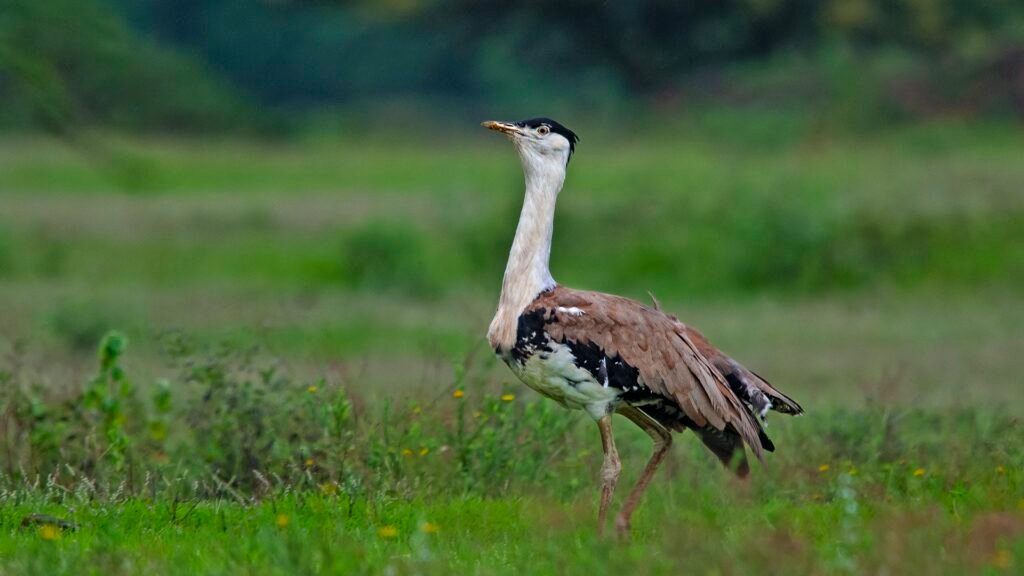
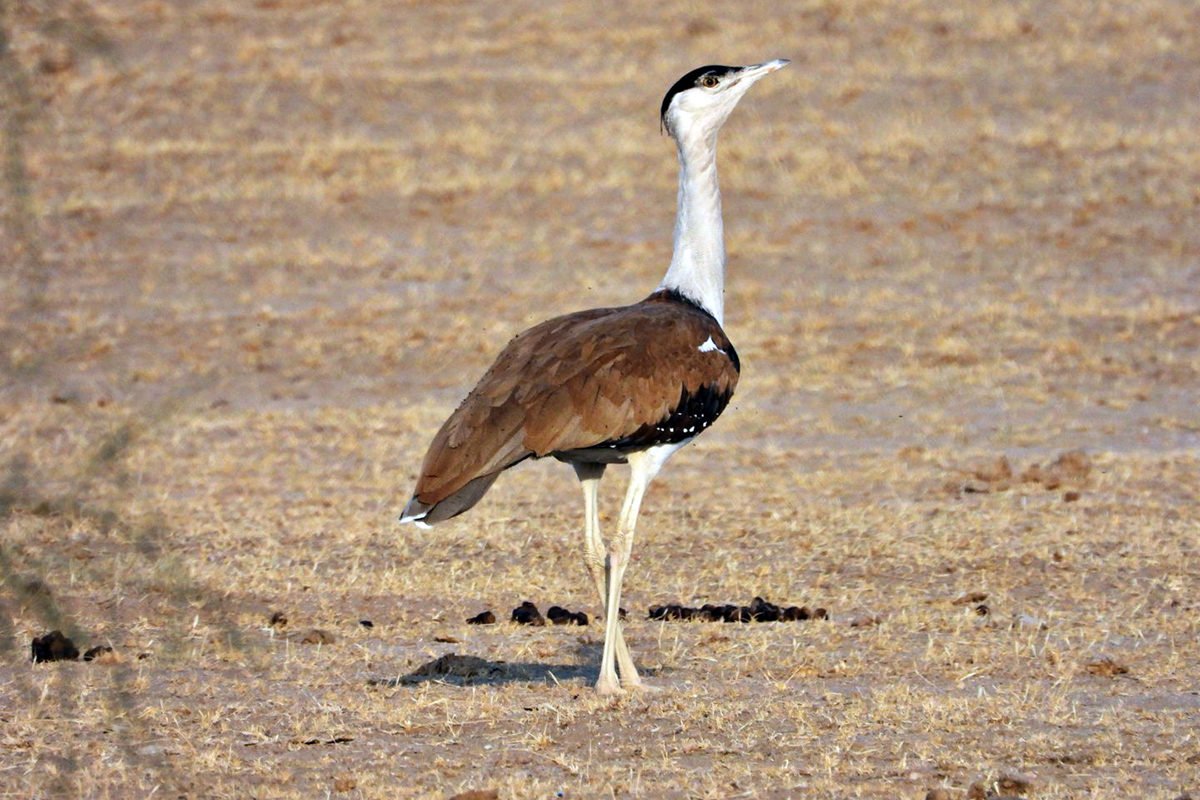
The Great Indian Bustard is a critically endangered bird species native to India. It is a large bird, with a height of up to one meter and a wingspan of around two meters. The Great Indian Bustard is known for its distinctive appearance, characterized by a brownish body, a black patch on the breast, and a black crown on the head.
This majestic bird primarily inhabits dry grasslands and semi-arid regions, where it feeds on a variety of insects, seeds, and small vertebrates. However, due to habitat loss, hunting, and disturbance, the population of the Great Indian Bustard has significantly declined over the years.
Conservation efforts are underway to protect this magnificent species. Protected areas and sanctuaries have been established to provide a safe haven for the Great Indian Bustard, and measures are being taken to reduce habitat degradation and poaching. Public awareness campaigns and community involvement are also crucial in ensuring the long-term survival of this iconic bird.
The Great Indian Bustard serves as an important ecological indicator, reflecting the health of grassland ecosystems. Efforts to preserve this species not only benefit the bird itself but also contribute to the conservation of other wildlife and the overall biodiversity of the region.
Remember to support initiatives that aim to safeguard the Great Indian Bustard and its habitat, as they play a vital role in preserving the natural heritage of India.